Portræt af Donatello

Donatello Paintings: The 100 Most Famous, Through a Gallery's Eye

Opdateret oktober 2026 · rangeret efter vores popularitetsscore (søgninger, besøg og ordrer for hvert værk) · 148 værker af Donatello i vores katalog

In short

To the gallery's eye, Donatello's most famous painting is Madonna and Child between St Francis and St Anthony (1448), whose original hangs in the Basilica di Sant'Antonio, Padua. Cantoria (1439) and Entombment (1447) complete the trio every eye recognises. Of the 148 works by Donatello in our catalog, the gallery presents the 100 most famous below, each original with its year, its museum and what makes it unique.

1386 – 1466, Firenze Tidlig renæssance Flest værker: Museo dell'Opera del Duomo

The gallery's top 10 Donatello paintings

1
Madonna and Child between St Francis and St Anthony (1448) af Donatello

Madonna and Child between St Francis and St Anthony

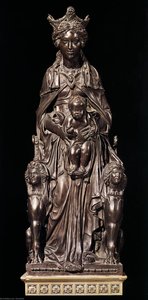
1448 · Bronze · Basilica di Sant'Antonio, Padua

In the heart of the Italian Renaissance, where the shadows of antiquity met the burgeoning light of humanism, Donatello breathed life into metal with his masterpiece, Madonna and Child between St Francis and St Anthony. Created around 1448, this profound bronze sculpture serves as a window into a period of unparalleled spiritual and artistic transformation. The composition is a masterclass in symmetrical grace; at its center, the Virgin Mary cradles…

2
Cantoria (1439) af Donatello

Cantoria

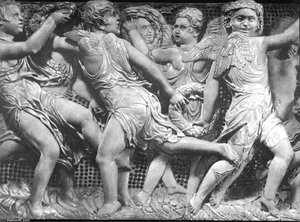
1439 · Marble · Museo dell'Opera del Duomo, Firenze

To stand before Donatello’s Cantoria is to witness the very moment the Renaissance found its pulse. Completed around 1439 for the Cathedral of Santa Maria del Fiore in Florence, this monumental marble relief is far more than a functional singers' gallery; it is a breathtaking explosion of movement and spiritual ecstasy. While much of the era’s sculpture remained tethered to the static, formal traditions of the Byzantine style, Donatello broke…

3
Entombment (1447) af Donatello

Entombment

1447 · Oil On Canvas · Basilica di Sant'Antonio, Padua

To stand before Donatello's depiction of the Entombment is to be enveloped in an atmosphere so thick with grief, it feels almost palpable. This scene transcends mere narrative illustration; it is a profound meditation on loss, sacrifice, and the solemn weight of human devotion. The composition draws the viewer into the immediate aftermath of unimaginable tragedy. Jesus Christ lies within the tomb, not merely as a subject, but as the…

4
Miracle of the Repentant Son (1447) af Donatello

Miracle of the Repentant Son

1447 · Acrylic · Basilica di Sant'Antonio, Padua

Donatello’s bronze sculpture, "Miracle of the Repentant Son," transcends mere representation; it's a profound meditation on faith, remorse, and divine grace. Created in 1447 during the apex of his artistic maturity, this work embodies the burgeoning humanism and emotional depth that defined the Early Renaissance in Florence. More than just a depiction of a biblical miracle – the restoration of a severed limb by St. Anthony – it’s a study…

5
Crucifix (1412) af Donatello

Crucifix

1412 · Acrylic On Canvas · Santa Croce i Firenze, Florence

Donatello's 1412 Crucifix, housed within the Basilica of Santa Croce in Florence, isn’t merely a depiction of Christ on the cross; it’s a visceral experience. This early Renaissance masterpiece transcends simple representation, plunging the viewer into the heart of Christian theology and embodying the profound tension between suffering and redemption. Crafted from richly-toned pearwood, the sculpture immediately commands attention with its remarkably realistic portrayal of the human form – a…

6
Annunciation (1435) af Donatello

Annunciation

1435 · Acrylic On Canvas · Santa Croce i Firenze, Florence

Donatello’s 1435 Annunciation, housed within the Basilica di Santa Croce in Florence, isn’t merely a depiction of a biblical moment; it’s a profound meditation on grace, humility, and the transformative power of faith. Commissioned during a pivotal period of artistic innovation – bridging the Gothic and Renaissance eras – this sculpture embodies Donatello's revolutionary approach to humanism and his masterful command of classical forms. The scene unfolds with an arresting…

7
St George (detail) (1416) af Donatello

St George (detail)

1416 · Marble · Museo Nazionale del Bargello, Firenze

The marble figure of St. George, sculpted by Donatello around 1416, stands as more than just a depiction of a saint; it's a pivotal moment in the evolution of Renaissance sculpture – a testament to the artist’s innovative spirit and his profound understanding of human form and narrative. Originally gracing the north wall of Orsanmichele, Florence’s imposing guildhall, this statue immediately captivated viewers with its dynamic energy and strikingly realistic…

8
Herod's Banquet (1427) af Donatello

Herod's Banquet

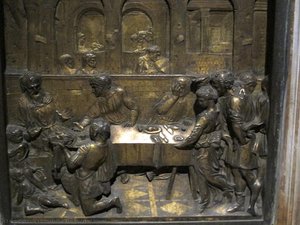
1427 · Bronze · Baptisteriet i Siena, Siena

Donatello's Herod’s Banquet, crafted around 1427 for the baptismal font of Siena’s San Giovanni Baptistery, isn’t merely a depiction of a biblical episode; it’s a profound meditation on power, betrayal, and the chilling consequences of unchecked ambition. Commissioned amidst the competitive fervor of Renaissance Florence and Siena, this bronze relief stands as a testament to Donatello's burgeoning mastery – a pivotal work that showcases his innovative approach to sculpture and…

9
Bearded Prophet (1418) af Donatello

Bearded Prophet

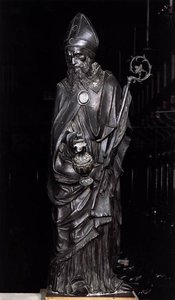
1418 · Bronze · Museo dell'Opera del Duomo, Firenze

In the heart of the Florentine Renaissance, where the shadows of antiquity began to dance with the light of new humanism, Donatello breathed life into bronze with his Bearded Prophet. Created around 1418, this monumental figure is far more than a mere sculpture; it is a profound meditation on the weight of divine knowledge and the solemnity of faith. As one gazes upon the weathered surface of the bronze, there…

10
St. John the Evangelist (1415) af Donatello

St. John the Evangelist

1415 · Marble

St. John the Evangelist is a marble sculpture created by the artist Donatello. Dated 1410, this work depicts one of the twelve apostles of Jesus. The subject is rendered as an elderly man, presented with a face etched with lines and a gaze that suggests a state of contemplation and wisdom. This choice of representation presents the figure as a philosopher-like individual.

Donatello paintings, ranked 11 to 100

11St Mark (1411) af DonatelloSt Mark1411 · Orsanmichele 12Prophet with Scroll (detail) (1418) af DonatelloProphet with Scroll (detail)1418 · Museo dell'Opera del Duomo 13St John on Patmos (1428) af DonatelloSt John on Patmos1428 14David (detail) (1409) af DonatelloDavid (detail)1409 · Museo Nazionale del Bargello 15Pietà (1447) af DonatelloPietà1447 · Basilica di Sant'Antonio 16Pulpit (on the right) (1465) af DonatelloPulpit (on the right)1465 · San Lorenzo (Florence) 17Prophet Jeremiah (1423) af DonatelloProphet Jeremiah1423 · Museo dell'Opera del Duomo 18Prophet Habakkuk (1427) af DonatelloProphet Habakkuk1427 · Museo dell'Opera del Duomo 19Pulpit (1438) af DonatelloPulpit1438 · Museum of the Cathedral 20Miracle of the New-born Child (detail) (1447) af DonatelloMiracle of the New-born Child (detail)1447 · Basilica di Sant'Antonio 21Miracle of the Ass (1447) af DonatelloMiracle of the Ass1447 · Basilica di Sant'Antonio 22Cantoria (detail) (1439) af DonatelloCantoria (detail)1439 · Museo dell'Opera del Duomo 23Evangelist Luke (1428) af DonatelloEvangelist Luke1428 24Pulpit (detail) (1438) af DonatelloPulpit (detail)1438 · Museo dell'Opera del Duomo 25Christ before Pilate and Caiaphas (1460) af DonatelloChrist before Pilate and Caiaphas1460 · San Lorenzo (Florence) 26David (1409) af DonatelloDavid1409 · Museo Nazionale del Bargello 27St George and the Dragon (1416) af DonatelloSt George and the Dragon1416 · Museo Nazionale del Bargello 28Saint George (1417) af DonatelloSaint George1417 · Museo Nazionale del Bargello 29St John the Evangelist (detail) (1410) af DonatelloSt John the Evangelist (detail)1410 · Museo dell'Opera del Duomo 30St John the Evangelist (1410) af DonatelloSt John the Evangelist1410 · Museo dell'Opera del Duomo 31Deposition (detail) (1465) af DonatelloDeposition (detail)1465 · San Lorenzo (Florence) 32Equestrian Statue of Gattamelata (8) (1447) af DonatelloEquestrian Statue of Gattamelata (8)1447 · Piazza del Santo 33North pulpit (1460) af DonatelloNorth pulpit1460 · San Lorenzo (Florence) 34Prophet (left of the Porta della Mandorla) (1406) af DonatelloProphet (left of the Porta della Mandorla)1406 · Duomo Firenze 35David (1430) af DonatelloDavid1430 · Museo Nazionale del Bargello 36Tombstone of Bishop Giovanni Pecci (1426) af DonatelloTombstone of Bishop Giovanni Pecci1426 · Duomo 37Miracle of the Avaricious Man's Heart (1447) af DonatelloMiracle of the Avaricious Man's Heart1447 · Basilica di Sant'Antonio 38Allegoric Figure of a Boy (Atys), rear view (1430) af DonatelloAllegoric Figure of a Boy (Atys), rear view1430 · Museo Nazionale del Bargello 39St George (detail) (1416) af DonatelloSt George (detail)1416 · Museo Nazionale del Bargello 40Cantoria (detail) (1439) af DonatelloCantoria (detail)1439 · Museo dell'Opera del Duomo 41Donatello's Gattamelata (1447) af DonatelloDonatello's Gattamelata1447 · Piazza del Santo 42Equestrian Statue of Gattamelata (1447) af DonatelloEquestrian Statue of Gattamelata1447 · Piazza del Santo 43Marzocco (1419) af DonatelloMarzocco1419 · Museo Nazionale del Bargello 44Prophet Jeremiah (detail) (1423) af DonatelloProphet Jeremiah (detail)1423 · Museo dell'Opera del Duomo 45Cantoria (detail) (1439) af DonatelloCantoria (detail)1439 · Museo dell'Opera del Duomo 46Herod's Banquet (detail) (1427) af DonatelloHerod's Banquet (detail)1427 · Baptisteriet i Siena 47Miracle of the Avaricious Man's Heart (detail) (1447) af DonatelloMiracle of the Avaricious Man's Heart (detail)1447 · Basilica di Sant'Antonio 48Bearded Prophet (detail) (1418) af DonatelloBearded Prophet (detail)1418 · Museo dell'Opera del Duomo 49Cantoria (detail) (1439) af DonatelloCantoria (detail)1439 · Museo dell'Opera del Duomo 50Prophet Jeremiah (1423) af DonatelloProphet Jeremiah1423 · Museo dell'Opera del Duomo 51South pulpit (1460) af DonatelloSouth pulpit1460 · San Lorenzo (Florence) 52Deposition (1465) af DonatelloDeposition1465 · San Lorenzo (Florence) 53St George (1416) af DonatelloSt George1416 · Museo Nazionale del Bargello 54Cantoria (1439) af DonatelloCantoria1439 · Museo dell'Opera del Duomo 55Faith (1427) af DonatelloFaith1427 · Baptisteriet i Siena 56Old Sacristy (1428) af DonatelloOld Sacristy1428 · San Lorenzo (Florence) 57Annunciation (detail) (1435) af DonatelloAnnunciation (detail)1435 · Santa Croce i Firenze 58Pulpit (on the left) (1465) af DonatelloPulpit (on the left)1465 · San Lorenzo (Florence) 59Prophet with Scroll (1418) af DonatelloProphet with Scroll1418 · Museo dell'Opera del Duomo 60St John the Evangelist (1410) af DonatelloSt John the Evangelist1410 · Museo dell'Opera del Duomo 61Prophet Habakkuk (1427) af DonatelloProphet Habakkuk1427 · Museo dell'Opera del Duomo 62Entombment (1465) af DonatelloEntombment1465 · San Lorenzo (Florence) 63Cantoria (9) (1439) af DonatelloCantoria (9)1439 · Museo dell'Opera del Duomo 64Lamentation over the Dead Christ af DonatelloLamentation over the Dead ChristVictoria and Albert Museum 65St George (1416) af DonatelloSt George1416 · Museo Nazionale del Bargello 66St John the Baptist (1438) af DonatelloSt John the Baptist1438 · Santa Maria Gloriosa dei Frari 67Madonna with the Child (1448) af DonatelloMadonna with the Child1448 · Basilica di Sant'Antonio 68Chellini Madonna, verso af DonatelloChellini Madonna, versoVictoria and Albert Museum 69St Cosmas and St Damian (1428) af DonatelloSt Cosmas and St Damian1428 70St Mary Magdalen (1457) af DonatelloSt Mary Magdalen1457 · Museo dell'Opera del Duomo 71Bust of Niccolo da Uzzano (1430) af DonatelloBust of Niccolo da Uzzano1430 · Museo Nazionale del Bargello 72Crucifixion (1465) af DonatelloCrucifixion1465 · Museo Nazionale del Bargello 73Delivery of the Keys to St Peter and the Ascension of Christ (1430) af DonatelloDelivery of the Keys to St Peter and the Ascension of Christ1430 74Prophet Habbakuk (1426) af DonatelloProphet Habbakuk1426 75The Feast of Herod (1427) af DonatelloThe Feast of Herod1427 76St Stephen and St Lawrence (1428) af DonatelloSt Stephen and St Lawrence1428 77Evangelist Mark (1428) af DonatelloEvangelist Mark1428 78Herod's Banquet (1435) af DonatelloHerod's Banquet1435 · Palais des Beaux-Arts de Lille 79Pulpit (1438) af DonatelloPulpit1438 · Cathedral 80Agony in the Garden (1465) af DonatelloAgony in the Garden1465 · San Lorenzo (Florence) 81Funeral Monument to John XXIII (detail) (1435) af DonatelloFuneral Monument to John XXIII (detail)1435 · Baptisteriet i Firenze 82Chellini Madonna, recto af DonatelloChellini Madonna, rectoVictoria and Albert Museum 83Hope (1427) af DonatelloHope1427 · Baptisteriet i Siena 84St Mark (1411) af DonatelloSt Mark1411 · Orsanmichele 85St Louis (1413) af DonatelloSt Louis1413 · Museo dell'Opera di Santa Croce 86St Rossore (1425) af DonatelloSt Rossore1425 · Museo Nazionale di San Matteo 87Putti of the trabeation (1428) af DonatelloPutti of the trabeation1428 88The Sacrifice of Isaac (1418) af DonatelloThe Sacrifice of Isaac1418 · Museo dell'Opera del Duomo 89Candelabra Angels (1430) af DonatelloCandelabra Angels1430 90Musician Angels (1447) af DonatelloMusician Angels1447 · Basilica di Sant'Antonio 91Virgin and Child (1420) af DonatelloVirgin and Child1420 · Museo Bardini 92Door with the representation of Apostles (1440) af DonatelloDoor with the representation of Apostles1440 93Door with the representation of Martyrs (1440) af DonatelloDoor with the representation of Martyrs1440 94Funeral Monument to John XXIII (detail) (1435) af DonatelloFuneral Monument to John XXIII (detail)1435 · Baptisteriet i Firenze 95Miracle of the Ass (detail) (1447) af DonatelloMiracle of the Ass (detail)1447 · Basilica di Sant'Antonio 96Funeral Monument to John XXIII (detail) (1435) af DonatelloFuneral Monument to John XXIII (detail)1435 · Baptisteriet i Firenze 97Equestrian Statue of Gattamelata (9) (1447) af DonatelloEquestrian Statue of Gattamelata (9)1447 · Piazza del Santo 98Equestrian Statue of Gattamelata (detail) (1447) af DonatelloEquestrian Statue of Gattamelata (detail)1447 · Piazza del Santo 99Equestrian Statue of Gattamelata (detail) (1447) af DonatelloEquestrian Statue of Gattamelata (detail)1447 · Piazza del Santo 100Protome Carafa (1465) af DonatelloProtome Carafa1465

Donatello's famous paintings, period by period

The subjects that held Donatello's eye

The four subjects that come back most often in these originals, each with its finest example.

The museums that keep Donatello's originals

De 8 museer, der rummer flest af malerierne på denne side.

Museum By Værker af Donatello Malerier fra denne liste
Museo dell'Opera del Duomo, FirenzeMuseo dell'Opera del Duomo Firenze 22 Cantoria, Bearded Prophet, Prophet with Scroll (detail)
Museo Nazionale del Bargello, FirenzeMuseo Nazionale del Bargello Firenze 13 St George (detail), David (detail), David
Basilica di Sant'Antonio, PaduaBasilica di Sant'Antonio Padua 12 Madonna and Child between St Francis and St Anthony, Entombment, Miracle of the Repentant Son
San Lorenzo (Florence), FlorenceSan Lorenzo (Florence) Florence 12 Pulpit (on the right), Christ before Pilate and Caiaphas, Deposition (detail)
Piazza del Santo, PaduaPiazza del Santo Padua 6 Equestrian Statue of Gattamelata (8), Donatello's Gattamelata, Equestrian Statue of Gattamelata
Baptisteriet i Siena, SienaBaptisteriet i Siena Siena 4 Herod's Banquet, Herod's Banquet (detail), Faith
Baptisteriet i Firenze, FlorenceBaptisteriet i Firenze Florence 4 Funeral Monument to John XXIII (detail), Funeral Monument to John XXIII (detail), Funeral Monument to John XXIII (detail)
Santa Croce i Firenze, FlorenceSanta Croce i Firenze Florence 3 Crucifix, Annunciation, Annunciation (detail)

Donatello, one signature painting per decade

Værker per årti

Pick a decade to see the original that defines it.

Donatello's paintings: the gallery answers

Which Donatello painting is the most famous of all?Reveal the answer

Madonna and Child between St Francis and St Anthony (1448), Basilica di Sant'Antonio, Padua. Cantoria (1439) and Entombment (1447) come next.

How old was Donatello on completing Madonna and Child between St Francis and St Anthony?Reveal the answer

62 years old: Madonna and Child between St Francis and St Anthony dates from 1448, and Donatello was born in 1386.

Which are Donatello's top 10 paintings?Reveal the answer

Madonna and Child between St Francis and St Anthony, Cantoria, Entombment, Miracle of the Repentant Son, Crucifix, Annunciation, St George (detail), Herod's Banquet, Bearded Prophet og St. John the Evangelist. The ranking above gives each one's year and museum.

How many works did Donatello create?Reveal the answer

Our catalog holds 148 works by Donatello, dated from 1406 to 1465.

Where do Donatello's most famous originals hang?Reveal the answer

Mostly in Museo dell'Opera del Duomo (Firenze), Museo Nazionale del Bargello (Firenze) og Basilica di Sant'Antonio (Padua). The museum table above lists them all.

When did Donatello create the most famous paintings?Reveal the answer

In 1430s: 22 of the 100 works on this page were made then, Cantoria among them.

Which are Donatello's earliest and latest famous works?Reveal the answer

On this page, the earliest is Prophet (left of the Porta della Mandorla) (1406) and the latest Pulpit (on the right) (1465).

Which subjects did Donatello return to most?Reveal the answer

Renaissance (46), Sculpture (34) og Renaissance art (18), across the 100 works on this page.

Which medium did Donatello work in most?Reveal the answer

Marble, for 27 of the 100 works on this page.

Which movement is Donatello associated with?Reveal the answer

Tidlig renæssance, judging by the originals on this page.

Which Donatello originals does the Museo dell'Opera del Duomo hold?Reveal the answer

Cantoria, Bearded Prophet og Prophet with Scroll (detail): the Museo dell'Opera del Duomo, Firenze holds 21 of the works on this page.

Can I have a Donatello painting reproduced by hand?Reveal the answer

Yes, as a reproduction: the original stays in its museum, but any painting on this page can be painted by hand for you, made to order one at a time, from the painting's own page.

Donatello: the artist

Livet og identiteten bag Donatello

Født som Donato di Niccolò di Betto Bardi, tilbragte manden, som historien kender som Donatello, sit liv inden for Firenzes mure i Italien. Han trådte ind i verden omkring 1386, en tid hvor byen var begyndt at omforme sit eget ansigt gennem sten og bronze. Hans tilstedeværelse i det florentinske landskab var konstant, præget af en stødig hånd og et intenst fokus på hans subjekters fysiske virkelighed. Han var en italiensk renæssanceskulptør, der forstod tyngden i de materialer, han arbejdede med, fra marmorens hårdhed til voksens flydende form.

Hans arbejde var ikke en ensom stræben efter perfektion, men snarere en række svar på sin tids behov. Han bevægede sig gennem Firenzes gader, arbejdede i mange forskellige medier og efterlod sig et spor af figurer, der indfangede en helt særlig, menneskelig tilstedeværelse. Selvom han var kendt for at være venlig og vellidt af sine omgivelser, kæmpede han med de praktiske aspekter ved at drive en virksomhed. Han påtog sig ofte mere arbejde, end hans hænder kunne nå at færdiggøre rettidigt, hvilket nogle gange betød, at de sidste detaljer blev overladt til andre, eller at værkerne blev leveret senere end forventet. Denne tendens til overforbrug af kræfter tyder på en mand, der var mere optaget af selve skabelsesprocessen end af ledelsen af et værksted.

Donatello døde i Firenze den 13. december 1466. Han efterlod sig et livsværk, der ændrede den måde, skulptører tilgik den menneskelige form på, ved at bevæge sig væk fra fortidens stive traditioner mod noget mere jordbundet og ekspressivt. Hans liv var uløseligt knyttet til byen, og hans identitet forbliver uadskillelig fra den florentinske jord, hvor han levede og arbejdede.

Tidlige år og kunstnerisk uddannelse

Donatello blev født i Firenze, Italien, og voksede op i en by, der fungerede som det primære epicenter for den spirende renæssance. Dette miljø tilførte den essentielle kulturelle energi, som var nødvendig for hans udvikling. Han tilbragte sine tidlige år dybt fordybet i den lokale atmosfære, hvor skiftet væk fra de rigide middelalderlige traditioner allerede var ved at vinde indpas. Hans forbindelse til det florentinske landskab var dyb, da byens skiftende værdier formede hans tidlige tilgang til form og figur.

Hans uddannelse indebar en indgående studium af klassisk skulptur. Dette fokus på antikken hjalp ham med at bevæge sig mod en ny stil, der prioriterede realisme og humanisme. Før han fandt sin egen stemme, lærte han den internationale gotiske stil af Lorenzo Ghiberti. Denne læringsperiode gjorde det muligt for ham at mestre sit håndværks tekniske færdigheder, før han begyndte at afvige fra de etablerede traditioner. Han arbejdede med en bred vifte af materialer, herunder sten, bronze, træ, ler, stuk og voks, og han benyttede ofte glas på opfindsom vis for at opnå specifikke effekter.

Mæcener, værksted og opgaver

Donatellos hænder var ofte fulde af arbejde. Han havde en tendens til at påtage sig langt flere opgaver, end hans tidsplan egentlig kunne rumme, en vane der indimellem betød, at projekter blev færdiggjort sent eller blev overdraget til andre for at blive afsluttet. Denne massive arbejdsmængde krævede en konstant tilstedeværelse i hans værksted, hvor han arbejdede side om side med flere assistenter. En gruppe på fire var et typisk antal for hans atelier, hvilket hjalp ham med at håndtere de fysiske krav fra sten, bronze og ler.

Medici-familien ydede en stabil støtte og tilbød den form for mæcenatvirksomhed, der gjorde det muligt for ham at udforske forskellige faser af sit liv. Hans rækkevidde strakte sig langt ud over Firenzes gader; han rejste for at udføre opgaver i Rom, Padua og Siena. Denne konstante bevægelse mellem byerne betød, at hans kunstneriske virke aldrig var begrænset til ét enkelt sted, da han medbragte både sine metoder og sine assistenter til forskellige centre for kulturel aktivitet.

Innovative teknikker og kunstnerisk stil

Donatellos tilgang til skulptur markerede et radikalt brud med de stive traditioner fra den internationale gotik. Han udviklede en stil i den tidlige renæssance, der hyldede en helt ny form for realisme, hvilket ofte blev opnået gennem en dybdegående forståelse for den menneskelige anatomi og det subtile spil mellem lys og overflade. Han lod sig ikke begrænse af et enkelt materiale, men arbejdede sig gennem sten, bronze, træ, ler, stuk og voks. Han fandt endda innovative måder at inddrage glas på for at tilføje en ekstra dimension af detaljerigdom til sine figurer.

Et af hans mest banebrydende tekniske bidrag var udviklingen af rilievo stiacciato. Dette er en ekstremt lav reliefteknik, hvor udskæringerne er så fine, at de skaber en illusion af dybde gennem næsten umærkelige variationer i tykkelsen. Ved at mestre denne metode kunne han antyde perspektiv og afstand på en næsten flad overflade. Hans værker udviser ofte en fascinerende spænding mellem materialets fysiske tyngde og motivets ekspressive bevægelse; han besad evnen til at få marmor til at fremstå blødt som hud eller lade bronze bære en følelse af tung, muskuløs energi.

  • David (bronze)
  • Equestrian Monument of Gattamelata
  • Saint George (marmor)

De skulpturelle mesterværker

I 1416 færdiggjorde han Sankt Georg, en marmorfigur, der indfanger en følelse af urokkelig mod. Skulpturen fremstiller ridderen i rustning, balancerende på forfoden frem for at stå i en traditionel contrapposto. Der er en mærkbar fornemmelse af den muskuløse krop, der arbejder under stenens overflade. Dette værk var et af mange bestillingsarbejder fra de florentinske lav, som havde til formål at pryde de ydre nicher i Orsanmichele-kirken.

Hans bronze-udgave af David står som et monumentalt vendepunkt i skulpturhistorien. Det er den første fritstående, nøgne mandsskulptur skabt siden antikken. Figuren er afbildet med et gådefuldt smil, stående med den ene fod hvilende på den afhuggede hoved af Goliat. Mens marmorversionen af dette motiv var et tidligt bestillingsarbejde, er bronzeversionen bemærkelsesværdig for sin delikate, androgyne fysik og den måde, hvorpå den bruger den unge mands nøgenhed som en kontrast til det tunge sværd i hånden.

Senere i sin karriere bevægede han sig mod andre materialer og skalaer. Equestrian Monument of Gattamelata, skabt i 1453, er et massivt bronzemonument placeret i Padua. Omkring år 1440 skabte han Den angrende Magdalene, en træskulptur udskåret i hvid poppel. Denne figur er mager og udmagret, hvilket bryder radikalt med de typiske fremstillinger af en smuk, ung kvinde. Udskæringen er rå og ekstremt detaljeret, hvilket afslører en helt anden side af hans tekniske mesterskab.

  • Sankt Georg, 1416
  • David (bronze), ca. 1440
  • Den angrende Magdalene, ca. 1440
  • Equestrian Monument of Gattamelata, 1453

Arv og kunstnerisk indflydelse

Donatellos tilgang til form fandt ikke øjeblikkelig accept i hans samtid. Hans kunstneriske rejse bevægede sig gennem markante faser, der begyndte med et fokus på klassisk monumentalitet og en voksende følelse for det ekspressive udtryk. Som hans karriere skred frem, vandt denne stil terræn og endte med at blive den mest dominerende arbejdsform i regionen. Hans indflydelse rakte langt ud over Firenzes grænser, hvor den spredte sig til andre italienske hoffer og satte dybe spor hos kunstnere over hele Europa.

Måden, hvorpå han mestrede sine materialer, åbnede op for et utroligt spektrum af emotionel dybde. Han bevægede sig fra den tunge, massive tilstedeværelse i sine tidlige marmorfigurer mod mere rå og endda brutale værker i sine senere år. Dette skift vidnede om en vilje til at udforske den menneskelige tilstand gennem varierende teksturer – fra stenens glatte overflader til det teksturerede, afmagrede træ i hans senere religiøse udskæringer. Hans evne til at indfange en følelse af bevægelse og psykologisk tyngde ændrede fundamentalt den måde, hvorpå skulptører tilgik den menneskelige figur.

  • David (bronze)
  • Equestrian Statue of Gattamelata
  • Saint George
  • Penitent Magdalene

Alle 148 værker af Donatello →