Portræt af Canaletto

De 100 mest berømte Canaletto-malerier, en galleriselektion

Opdateret oktober 2026 · rangeret efter vores popularitetsscore (søgninger, besøg og ordrer for hvert værk) · 549 værker af Canaletto i vores katalog

Kort sagt

Af alle de originale værker, som Canaletto efterlod, er det mest berømte Det Store Kanal og Salutationskirken (1730), som er en del af samlingen på Museum of Fine Arts, Houston i Houston. Lige efter følger The Bucintoro Returning to the Molo on Ascension Day (1730) og Capriccio with Ruins and Porta Portello, Padua (1750). Vores katalog indeholder 549 værker af Canaletto; galleriet har bevaret de 100 værker, som verden beundrer mest, hver vist med sin dato, sit museum og sin historie.

1697 – 1768, Venedig Rococo Flest værker: Royal Collection

Canalettos top 10 malerier: galleriets udvalg

1
Det Store Kanal og Salutationskirken (1730) af Canaletto

Det Store Kanal og Salutationskirken

1730 · Olie på lærred · Museum of Fine Arts, Houston, Houston

Giovanni Antonio Canaletto, bedre kendt som Canaletto, malede i 1730 et billede, der fanger essensen af Venedig på en måde få andre kunne. "The Grand Canal and the Church of the Salute" er mere end blot et landskab; det er et vindue ind til en svunden tid, et øjebliks fanget i lys og farve. Billedet fremstiller den ikoniske Grand Canal med sin majestætiske Church of the Salute som et centralt…

2
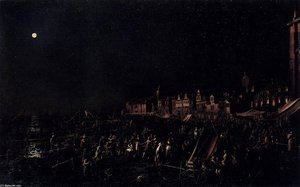
The Bucintoro Returning to the Molo on Ascension Day (1730) af Canaletto

The Bucintoro Returning to the Molo on Ascension Day

1730 · Oil On Canvas

In the heart of the eighteenth century, few sights could rival the grandeur of Venice during the festivities of Ascension Day. Giovanni Antonio Canal, known universally as Canaletto, captures this ephemeral magic in his masterpiece, The Bucintoro Returning to the Molo on Ascension Day. This sweeping oil-on-canvas work is far more than a mere topographical record; it is a window into a lost era of maritime splendor and civic pride.…

3
Capriccio with Ruins and Porta Portello, Padua (1750) af Canaletto

Capriccio with Ruins and Porta Portello, Padua

1750 · Oil On Canvas · Gallerie dell'Accademia di Venezia, Venedig

Giovanni Antonio Canal, universally known as Canaletto, possessed an extraordinary gift for capturing the essence of Venice – its light, its atmosphere, and its vibrant daily life. His “Capriccio with Ruins and Porta Portello,” painted in 1750, is a quintessential example of this mastery, offering not merely a depiction of a scene but a carefully constructed evocation of memory, history, and the enduring beauty of a fading grandeur. This painting…

4
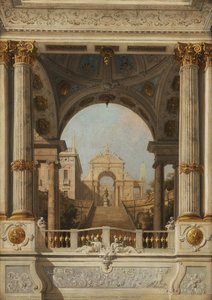
Capriccio of a Renaissance Triumphal Arch seen from the Portico of a Palace (1755) af Canaletto

Capriccio of a Renaissance Triumphal Arch seen from the Portico of a Palace

1755 · Oil On Canvas

To gaze upon Giovanni Antonio Canaletto’s Capriccio of a Renaissance Triumphal Arch seen from the Portico of a Palace is to step directly into a meticulously crafted dreamscape, a moment where the grandeur of classical antiquity meets the vibrant energy of 18th-century life. Painted in 1755, this oil on canvas is far more than a mere depiction of architecture; it is a masterful meditation on permanence, memory, and the enduring…

5
The Feast Day of St Roch (1735) af Canaletto

The Feast Day of St Roch

1735 · Oil On Canvas · National Gallery, London

To step before Canaletto’s “The Feast Day of St Roch” is to be instantly transported to the sun-drenched, bustling streets of 18th-century Venice. Created in 1735, this masterpiece serves as much more than a mere topographical record; it is a vibrant, breathing window into a vanished era of grandeur and communal devotion. The painting captures a pivotal moment during the feast day of Saint Roch, a figure deeply revered by…

6
The Grand Canal (1728) af Canaletto

The Grand Canal

1728 · Oil On Canvas · Galleria degli Uffizi, Firenze

To gaze upon Canaletto’s 1728 masterpiece, The Grand Canal, is to be transported instantly to the golden age of the Venetian Republic. This breathtaking canvas does not merely depict a waterway; it captures the very soul of a city at its zenith, pulsating with commerce, elegance, and an almost ethereal light. As the eye wanders across the expansive horizontal panorama, one feels the gentle movement of gondolas slicing through the…

7
Piazza San Marco (1730) af Canaletto

Piazza San Marco

1730 · Oil On Canvas · Metropolitan Museum of Art, New York

Piazza San Marco: A Venetian Masterpiece The Piazza San Marco in Venice stands as an enduring testament to artistic vision and cultural grandeur—a fact eloquently captured by Giovanni Antonio Canaletto’s monumental oil painting, completed in 1730. More than just a depiction of a public space, this artwork embodies the spirit of Baroque realism, skillfully blending meticulous observation with idealized beauty to transport viewers back to the vibrant heart of Renaissance…

8
Grand Canal: Looking North-East from Santa Croce to San Geremia (1732) af Canaletto

Grand Canal: Looking North-East from Santa Croce to San Geremia

1732 · Etching · Royal Collection, London

To gaze upon this depiction of the Grand Canal looking northeast from Santa Croce toward San Geremia is to step directly into the heart of 18th-century Venice. It is more than just an architectural record; it is a meticulously preserved moment of life, rendered with the breathtaking precision characteristic of Giovanni Antonio Canaletto. The scene unfolds before us, dominated by the majestic sweep of the waterway, where history and daily…

9
Piazza San Marco with the Basilica (1730) af Canaletto

Piazza San Marco with the Basilica

1730 · Oil On Canvas · Harvard Art Museums, Cambridge

The sun hangs high over the bustling heart of Venice in Canaletto's 1730 oil on canvas, Piazza San Marco with the Basilica. This scene captures the very essence of the city's most famous square, where the air feels thick with the movement of a thousand daily lives. We find ourselves standing within the wide expanse of the piazza, looking toward the grand architecture that defines this urban center. The light…

10
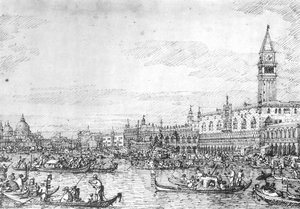
Venice: The Canale di San Marco with the Bucintoro at Anchor (1730) af Canaletto

Venice: The Canale di San Marco with the Bucintoro at Anchor

1730 · Royal Collection, London

Giovanni Antonio Canal, universally known as Canaletto, possessed an extraordinary gift for capturing the vibrant pulse of 18th-century Venice. His “Venice: The Bucintoro at the Molo on Ascension Day,” painted around 1754, stands as a testament to this skill – a monumental canvas brimming with life, color, and meticulously rendered detail. More than just a depiction of a specific event, it’s an immersive experience, transporting the viewer directly into the…

Canaletto-udvalget fortsætter, fra 11 til 100

11The Piazzetta Looking towards the Torre dell'Orologio (1725) af CanalettoThe Piazzetta Looking towards the Torre dell'Orologio1725 · Royal Collection 12The Piazzetta: Looking North, the Campanile under Repair (1745) af CanalettoThe Piazzetta: Looking North, the Campanile under Repair1745 · Royal Collection 13Santi Giovanni e Paolo and the Scuola di San Marco (1725) af CanalettoSanti Giovanni e Paolo and the Scuola di San Marco1725 · Gemäldegalerie Alte Meister 14Piazza San Marco: Looking East from the North-West Corner (1760) af CanalettoPiazza San Marco: Looking East from the North-West Corner1760 · National Gallery 15London: Ranelagh, Interior of the Rotunda (1754) af CanalettoLondon: Ranelagh, Interior of the Rotunda1754 · National Gallery 16Grand Canal: Looking North-East toward the Rialto Bridge (detail) (1725) af CanalettoGrand Canal: Looking North-East toward the Rialto Bridge (detail)1725 · Gemäldegalerie Alte Meister 17Grand Canal: Looking South-East from the Campo Santa Sophia to the Rialto Bridge (1756) af CanalettoGrand Canal: Looking South-East from the Campo Santa Sophia to the Rialto Bridge1756 · Staatliche Museen zu Berlin 18View through a Baroque Colonnade into a Garden, 1760-1768 (1768) af CanalettoView through a Baroque Colonnade into a Garden, 1760-17681768 · Albertina 19The Grand Canal near the Rialto Bridge, Venice (1730) af CanalettoThe Grand Canal near the Rialto Bridge, Venice1730 · Museum of Fine Arts, Houston 20Grand Canal: Looking North from Near the Rialto Bridge (1726) af CanalettoGrand Canal: Looking North from Near the Rialto Bridge1726 · Gemäldegalerie Alte Meister 21Capriccio: The Grand Canal, with an Imaginary Rialto Bridge and Other Buildings (1740) af CanalettoCapriccio: The Grand Canal, with an Imaginary Rialto Bridge and Other Buildings1740 · Galleria Nazionale 22View of San Giovanni dei Battuti at Murano (1725) af CanalettoView of San Giovanni dei Battuti at Murano1725 · Hermitage Museum 23Interior of San Marco, Venice (1745) af CanalettoInterior of San Marco, Venice1745 · Montreal Museum of Fine Arts 24Venice: Palazzo Grimani (1756) af CanalettoVenice: Palazzo Grimani1756 · National Gallery 25London: The Thames and the City of London from Richmond House (1747) af CanalettoLondon: The Thames and the City of London from Richmond House1747 26Alnwick Castle (1747) af CanalettoAlnwick Castle1747 27Venice, Bacino di San Marco on Ascension Day (1754) af CanalettoVenice, Bacino di San Marco on Ascension Day1754 28London seen through an arch of Westminster Bridge (1747) af CanalettoLondon seen through an arch of Westminster Bridge1747 29Entrance to the Grand Canal: Looking East (1725) af CanalettoEntrance to the Grand Canal: Looking East1725 · Gemäldegalerie Alte Meister 30Landscape with Ruins (also known as picket Duty in Virginia) af CanalettoLandscape with Ruins (also known as picket Duty in Virginia) 31The Piazzetta to the South (1720) af CanalettoThe Piazzetta to the South1720 · Royal Collection 32Piazza San Marco: Looking East along the Central Line (1723) af CanalettoPiazza San Marco: Looking East along the Central Line1723 · Thyssen-Bornemisza Museum 33Grand Canal: The Rialto Bridge from the South (1727) af CanalettoGrand Canal: The Rialto Bridge from the South1727 34Capriccio: The Horses of San Marco in the Piazzetta (1743) af CanalettoCapriccio: The Horses of San Marco in the Piazzetta1743 35Palazzo Ducale and the Piazza di San Marco (1755) af CanalettoPalazzo Ducale and the Piazza di San Marco1755 · Galleria degli Uffizi 36Piazza San Marco: Looking East from the South West Corner (1760) af CanalettoPiazza San Marco: Looking East from the South West Corner1760 · National Gallery 37Piazza San Marco, Looking toward San Geminiano (1735) af CanalettoPiazza San Marco, Looking toward San Geminiano1735 · Galleria Corsini 38View of the Arch of Constantine with the Colosseum (1742) af CanalettoView of the Arch of Constantine with the Colosseum1742 · J. Paul Getty Museum 39Arrival of the French Ambassador in Venice (detail) (1740) af CanalettoArrival of the French Ambassador in Venice (detail)1740 · Hermitage Museum 40Bacino di S. Marco: From the Piazzetta (1750) af CanalettoBacino di S. Marco: From the Piazzetta1750 · National Gallery of Victoria 41The Grand Canal, Venice, Looking South toward the Rialto Bridge (1734) af CanalettoThe Grand Canal, Venice, Looking South toward the Rialto Bridge1734 · Metropolitan Museum of Art 42The Colosseum (1743) af CanalettoThe Colosseum1743 · Galleria Borghese 43Perspective View (Stage design) af CanalettoPerspective View (Stage design)Accademia di San Luca 44Venice: Capriccio of the Courtyard of the Doges' Palace with the Scala dei Giganti (1744) af CanalettoVenice: Capriccio of the Courtyard of the Doges' Palace with the Scala dei Giganti1744 · Buckingham Palace 45Piazzetand the Doge s Palace from the Bacino di San Marco (1737) af CanalettoPiazzetand the Doge s Palace from the Bacino di San Marco1737 46The Stonemason's Yard (1726) af CanalettoThe Stonemason's Yard1726 · National Gallery 47Return of the Bucentoro to the Molo on Ascension Day (detail) (1732) af CanalettoReturn of the Bucentoro to the Molo on Ascension Day (detail)1732 · Royal Collection 48Venice: The Bacino from the Giudecca (1740) af CanalettoVenice: The Bacino from the Giudecca1740 · Wallace Collection 49The Doge's Palace with the Piazza di San Marco (1735) af CanalettoThe Doge's Palace with the Piazza di San Marco1735 · Galleria degli Uffizi 50The Grand Canal, Venice, Looking Southeast, with the Campo della Carità to the Right (1734) af CanalettoThe Grand Canal, Venice, Looking Southeast, with the Campo della Carità to the Right1734 · Metropolitan Museum of Art 51The Grand Canal with the Rialto Bridge and the Fondaco dei Tedeschi (1730) af CanalettoThe Grand Canal with the Rialto Bridge and the Fondaco dei Tedeschi1730 · Rijksmuseum 52The Grand Canal and the Church of the Salute (detail) (1730) af CanalettoThe Grand Canal and the Church of the Salute (detail)1730 · Museum of Fine Arts, Houston 53The Rialto Bridge from the South (1735) af CanalettoThe Rialto Bridge from the South1735 · Galleria Corsini 54The Grand Canal from Campo San Vio towards the Bacino (1729) af CanalettoThe Grand Canal from Campo San Vio towards the Bacino1729 · Royal Collection 55Piazza San Marco: Set mod sydøst (1735) af CanalettoPiazza San Marco: Set mod sydøst1735 · National Gallery of Art 56Capriccio of the Rialto Bridge with the Lagoon Beyond (1746) af CanalettoCapriccio of the Rialto Bridge with the Lagoon Beyond1746 57Piazza San Marco, Looking Towards San Geminiano (1737) af CanalettoPiazza San Marco, Looking Towards San Geminiano1737 · Galleria Nazionale d'Arte Moderna 58A Regatta on the Grand Canal (1735) af CanalettoA Regatta on the Grand Canal1735 · National Gallery 59Rio dei Mendicanti: Looking South (1725) af CanalettoRio dei Mendicanti: Looking South1725 · Gemäldegalerie Alte Meister 60Grand Canal: Looking from Palazzo Balbi (1726) af CanalettoGrand Canal: Looking from Palazzo Balbi1726 · Gemäldegalerie Alte Meister 61The Porta Portello with the Brenta Canal in Padua, 1740-1743 (1743) af CanalettoThe Porta Portello with the Brenta Canal in Padua, 1740-17431743 · Albertina 62San Giacomo di Rialto (detail) (1725) af CanalettoSan Giacomo di Rialto (detail)1725 · Gemäldegalerie Alte Meister 63San Marco Square (Venice) (1743) af CanalettoSan Marco Square (Venice)1743 64Piazza San Marco, Looking East from the Southwest Corner (also known as Piazza San Marco and he Colonnade) (1756) af CanalettoPiazza San Marco, Looking East from the Southwest Corner (also known as Piazza San Marco and he Colonnade)1756 · National Gallery 65SS. Giovanni e Paulo and the Scuola de San Marco (1725) af CanalettoSS. Giovanni e Paulo and the Scuola de San Marco1725 · Staatliche Kunstsammlungen 66Rialto Bridge from the South (1737) af CanalettoRialto Bridge from the South1737 · Galleria Nazionale d'Arte Antica 67A Regatta on the Grand Canal (1740) af CanalettoA Regatta on the Grand Canal1740 68Entrance to the Grand Canal and the Church of La Salute (1735) af CanalettoEntrance to the Grand Canal and the Church of La Salute1735 69The Grand Canal with the Rialto Bridge in the Background (detail) (1724) af CanalettoThe Grand Canal with the Rialto Bridge in the Background (detail)1724 · Gemäldegalerie Alte Meister 70Capriccio: Ruins and Classic Buildings (1730) af CanalettoCapriccio: Ruins and Classic Buildings1730 · Museo Poldi Pezzoli 71Capriccio (Venetian Courtyard) (1765) af CanalettoCapriccio (Venetian Courtyard)1765 · Tel Aviv Museum of Art 72Venice: Riva degli Schiavoni (1730) af CanalettoVenice: Riva degli Schiavoni1730 · Royal Collection 73Grand Canal, Looking East from the Campo San Vio (1723) af CanalettoGrand Canal, Looking East from the Campo San Vio1723 · Thyssen-Bornemisza Museum 74Reception of the Imperial Ambassador at the Doge's Palace (1729) af CanalettoReception of the Imperial Ambassador at the Doge's Palace1729 75Entrance of the Grand Canal - from the West End of the Molo af CanalettoEntrance of the Grand Canal - from the West End of the MoloNational Gallery of Art 76Venice Viewed from the San Giorgio Maggiore af CanalettoVenice Viewed from the San Giorgio MaggioreStädel Museum 77The Grand Canal near the Ponte del Rialto (1725) af CanalettoThe Grand Canal near the Ponte del Rialto1725 · Ashmolean Museum of Art and Archaeology 78Rome: The Arch of Constantine (detail) (1742) af CanalettoRome: The Arch of Constantine (detail)1742 · Royal Collection 79View of the Church and the Doge's Palace from the Procuratie Vecchie (1742) af CanalettoView of the Church and the Doge's Palace from the Procuratie Vecchie1742 · National Gallery of Art 80Perspective View with Portico (detail) (1765) af CanalettoPerspective View with Portico (detail)1765 · Gallerie dell'Accademia di Venezia 81View of the Canale Grande from San Vio (Venice) af CanalettoView of the Canale Grande from San Vio (Venice)Bavarian State Painting Collections 82Reception of the Ambassador in the Doge's Palace (1730) af CanalettoReception of the Ambassador in the Doge's Palace1730 83The Vigilia di San Pietro af CanalettoThe Vigilia di San PietroStaatliche Museen zu Berlin 84Padua: The Prato della Valle with Santa Giustinia and the Church of Misericordia (sheet 1) (1740) af CanalettoPadua: The Prato della Valle with Santa Giustinia and the Church of Misericordia (sheet 1)1740 · Royal Collection 85Det Store Kanal og Salme Kirken (1738) af CanalettoDet Store Kanal og Salme Kirken1738 · Privatsamling 86Grand Canal: San Geremia and the Entrance to the Cannaregio af CanalettoGrand Canal: San Geremia and the Entrance to the CannaregioBarnes Foundation 87San Giacomo de Rialto af CanalettoSan Giacomo de RialtoStaatliche Kunstsammlungen 88Piazza San Marco (1735) af CanalettoPiazza San Marco1735 · National Gallery of Art 89Imaginary View of Venice (1740) af CanalettoImaginary View of Venice1740 · British Museum 90London: Westminster Abbey, with a Procession of Knights of the Bath (1749) af CanalettoLondon: Westminster Abbey, with a Procession of Knights of the Bath1749 · Westminster Abbey 91La Vigilia di Santa Marta (1760) af CanalettoLa Vigilia di Santa Marta1760 · Staatliche Museen zu Berlin 92The Quay of the Dogana (1730) af CanalettoThe Quay of the Dogana1730 93View of the Ducal Palace (1730) af CanalettoView of the Ducal Palace1730 · El Paso Museum of Art 94Mestre (1741) af CanalettoMestre1741 95Roofs and Chimneys in Venice (1735) af CanalettoRoofs and Chimneys in Venice1735 96Padua: The Prato della Valle with Santa Giustinia and the Church of Misericordia (1740) af CanalettoPadua: The Prato della Valle with Santa Giustinia and the Church of Misericordia1740 97Padua: The Prato della Valle with Santa Giustinia and the Church of Misericordia (1740) af CanalettoPadua: The Prato della Valle with Santa Giustinia and the Church of Misericordia1740 98The Molo with the Library and the Entrance to the Grand Canal (1740) af CanalettoThe Molo with the Library and the Entrance to the Grand Canal1740 99Capriccio: a Palladian Design for the Rialto Bridge, with Buildings at Vicenza (1740) af CanalettoCapriccio: a Palladian Design for the Rialto Bridge, with Buildings at Vicenza1740 · Galleria Nazionale 100London: Westminster Bridge under Repair (1749) af CanalettoLondon: Westminster Bridge under Repair1749

Canalettos berømte malerier, periode for periode

Motiverne, der fangede Canalettos blik

De fire motiver, der optræder hyppigst i disse originaler, hver med sit fineste eksempel.

De museer, der udstiller Canalettos originalværker

De 8 museer, der rummer flest af malerierne på denne side.

Museum By Værker af Canaletto Malerier fra denne liste
Royal Collection, LondonRoyal Collection London 54 Grand Canal: Looking North-East from Santa Croce to San Geremia, Venice: The Canale di San Marco with the Bucintoro at Anchor, The Piazzetta Looking towards the Torre dell'Orologio
National Gallery, LondonNational Gallery London 22 The Feast Day of St Roch, Piazza San Marco: Looking East from the North-West Corner, London: Ranelagh, Interior of the Rotunda
Gemäldegalerie Alte Meister, DresdenGemäldegalerie Alte Meister Dresden 10 Santi Giovanni e Paolo and the Scuola di San Marco, Grand Canal: Looking North-East toward the Rialto Bridge (detail), Grand Canal: Looking North from Near the Rialto Bridge
National Gallery of Art, WashingtonNational Gallery of Art Washington 7 Piazza San Marco: Set mod sydøst, Entrance of the Grand Canal - from the West End of the Molo, View of the Church and the Doge's Palace from the Procuratie Vecchie
Metropolitan Museum of Art, New YorkMetropolitan Museum of Art New York 7 Piazza San Marco, The Grand Canal, Venice, Looking South toward the Rialto Bridge, The Grand Canal, Venice, Looking Southeast, with the Campo della Carità to the Right
Museum of Fine Arts, Houston, HoustonMuseum of Fine Arts, Houston Houston 4 Det Store Kanal og Salutationskirken, The Grand Canal near the Rialto Bridge, Venice, The Grand Canal and the Church of the Salute (detail)
Galleria degli Uffizi, FirenzeGalleria degli Uffizi Firenze 4 The Grand Canal, Palazzo Ducale and the Piazza di San Marco, The Doge's Palace with the Piazza di San Marco
Staatliche Museen zu Berlin, BerlinStaatliche Museen zu Berlin Berlin 3 Grand Canal: Looking South-East from the Campo Santa Sophia to the Rialto Bridge, The Vigilia di San Pietro, La Vigilia di Santa Marta

Canaletto årti for årti: det originale værk, der definerer hvert enkelt

Værker per årti

Vælg et årti for at se det originale værk, der definerer det.

Samleres spørgsmål om Canalettos malerier

Hvilket værk er Canaletto mest kendt for?Vis svaret

Det Store Kanal og Salutationskirken (1730), Museum of Fine Arts, Houston, Houston. Derefter følger The Bucintoro Returning to the Molo on Ascension Day (1730) og Capriccio with Ruins and Porta Portello, Padua (1750).

Hvor gammel var Canaletto, da Det Store Kanal og Salutationskirken blev skabt?Vis svaret

33 år gammel: Det Store Kanal og Salutationskirken er fra 1730, og Canaletto blev født i 1697.

Hvad er de ti mest berømte Canaletto malerier?Vis svaret

Det Store Kanal og Salutationskirken, The Bucintoro Returning to the Molo on Ascension Day, Capriccio with Ruins and Porta Portello, Padua, Capriccio of a Renaissance Triumphal Arch seen from the Portico of a Palace, The Feast Day of St Roch, The Grand Canal, Piazza San Marco, Grand Canal: Looking North-East from Santa Croce to San Geremia, Piazza San Marco with the Basilica og Venice: The Canale di San Marco with the Bucintoro at Anchor. Ranglisten ovenfor viser det enkelte værks årstal og museum.

Hvor mange malerier efterlod Canaletto?Vis svaret

Vores katalog indeholder 549 værker af Canaletto, dateret fra 1720 til 1768.

I hvilke museer udstilles Canaletto's mesterværker?Vis svaret

Primært i Royal Collection (London), National Gallery (London) og Gemäldegalerie Alte Meister (Dresden). Museumslisten ovenfor viser dem alle.

I hvilke år malede Canaletto sine mest berømte værker?Vis svaret

I 1730s: 30 af de 100 værker på denne side blev skabt dengang, herunder Det Store Kanal og Salutationskirken.

Hvad er de første og de sidste berømte originaler af Canaletto?Vis svaret

På denne side er det tidligste The Piazzetta to the South (1720) og det seneste View through a Baroque Colonnade into a Garden, 1760-1768 (1768).

Hvilke motiver valgte Canaletto oftest?Vis svaret

Architecture (51), Venice (38) og Cityscape (27), fordelt på de 100 værker på denne side.

Hvilken teknik brugte Canaletto mest?Vis svaret

Oil On Canvas, for 64 af de 100 værker på denne side.

Hvilken kunstretning tilhører Canaletto?Vis svaret

Rococo og Baroque realism, baseret på originalerne på denne side.

Hvilke værker af Canaletto udstilles på Royal Collection?Vis svaret

Grand Canal: Looking North-East from Santa Croce to San Geremia, Venice: The Canale di San Marco with the Bucintoro at Anchor og The Piazzetta Looking towards the Torre dell'Orologio: Royal Collection, London har 10 af værkerne på denne side.

Kan jeg bestille en reproduktion af et maleri af Canaletto?Vis svaret

Ja, som reproduktion: det originale værk bliver i sit museum, men ethvert maleri på denne side kan males i hånden til dig, bestilt efter behov og malet ét ad gangen, direkte fra maleriets egen side.

Canaletto: liv og værk

Tidligt liv, familie og uddannelse

Giovanni Antonio Canal, af mange kendt som Canaletto, blev født i Venedig, Italien, den 18. oktober 1697. Han voksede op i et hjem, hvor perspektivets linjer og illusionen om rum var en naturlig del af dagligdagen. Hans far, Bernardo Canal, var maler med speciale i teaterkulisser, og hans mor var Artemisia Barbieri. Fra en tidlig alder observerede Canaletto, hvordan hans far konstruerede baggrunde til scenen, og han lærte, hvordan man får en flad overflade til at fremstå som en dyb, tilbagetrækkende gade eller en storslået sal.

Hans formelle uddannelse begyndte under sin fars vågne øje. Han arbejdede ikke alene; han var i lære sammen med sin bror, hvor de begge lærte det komplicerede håndværk bag teatermaleri. Dette tidlige arbejde krævede en præcis forståelse for, hvordan lyset rammer en overflade, og hvordan arkitektur kan manipuleres til at bedrage øjet. De år, han brugte på at arbejde med scenografi, lagde det tekniske fundament for hans senere interesse for de faktiske bygninger og vandveje i Venedig.

Indflydelsen fra familiens erhverv fulgte ham, efterhånden som han bevægede sig mod mere permanente motiver. Hans tidlige år var defineret af dette læretid, hvor fokus lå på synets mekanik og konstruktionen af rum. Han lærte at føre penslen, ikke blot for at afbilde et motiv, men for at opbygge en verden, der føltes fysisk nærværende.

De formative år i Rom

I 1718 forlod Canaletto Venedig til fordel for Rom. Han tilbragte størstedelen af denne tid i teaterverdenens tjeneste, hvor han overførte de færdigheder, han havde lært af sin far, til scenens magi. Under karnevalsperioden i 1720 hjalp han med at producere scenografien til to operaer på Teatro Catranica. Disse produktioner var komponeret af Alessandro Scarlatti, Tito Sempronio Greco og Turno Aricino. Arbejdet med disse kulisser krævede en rolig hånd og en indgående forståelse for, hvordan lys og skygge falder hen over et iscenesat rum.

Under opholdet i Rom stødte han på værkerne fra vedutisten Giovanni Paolo Pannini. Denne eksponering for Panninis tilgang til arkitektoniske perspektiver begyndte at forskyde hans fokus. Han bevægede sig væk fra det rent teatralske og mod en måde at betragte selve byen på. Han begyndte at iagttage den håndgribelige, fysiske virkelighed i bygninger og gader – en vane, der skulle komme til at definere hans senere virksemhed. Overgangen fra at designe imaginære baggrunde til at dokumentere faktiske byrum var en stille, men skelsættende forandring i hans kunstneriske praksis.

De venetianske vedute og den topografiske stil

Efter sin hjemkomst til Venedig begyndte Canaletto at finde ind i sin helt egen, signaturprægede topografiske stil. Han rettede sit skarpe blik mod byens kanaler, paladsernes storslåede facader, markedspladsernes livlige aktivitet og de små, stille detaljer i det daglige liv. Hans første kendte værk, som både er signeret og dateret, var en arkitektonisk Capriccio fra 1723, som dukkede op i en privat samling i Milano. Dette tidlige værk vidner om en spirende interesse for, hvordan bygninger indtager og definerer det urbane rum.

Han brugte en stor del af sin tid på at dokumentere de helt særlige teksturer, der kendetegner det venetianske landskab. I 1725 malede han The Stonemason's Yard, et mesterværk der demonstrerer hans tidlige evne til at indfange arkitektonisk detalje. Han formåede også at fastholde vandets evige bevægelse og folkemængdernes dynamik under offentlige begivenheder, som eksempelvis regattaen på den Store Kanal. Hans malerier var aldrig blot tørre registreringer; de var dybe, omhyggelige observationer af det subtile spil mellem lys og skygge, når de falder over sten og vand.

  • Architectural Capriccio (1723)
  • The Stonemason's Yard (1725)
  • Regatta on the Grand Canal

Den engelske periode og livet i London

Mellem 1746 og 1756 foretog Canaletto flere rejser til England. I denne periode fandt han en fast plads blandt britiske samlere, hvilket i høj grad blev hjulpet på vej af købmanden og kenderen Joseph "Consul" Smith. Smiths indflydelse var afgørende for at sikre kunstneren en fodfæste i de kredse, der samlede på hans byprospekter. Selvom hans blik ofte vendte tilbage mod Venedigs arkitektur, gav opholdet i England ham mulighed for at dokumentere nye landskaber og omgivelser for et helt andet publikum.

Fra 1749 til 1752 boede han i London, hvor han var hjemme i Beak Street 41 i Soho-distriktet. Denne periode var præget af hans vandringer gennem storbyen og dens omegn, hvor han indfangede det helt særlige lys og den specifikke struktur i det engelske landskab. Hans værker fra disse år vidner om et skift i motivverdenen; han bevægede sig væk fra hjemlandets kanaler og mod det britiske landskabs sten og frodige grønne vidder.

  • Eton College (1746-1756)

Teknik og kunstnerisk stil

Canalettos tilgang markerede et skifte væk fra de religiøse og mytologiske motiver, som tidligere tiders venetianske malere havde foretrukket. I stedet rettede han sit blik mod den håndgribelige virkelighed i gaderne, vandet og stenene i de byer, han dokumenterede. Hans værker hvilede ofte på en præcis forståelse for perspektiv, og den omhyggelige natur i hans forberedende tegninger har fået nogle til at foreslå, at han benyttede en camera obscura for at opnå en sådan topografisk nøjagtighed. Han nøjedes dog ikke blot med at registrere en scene, som et kamera ville gøre; han manipulerede sine billeder for at sikre, at de føltes harmoniske for det menneskelige øje, hvor han fandt en perfekt balance mellem det faktiske udsyn og en følelse af kompositionel orden.

Udover sine oliemalerier var han en betydningsfuld raderingskunstner, der benyttede raderingsteknikken til at udbrede sine visuelle optegnelser. Hans evne til at indfange lys og skygge handlede ikke blot om efterligning, men om selve måden, lyset rammer en overflade på. Han observerede, hvordan sollyset glimter i vandet, og hvordan det kaster lange skygger hen over en piazza, og han genskabte disse effekter i sit atelier for at skabe dybde og dimension. Denne omhyggelige observation gjorde det muligt for ham at konstruere en vision af Venedig, der føltes både autentisk og nøje arrangeret.

Arv og hvor man kan opleve hans værker

Hans nærvær mærkes stadig i samlingerne hos store institutioner over hele Europa og langt derover. I London er hans penselstrøg tydelige i National Gallery og i den Royal Collection. Disse værker giver os mulighed for at opleve de præcise linjer og det lys, som han indfangede i sin tid i Venedig og sine år i England. Mange af hans malerier har fundet et permanent hjem i Gemäldegalerie i Dresden, hvilket yderligere understreger hans enorme betydning for den måde, bylandskaber dokumenteres på.

På den anden side af Atlanten rummer National Gallery of Art i Washington hans værk fra 1742, View of the Church and the Doge's Palace from the Procuratie Vecchie. Dette værk illustrerer mesterligt, hvordan han mestrede både arkitekturen og den helt særlige atmosfære, der findes i de venetianske gader. Hans indflydelse rakte endda ind i hans egen familie, da hans nevø, Bellotto, fulgte i hans fodspor og blev en anerkendt kunstner i sin egen ret.

Alle 549 værker af Canaletto →