


1


Opdateret oktober 2026 · rangeret efter vores popularitetsscore (søgninger, besøg og ordrer for hvert værk) · 41 værker af Benjamin Wilson i vores katalog
Kort sagt
I galleriets øjne er Benjamin Wilsons mest berømte maleri Portrait of Edward Bridgen, hvis original hænger på Vanderbilt Museum of Art i Nashville. William Tempest og Portrait of Charles Watson-Wentworth, second fuldender trioen, som ethvert øje genkender. Ud af de 41 værker af Benjamin Wilson i vores katalog præsenterer galleriet herunder de 41 mest berømte, hver som et originalværk med årstal, museum og det, der gør det unikt.


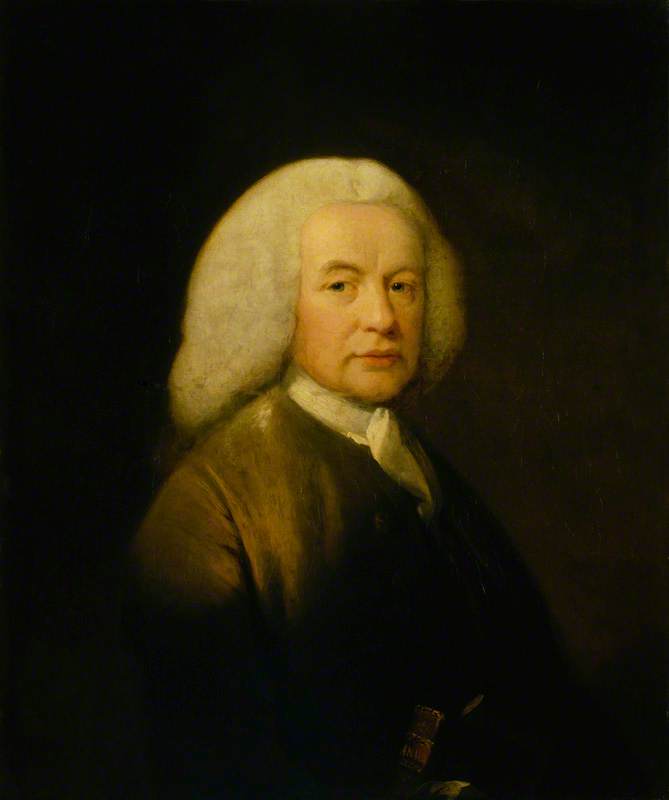


 Edward Eliot
12
 Thomas Gray
13
 Francis Fauquier
14
 John Smeaton
15
 Roger Long
16
 John Dollond -National Maritime Museum
17
 The five sisters
18
 Edmund Spenser
19
 Conversation Piece
20
 Portrait Of A Lady With A Mask And CherriesDulwich Picture Gallery
21
 Philip Stanhope
22
 James BradleyNational Maritime Museum
23
 Dr Richard Russell
24
 A Lady And Gentleman In A Landscape
25
 William WhiteheadNational Portrait Gallery
26
 Sir George Savile
27
 Simon, 1st Earl Harcourt
28
 Edward Macro
29
 Judge Christopher Robinson
30
 Dr Gowin Knight
31
 James Short
32
 Deborah Read Franklin
33
 David Garrick As Romeo At Juliet's Tomb
34
 Portrait of Francis Fauquier, Lieutenant Governor
35
 David Garrick And George Anne Bellamy In ''romeo And Juliet''Yale Center for British Art
36
 David GarrickNational Portrait Gallery
37
 David Garrick, As Romeo, George Anne Bellamy
38
 Portrait Of A Gentleman In Oriental Dress With An
39
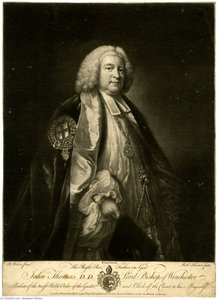 John Thomas Bishop Of Winchester Houston
40
 'mr Nicholas' - A Seated Man With A Dog
41
 Benjamin Franklin1759
De fire motiver, der optræder hyppigst i disse originaler, hver med sit fineste eksempel.
De 6 museer, der rummer flest af malerierne på denne side.
| Museum | By | Værker af Benjamin Wilson | Malerier fra denne liste |
|---|---|---|---|
 National Portrait Gallery |
London | 3 | James Parsons, William Whitehead, David Garrick |
 National Maritime Museum |
London | 2 | John Dollond -, James Bradley |
| Vanderbilt Museum of Art | Nashville | 1 | Portrait of Edward Bridgen |
 Antony House |
1 | Sir William Henry Lyttelton | |
 Dulwich Picture Gallery |
London | 1 | Portrait Of A Lady With A Mask And Cherries |
 Yale Center for British Art |
New Haven | 1 | David Garrick And George Anne Bellamy In ''romeo And Juliet'' |
Hvert dateret originalværk af Benjamin Wilson på denne side er skabt i 1759: her er de mest berømte først.
Vælg et årstal for at se de originale værker.

Portrait of Edward Bridgen, Vanderbilt Museum of Art, Nashville. Derefter følger William Tempest og Portrait of Charles Watson-Wentworth, second.
Portrait of Edward Bridgen, William Tempest, Portrait of Charles Watson-Wentworth, second, Self-portrait, Thomas Gray -, Charles Ingram, Judge Richard Wilson, James Parsons, Sir William Henry Lyttelton og George Parker. Ranglisten ovenfor viser det enkelte værks årstal og museum.
Vores katalog indeholder 41 værker af Benjamin Wilson.
Primært i National Portrait Gallery (London), National Maritime Museum (London) og Vanderbilt Museum of Art (Nashville). Museumslisten ovenfor viser dem alle.
Portraits (5), Men (4) og 18th century (3), fordelt på de 41 værker på denne side.
Neoclassicism, baseret på originalerne på denne side.
James Parsons, William Whitehead og David Garrick: National Portrait Gallery, London har 3 af værkerne på denne side.
Ja, som reproduktion: det originale værk bliver i sit museum, men ethvert maleri på denne side kan males i hånden til dig, bestilt efter behov og malet ét ad gangen, direkte fra maleriets egen side.
In the vibrant intellectual landscape of the eighteenth-century Enlightenment, few figures embodied the era's marriage of aesthetic beauty and scientific inquiry as gracefully as Benjamin Wilson. Born in 1721 to a prosperous clothier family in Leeds, Wilson’s early life was steeped in an environment where craftsmanship and artistry were deeply valued. His formative years were marked by an encounter with the opulent decorations of Jacques Parmentier at Leeds Grammar School, a moment that ignited a lifelong passion for the visual arts. This early spark eventually propelled him from the industrial heart of England to the bustling artistic circles of London, where he would transform from a diligent legal clerk into one of Britain’s most respected painters and philosophers.
Wilson's journey through the London art scene was defined by a relentless pursuit of mastery. Under the guidance of luminaries such as William Hogarth and Lambert, he honed his skills at the St. Martin's Lane Academy, learning to capture the subtle nuances of human character and the dramatic interplay of light. His talent was not merely local; during the late 1740s, Wilson traveled to Dublin, where his success as a portraitist began to flourish. This period of development allowed him to refine a style characterized by a sophisticated use of texture and a profound ability to imbue his subjects with both dignity and psychological depth. His work became a mirror for the era's rising aristocracy, capturing the essence of figures like David Garrick and Sir William Henry Lyttelton with an elegance that spoke to their social standing and intellectual vigor.
What truly distinguishes Benjamin Wilson from his contemporaries was his refusal to confine his intellect to the canvas. He was a man of profound curiosity, viewing the world through both an artistic and a scientific lens. While his hands were busy with the delicate application of oil paint, his mind was engaged in the rigorous debates of natural philosophy. Wilson became a notable figure in the scientific community, particularly through his investigations into electricity and magnetism. He famously championed Isaac Newton’s theory of gravitation-optical ether, standing firm against the prevailing views of Benjamin Franklin, a testament to his independent and courageous intellectual spirit.
This scientific rigor deeply informed his artistic technique. His meticulous observations of natural phenomena—such as his celebrated studies on tourmaline—translated into a painterly approach that prioritized the authentic representation of light and atmosphere. To Wilson, light was not merely a tool for visibility but a subject of physical study. This dual identity allowed him to create portraits that felt remarkably alive, where the sheen of silk or the soft glow of skin was rendered with a precision born from an understanding of the very physics of light. His legacy is thus a rare tapestry woven from two seemingly disparate threads: the emotive power of fine art and the empirical truth of scientific discovery.
The breadth of Wilson's contributions to British art remains a cornerstone of eighteenth-century history. His ability to secure patronage from high-ranking figures, including Prince Edward, allowed him to participate in the highest levels of cultural production. His oeuvre, which includes notable works such as Charles Ingram and James Parsons, showcases a mastery of the portrait genre that helped define the British school of painting during a period of immense transition.
Beyond his individual paintings, Wilson's significance lies in his role as a bridge between eras. He stood at the crossroads of the classical traditions of the past and the burgeoning scientific revolution of the future. His life serves as a poignant reminder of a time when the boundaries between disciplines were fluid, and when the pursuit of beauty was seen as inseparable from the pursuit of truth. Today, we remember Benjamin Wilson not just as a skilled hand with a brush, but as a visionary who sought to illuminate the world, both through the pigment on his canvas and the light of human reason.


