Menu
GRATIS KUNSTRÅDGIVNING

1731 - 1810

Kort om kunstneren

  • Art period: Early Modern
  • Also known as: henry cavendish
  • Lifespan: 79 years
  • Nationality: France
  • Died: 1810
  • Born: 1731, Nice, France
  • Vis flere…
  • Museums on APS:
    • Museo della Radiologia
    • Museo della Radiologia
    • Museo della Radiologia
    • Museo della Radiologia
    • Museo della Radiologia
  • Top 3 works: Torsion balance
  • Top-ranked work: Torsion balance
  • Works on APS: 1
  • Copyright status: Public domain

Kunstquiz

Der er kun ét korrekt svar på hvert spørgsmål.

Spørgsmål 1:
Henry Cavendish is most famously known for his discovery of:
Spørgsmål 2:
What was Henry Cavendish's primary area of scientific study?
Spørgsmål 3:
Which institution did Henry Cavendish serve on the Council of?
Spørgsmål 4:
Cavendish's experiment to measure Earth’s density is commonly referred to as:
Spørgsmål 5:
What was a notable characteristic of Henry Cavendish's personality?

The Enigmatic Mind of Henry Cavendish

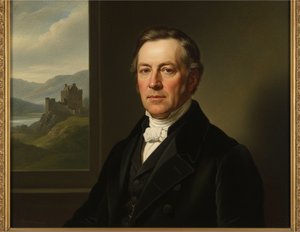
Henry Cavendish, a name perhaps less familiar than those of his contemporaries Lavoisier and Dalton, stands as a monumental figure in the history of science – a quiet revolutionary who fundamentally reshaped our understanding of matter. Born in Nice, France, in 1731, into a lineage steeped in aristocratic privilege, Cavendish’s life was one of deliberate seclusion, yet within those self-imposed boundaries, he conducted experiments that unveiled secrets of the universe previously unimaginable. His story is not one of grand pronouncements or public acclaim, but rather of meticulous observation, painstaking calculation, and an unwavering dedication to unraveling the mysteries of the natural world – a testament to the power of quiet brilliance.

Early Life and Scientific Foundations

Cavendish’s childhood was marked by tragedy; his mother died shortly after his birth, leaving him in the care of his father, Lord Charles Cavendish, a man deeply involved in scientific pursuits and a member of the Royal Society. This early exposure to science, coupled with a somewhat unconventional upbringing – he attended Newcome's School before progressing to Cambridge University without taking a degree (a common practice for those of his social standing), and later residing with his father in London—laid the groundwork for his future work. Unlike many of his peers, Cavendish eschewed a career in politics or the military, dedicating himself entirely to scientific investigation. His family’s wealth provided him with the resources to establish a private laboratory, a sanctuary where he could pursue his research largely undisturbed by the demands of society. This isolation fostered an intensely focused and remarkably precise approach to experimentation – a hallmark of his entire career.

The Discovery of Hydrogen and Torsion Balance Experiments

Cavendish’s most enduring legacy rests on two pivotal achievements: the discovery of hydrogen and his groundbreaking use of the torsion balance. Initially, he termed the newly identified gas “inflammable air,” a description reflecting its propensity to burn in oxygen-rich environments. However, it was Antoine Lavoisier who ultimately recognized the element's significance, coining the name "hydrogen" from the Greek words meaning ‘water-forming.’ Crucially, Cavendish’s work extended far beyond simply identifying this new substance; he meticulously characterized its properties – its density, its ability to extinguish flames, and its role in forming water upon combustion. His most celebrated experiment involved the use of a torsion balance—an instrument designed to measure extremely small forces—to determine the density of Earth. This ambitious undertaking, often referred to as the “Cavendish Experiment,” relied on precisely measuring the slight deflection of a suspended rod when a known weight is applied. By carefully analyzing this deflection, Cavendish was able to calculate the mass and radius of the Earth with an accuracy that astonished his contemporaries. This experiment not only provided a remarkably precise value for the gravitational constant but also demonstrated Cavendish’s extraordinary skill in experimental design and data analysis.

Beyond Hydrogen: A Broad Spectrum of Scientific Inquiry

While the discovery of hydrogen remains his most famous achievement, Cavendish's scientific interests were remarkably diverse. He investigated the composition of atmospheric air, meticulously analyzing its components and their proportions. He explored the properties of various gases, conducted experiments on the synthesis of water, and even ventured into the realm of electrical phenomena, developing a mechanical theory of heat – a significant contribution to thermodynamics at a time when the field was still in its infancy. His work extended to the study of chemical reactions, including the formation of nitric acid, and he made important observations about the behavior of metals. His meticulous approach and unwavering commitment to accuracy established him as a leading figure in 18th-century science.

Legacy and Historical Significance

Henry Cavendish’s impact on scientific thought is profound and often understated. He was a pioneer in experimental chemistry and physics, employing rigorous methodology and precise instrumentation—qualities that would become hallmarks of the modern scientific method. His work laid the foundation for subsequent research into atomic theory, thermodynamics, and the nature of matter itself. Despite his reclusive personality and lack of public recognition during his lifetime, Cavendish’s contributions were eventually acknowledged through numerous accolades, including the Copley Medal in 1766 – a testament to the enduring value of his scientific achievements. Today, the Cavendish Laboratory at Cambridge University bears his name, solidifying his place as one of the most influential scientists of all time—a quiet giant whose meticulous observations continue to resonate within the halls of science.