The Dawn of Connection: Siemens & Halske and the Electrical Revolution
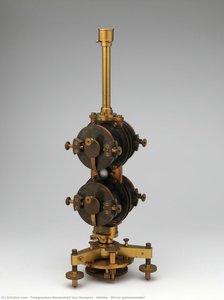
The story of Siemens & Halske is not one of a single artist’s hand, but rather the collective vision of pioneering engineers who fundamentally altered the course of 19th-century technology. Founded in Berlin in 1847 by Werner von Siemens and Johann Georg Halske, the firm emerged at a pivotal moment – an era hungry for faster communication and increasingly captivated by the possibilities of electricity. It wasn’t born from artistic impulse in the traditional sense, yet their work *was* profoundly creative, translating scientific principles into tangible tools that reshaped society. Their initial focus, the manufacturing of electrical telegraphs based on Charles Wheatstone's 1837 patent, was deceptively simple. However, it represented a leap forward, promising to shrink distances and connect people in ways previously unimaginable. The very first projects – like the construction of one of Europe’s earliest telegraph lines stretching from Berlin to Frankfurt am Main in 1848 – were acts of faith in a future powered by electrical signals. This wasn't merely about building machines; it was about weaving a new network across the continent, a nervous system for commerce, politics, and personal correspondence.
From Telegraphs to Technological Titans
The early success with telegraphy laid the foundation for an ambitious expansion into nearly every facet of electrical engineering. Siemens & Halske didn’t remain confined to replicating Wheatstone's designs; they rapidly began innovating, refining existing technologies and venturing into new territories. The company quickly became synonymous with progress, tackling challenges in areas like incandescent lighting – a direct competitor to the burgeoning gas industry – and the development of powerful DC motors. This diversification wasn’t accidental. Werner von Siemens possessed an exceptional ability to foresee future needs and steer his company towards emerging markets. However, the path wasn't without competition. The rise of
Allgemeine Elektrizitäts-Gesellschaft (AEG), founded by Emil Rathenau in 1887, created a formidable rival, sparking decades of intense innovation and market rivalry that ultimately benefited the field as a whole. Both companies pushed the boundaries of what was possible, driving down costs and improving efficiency. The internal dynamics of Siemens & Halske also shifted over time; Johann Georg Halske departed the company in 1867, leaving Werner von Siemens to guide its trajectory for another two decades until his retirement in 1890.
Siemensstadt: A Crucible of Innovation
The physical embodiment of Siemens & Halske’s growth was
Siemensstadt, a vast new industrial complex built in Berlin. More than just a factory, it became a self-contained community – a testament to the company's commitment to its workforce and a deliberate attempt to foster an environment conducive to innovation. This sprawling site wasn’t simply about production; it was designed to attract the brightest minds, providing housing, education, and recreational facilities. The creation of Siemensstadt signaled a new era for industrial enterprises, recognizing that technological advancement required not only capital investment but also a dedicated and skilled labor force. It became a symbol of German engineering prowess, attracting talent from across Europe and solidifying Siemens & Halske’s position as a global leader.
A Legacy Forged in Wire and Current
The historical significance of Siemens & Halske extends far beyond the specific products they manufactured. They were instrumental in establishing the infrastructure for modern communication networks, powering industries, and illuminating cities. Their early work with telegraphs laid the groundwork for the telephone, radio, and ultimately, the internet. The development of efficient DC motors revolutionized manufacturing processes, enabling mass production and driving economic growth.
- Their contributions to incandescent lighting challenged established energy paradigms.
- The company’s commitment to research and development fostered a culture of continuous improvement.
- Siemensstadt served as a model for industrial communities worldwide.
While the company has evolved significantly since its founding, undergoing numerous transformations and mergers, the spirit of innovation that defined Siemens & Halske remains. They weren’t artists in the traditional sense, but their work – forged in wire and current – left an indelible mark on the world, connecting people, powering progress, and shaping the very fabric of modern life. Their story is a powerful reminder that technological advancement can be a profoundly creative endeavor, driven by vision, ingenuity, and a relentless pursuit of a better future.