


1


Opdateret november 2026 · rangeret efter vores popularitetsscore (søgninger, besøg og ordrer for hvert værk) · 63 værker af Richard Barrett Davis i vores katalog
Kort sagt
The Coronation Procession of William IV (I) (1831) er det maleri af Richard Barrett Davis, der vækker mest opsigt; originalen findes på Buckingham Palace, London. Derefter falder blikket på Star (1831) og 'Maria' held by a Groom with James Robinson and a Pony (1828). Blandt de 63 værker af Richard Barrett Davis i vores katalog er disse 63 de mest berømte, hver især et unikt originalværk præsenteret med sit årstal, sit museum og årsagen til dets tidløse betydning.


 The Coronation Procession of William IV (IX)1831 · Buckingham Palace
12
 The Coronation Procession of William IV (VIII)1831 · Buckingham Palace
13
 The Coronation Procession of William IV (VI)1831 · Buckingham Palace
14
 The Coronation Procession of William IV (V)1831 · Buckingham Palace
15
 The Coronation Procession of William IV (IV)1831 · Buckingham Palace
16
 The Coronation Procession of William IV (III)1831 · Buckingham Palace
17
 The Coronation Procession of William IV (II)1831 · Buckingham Palace
18
 A Cream Horse1831 · Royal Collection
19
 A Bay Carriage-Horse1831 · Royal Collection
20
 Dew Drop1831 · Royal Collection
21
 A Cream Carriage Horse1831 · Royal Collection
22
 Rhesus1831 · Royal Collection
23
 Uxbridge1838 · Royal Collection
24
 Malpeinado1846 · Royal Collection
25
 Out hunting,1841
26
 The Funeral Procession Of The Much Beloved And Regretted Princess Charlotte Of Wales And Of Saxe Coburg
27
 The Chase
28
 Tally Ho
29
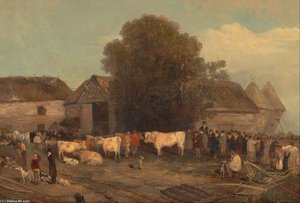 The Farm SaleYale Center for British Art
30
 Gone To Earth
31
 Church, with 'old' sam darling up
32
 Sol Legare2006 · International African American Museum
33
 Hunter's Annual
34
 The Sporting Sweep
35
 Foxhunting- The Few Not FunkersYale Center for British Art
36
 W. Head, Huntsman To The Donnington Hounds,
37
 Going out; hunting in cover; the chase; and the death, by t. sutherland
38
 Full Cry -
39
 A Huntsman Encouraging HoundsAnglesey Abbey
40
 Equestrian Scene
41
 Foxhunting- Road Riders Or FunkersYale Center for British Art
42
 The Old Surrey Hounds
43
 Huntsman To King George Iii's Harriers, With Hounds Drawing Covert
44
 Hunting Scene - A Huntsman Casting HoundsAnglesey Abbey
45
 Calling Hounds Out Of Cover
46
 W. Sebright, Huntsman To The Milton Hounds
47
 Hunting Scene - A Fox Followed By Hounds And Huntsmen In Full CryAnglesey Abbey
48
 Full Cry
49
 Going To Cover
50
 Hunting Scene - A Huntsman Encouraging Hounds Through A GateAnglesey Abbey
51
 Study Of A Group Of Foxhounds
52
 Cattle
53
 Curricle HorsesKnightshayes Court
54
 A Hunter In A Stable
55
 A Huntsman And Hounds In A Wooded Landscape
56
 At The Horsefair
57
 Horseman And Mount
58
 Queen Victoria, King Leopold Of The Belgians, And Their Suites Riding Out In Windsor Great Park
59
 Near Virginia Water
60
 A bay hunter in a stable
61
 A huntsman with his hunter in a landscape
62
 George Mountford, Huntsman To The QuornYale Center for British Art
63
 The Royal Hunt With The Master Of The Royal Buckhounds, The Artist's Brother, Charles F. DavisAnglesey Abbey
De fire motiver, der optræder hyppigst i disse originaler, hver med sit fineste eksempel.
De 7 museer, der rummer flest af malerierne på denne side.
| Museum | By | Værker af Richard Barrett Davis | Malerier fra denne liste |
|---|---|---|---|
 Royal Collection |
London | 12 | Star, 'Maria' held by a Groom with James Robinson and a Pony, Julius |
 Buckingham Palace |
London | 10 | The Coronation Procession of William IV (I), The Coronation Procession of William IV (VII), The Coronation Procession of William IV (X) |
 Anglesey Abbey |
5 | A Huntsman Encouraging Hounds, Hunting Scene - A Huntsman Casting Hounds, Hunting Scene - A Fox Followed By Hounds And Huntsmen In Full Cry | |
 Yale Center for British Art |
New Haven | 4 | The Farm Sale, Foxhunting- The Few Not Funkers, Foxhunting- Road Riders Or Funkers |
 Upton House |
Banbury | 1 | Thomas Sebright With The Fitzwilliam Hounds |
 International African American Museum |
Charleston | 1 | Sol Legare |
 Knightshayes Court |
Tiverton | 1 | Curricle Horses |
Vælg et årti for at se det originale værk, der definerer det.
The Coronation Procession of William IV (I) (1831), Buckingham Palace, London. Derefter følger Star (1831) og 'Maria' held by a Groom with James Robinson and a Pony (1828).
49 år gammel: The Coronation Procession of William IV (I) er fra 1831, og Richard Barrett Davis blev født i 1782.
The Coronation Procession of William IV (I), Star, 'Maria' held by a Groom with James Robinson and a Pony, Julius, Thomas Sebright With The Fitzwilliam Hounds, The Funeral Procession of Queen Charlotte, The Farm Sale,, The Nubian Giraffe, The Coronation Procession of William IV (VII) og The Coronation Procession of William IV (X). Ranglisten ovenfor viser det enkelte værks årstal og museum.
Vores katalog indeholder 63 værker af Richard Barrett Davis, dateret fra 1818 til 1846.
Primært i Royal Collection (London), Buckingham Palace (London) og Anglesey Abbey. Museumslisten ovenfor viser dem alle.
I 1830s: 17 af de 63 værker på denne side blev skabt dengang, herunder The Coronation Procession of William IV (I).
På denne side er det tidligste The Funeral Procession of Queen Charlotte (1818) og det seneste Julius (1846).
Hunting (7), Hunting scene (6) og Rural landscape (6), fordelt på de 63 værker på denne side.
Neoclassicism, baseret på originalerne på denne side.
Star, 'Maria' held by a Groom with James Robinson and a Pony og Julius: Royal Collection, London har 12 af værkerne på denne side.
In the golden age of British sporting art, few names resonate with as much prestige and anatomical precision as Richard Barrett Davis. Born in 1782 in the quiet town of Watford, Hertfordshire, Davis was destined for a life intertwined with the grandeur of the English countryside and the nobility of the equine form. His early years were steeped in the atmosphere of the hunt; his father served as a huntsman to King George III, an association that likely planted the seeds of his lifelong fascination with the spirited movement of horses and the rugged beauty of the wild. This connection to the monarchy would later manifest in a career defined by royal patronage and a profound ability to capture the majesty of both domesticated and untamed creatures.
Davis’s artistic evolution was shaped by a rigorous classical education, beginning under the watchful eyes of masters such as William Evans of Eton and William Beechey. These mentors provided him with a formidable foundation in technique, which he further refined upon entering the prestigious Royal Academy in 1802. His training was not merely about the application of pigment to canvas but an immersion into the study of light, form, and the subtle nuances of animal behavior. As his skills matured, Davis moved beyond simple documentation, embracing the emotional depth of the Romantic movement. His landscapes were never static; they breathed with atmospheric perspective and a delicate tonal gradation that suggested the damp mist of an English morning or the heat of a summer afternoon.
The trajectory of Davis’s career reached a magnificent zenith in 1831, when he was appointed as the official animal painter to King William IV. This appointment was more than a professional milestone; it was a validation of his status as one of the premier equestrian artists of the Victorian era. Through this royal connection, Davis gained unparalleled access to the finest specimens of the Royal Stud, allowing him to produce works like Mares and Foals from the Royal Stud (1808) that celebrated the strength and grace of the English Thoroughbred. His ability to translate the power of a galloping horse and the delicate vulnerability of a foal onto canvas earned him a place in the hearts of the aristocracy.
Beyond the stable, Davis’s repertoire expanded into the thrilling narratives of the hunt and the dramatic tension of the wild. His works often captured the high-stakes energy of British sporting life, featuring:
The enduring significance of Richard Barrett Davis lies in his seamless blend of scientific accuracy and romantic imagination. While he was a meticulous observer of anatomy—a trait essential for any successful animal painter—he was also deeply influenced by the classical compositions of Claude Lorrain and Nicolas Poussin. This influence allowed him to elevate his subjects from mere sporting illustrations to profound works of art that commanded respect in the galleries of the Society of British Artists, which he joined in 1829.
As we look back upon his life, which concluded in 1854, we see an artist who bridged the gap between the Enlightenment's focus on observation and the Victorian era's passion for grandeur. His paintings remain vital windows into a bygone era of British history, preserving the elegance of the hunt and the untamed spirit of the landscape. Through his brush, the horses of the Royal Stud and the hounds of the English countryside continue to gallop through the halls of art history, forever captured in their most majestic moments.
