


1


Opdateret november 2026 · rangeret efter vores popularitetsscore (søgninger, besøg og ordrer for hvert værk) · 6 værker af Peter Burnitz i vores katalog
Kort sagt
Destroyed House (1854) er det maleri af Peter Burnitz, der vækker mest opsigt; originalen findes på Städel Museum, Frankfurt. Derefter falder blikket på Waldbach (1849) og Landscape with View of Frankfurt am Main (1867). Blandt de 6 værker af Peter Burnitz i vores katalog er disse 5 de mest berømte, hver især et unikt originalværk præsenteret med sit årstal, sit museum og årsagen til dets tidløse betydning.
De 3 museer, der rummer flest af malerierne på denne side.
| Museum | By | Værker af Peter Burnitz | Malerier fra denne liste |
|---|---|---|---|
 Bavarian State Painting Collections |
München | 2 | Forest Landscape (near Barbizon), Landscape with Water |
 Städel Museum |
Frankfurt | 1 | Destroyed House |
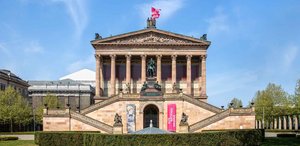 Alte Nationalgalerie |
Berlin | 1 | Landscape with View of Frankfurt am Main |
Vælg et årti for at se det originale værk, der definerer det.
Destroyed House (1854), Städel Museum, Frankfurt. Derefter følger Waldbach (1849) og Landscape with View of Frankfurt am Main (1867).
30 år gammel: Destroyed House er fra 1854, og Peter Burnitz blev født i 1824.
Vores katalog indeholder 6 værker af Peter Burnitz, dateret fra 1849 til 1867.
Primært i Bavarian State Painting Collections (München), Städel Museum (Frankfurt) og Alte Nationalgalerie (Berlin). Museumslisten ovenfor viser dem alle.
I 1860s: 3 af de 5 værker på denne side blev skabt dengang, herunder Landscape with View of Frankfurt am Main.
På denne side er det tidligste Waldbach (1849) og det seneste Landscape with View of Frankfurt am Main (1867).
Forest Landscape (near Barbizon) og Landscape with Water: Bavarian State Painting Collections, München har 2 af værkerne på denne side.
In the mid-nineteenth century, a profound transformation occurred within the heart of German art, as the rigid structures of classical tradition began to yield to the atmospheric whispers of nature. At the center of this quiet revolution stood Carl Peter Burnitz, an artist whose life journey was as much a pursuit of aesthetic truth as it was a departure from a destined legal career. Born in Frankfurt in 1824, Burnitz’s early years were marked by the sudden weight of orphanhood, leaving him under the guardianship of his uncle, the architect Rudolf Burnitz. This early exposure to architectural precision and structural form likely laid the groundwork for the disciplined eye he would later apply to the untamed beauty of the natural world.
Burnitz’s path was initially paved with the heavy volumes of law. After rigorous studies at the Universities of Berlin, Göttingen, and Heidelberg—where he eventually earned his Doctor of Law—he found himself standing at a crossroads common to many great souls: the tension between societal expectation and creative calling. While his legal training provided him with a sharp, analytical intellect, it was the sun-drenched landscapes of Italy that truly awakened his spirit. His travels through Rome, Naples, and Palermo acted as a catalyst, replacing the dry logic of jurisprudence with a vibrant, sensory engagement with light and shadow.
The true metamorphosis of Burnitz began when he abandoned the courtroom for the canvas, a transition facilitated by the guidance of fellow artists. Following a transformative trip through Madrid and Algiers, where he met the painter Fritz Bamberger, Burnitz sought the artistic epicenter of Europe: Paris. It was here that his brushwork began to absorb the soul of the Barbizon School. Through the influence of lithographers and painters like Karl Bodmer and Emile Lambinet, Burnitz learned to look past the mere representation of scenery to capture the very breath of the landscape.
This period of development was characterized by an intimate dialogue with nature. He moved away from the grand, staged vistas of the past toward a more humble, yet deeply emotional, observation of the earth. His work began to reflect the subtle nuances of atmosphere—the way mist clings to a forest path or how light filters through a dense canopy. This mastery of tone and texture allowed him to translate the fleeting moments of the natural world into enduring compositions that resonated with the burgeoning Romantic movement.
Upon returning to Germany, Burnitz became a vital figure in the Kronberg artist colony. Alongside contemporaries such as Anton Burger and Jakob Fürchtegott Dielmann, he helped cultivate a regional style that celebrated the rugged beauty of the Taunus mountains. His paintings from this era, such as his evocative depictions of autumn landscapes and forest ponds, demonstrate a sophisticated command over organic textures and seasonal shifts.
Burnitz’s later years were marked by both professional success and a deep connection to the artistic community in Frankfurt. Though he achieved enough prosperity to purchase a grand residence, he famously chose to let it serve as a home for his peers, such as Eduard von Steinle, embodying a spirit of communal devotion to art. His legacy remains etched in the quiet dignity of his landscapes:
When Peter Burnitz passed away in 1886, he left behind more than just a collection of landscapes; he left a testament to the courage required to follow one's true vocation. His works, now cherished in private collections and museums like the Städel Museum, continue to invite viewers into a world where the landscape is not merely seen, but deeply felt.


