Portræt af Orthodox Icons

De 42 mest berømte Orthodox Icons-malerier, hver og en unik

Opdateret november 2026 · rangeret efter vores popularitetsscore (søgninger, besøg og ordrer for hvert værk) · 42 værker af Orthodox Icons i vores katalog

Kort sagt

St George and the Youth of Mytilene (1250) er det maleri af Orthodox Icons, der vækker mest opsigt; originalen findes på British Museum, London. Derefter falder blikket på The Mother of God of Tenderness (Theotokos of God of Belozersk) (1250) og Glorification of the Cross (back side of 'Christ Acheiropoietos') (1200). Blandt de 42 værker af Orthodox Icons i vores katalog er disse 42 de mest berømte, hver især et unikt originalværk præsenteret med sit årstal, sit museum og årsagen til dets tidløse betydning.

Byzantine Flest værker: Det Statlige Russiske Museum

Top 10 malerier af Orthodox Icons, set gennem galleriets øjne

1
St George and the Youth of Mytilene (1250) af Orthodox Icons

St George and the Youth of Mytilene

1250 · Tempera On Panel · British Museum, London

To encounter this work from 1250 is to step into a specific, sacred moment of the thirteenth century. This Byzantine icon depicts St George intervening to rescue the youth of Mytilene from the shadow of slavery. The composition centers on the saint mounted upon a horse, his presence commanding yet composed. He wears a blue robe, a hue often associated with the human condition, and carries a shield as he…

2
The Mother of God of Tenderness (Theotokos of God of Belozersk) (1250) af Orthodox Icons

The Mother of God of Tenderness (Theotokos of God of Belozersk)

1250 · Tempera On Panel · Det Statlige Russiske Museum, Sankt Petersborg

The Mother of God of Tenderness (Theotokos of God of Belozersk) emerges from the shadows of history, a profound presence created by Orthodox Icons. Dating from about 1250, this sacred work belongs to the Vologda school of icon painting, a tradition that breathes life into the wooden panel through stylized grace. It exists as a vital part of the Virgin Mary, Mother of God series, capturing a moment of divine…

3
Glorification of the Cross (back side of 'Christ Acheiropoietos') (1200) af Orthodox Icons

Glorification of the Cross (back side of 'Christ Acheiropoietos')

1200 · Tempera On Panel

Created between circa 1150 and 1200, this tempera on wood panel belongs to the Novgorod school of icon painting. It represents a specific moment in the Passion of Jesus, rendered with the disciplined precision of Byzantine iconography. The composition centers on a large, imposing cross, flanked by two kneeling angels and topped by winged attendants. This arrangement creates a layered, dynamic structure that directs the eye toward the central symbol…

4
Deesis from the Church of Nikola of Kozhe (1300) af Orthodox Icons

Deesis from the Church of Nikola of Kozhe

1300 · Tempera On Panel · Det Statlige Russiske Museum, Sankt Petersborg

The Deesis from the Church of Nikola of Kozhe emerges from the shadows of the thirteenth century, a profound relic of ancient Russian devotion. Created by Orthodox Icons, this work carries the weight of centuries within its wooden frame. It originates from the Pskov church of St. Nicholas from the Skin, a place where the spiritual and the physical once met in quiet prayer. The piece dates to about 1300,…

5
Theotokos of Kholm (1125) af Orthodox Icons

Theotokos of Kholm

1125 · Tempera · Museet for Volyn Ikon, Lutsk

The surface of the Theotokos of Kholm bears the heavy weight of centuries. Cracks spiderweb across the face of the Virgin Mary, tracing the slow decay of the canvas support. Beneath the flaking layers of paint, the earth-toned pigments of ochre and umber struggle to remain visible. The image is a quiet struggle between the material and the divine. Time has etched itself into the very texture of the work,…

6
Christ the Ancient of Days (detail Annunciation of Ustyug) (1140) af Orthodox Icons

Christ the Ancient of Days (detail Annunciation of Ustyug)

1140 · Tempera On Panel

The golden surface shimmers with the weight of centuries, a textured expanse of aged gesso that feels less like a flat plane and more like a window into a celestial realm. Within this radiant glow, a divine encounter unfolds. An angel, caught in a moment of sacred messenger-ship, descends through a halo of deep red and gold. Below, a seated figure rests in quiet humility, her form rendered with the…

7
Virgin Mary on the Throne (1150) af Orthodox Icons

Virgin Mary on the Throne

1150 · Carved

Virgin Mary on the Throne by Orthodox Icons is a religious relief carving dating from about 1150. The work presents the Virgin Mary enthroned with the Christ Child, a central subject in Orthodox Christian devotion. This depiction functions as a devotional image intended for contemplation and prayer.

8
The Savior of Golden Hair (1225) af Orthodox Icons

The Savior of Golden Hair

1225 · Tempera On Panel

The portrait presents a close-up view of Christ, positioned centrally within the frame. The composition utilizes a strong frontal perspective, focusing on the facial features and the surrounding halo. The background consists of a dense arrangement of geometric shapes, including circles, squares, and rectangles, rendered in shades of dark blue, green, and red. These shapes create a structured, non-naturalistic backdrop behind the figure. The lines defining the contours of the…

9
Doubting Thomas (1225) af Orthodox Icons

Doubting Thomas

1225 · Carved · Nationalmuseet i Warszawa, Warszawa

In this work, titled Doubting Thomas by Orthodox Icons, we encounter a profound moment of spiritual transition. The piece depicts the biblical scene of Doubting Thomas, capturing the precise instant of the encounter between the apostle and the resurrected Christ. It is a quiet study of the tension between human doubt and divine revelation. Through this interaction, the artist explores the movement from skepticism toward a settled belief, specifically as…

10
Hodegetria of Ryazan (1300) af Orthodox Icons

Hodegetria of Ryazan

1300 · Tempera On Panel · The Ryazan State Regional Art Museum, Ryazan

The Hodegetria of Ryazan by Orthodox Icons presents a solemn encounter with the divine. In this Orthodox Christian depiction, the Virgin Mary holds the Christ Child at her side. Her hand moves with a specific purpose, pointing toward the infant as the way. This gesture defines the Hodegetria type, directing the gaze of the observer toward the source of salvation. The subject matter is rooted deeply in Christian theology, focusing…

Orthodox Iconss berømte malerier, nummer 11 til 42

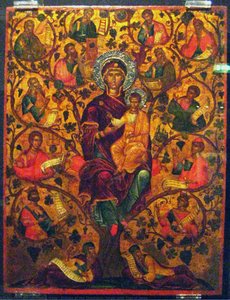
11Theotokos of Saint Maksim's Vision (1305) af Orthodox IconsTheotokos of Saint Maksim's Vision1305 · Vladimir-Suzdal Museum Reserve 12The Saviour of Furious Eye (1400) af Orthodox IconsThe Saviour of Furious Eye1400 · Det Statlige Russiske Museum 13Saint Nikita slaying the demon (1843) af Orthodox IconsSaint Nikita slaying the demon1843 · Det Statlige Russiske Museum 14The Saviour of Furious Eye (1575) af Orthodox IconsThe Saviour of Furious Eye1575 15Holy Wisdom (1618) af Orthodox IconsHoly Wisdom1618 16Entrance to Jerusalem. From the Festive Row of the Main Iconostasis of the Assumption Cathedral of the Kyiv-Pechersk Lavra (1729) af Orthodox IconsEntrance to Jerusalem. From the Festive Row of the Main Iconostasis of the Assumption Cathedral of the Kyiv-Pechersk Lavra1729 · National Art Museum of Ukraine 17Composite Icon with the Crucifixion, Christ, Saints and Gospel Scenes (1050) af Orthodox IconsComposite Icon with the Crucifixion, Christ, Saints and Gospel Scenes1050 · Hermitage Museum 18Saint Nikita slaying the demon (1850) af Orthodox IconsSaint Nikita slaying the demon1850 19Annunciation of Ustyug (1140) af Orthodox IconsAnnunciation of Ustyug1140 20Hodegetria (1150) af Orthodox IconsHodegetria1150 · Hilandar-klosteret 21Theotokos of Vladimir (1150) af Orthodox IconsTheotokos of Vladimir1150 22Deesis from Dormition Cathedral in Moscow (1200) af Orthodox IconsDeesis from Dormition Cathedral in Moscow1200 23Christ Acheiropoietos (made Without Hands) (1200) af Orthodox IconsChrist Acheiropoietos (made Without Hands)1200 24Demetrius of Thessaloniki (1225) af Orthodox IconsDemetrius of Thessaloniki1225 25Icon of Sts. Peter and Paul from Belozersk (1230) af Orthodox IconsIcon of Sts. Peter and Paul from Belozersk1230 · Det Statlige Russiske Museum 26Our Lady of the Sign from Zverin Monastery (front side) (1250) af Orthodox IconsOur Lady of the Sign from Zverin Monastery (front side)1250 27Synaxis of the Twelve Apostles (1300) af Orthodox IconsSynaxis of the Twelve Apostles1300 28St. Basil of Caesarea and Prince Vasili III of Russia (1575) af Orthodox IconsSt. Basil of Caesarea and Prince Vasili III of Russia1575 29St. Simeon Stylites with Scenes from His Life (1575) af Orthodox IconsSt. Simeon Stylites with Scenes from His Life1575 30Virgin (Theotokos) and Child between Saints Theodore and George af Orthodox IconsVirgin (Theotokos) and Child between Saints Theodore and GeorgeSankt Katarina-klosteret 31Praises of the Theotokos. Virgin with Tree of Jesse (1600) af Orthodox IconsPraises of the Theotokos. Virgin with Tree of Jesse1600 32Theotokos of Azov (1700) af Orthodox IconsTheotokos of Azov1700 33Mother of God, Helping the Kinship (1750) af Orthodox IconsMother of God, Helping the Kinship1750 34Archangel Michael, slaying the Shakers, saints Sisinius and Maruf, with the martyrdom of Sisinius (1831) af Orthodox IconsArchangel Michael, slaying the Shakers, saints Sisinius and Maruf, with the martyrdom of Sisinius1831 35Holy Wisdom (1850) af Orthodox IconsHoly Wisdom1850 36Alexander Nevsky (1895) af Orthodox IconsAlexander Nevsky1895 37Saint Christopher and Saint George (Macedonia) af Orthodox IconsSaint Christopher and Saint George (Macedonia) 38Thaddeus of Edessa (Thaddeus of the Seventy Disciples) af Orthodox IconsThaddeus of Edessa (Thaddeus of the Seventy Disciples)Sankt Katarina-klosteret 39Ss.Sergius and Bacchus af Orthodox IconsSs.Sergius and BacchusMuseum of Western and Oriental Art 40Blachernitissa (Theotokos of Blachernae) af Orthodox IconsBlachernitissa (Theotokos of Blachernae) 41Apa Abraham af Orthodox IconsApa AbrahamBode Museum 42Theotokos of the Caves (Svensk) with the Monks Anthony and Theodosius of the Caves (1288) af Orthodox IconsTheotokos of the Caves (Svensk) with the Monks Anthony and Theodosius of the Caves1288 · Tretyakov Gallery

Motiverne, der fangede Orthodox Iconss blik

De fire motiver, der optræder hyppigst i disse originaler, hver med sit fineste eksempel.

De museer, der udstiller Orthodox Iconss originalværker

De 8 museer, der rummer flest af malerierne på denne side.

Museum By Værker af Orthodox Icons Malerier fra denne liste
Det Statlige Russiske Museum, Sankt PetersborgDet Statlige Russiske Museum Sankt Petersborg 5 The Mother of God of Tenderness (Theotokos of God of Belozersk), Deesis from the Church of Nikola of Kozhe, The Saviour of Furious Eye
Sankt Katarina-klosteret, Saint CatherineSankt Katarina-klosteret Saint Catherine 2 Virgin (Theotokos) and Child between Saints Theodore and George, Thaddeus of Edessa (Thaddeus of the Seventy Disciples)
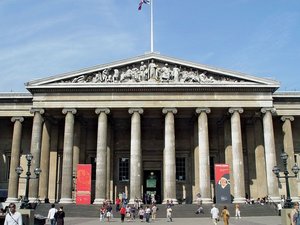
British Museum, LondonBritish Museum London 1 St George and the Youth of Mytilene
Museet for Volyn Ikon, LutskMuseet for Volyn Ikon Lutsk 1 Theotokos of Kholm
Nationalmuseet i Warszawa, WarszawaNationalmuseet i Warszawa Warszawa 1 Doubting Thomas
The Ryazan State Regional Art Museum, RyazanThe Ryazan State Regional Art Museum Ryazan 1 Hodegetria of Ryazan
Vladimir-Suzdal Museum Reserve, VladimirVladimir-Suzdal Museum Reserve Vladimir 1 Theotokos of Saint Maksim's Vision
National Art Museum of Ukraine, KyivNational Art Museum of Ukraine Kyiv 1 Entrance to Jerusalem. From the Festive Row of the Main Iconostasis of the Assumption Cathedral of the Kyiv-Pechersk Lavra

Orthodox Icons gennem årtierne: ét unikt originalværk til hver

Værker per årti

Vælg et årti for at se det originale værk, der definerer det.

Orthodox Iconss malerier: spørgsmål til galleriet

Hvad er det mest berømte værk af Orthodox Icons?Vis svaret

St George and the Youth of Mytilene (1250), British Museum, London. Derefter følger The Mother of God of Tenderness (Theotokos of God of Belozersk) (1250) og Glorification of the Cross (back side of 'Christ Acheiropoietos') (1200).

Hvilke ti malerier af Orthodox Icons er de mest berømte?Vis svaret

St George and the Youth of Mytilene, The Mother of God of Tenderness (Theotokos of God of Belozersk), Glorification of the Cross (back side of 'Christ Acheiropoietos'), Deesis from the Church of Nikola of Kozhe, Theotokos of Kholm, Christ the Ancient of Days (detail Annunciation of Ustyug), Virgin Mary on the Throne, The Savior of Golden Hair, Doubting Thomas og Hodegetria of Ryazan. Ranglisten ovenfor viser det enkelte værks årstal og museum.

Hvor mange værker af Orthodox Icons er kendt?Vis svaret

Vores katalog indeholder 42 værker af Orthodox Icons, dateret fra 1050 til 1895.

Hvor kan de mest berømte originaler af Orthodox Icons ses?Vis svaret

Primært i Det Statlige Russiske Museum (Sankt Petersborg), Sankt Katarina-klosteret (Saint Catherine) og British Museum (London). Museumslisten ovenfor viser dem alle.

I hvilken periode skabte Orthodox Icons sine mest kendte malerier?Vis svaret

I 1300s: 4 af de 42 værker på denne side blev skabt dengang, herunder Deesis from the Church of Nikola of Kozhe.

Hvilket berømt maleri af Orthodox Icons er det tidligste, og hvilket er det seneste?Vis svaret

På denne side er det tidligste Composite Icon with the Crucifixion, Christ, Saints and Gospel Scenes (1050) og det seneste Alexander Nevsky (1895).

Hvilke motiver foretrak Orthodox Icons?Vis svaret

Woman (11), Child (9) og Halo (9), fordelt på de 42 værker på denne side.

Hvilke materialer brugte Orthodox Icons mest til sine malerier?Vis svaret

Tempera On Panel, for 20 af de 42 værker på denne side.

Hvilken stilart tilhører værkerne fra Orthodox Icons?Vis svaret

Byzantine, baseret på originalerne på denne side.

Hvilke originalværker af Orthodox Icons kan jeg se på Det Statlige Russiske Museum?Vis svaret

The Mother of God of Tenderness (Theotokos of God of Belozersk), Deesis from the Church of Nikola of Kozhe og The Saviour of Furious Eye: Det Statlige Russiske Museum, Sankt Petersborg har 5 af værkerne på denne side.

Orthodox Icons: et portræt af kunstneren

The Eternal Window: The Sacred Tradition of Orthodox Icons

To gaze upon an Orthodox icon is not merely to observe a painting, but to encounter a window into the eternal. This profound tradition of religious art, rooted deeply in the soil of Byzantine Christianity, transcends the boundaries of time and geography, stretching from the ancient heart of Constantinople across the vast landscapes of Eastern Europe and beyond. Unlike the Western Christian tradition, which often seeks to capture the tangible realism of the human form and the dramatic narratives of earthly life, the art of the iconographer strives for something far more elusive: spiritual contemplation. The goal is not to replicate the physical world with photographic accuracy, but to illuminate the sacred mysteries of faith, evoking divine grace through a language of stylized symbols and luminous textures.

The origins of this venerable art form are found in the early centuries of the Christian era, drawing inspiration from Jewish traditions of depicting God’s glory and the exquisite beauty of illuminated manuscripts from Alexandria and Jerusalem. As the Byzantine Empire established itself as a beacon of Christian culture, icon painting blossomed into a highly disciplined craft. The artists, or iconographers, adhered to strict theological canons, believing that the divine could only be properly expressed through forms that transcended earthly limitations. Through the use of specific proportions and a unique perspective, they created a visual theology where every color, line, and gesture serves as a vessel for the holy.

A Legacy of Divine Light and Symbolism

The technical mastery of Orthodox iconography is inseparable from its spiritual purpose. The use of gold leaf is perhaps the most striking element, acting as more than mere decoration; it represents the uncreated light of God, creating a shimmering, celestial atmosphere that separates the sacred subject from the mundane world. This alchemy of divinity transforms the wooden panel into a portal of radiance. Every element within the composition carries profound weight:

  • The Use of Gold: Symbolizing the divine presence and the eternal kingdom that exists beyond the reach of shadow.
  • Stylized Figures: The elongated features and solemn expressions of saints are designed to direct the viewer's focus away from physical beauty toward spiritual essence.
  • Symbolic Color Palettes: Specific hues are employed to convey theological truths, such as blue for humanity and red for divinity or martyrdom.
  • Inverse Perspective: A technique where lines converge toward the viewer rather than a distant horizon, symbolically inviting the observer into the sacred space of the icon.

Throughout history, various regional styles have emerged, enriching the broader Byzantine tradition. In Russia, the art reached new heights of emotional and spiritual depth through masters like Andrei Rublev, whose work, such as the iconic Trinity, exemplifies a sense of profound peace and interconnectedness. Meanwhile, in Bulgaria and Romania, local traditions introduced unique nuances, such as the delicate beauty of icons painted on glass, ensuring that the breath of this ancient art continued to move through the hearts of the faithful across generations.

The Enduring Significance of the Iconographic Vision

The historical significance of Orthodox icons lies in their ability to act as a living chronicle of faith. They have survived the rise and fall of empires, the shifts of political ideologies, and the changing tides of artistic movements. Even in the modern era, the tradition remains a vital force, providing a sense of continuity and stability in an ever-changing world. The iconographer does not seek fame or individual expression in the modern sense; rather, they serve as a humble conduit for a much larger, divine narrative.

Today, the study and preservation of these works allow us to touch the pulse of history. Whether it is the monumental mosaics of ancient monasteries or the intimate, hand-painted icons found in private devotion, the essence remains unchanged. The icon continues to perform its primary function: to invite the soul into a direct, unmediated dialogue with the sacred, offering a moment of stillness and a glimpse of the divine radiance that persists through the ages.