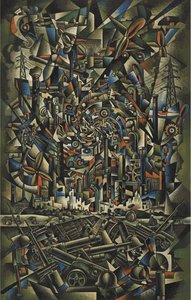
Omran Younis: A Voice of Suffering and Resilience from Syria
Born in 1971 in Hassakah, Syrian Arab Republic, Omran Younis’s life has been inextricably linked to the tumultuous history of his homeland. His early years were shaped by the realities of a region grappling with conflict and displacement, experiences that would profoundly inform his artistic vision. Younis's journey began with formal training at Damascus University’s Department of Painting, where he honed his skills and developed a distinctive style characterized by intense emotion and unflinching honesty. He graduated with both a Bachelor’s and Master’s degree, solidifying his position as a significant voice within the Syrian art scene.
The Language of Trauma: Artistic Style and Themes
Younis's work is immediately recognizable for its raw intensity. He doesn’t shy away from depicting the brutal realities of conflict, particularly the suffering inflicted upon his people during the ongoing Syrian Civil War. His paintings are often described as “horrific,” featuring graphic depictions of corpses, dismembered bodies, coffins overflowing with the dead, and scenes of panic and fear. These aren't merely representations of violence; they’re visceral explorations of trauma, loss, and the psychological impact of war. He masterfully employs bold brushstrokes and a rich, often dark, color palette to amplify the emotional weight of his subjects. The use of thick impasto creates a tangible sense of texture and immediacy, drawing the viewer directly into the heart of the depicted scenes.
- Expressionistic Techniques: Younis’s style leans heavily towards Expressionism, utilizing distortion and exaggeration to convey heightened emotional states.
- Symbolic Imagery: Recurring motifs such as coffins, skulls, and fragmented bodies serve as potent symbols of death, destruction, and the disintegration of human life.
- Color Palette: A predominantly dark and somber color scheme—often dominated by blacks, browns, and deep reds—underscores the gravity and despair depicted in his work.
Early Recognition and Exhibitions
Despite the challenging circumstances within Syria, Younis’s talent quickly garnered recognition both domestically and internationally. He began exhibiting his work throughout the Middle East, including prominent showings in the United States, Canada, and France. His unique approach to depicting Syrian suffering earned him critical acclaim and numerous awards, most notably the First Prize of the 3rd Annual Competition for Young Contemporary Art in Damascus. This recognition signaled a growing acknowledgment of his importance as an artist addressing urgent social and political issues.
Beyond Syria: A Global Presence
Today, Younis’s paintings are held in collections across the Arab world, reflecting the enduring impact of his work. His art transcends geographical boundaries, offering a powerful commentary on human suffering that resonates with audiences worldwide. He continues to explore themes of loss and resilience, often revisiting specific events or experiences through recurring motifs and stylistic approaches. His dedication to portraying the realities of war has established him as a vital voice in contemporary art, prompting reflection on humanity’s darkest moments.
A Personal Reflection: The Artist's Voice
Younis himself offers insight into his artistic process and motivations. He describes his work as an attempt to grapple with the “interrogation between what is graphic – from the point of view of the arrangement of space – and what is in relation to the vigor of the line.” He speaks of a dialogue between the visible form and the underlying emotional force, using thick brushstrokes and contrasting colors to convey the intensity of his subject matter. His words reveal a deep commitment to bearing witness to the suffering he observes, transforming personal pain into a powerful artistic statement. “For what is the theme and its treatment, I find myself facing the assassin in the same room. It’s as if we are fighting on the white canvas and the thick lines are all the more profound wounds.”
Spørgsmål & svar
Hvor kommer Omran Younis fra?
Omran Younis blev født i Syrian Arab Republic.
Hvad er fødestedet og fødselsåret for Omran Younis?
Omran Younis blev født i Hasakah i 1971.
Findes der en virtuel 3D-tour af Omran Youniss værker?
Et virtuelt besøg er muligt: 3D-museum-siden for Omran Younis præsenterer kunstnerens værker i et tredimensionelt galleri.
Hvor kan man finde Omran Youniss værker opdelt efter emne?
Emneatlas for Omran Younis er en side, der kortlægger kunstnerens værker efter deres motiver.
Findes der en kronologisk gennemgang af Omran Younis?
Kronologi for Omran Younis er en rullevenlig tidslinje, der præsenterer kunstnerens værker i kronologisk rækkefølge, opdelt i kapitler efter karriereperioder.
Hvor er Omran Youniss værker grupperet efter teknik?
Siden Alle medier grupperer Omran Youniss værker efter teknik.
Hvilken by og hvilket land er Omran Younis født i?
Omran Younis blev født i Hasakah i Syrian Arab Republic.