

1


Opdateret november 2026 · rangeret efter vores popularitetsscore (søgninger, besøg og ordrer for hvert værk) · 4 værker af Nanine Vallain i vores katalog
Kort sagt
Portrait of a Young Woman Holding a Lamb (1788) er det maleri af Nanine Vallain, der vækker mest opsigt; originalen findes på Musée Cognacq-Jay, Paris. Derefter falder blikket på Portrait of Louis-Antoine-Henry de Bourbon-Condé, Duke of Enghien (1788) og An allegory of the French revolution (1793). Blandt de 4 værker af Nanine Vallain i vores katalog er disse 4 de mest berømte, hver især et unikt originalværk præsenteret med sit årstal, sit museum og årsagen til dets tidløse betydning.
De 4 museer, der rummer flest af malerierne på denne side.
| Museum | By | Værker af Nanine Vallain | Malerier fra denne liste |
|---|---|---|---|
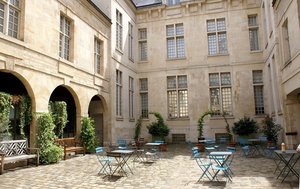 Musée Cognacq-Jay |
Paris | 1 | Portrait of a Young Woman Holding a Lamb |
 Musée Condé |
Chantilly | 1 | Portrait of Louis-Antoine-Henry de Bourbon-Condé, Duke of Enghien |
 Museum of the French Revolution |
Vizille | 1 | An allegory of the French revolution |
 National Gallery of Ireland |
Dublin | 1 | Portrait of a Lady |
Vælg et årti for at se det originale værk, der definerer det.


Portrait of a Young Woman Holding a Lamb (1788), Musée Cognacq-Jay, Paris. Derefter følger Portrait of Louis-Antoine-Henry de Bourbon-Condé, Duke of Enghien (1788) og An allegory of the French revolution (1793).
21 år gammel: Portrait of a Young Woman Holding a Lamb er fra 1788, og Nanine Vallain blev født i 1767.
Vores katalog indeholder 4 værker af Nanine Vallain, dateret fra 1788 til 1805.
Primært i Musée Cognacq-Jay (Paris), Musée Condé (Chantilly) og Museum of the French Revolution (Vizille). Museumslisten ovenfor viser dem alle.
I 1780s: 2 af de 4 værker på denne side blev skabt dengang, herunder Portrait of a Young Woman Holding a Lamb.
På denne side er det tidligste Portrait of a Young Woman Holding a Lamb (1788) og det seneste Portrait of a Lady (1805).
Born in Paris in 1767, Nanine Vallain grew up in a household defined by the precision of the written word. Her father was a master scribe, a profession that required a steady hand and a keen eye for detail. This environment likely prepared her for the disciplined study of form and line that would define her later years. Rather than following the path of her family's trade, she turned her attention toward the visual arts, seeking out the guidance of established masters to refine her natural talent.
Her formal education was shaped by two significant figures of the era. She first took lessons in painting and drawing with Joseph-Benoît Suvée, learning the foundational techniques required to navigate the competitive Parisian art scene. Later, she expanded her training by studying under Jacques-Louis David. This period of instruction provided her with the technical rigor necessary to move beyond simple sketches and into the realm of professional exhibition.
The results of her training became public during the Exposition de la Jeunesse in 1785. It was at this annual exhibit, held at the place Dauphine, that her work first caught the attention of the city's art critics. Her presence in these exhibitions marked the beginning of a career that would see her navigate the shifting political and social landscapes of France, moving from the intimate world of portraiture toward more complex allegorical subjects.
Vallain’s presence in the Parisian art scene began to take shape in the mid-1780s. After her initial recognition, she returned to the Exposition de la Jeunesse in 1787, presenting the work L'Etude. This period marked the beginning of a steady professional life in the city, where she navigated the shifting social and political landscapes of the time. By 1793, her personal and professional lives intersected when she married Barthèlemy Piètre. That same year, she took part in the Commune générale des arts, a group that offered a rare opening for women to participate in the artistic community during a period of intense political change.
Her involvement with the Salon in Paris began in 1793, and she continued to exhibit there until 1810. However, her path was not without significant obstacles. She faced a notable interruption in her career, a pause caused by reactionary measures taken against women in the professional sphere. Despite this setback, she eventually resumed her work. When she returned to the Salon in the years between 1806 and 1810, her focus had shifted toward more complex themes, moving beyond the portraits that had characterized her earlier years to explore allegorical and biblical subjects.
As a Neoclassical painter, Vallain developed a style defined by a certain structural strength. Her brushwork was noted for a firm handling that provided her compositions with a sense of sophistication and harmony. Those who viewed her work in the late eighteenth century often commented on her agreeable use of color, which helped bring a sense of balance to her various subjects. This technical control allowed her to move between the intimate details of a face and the broader requirements of a large-scale scene.
In the early years of her career, she focused her talents primarily on portraiture. These works allowed her to explore the nuances of character and social standing through a refined approach to light and form. However, her interests were not limited to the likenesses of individuals. She also turned her attention to genre scenes and historical works, seeking to capture moments of human experience through a classical lens.
As her career progressed, particularly during her exhibitions at the Salon between 1806 and 1810, her subject matter shifted toward more complex themes. She began to favor biblical scenes and allegories, using these narratives to explore deeper emotional and symbolic territory. This transition showed a move from the specificities of the individual toward the grander, more universal stories of faith and myth.
Much of Vallain's most significant output has found a permanent home in major institutions, ensuring her presence in the history of French painting. Her most famous piece, an allegory of Liberty, remains part of the collection at the Louvre. This work, which reflected her political convictions during a period of intense social change, remains one of her most recognizable contributions to the art of the era.
Her skill in capturing the likeness and character of her subjects is preserved in several notable portraits held in international collections. The National Gallery of Ireland houses a Portrait of a Lady, painted about 1805. Meanwhile, the Musée Cognacq-Jay holds a 1788 work titled Portrait of a Young Girl with a Lamb. These pieces offer a glimpse into the varied subjects she tackled throughout her career, from intimate studies of youth to more formal social portraits.
Other important works have been preserved in specialized French collections. The Musée Condé maintains her Portrait of Louis-Antoine-Henry de Bourbon-Condé, duc d'Enghien, a piece dating to around 1788. Her output also included significant religious and historical themes, such as:
