Portræt af Matthew Boulton

De 8 mest berømte Matthew Boulton-malerier, hver og en unik

Opdateret november 2026 · rangeret efter vores popularitetsscore (søgninger, besøg og ordrer for hvert værk) · 8 værker af Matthew Boulton i vores katalog

Kort sagt

Klaprede hænder (1793) er det maleri af Matthew Boulton, der vækker mest opsigt; originalen findes på Skokloster Castle, Skokloster. Derefter falder blikket på East India Company Coin (1791) og A Lion Coin (1792). Blandt de 8 værker af Matthew Boulton i vores katalog er disse 8 de mest berømte, hver især et unikt originalværk præsenteret med sit årstal, sit museum og årsagen til dets tidløse betydning.

Neoclassical Flest værker: Skokloster Castle

Top 10 malerier af Matthew Boulton, set gennem galleriets øjne

1
Klaprede hænder (1793) af Matthew Boulton

Klaprede hænder

1793 · Metalarbejde · Skokloster Castle, Skokloster

Matthew Boulton, en pioner inden for industriel kunst, var ikke blot en fabriksdirektør; han var også en visionær, der udfordrede konventionelle kunstneriske perspektiver. Hans arbejde repræsenterer et fascinerende møde mellem praktisk innovation og æstetisk finesse – særligt tydeligt i hans ikoniske sølvmønt fra 1793, hvor to håndtryk dominerer designet.

2
East India Company Coin (1791) af Matthew Boulton

East India Company Coin

1791 · Bronze · Skokloster Castle, Skokloster

This unassuming bronze coin, dated 1791, offers a fascinating window into the complex world of the British East India Company and the burgeoning industrial revolution in late 18th-century England. More than mere currency, it represents a confluence of artistic innovation, imperial ambition, and technological advancement, all masterfully orchestrated by Matthew Boulton at his groundbreaking Soho Mint. The coin’s very existence speaks volumes about an era defined by global trade, colonial…

3
A Lion Coin (1792) af Matthew Boulton

A Lion Coin

1792 · Bronze · Skokloster Castle, Skokloster

A Lion's Gaze: Matthew Boulton’s Symbolic Coin of Sierra Leone The small bronze coin resting against a stark white background holds within it a remarkable story – one interwoven with industrial innovation, colonial ambition, and the burgeoning power of symbolic representation. This is "A Lion Coin," crafted in 1792 by the visionary Matthew Boulton, a figure who stands as a pivotal bridge between traditional artistry and the dawn of the…

4
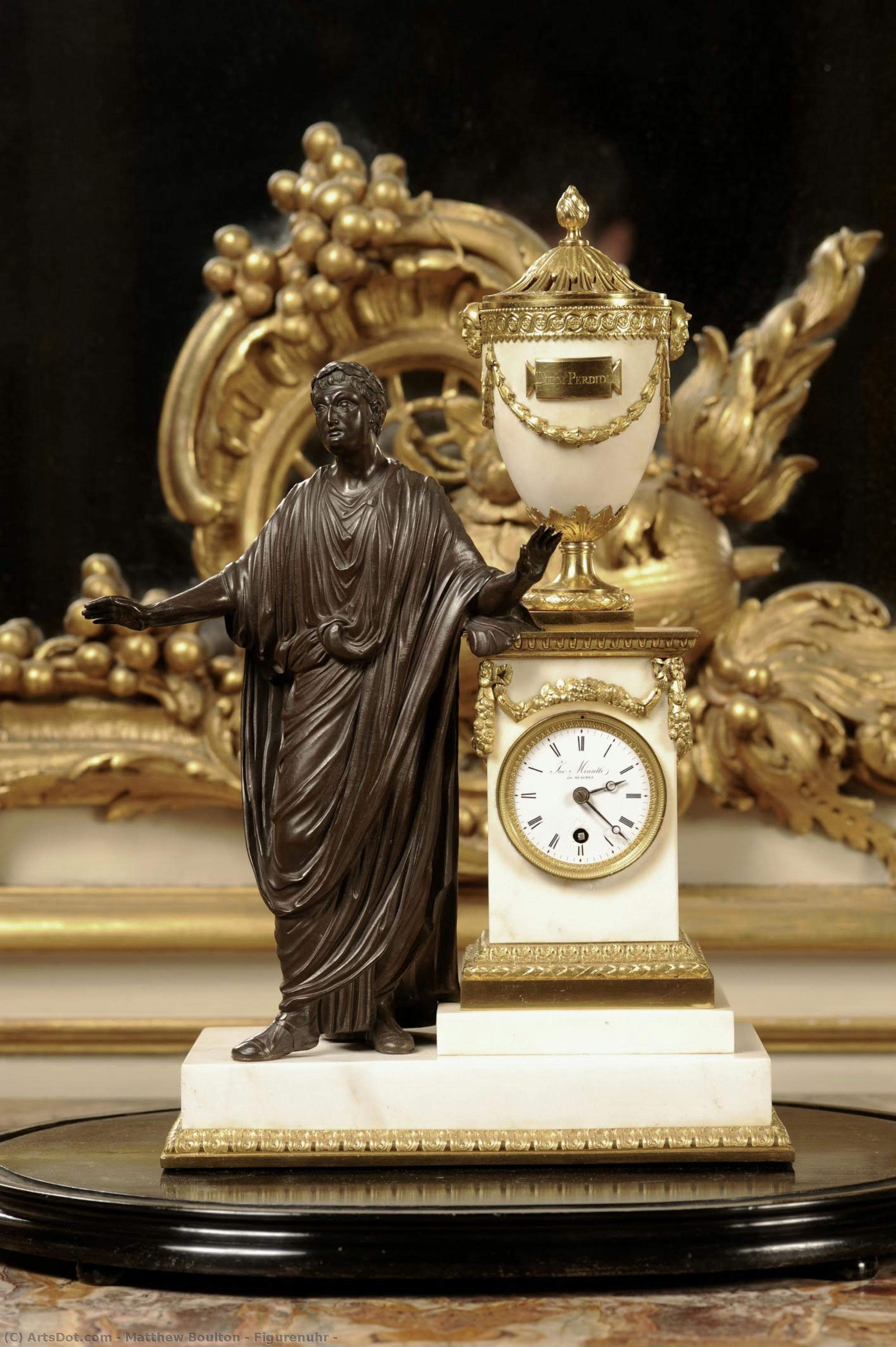
Figurenuhr (1771) af Matthew Boulton

Figurenuhr

1771 · Bronze · Sanssouci Slot, Potsdam

In the quiet intersection where industrial ingenuity meets the sublime grace of antiquity, there exists the Figurenuhr “Titus.” Crafted around 1771, this extraordinary timepiece is far more than a mere instrument for measuring hours; it is a profound dialogue between the precision of the Enlightenment and the enduring grandeur of the Roman Empire. Born from the collaborative genius of Matthew Boulton, the visionary master of the Soho Manufactory, and the…

5
A Just Coin (1791) af Matthew Boulton

A Just Coin

1791 · Bronze · Skokloster Castle, Skokloster

In the quiet, tactile presence of "A Just Coin," one finds much more than a mere relic of 1791; one encounters a profound intersection of mechanical precision and moral symbolism. This bronze masterpiece, struck at the legendary Soho Mint, serves as a mesmerizing window into an era where the gears of the Industrial Revolution began to turn in harmony with classical ideals. As a piece of numismatic art, it transcends…

6
The Just Scales (1791) af Matthew Boulton

The Just Scales

1791 · Bronze · Skokloster Castle, Skokloster

In the quiet intersection of industrial innovation and classical symbolism lies The Just Scales, a breathtaking bronze artifact from 1791 that transcends its original purpose as a numismatic object to become a profound piece of historical art. At first glance, the viewer is captivated by the warm, muted golden-brown patina that envelops the circular composition, evoking the weathered dignity of an ancient relic. The centerpiece—a meticulously rendered set of scales—commands…

7
Det Fjerde Tegn (1791) af Matthew Boulton

Det Fjerde Tegn

1791 · Akryl på lærred · Skokloster Castle, Skokloster

Matthew Boulton og Symbolet på Fire – En Revolutionerende Medaljens Kunst Matthew Boulton var en banebrydende figur inden for industriel kunst, født i Handsworth, West Midlands, England, hvor hans familie havde dybe rødder i smedefaget. Denne tidlige uddannelse ved Soho Manufactory gav ham både praktisk erfaring med produktionsprocesser og en værdsættelse for håndværkets præcision – fundamentet for hans senere kunstneriske ambitioner. Han var ikke blot en fabriksarbejder; han var en…

8
Aircraft wing af Matthew Boulton

Aircraft wing

Known as the P10, this unique prototype aircraft built by Boulton and Paul Ltd of Norwich in 1919 was the first British plane to have a frame constructed entirely from metal. It was a light two seater plane with a thirty foot wing span. Described by the manufacturers as an exercise in constructional techniques, rather than as a commercial aircraft, the remaining wing and rudder section are the oldest surviving…

Motiverne, der fangede Matthew Boultons blik

De fire motiver, der optræder hyppigst i disse originaler, hver med sit fineste eksempel.

De museer, der udstiller Matthew Boultons originalværker

De 3 museer, der rummer flest af malerierne på denne side.

Museum By Værker af Matthew Boulton Malerier fra denne liste
Skokloster Castle, SkoklosterSkokloster Castle Skokloster 6 Klaprede hænder, East India Company Coin, A Lion Coin
Sanssouci Slot, PotsdamSanssouci Slot Potsdam 1 Figurenuhr
the-bridewell-museum Museum of Norwich at the Bridewell, Norwichthe-bridewell-museum Museum of Norwich at the Bridewell Norwich 1 Aircraft wing

Matthew Boulton gennem årene: de unikke originaler fra hver enkelt

En lang karriere på 23 år, fra 1771 til 1793: Matthew Boultons mest berømte originalværker, vist år for år.

Værker efter år

Vælg et årstal for at se de originale værker.

Matthew Boultons malerier: spørgsmål til galleriet

Hvad er det mest berømte værk af Matthew Boulton?Vis svaret

Klaprede hænder (1793), Skokloster Castle, Skokloster. Derefter følger East India Company Coin (1791) og A Lion Coin (1792).

Hvor mange værker af Matthew Boulton er kendt?Vis svaret

Vores katalog indeholder 8 værker af Matthew Boulton, dateret fra 1771 til 1793.

Hvor kan de mest berømte originaler af Matthew Boulton ses?Vis svaret

Primært i Skokloster Castle (Skokloster), Sanssouci Slot (Potsdam) og the-bridewell-museum Museum of Norwich at the Bridewell (Norwich). Museumslisten ovenfor viser dem alle.

I hvilken periode skabte Matthew Boulton sine mest kendte malerier?Vis svaret

I 1791: 4 af de 8 værker på denne side blev skabt dengang, herunder East India Company Coin.

Hvilket berømt maleri af Matthew Boulton er det tidligste, og hvilket er det seneste?Vis svaret

På denne side er det tidligste Figurenuhr (1771) og det seneste Klaprede hænder (1793).

Hvilke motiver foretrak Matthew Boulton?Vis svaret

Numismatic art (2), Numismatics (2) og Bronze (2), fordelt på de 8 værker på denne side.

Hvilke materialer brugte Matthew Boulton mest til sine malerier?Vis svaret

Bronze, for 5 af de 8 værker på denne side.

Hvilken stilart tilhører værkerne fra Matthew Boulton?Vis svaret

Neoclassical, baseret på originalerne på denne side.

Hvilke originalværker af Matthew Boulton kan jeg se på Skokloster Castle?Vis svaret

Klaprede hænder, East India Company Coin og A Lion Coin: Skokloster Castle, Skokloster har 6 af værkerne på denne side.

Matthew Boulton: et portræt af kunstneren

Matthew Boulton: A Pioneer of Industrial Art

Early Life and Background

  • Born in Handsworth, West Midlands, England, Matthew Boulton (1728-1809) came from a family deeply involved in manufacturing.
  • His father was a successful metalworker, and young Matthew received his early education at the Soho Manufactory, laying the foundation for his future endeavors.
  • This upbringing instilled in him both a practical understanding of industrial processes and an appreciation for craftsmanship.

The Establishment of the Soho Mint

  • In 1788, Boulton established the Soho Mint, a groundbreaking enterprise that revolutionized coin production.
  • He partnered with James Watt, inventor of the improved steam engine, to power machinery used in minting coins and medals.
  • This collaboration marked a pivotal moment in the integration of industrial technology into artistic creation.

Artistic Development & Numismatic Innovation

  • Boulton wasn’t a traditional artist in the sense of painting or sculpting, but he possessed an exceptional eye for design and detail.
  • His primary focus was on numismatics – the study and collection of coins and medals.
  • He elevated medal-making from a craft to a fine art form through innovative designs and meticulous execution.
  • The use of steam power allowed for greater precision, consistency, and artistic complexity in his work.

Notable Works & Commissions

  • Seringapatam Medal (1801-2): Commissioned by the East India Company to commemorate the British victory over Tipu Sultan at Seringapatam. A highly detailed and historically significant medal.
  • Battle of Trafalgar Medal (1805): Boulton personally funded the production of this medal, celebrating Admiral Nelson’s triumph. It exemplifies his patriotic spirit and artistic commitment.
  • He also produced coins for the East India Company and various other institutions, showcasing a diverse range of designs.
  • Other works include various commemorative medals and tokens reflecting significant events and individuals of his time.

Influences & Artistic Style

  • Boulton drew inspiration from classical art, particularly the sculptural traditions of ancient Greece and Rome.
  • He admired the precision and detail found in antique coins and medals, striving to emulate these qualities in his own work.
  • The prevailing Neoclassical style of the late 18th century heavily influenced his designs, emphasizing order, balance, and clarity.

Historical Significance & Legacy

  • Matthew Boulton’s innovations transformed coin production, setting new standards for quality and security.
  • His integration of steam power into the artistic process was a landmark achievement in industrial history.
  • The Soho Mint continued to operate after his death (sold in 1850), leaving a lasting legacy on British coinage and medal-making.
  • Boulton’s work demonstrates the powerful synergy between art, industry, and technological advancement. He remains a significant figure in both artistic and industrial history.