Portræt af Mester Mateo

De 44 mest berømte Mester Mateo-malerier, hver og en unik

Opdateret oktober 2026 · rangeret efter vores popularitetsscore (søgninger, besøg og ordrer for hvert værk) · 44 værker af Mester Mateo i vores katalog

Kort sagt

The disappeared façade at the end of the Camino (1211) er det maleri af Mester Mateo, der vækker mest opsigt; originalen findes på Catedral de Santiago Foundation Museum, Santiago de Compostela. Derefter falder blikket på Base of the mullion of the Portico of Glory (1188) og Trinity of the Portico of Glory (1188). Blandt de 44 værker af Mester Mateo i vores katalog er disse 44 de mest berømte, hver især et unikt originalværk præsenteret med sit årstal, sit museum og årsagen til dets tidløse betydning.

1161 – 1217 Romanesque Flest værker: Catedral de Santiago Foundation Museum

Top 10 malerier af Mester Mateo, set gennem galleriets øjne

2
Base of the mullion of the Portico of Glory (1188) af Mester Mateo

Base of the mullion of the Portico of Glory

1188 · Stone · Catedral de Santiago Foundation Museum, Santiago de Compostela

To stand before the Portico of Glory is to witness a profound shift in the language of stone. This specific base of the mullion, carved around 1188, offers a glimpse into the transition from the rigid forms of the Romanesque to a more fluid, naturalistic sensibility. Here, the stone does not merely exist; it breathes. The sculptor, Master Mateo, utilized a technique known as trabajo vivo, layering limestone to create…

3
Trinity of the Portico of Glory (1188) af Mester Mateo

Trinity of the Portico of Glory

1188 · Stone · Catedral de Santiago Foundation Museum, Santiago de Compostela

Divine Presence in Stone The capital features God the Father holding the Christ child upon his lap. Above them, the Holy Spirit takes form as a dove at the peak of the composition. Angels surround these central figures, carrying incense burners to complete the celestial scene. This sculptural arrangement uses the trabajo vivo technique, layering stone slabs to create textures that mimic flesh and fabric. The result is a sense…

4
Statue-column of king David (1188) af Mester Mateo

Statue-column of king David

1188 · Stone · Catedral de Santiago Foundation Museum, Santiago de Compostela

In the hallowed atmosphere of the Santiago Cathedral, where history and spirituality converge, stands a figure of profound majesty: the Statue-column of King David. Carved by the legendary Master Mateo around 1188, this Romanesque masterpiece is far more than a mere architectural ornament; it is a window into the soul of the twelfth century. The sculpture captures the biblical monarch in a moment of eternal resonance, seated upon a cross-frame…

5
The Glory, Central Arch, Portico of Glory (1211) af Mester Mateo

The Glory, Central Arch, Portico of Glory

1211 · Stone · Catedral de Santiago Foundation Museum, Santiago de Compostela

The Glory, Central Arch, Portico of Glory is a sculptural work by Master Mateo. It forms a primary component of the Portico of Glory, located at the Cathedral of Santiago de Compostela in Spain. This specific section of the portal was part of a complete three-piece set that reached its conclusion in 1211. The work is currently held at The Catedral de Santiago Foundation in Santiago de Compostela.

6
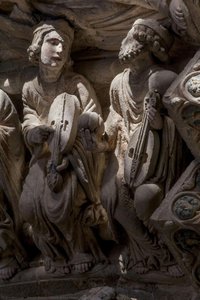
The Elders holding instruments, Central Arch, Portico of Glory (1211) af Mester Mateo

The Elders holding instruments, Central Arch, Portico of Glory

1211 · Stone · Catedral de Santiago Foundation Museum, Santiago de Compostela

Within the sacred shadows of the Portico of Glory, a profound scene unfolds in stone. The Elders holding instruments, Central Arch, Portico of Glory emerges from the limestone, appearing as if caught in a moment of eternal preparation. This work, created by the hands of Master Mateo, brings the figures of the Apocalypse into a tangible, breathing presence. They sit amidst the radial archivolts, their bodies leaning toward one another…

8
Saint Matthew, Central Arch, Portico of Glory (1211) af Mester Mateo

Saint Matthew, Central Arch, Portico of Glory

1211 · Stone · Catedral de Santiago Foundation Museum, Santiago de Compostela

The stone breathes under the soft, diffuse light of the cathedral, revealing a figure caught in a moment of eternal devotion. Here, within the central arch of the Portico of Glory, Saint Matthew sits with a quiet, heavy presence. He is a winged presence, his form emerging from the granite with a startling sense of life. He leans over a desk, his knees supporting the weight of his task, as…

9
Saint Luke, Central Arch, Portico of Glory (1211) af Mester Mateo

Saint Luke, Central Arch, Portico of Glory

1211 · Stone · Catedral de Santiago Foundation Museum, Santiago de Compostela

The limestone relief of Saint Luke, carved around 1211, occupies a central position within the Portico of Glory at the Cathedral of Santiago de Compostela in Spain. The figure is depicted reclining on his right side, a posture that suggests both physical repose and deep introspection. In his left hand, he holds a book, while his head rests upon a lamb, a direct reference to his role as an Evangelist…

10
Arma Christi, Central Arch, Portico of Glory (1211) af Mester Mateo

Arma Christi, Central Arch, Portico of Glory

1211 · Stone · Catedral de Santiago Foundation Museum, Santiago de Compostela

The relief known as Arma Christi, Central Arch, Portico of Glory is a sculptural work by the artist Master Mateo. This specific piece is situated within the Central Arch of the Portico of Glory. It was created in 1211. The work is part of a larger architectural and sculptural program located at the Santiago de Compostela Cathedral in Galicia, Spain.

Mester Mateos berømte malerier, nummer 11 til 44

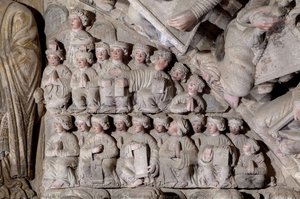
11Santo dos Croques of the Portico of Glory (1200) af Mester MateoSanto dos Croques of the Portico of Glory1200 · Catedral de Santiago Foundation Museum 12Saint Matthew (1200) af Mester MateoSaint Matthew1200 · Catedral de Santiago Foundation Museum 13Statues of David and Solomon (1188) af Mester MateoStatues of David and Solomon1188 · Catedral de Santiago Foundation Museum 14Portico de la Gloria (1168) af Mester MateoPortico de la Gloria1168 · Cathedral 15Portico de la Gloria (detail) (1168) af Mester MateoPortico de la Gloria (detail)1168 · Cathedral 16Portico de la Gloria (1168) af Mester MateoPortico de la Gloria1168 · Cathedral 17Portico de la Gloria (detail) (1168) af Mester MateoPortico de la Gloria (detail)1168 · Cathedral 18Right arch of the Portico of Glory. Iconography of the condemned (1188) af Mester MateoRight arch of the Portico of Glory. Iconography of the condemned1188 · Catedral de Santiago Foundation Museum 19Right arch of the Portico of Glory (1188) af Mester MateoRight arch of the Portico of Glory1188 · Catedral de Santiago Foundation Museum 20Left arch of the Portico of Glory (1188) af Mester MateoLeft arch of the Portico of Glory1188 · Catedral de Santiago Foundation Museum 21Right columns of the central arch of the Portico of Gloryh (1188) af Mester MateoRight columns of the central arch of the Portico of Gloryh1188 · Catedral de Santiago Foundation Museum 22Saint Marcus, Central Arch, Portico of Glory (1211) af Mester MateoSaint Marcus, Central Arch, Portico of Glory1211 · Catedral de Santiago Foundation Museum 23Saint John, Central Arch, Portico of Glory (1211) af Mester MateoSaint John, Central Arch, Portico of Glory1211 · Catedral de Santiago Foundation Museum 24Ordo Prophetarum, The counter facade, Portico of Glory (1211) af Mester MateoOrdo Prophetarum, The counter facade, Portico of Glory1211 · Catedral de Santiago Foundation Museum 25The Sybil, The counter facade, Portico of Glory (1211) af Mester MateoThe Sybil, The counter facade, Portico of Glory1211 · Catedral de Santiago Foundation Museum 26Right arch of the Portico of Glory. Iconography of the blessed (1211) af Mester MateoRight arch of the Portico of Glory. Iconography of the blessed1211 · Catedral de Santiago Foundation Museum 27Detail of the Elders, Central Arch, Portico of Glory (1211) af Mester MateoDetail of the Elders, Central Arch, Portico of Glory1211 · Catedral de Santiago Foundation Museum 28Tribune of Portico of Glory (1211) af Mester MateoTribune of Portico of Glory1211 · Catedral de Santiago Foundation Museum 29Angels, The Tribune, Portico of Glory (1211) af Mester MateoAngels, The Tribune, Portico of Glory1211 · Catedral de Santiago Foundation Museum 30Portico of Glory (1211) af Mester MateoPortico of Glory1211 · Catedral de Santiago Foundation Museum 31Keystones from Portico of the Glory (1211) af Mester MateoKeystones from Portico of the Glory1211 · Catedral de Santiago Foundation Museum 32Detail Maiestas Domini of The Portico of Glory (1211) af Mester MateoDetail Maiestas Domini of The Portico of Glory1211 · Catedral de Santiago Foundation Museum 33Arma Christi, Central Arch, Portico of Glory (1211) af Mester MateoArma Christi, Central Arch, Portico of Glory1211 · Catedral de Santiago Foundation Museum 34The Just, Central Arch, Portico of Glory (1211) af Mester MateoThe Just, Central Arch, Portico of Glory1211 · Catedral de Santiago Foundation Museum 35Detail of the Elders, Central Arch, Portico of Glory (1211) af Mester MateoDetail of the Elders, Central Arch, Portico of Glory1211 · Catedral de Santiago Foundation Museum 36Detail of the Blessed, Central Arch, Portico of Glory (1211) af Mester MateoDetail of the Blessed, Central Arch, Portico of Glory1211 · Catedral de Santiago Foundation Museum 37Central Arch of The Portico of Glory (1211) af Mester MateoCentral Arch of The Portico of Glory1211 · Catedral de Santiago Foundation Museum 38Organistrum, Central Arch, Portico of Glory (1211) af Mester MateoOrganistrum, Central Arch, Portico of Glory1211 · Catedral de Santiago Foundation Museum 39Drawing José Vega y Verdugo (1656-1657) Archivo de la Catedral (1657) af Mester MateoDrawing José Vega y Verdugo (1656-1657) Archivo de la Catedral1657 · Catedral de Santiago Foundation Museum 40Left arch of the Portico of Glory. Iconography (1188) af Mester MateoLeft arch of the Portico of Glory. Iconography1188 · Catedral de Santiago Foundation Museum 41Estatuas-columna de dos profetas procedentes de la desaparecida fachada exterior del Pórtico de la Gloria\n\n- Isaac (1188) af Mester MateoEstatuas-columna de dos profetas procedentes de la desaparecida fachada exterior del Pórtico de la Gloria\n\n- Isaac1188 · Catedral de Santiago Foundation Museum 42Rose window (1200) af Mester MateoRose window1200 · Catedral de Santiago Foundation Museum 43Stony choir reconstruction (1211) af Mester MateoStony choir reconstruction1211 · Catedral de Santiago Foundation Museum 44Lintels Central Arch of The Portico of Glory (1188) af Mester MateoLintels Central Arch of The Portico of Glory1188 · Catedral de Santiago Foundation Museum

Motiverne, der fangede Mester Mateos blik

De fire motiver, der optræder hyppigst i disse originaler, hver med sit fineste eksempel.

De museer, der udstiller Mester Mateos originalværker

De 2 museer, der rummer flest af malerierne på denne side.

Museum By Værker af Mester Mateo Malerier fra denne liste
Catedral de Santiago Foundation Museum, Santiago de CompostelaCatedral de Santiago Foundation Museum Santiago de Compostela 40 The disappeared façade at the end of the Camino, Base of the mullion of the Portico of Glory, Trinity of the Portico of Glory
Cathedral, Santiago de CompostelaCathedral Santiago de Compostela 4 Portico de la Gloria, Portico de la Gloria (detail), Portico de la Gloria

Mester Mateo gennem årtierne: ét unikt originalværk til hver

Værker per årti

Vælg et årti for at se det originale værk, der definerer det.

Mester Mateos malerier: spørgsmål til galleriet

Hvad er det mest berømte værk af Mester Mateo?Vis svaret

The disappeared façade at the end of the Camino (1211), Catedral de Santiago Foundation Museum, Santiago de Compostela. Derefter følger Base of the mullion of the Portico of Glory (1188) og Trinity of the Portico of Glory (1188).
Hvilken alder havde Mester Mateo, da The disappeared façade at the end of the Camino blev skabt?Vis svaret

50 år gammel: The disappeared façade at the end of the Camino er fra 1211, og Mester Mateo blev født i 1161.

Hvilke ti malerier af Mester Mateo er de mest berømte?Vis svaret

The disappeared façade at the end of the Camino, Base of the mullion of the Portico of Glory, Trinity of the Portico of Glory, Statue-column of king David, The Glory, Central Arch, Portico of Glory, The Elders holding instruments, Central Arch, Portico of Glory, Voussoirs with the punishment of lust, Saint Matthew, Central Arch, Portico of Glory, Saint Luke, Central Arch, Portico of Glory og Arma Christi, Central Arch, Portico of Glory. Ranglisten ovenfor viser det enkelte værks årstal og museum.

Hvor mange værker af Mester Mateo er kendt?Vis svaret

Vores katalog indeholder 44 værker af Mester Mateo, dateret fra 1188 til 1211.

Hvor kan de mest berømte originaler af Mester Mateo ses?Vis svaret

Primært i Catedral de Santiago Foundation Museum (Santiago de Compostela) og Cathedral (Santiago de Compostela). Museumslisten ovenfor viser dem alle.

I hvilken periode skabte Mester Mateo sine mest kendte malerier?Vis svaret

I 1210s: 24 af de 44 værker på denne side blev skabt dengang, herunder The disappeared façade at the end of the Camino.

Hvilket berømt maleri af Mester Mateo er det tidligste, og hvilket er det seneste?Vis svaret

På denne side er det tidligste Base of the mullion of the Portico of Glory (1188) og det seneste The disappeared façade at the end of the Camino (1211).

Hvilke motiver foretrak Mester Mateo?Vis svaret

Sculpture (6), Medieval art (5) og Stone (4), fordelt på de 44 værker på denne side.

Hvilke materialer brugte Mester Mateo mest til sine malerier?Vis svaret

Stone, for 11 af de 44 værker på denne side.

Hvilken stilart tilhører værkerne fra Mester Mateo?Vis svaret

Romanesque, baseret på originalerne på denne side.

Hvilke originalværker af Mester Mateo kan jeg se på Catedral de Santiago Foundation Museum?Vis svaret

The disappeared façade at the end of the Camino, Base of the mullion of the Portico of Glory og Trinity of the Portico of Glory: Catedral de Santiago Foundation Museum, Santiago de Compostela har 40 af værkerne på denne side.

Mester Mateo: et portræt af kunstneren

Sjælen i Santiagos Glorie

Mester Mateo, en billedhugger hvis navn forbliver indhyllet i mystik på trods af hans monumentale bidrag til Katedralen i Santiago de Compostela, står som en af de mest ærede skikkelser inden for romansk kunst i Spanien. Han blev født omkring 1161 i Galicien, og selvom de præcise detaljer om hans liv er knappe, hviler Mester Mateos eftermæle primært på hans uovertrufne bedrift: Portico de la Gloria. Dette åndeløse arkitektoniske vidunder dominerer katedralens facade og legemliggør det tolvte århundredes spirituelle glød. Han trådte frem som billedhugger i en periode præget af intens religiøs hengivenhed og kunstnerisk innovation, i en verden hvor pilgrimsruten til Santiago allerede var en transformativ rejse for tusindvis af sjæle.

Begyndelsen på hans største værk tog fart omkring 1188, da han fik til opgave at overvåge skabelsen af den tredelte portal, som skulle blive hans magnum opus. Selve Katedralprojektet var blevet udtænkt årtier tidligere, drevet af kong Alfonso VIII og næret af stedets enorme religiøse betydning. I denne hellige kontekst udhuggede Mester Mateo ikke blot sten; han pustede liv i dem. Hans involvering i Portico de la Adamant var en guddommelig opgave, der transformerede en strukturel nødvendighed til en teologisk fortælling, som fortsat fanger både pilgrimme og kunsthistorikere.

En symfoni i sten: Teknik og stil

Mester Mateos skulpturelle stil er kendetegnet ved en bemærkelsesværdig realisme, der repræsenterede et dybt brud med tidligere, mere stive romanske konventioner. Mens hans samtidige ofte støttede sig til stiliserede, flade figurer, studerede Mester Mateo omhyggeligt menneskelig anatomi og draperings komplekse fald, hvilket resulterede i en forbløffende nøjagtighed i hans fremstillinger. Hans beherskelse af udskæring i kalksten var uovertruffen, især gennem hans brug af en teknik kendt som trabajo vivo. Denne metode indebar lagdeling af stenplader for at skabe teksturerede overflader, der efterlignede udseendet af kød og stof, hvilket gav en følelse af bevægelse og vitalitet til det statiske medie.

Denne innovative tilgang gjorde det muligt for ham at bygge bro mellem det jordiske og det guddommelige. Når man betragter hans arbejde, kan man se, hvordan han dygtigt udnyttede lys og skygge til at forstærke dybden i sine relieffer. Hans evne til at manipulere sten for at antyde blødheden i en helgens klædningsstykke eller den muskuløse spænding hos en bibelsk figur løftede hans håndværk til et sofistikeret niveau, der sjældent blev set i middelalderen. Denne tekniske genialitet sikrede, at hans figurer ikke blot var symboler, men nærværende skikkelser i katedralens indgangsparti.

Portico de la Gloria: Et vidnesbyrd om tro

Portico de la Gloria fungerer som det ultimative vidnesbyrd om Mester Mateos kunstneriske og spirituelle vision. Dens centrale paneler skildrer dybe scener fra evangelierne – herunder fødslen, bebudelsen og korsfæstelsen – arrangeret på en måde, der guider beskueren gennem en hellig historie. Ikonografien er omfattende og kompleks og indeholder:

  • Den centrale bue: Med ikoniske figurer som Sankt Lukas, hvor den indviklede romanske skulptur udviser dyb religiøs symbolik.
  • Den venstre bue: Et mesterstykke i det 12. århundredes spanske reliefskæring, der fremviser detaljerede bibelske fortællinger.
  • Den højre bue: En fremvisning af indviklet skønhed, der demonstrerer hans evne til at mestre kompleks arkitektonisk og skulpturel integration.

Gennem disse værker opnåede Mester Mateo en historisk betydning, der rækker ud over hans egen fødetid. Han førte den romanske stil mod den spirende elegance i den gotiske stil og efterlod en arv, der forbliver hjerteslaget i Santiago de Compostela. Hans arbejde står som en permanent bro mellem middelalderens tankegang og det evige, hvilket sikrer, at selv århundreder efter hans død i 1217, fortsætter gløden fra hans stensymfoni med at indgyde ærefrygt.