


1


Opdateret november 2026 · rangeret efter vores popularitetsscore (søgninger, besøg og ordrer for hvert værk) · 22 værker af Mark Fisher i vores katalog
Kort sagt
I galleriets øjne er Mark Fishers mest berømte maleri Weaned Calves (1879). Snow Scene (1894) og The Back Of The Farm - Evening (1911) fuldender trioen, som ethvert øje genkender. Ud af de 22 værker af Mark Fisher i vores katalog præsenterer galleriet herunder de 20 mest berømte, hver som et originalværk med årstal, museum og det, der gør det unikt.


 Farm Work1904 · Touchstones Rochdale Arts And Heritage Centre
12
 Hill and Dale1900
13
 Landscape and Cattle1906 · Leeds Art Gallery
14
 Early Spring1907 · Leeds Art Gallery
15
 In Algiers1907 · Leeds Art Gallery
16
 Harlow Mill1912
17
 Markwell's Farm1920 · Amgueddfa Cymru
18
 Horses by a Lock1920 · Manchester Art Gallery
19
 Farm at Chishill1923 · Amgueddfa Cymru
20
 Feeding the Fowls1920
De 7 museer, der rummer flest af malerierne på denne side.
| Museum | By | Værker af Mark Fisher | Malerier fra denne liste |
|---|---|---|---|
 Leeds Art Gallery |
Leeds | 3 | Landscape and Cattle, Early Spring, In Algiers |
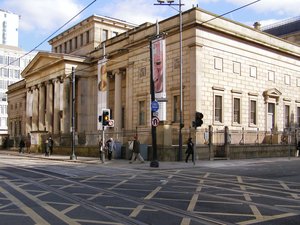 Manchester Art Gallery |
Manchester | 2 | Fen Meadows with Cattle, Horses by a Lock |
 Amgueddfa Cymru |
Cardiff | 2 | Markwell's Farm, Farm at Chishill |
 Auckland Art Gallery Toi o Tāmaki |
Auckland | 1 | Rest |
 Birmingham Museums And Art Gallery |
Birmingham | 1 | The Halt |
 Peterborough Museum And Art Gallery |
Peterborough | 1 | Landscape with a Stream, Chantreuil, France |
 Touchstones Rochdale Arts And Heritage Centre |
Rochdale | 1 | Farm Work |
Vælg et årti for at se det originale værk, der definerer det.

In the quiet, rhythmic pulse of the English countryside, there exists a timelessness that few artists manage to capture with such profound intimacy as William Mark Fisher. His 1904 masterpiece, Farm Work, serves as a breathtaking window into an era defined by the honest toil of the land. The canvas breathes with the scent of sun-warmed hay and the heavy, rhythmic breathing of laboring beasts. At the heart of this…

Weaned Calves (1879). Derefter følger Snow Scene (1894) og The Back Of The Farm - Evening (1911).
38 år gammel: Weaned Calves er fra 1879, og Mark Fisher blev født i 1841.
Weaned Calves, Snow Scene, The Back Of The Farm - Evening, Rest, Land and Sea, Fen Meadows with Cattle, The Halt, Landscape with Cattle, Milking Time og Landscape with a Stream, Chantreuil, France. Ranglisten ovenfor viser det enkelte værks årstal og museum.
Vores katalog indeholder 22 værker af Mark Fisher, dateret fra 1871 til 1923.
Primært i Leeds Art Gallery (Leeds), Manchester Art Gallery (Manchester) og Amgueddfa Cymru (Cardiff). Museumslisten ovenfor viser dem alle.
I 1900s: 5 af de 20 værker på denne side blev skabt dengang, herunder Farm Work.
På denne side er det tidligste Land and Sea (1871) og det seneste Farm at Chishill (1923).
Landscape and Cattle, Early Spring og In Algiers: Leeds Art Gallery, Leeds har 3 af værkerne på denne side.
Born in Boston, Massachusetts, in 1841, Mark Fisher grew up in a household where money was scarce. His childhood was defined by the necessity of work, leaving little room for the leisure often associated with young students. By the age of 14, he was apprenticed to his cousin, William Lawless, who worked as a sign and house painter. This early exposure to the practical, physical side of applying pigment to surfaces provided a grounded beginning to his relationship with color and form.
As he matured, Fisher sought a more formal education to refine his natural inclinations. He began taking drawing classes at the Lowell Institute, a step that moved him from the labor of a tradesman toward the discipline of a trained artist. It was during this period of study that he came under the guidance of the American landscape artist George Innes. Through Innes, Fisher began to develop the foundational skills that would eventually lead him across the Atlantic.
His path eventually brought him into the same circles as some of the most significant figures in art history. While studying, he was a classmate of Renoir, Monet, and Sisley. These connections placed him at a significant crossroads of artistic development, even if his own life would eventually take a different direction than those of his contemporaries.
In 1863, Fisher left for Paris to further his artistic training. He entered the atelier of Marc Gabriel Charles Gleyre, a place where he found himself among many other artists of his generation. During his time in the French capital, he also studied under Jean-Baptiste Camille Corot. These years in Paris provided him with a foundation in the techniques of the era, even as his own interests began to shift toward the natural world.
By 1872, Fisher moved to England. While his initial arrival brought him to the country, he eventually took up permanent residence in London. This change in scenery marked a significant transition in his life, as he moved away from the academic circles of France and toward the landscapes that would define his later years. He found a sense of belonging in the English countryside, a place that would provide the primary subject for much of his work.
Fisher’s approach to the canvas was defined by a quiet devotion to the natural world. While his early training focused on portraits and genre scenes, he eventually found his true calling in the landscape. He is often recognized as one of the first artists to introduce the Impressionistic style to England, bringing a fresh way of seeing the light and atmosphere of the countryside to a British audience. His work moved away from rigid, formal structures, opting instead for a method that captured the fleeting qualities of the outdoors through direct observation.
His brushwork was soft and deliberate, avoiding any sense of unnecessary drama or artifice. He favored a muted, sophisticated palette that allowed him to render the subtle shifts in light across a field or a riverbank. Through the careful use of atmospheric perspective, he achieved a remarkable sense of depth, making the distant hills and horizons feel as though they were breathing within the frame. This technical skill allowed him to create vast, open spaces that felt both grounded and airy.
Much of his output focused on idyllic pastoral scenes. He had a particular talent for depicting the stillness of meadows, the quiet of blooming gardens, and the heavy, muted tones of winter landscapes. These scenes often included the steady presence of livestock, such as cattle or sheep, and the simple, unhurried movements of country folk. His paintings were not meant to shout; they were meant to reflect the peaceful, rhythmic nature of rural life.
Fisher’s presence in the London art scene was marked by a steady and prolific output. He became a frequent presence at the Royal Academy, where he exhibited 89 works over his career. His reach extended beyond these major institutions, as he also showed 251 works at the Leicester Gallery. These exhibitions allowed his interpretations of the natural world to reach a wide audience, establishing him as a consistent figure in the British art community.
His professional standing grew through his involvement with several key groups. He was a member of the New English Art Club, a group that helped shape the direction of painting in England. His contributions to the field were recognized through formal honors; he was elected an Associate of the Royal Academy in 1911. This progression continued until 1919, when he achieved the status of a full member of the Royal Academy.
Fisher’s brush often found its way to the quiet rhythms of rural life. In his earlier years, following his move to England, he captured the changing seasons through a lens of soft light. His work from the 1870s shows a growing interest in the atmosphere of the countryside, seen in pieces like Noon (1872) and Early Summer (1875). These works began to establish his preference for the stillness of the landscape, a theme he continued with The Siesta in 1877 and Milking Time in 1881.
As he settled into his life in the English countryside, his paintings often centered on the presence of animals within the landscape. Landscape with Cattle and Sheep, painted about 1880, reflects this focus on pastoral scenes. He had a way of placing livestock and farmhands within a vast, breathing space, making the viewer feel the weight of the air and the depth of the fields. Even in his later years, he returned to these familiar subjects, such as in Sheep-shearing in a Barn, painted in 1916.
After settling in England, Fisher found his most enduring inspiration in the English countryside. He spent much of his time in Sussex, a landscape that offered the quietude and light he had come to favor. By 1901, he had moved to Hatfield Heath, where he remained for the rest of his life. This period of stability allowed him to continue his work within the established circles of the British art scene, maintaining his presence in the professional world even as his personal life became more settled.
His family life included his daughter, Millicent Margaret Prout. He passed away in London on April 30, 1923. His life had spanned from his beginnings in Boston to his final years in the English landscape, leaving behind a body of work that reflected the places he called home.