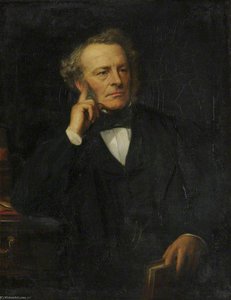
Portræt af Lowes Cato Dickinson

Lowes Cato Dickinson malerier: De 62 mest berømte, set gennem et galleris øjne

Opdateret november 2026 · rangeret efter vores popularitetsscore (søgninger, besøg og ordrer for hvert værk) · 76 værker af Lowes Cato Dickinson i vores katalog

Kort sagt

I galleriets øjne er Lowes Cato Dickinsons mest berømte maleri Sir Henry James Sumner Maine (1890), hvis original hænger på Pembroke College i Cambridge. George Peabody (1795-1869) (1868) og James Clerk Maxwell, Fellow, Physicist (1891) fuldender trioen, som ethvert øje genkender. Ud af de 76 værker af Lowes Cato Dickinson i vores katalog præsenterer galleriet herunder de 62 mest berømte, hver som et originalværk med årstal, museum og det, der gør det unikt.

1819 – 1908, Kilburn Victorian portraiture Flest værker: National Portrait Gallery

Galleriets top 10 Lowes Cato Dickinson malerier

1
Sir Henry James Sumner Maine (1890) af Lowes Cato Dickinson

Sir Henry James Sumner Maine

1890 · Olie på lærred · Pembroke College, Cambridge

Sir Henry James Sumner Maine (1822–1888) – Et Portrættet af en Jurist og Historiker Lowes Cato Dickinson, født i Kilburn, London, i 1819, var en kunstner og kristen socialistisk figur dybt rodfæstiget i den viktorianske kunstverden. Hans familie havde et nært forhold til kunst – hans far, Joseph Dickinson, var en respekteret litograf og udgiver på Bond Street – hvilket synes at have givet Dickinson en naturlig vej fremad. Han…

2
George Peabody (1795-1869) (1868) af Lowes Cato Dickinson

George Peabody (1795-1869)

1868 · Oil On Canvas · Harvard Art Museums, Cambridge

A single light source strikes the face of George Peabody, carving his features from a deep, velvet shadow. He sits in a three-quarter pose, a man composed of heavy fabrics and quiet authority. The light catches the crisp white of his collar and the subtle texture of his skin, revealing the map of a life lived through intellect and influence. His left hand holds a small piece of paper, a…

3
James Clerk Maxwell, Fellow, Physicist (1891) af Lowes Cato Dickinson

James Clerk Maxwell, Fellow, Physicist

1891 · Oil On Canvas · University of Cambridge Museums, Cambridge

Lowes Cato Dickinson’s 1891 oil on canvas, “James Clerk Maxwell, Fellow, Physicist,” transcends the conventional portrait to become a profound meditation on scientific inquiry and Victorian intellectualism. Housed within the hallowed halls of the University of Cambridge, this painting isn't merely a likeness; it’s an embodiment of Maxwell’s formidable mind and his pivotal role in shaping our understanding of the universe. Dickinson masterfully captures not just the outward appearance of…

4
Sir George Gabriel Stokes (1819–1903) (1874) af Lowes Cato Dickinson

Sir George Gabriel Stokes (1819–1903)

1874 · Oil On Canvas · Pembroke College, Cambridge

In the quiet, dignified realm of Victorian portraiture, few works capture the essence of scientific devotion as profoundly as Lowes Cato Dickinson’s 1874 masterpiece, Sir George Gabriel Stokes. This oil on canvas is far more than a mere likeness of a prominent physicist; it is a window into an era defined by the relentless pursuit of truth through observation and reason. As the viewer encounters this portrait, they are immediately…

6
John Russell, 1st Earl Russell (1861) af Lowes Cato Dickinson

John Russell, 1st Earl Russell

1861 · Oil On Canvas · National Portrait Gallery, London

Lowes Cato Dickinson rendered this portrait of John Russell, 1st Earl Russell, between 1855 and 1867. The sitter was a prominent statesman who served as Prime Minister and was a prolific writer. His influence extended into the institutional management of British art through his role as an ex-officio Trustee of the National Portrait Gallery.

7
James Anthony Froude (1890) af Lowes Cato Dickinson

James Anthony Froude

1890 · Oil On Canvas · Oriel College, Oxford

Lowes Cato Dickinson’s 1890 portrait of James Anthony Froude is more than a simple likeness; it's a carefully constructed tableau of Victorian intellect and understated melancholy. The painting, housed within the hallowed halls of the University of Oxford, immediately draws the viewer in with its formal composition and rich palette – a testament to Dickinson’s mastery of oil paint and his ability to capture both physical presence and inner character.

8
William Thomson (1824–1907), Baron Kelvin, Mathematician and Physicist (1869) af Lowes Cato Dickinson

William Thomson (1824–1907), Baron Kelvin, Mathematician and Physicist

1869 · Oil On Canvas · Peterhouse, Cambridge

In the quiet, dignified realm of Victorian portraiture, few works capture the intersection of scientific rigor and soulful contemplation as profoundly as Lowes Cato Dickinson’s 1869 masterpiece, William Thomson (1824–1907), Baron Kelvin. This oil on canvas is far more than a mere biographical record; it is an evocative window into an era defined by the relentless pursuit of truth and the burgeoning light of the scientific revolution. As the viewer…

9
Reverend Frederick William Hope, MA, DCL, FRS, LS (1861) af Lowes Cato Dickinson

Reverend Frederick William Hope, MA, DCL, FRS, LS

1861 · Oil On Canvas

Lowes Cato Dickinson presents Reverend Frederick William Hope, MA, DCL, FRS, LS in this 1861 oil portrait. The subject sits with the quiet gravity of a man defined by the study of the natural world. As an English clergyman, naturalist, collector, and entomologist, Hope carries the weight of his many titles in the steady set of his features. He is a man of science and spirit, captured in a moment…

10
Thomas Hare (1867) af Lowes Cato Dickinson

Thomas Hare

1867 · Oil On Canvas · National Portrait Gallery, London

This portrait of Thomas Hare is a significant work by the English painter Lowes Cato Dickinson. Executed in 1867, the painting captures a man who was deeply involved in the legal and political shifts of the Victorian era. Hare was a British lawyer and a dedicated supporter of electoral reform, a man whose ideas regarding proportional representation would eventually influence democratic systems across several nations.

Lowes Cato Dickinsons malerier, rangeret fra 11 til 62

11The Reverend Septimus C. H. Hansard (1823–1895) (1890) af Lowes Cato DickinsonThe Reverend Septimus C. H. Hansard (1823–1895)1890 12Henry Richards Guard, Fellow, Junior Bursar and Registrary of the University of Cambridge (1897) af Lowes Cato DickinsonHenry Richards Guard, Fellow, Junior Bursar and Registrary of the University of Cambridge1897 · University of Cambridge Museums 13Oscar Browning (1837–1923), President (1859) and Treasurer (1881–1902) of the Cambridge Union Society, Fellow of King's College, Teacher and Historian (1904) af Lowes Cato DickinsonOscar Browning (1837–1923), President (1859) and Treasurer (1881–1902) of the Cambridge Union Society, Fellow of King's College, Teacher and Historian1904 · Cambridge Union Society 14General the Right Honourable Robert Cornellis (1810–1890), Baron the Lord Napier of Magdala, GCB, GCSI, Governor of Gibraltar (1876–1883) (1889) af Lowes Cato DickinsonGeneral the Right Honourable Robert Cornellis (1810–1890), Baron the Lord Napier of Magdala, GCB, GCSI, Governor of Gibraltar (1876–1883)1889 · Government Art Collection 15John Bright (1811–1889) (1873) af Lowes Cato DickinsonJohn Bright (1811–1889)1873 · Touchstones Rochdale 16The Right Honourable Lord Justice Sir Robert Romer (1840–1918), PC, KC, GCB (1897) af Lowes Cato DickinsonThe Right Honourable Lord Justice Sir Robert Romer (1840–1918), PC, KC, GCB1897 · Trinity Hall 17Thomas Ethelbert Page (1850–1936), Classical Scholar and Schoolmaster (1883) af Lowes Cato DickinsonThomas Ethelbert Page (1850–1936), Classical Scholar and Schoolmaster1883 · St John’s College 18Arthur Penrhyn Stanley (1850) af Lowes Cato DickinsonArthur Penrhyn Stanley1850 · National Portrait Gallery 19Rear Admiral Sir Henry John Codrington (1808–1877) (1863) af Lowes Cato DickinsonRear Admiral Sir Henry John Codrington (1808–1877)1863 · National Maritime Museum 20Richard Cobden (1870) af Lowes Cato DickinsonRichard Cobden1870 · National Portrait Gallery 21Richard Lister Venables (1809–1894), MA (1871) af Lowes Cato DickinsonRichard Lister Venables (1809–1894), MA1871 22John Russell, 1st Earl Russell (1867) af Lowes Cato DickinsonJohn Russell, 1st Earl Russell1867 23John Russell, 1st Earl Russell (1867) af Lowes Cato DickinsonJohn Russell, 1st Earl Russell1867 24Edmund Law Lushington (1876) af Lowes Cato DickinsonEdmund Law Lushington1876 · Maidstone Museum - Bentlif Art Gallery 25Gladstone's Cabinet of 1868 (1874) af Lowes Cato DickinsonGladstone's Cabinet of 18681874 · National Portrait Gallery 26Arthur Cayley (1821–1895), Fellow and Mathematician, Sadlerian Professor (1863–1895) (1874) af Lowes Cato DickinsonArthur Cayley (1821–1895), Fellow and Mathematician, Sadlerian Professor (1863–1895)1874 27George Edward Wythes (1839–1875) (1883) af Lowes Cato DickinsonGeorge Edward Wythes (1839–1875)1883 · Ickworth 28Yearling Sale at Doncaster, South Yorkshire (1885) af Lowes Cato DickinsonYearling Sale at Doncaster, South Yorkshire1885 · Doncaster Museum And Art Gallery 29Sir Charles Lyell, 1st Bt (replica of an original of c.1870 by the artist) (1883) af Lowes Cato DickinsonSir Charles Lyell, 1st Bt (replica of an original of c.1870 by the artist)1883 30Thomas Spencer Baynes (1823–1887) (1888) af Lowes Cato DickinsonThomas Spencer Baynes (1823–1887)1888 31The Lawn at Goodwood (1886) af Lowes Cato DickinsonThe Lawn at Goodwood1886 32John Richardson Selwyn, DD, Bishop, Master (1898) af Lowes Cato DickinsonJohn Richardson Selwyn, DD, Bishop, Master1898 · University of Cambridge Museums 33The Lawn at Goodwood (1886) af Lowes Cato DickinsonThe Lawn at Goodwood1886 34Joseph Prior, Fellow and Tutor (1898) af Lowes Cato DickinsonJoseph Prior, Fellow and Tutor1898 · University of Cambridge Museums 35James Clerk Maxwell (1831–1879), Fellow, Physicist (1891) af Lowes Cato DickinsonJames Clerk Maxwell (1831–1879), Fellow, Physicist1891 36The Constable of the Tower (General the Right Honourable Robert Cornellis, 1810–1890, Baron the Lord Napier of Magdala, GCB, GCSI, Governor of Gibraltar, 1876–1883) (1890) af Lowes Cato DickinsonThe Constable of the Tower (General the Right Honourable Robert Cornellis, 1810–1890, Baron the Lord Napier of Magdala, GCB, GCSI, Governor of Gibraltar, 1876–1883)1890 37Joseph Prior (1834–1918), Fellow and Tutor (1898) af Lowes Cato DickinsonJoseph Prior (1834–1918), Fellow and Tutor1898 38Charles Kingsley (1862) af Lowes Cato DickinsonCharles Kingsley1862 · National Portrait Gallery 39Charles Barry Junior (1823–1900), PRIBA (1880) af Lowes Cato DickinsonCharles Barry Junior (1823–1900), PRIBA1880 · Royal Institute of British Architects 40Field Marshal Lord Roberts (1832–1914), VC, KP, GCB, GCSI, GCIE, c.1900 (1901) af Lowes Cato DickinsonField Marshal Lord Roberts (1832–1914), VC, KP, GCB, GCSI, GCIE, c.19001901 41John Campbell White, Baron Overtoun af Lowes Cato DickinsonJohn Campbell White, Baron Overtoun 42Mrs Alice Westlake (1842–1923) af Lowes Cato DickinsonMrs Alice Westlake (1842–1923) 43Henry Wilkinson Cookson, Master (1847–1876) (1876) af Lowes Cato DickinsonHenry Wilkinson Cookson, Master (1847–1876)1876 · Peterhouse 44Den Højtærværdige Hugh McCalmont Cairns (1819–1885), 1. hertug af Cairns (1876) af Lowes Cato DickinsonDen Højtærværdige Hugh McCalmont Cairns (1819–1885), 1. hertug af Cairns1876 · National Trust 45John Bright (1873) af Lowes Cato DickinsonJohn Bright1873 · Touchstones Rochdale Arts And Heritage Centre 46Clara Pater (1860) af Lowes Cato DickinsonClara Pater1860 · Somerville College 47Sir Henry James Sumner Maine (1822–1888), KCSI, LLD, FRS, Master (1877–1888) (1888) af Lowes Cato DickinsonSir Henry James Sumner Maine (1822–1888), KCSI, LLD, FRS, Master (1877–1888)1888 · Trinity Hall 48Mrs Brown Grieve (1863) af Lowes Cato DickinsonMrs Brown Grieve1863 49Henry Wilkinson Cookson (1875) af Lowes Cato DickinsonHenry Wilkinson Cookson1875 · Abbot Hall Art Gallery 50James Anthony Froude (1890) af Lowes Cato DickinsonJames Anthony Froude1890 51Henry Sidgwick, Fellow, Philosopher and Knightsbridge Professor (1902) af Lowes Cato DickinsonHenry Sidgwick, Fellow, Philosopher and Knightsbridge Professor1902 · University of Cambridge Museums 52The Reverend Joseph Waite (1824–1908), DD (1874) af Lowes Cato DickinsonThe Reverend Joseph Waite (1824–1908), DD1874 · Durham University 53John Walsh, 1st Baron Ormathwaite (1865) af Lowes Cato DickinsonJohn Walsh, 1st Baron Ormathwaite1865 · Llyfrgell Genedlaethol Cymru 54George Leeman af Lowes Cato DickinsonGeorge Leeman 55John Westlake, Esq., QC af Lowes Cato DickinsonJohn Westlake, Esq., QC 56Sir Richard Green Price (1803–1887) af Lowes Cato DickinsonSir Richard Green Price (1803–1887) 57George Noel Freeling af Lowes Cato DickinsonGeorge Noel Freeling 58George Noel Freeling (1829–1892) af Lowes Cato DickinsonGeorge Noel Freeling (1829–1892)Merton College 59Thomas Gejetan Ragland (1815–1858), Fellow (1841–1858), Missionary af Lowes Cato DickinsonThomas Gejetan Ragland (1815–1858), Fellow (1841–1858), Missionary 60Reverend Frederick Denison Maurice (1805–1872), Professor of Moral Philosophy (1866), Christian Socialist af Lowes Cato DickinsonReverend Frederick Denison Maurice (1805–1872), Professor of Moral Philosophy (1866), Christian Socialist 61The Reverend Henry Latham (1821–1902), Master (1888–1902) af Lowes Cato DickinsonThe Reverend Henry Latham (1821–1902), Master (1888–1902)Trinity Hall 62George Sclater Booth, Lord Basing af Lowes Cato DickinsonGeorge Sclater Booth, Lord BasingHampshire Cultural Trust

Lowes Cato Dickinsons berømte malerier, periode for periode

Motiverne, der fangede Lowes Cato Dickinsons blik

De fire motiver, der optræder hyppigst i disse originaler, hver med sit fineste eksempel.

De museer, der udstiller Lowes Cato Dickinsons originalværker

De 8 museer, der rummer flest af malerierne på denne side.

Museum By Værker af Lowes Cato Dickinson Malerier fra denne liste
National Portrait Gallery, LondonNational Portrait Gallery London 7 Goldsworthy Lowes Dickinson, John Russell, 1st Earl Russell, Thomas Hare
University of Cambridge Museums, CambridgeUniversity of Cambridge Museums Cambridge 5 James Clerk Maxwell, Fellow, Physicist, Henry Richards Guard, Fellow, Junior Bursar and Registrary of the University of Cambridge, John Richardson Selwyn, DD, Bishop, Master
Trinity Hall, CambridgeTrinity Hall Cambridge 3 The Right Honourable Lord Justice Sir Robert Romer (1840–1918), PC, KC, GCB, Sir Henry James Sumner Maine (1822–1888), KCSI, LLD, FRS, Master (1877–1888), The Reverend Henry Latham (1821–1902), Master (1888–1902)
Pembroke College, CambridgePembroke College Cambridge 2 Sir Henry James Sumner Maine, Sir George Gabriel Stokes (1819–1903)
Peterhouse, CambridgePeterhouse Cambridge 2 William Thomson (1824–1907), Baron Kelvin, Mathematician and Physicist, Henry Wilkinson Cookson, Master (1847–1876)
Harvard Art Museums, CambridgeHarvard Art Museums Cambridge 1 George Peabody (1795-1869)
Oriel College, OxfordOriel College Oxford 1 James Anthony Froude
Cambridge Union Society, CambridgeCambridge Union Society Cambridge 1 Oscar Browning (1837–1923), President (1859) and Treasurer (1881–1902) of the Cambridge Union Society, Fellow of King's College, Teacher and Historian

Lowes Cato Dickinson, ét signaturmaleri per årti

Værker per årti

Vælg et årti for at se det originale værk, der definerer det.

Lowes Cato Dickinson's malerier: galleriets svar

Hvilket maleri af Lowes Cato Dickinson er det mest berømte af alle?Vis svaret

Sir Henry James Sumner Maine (1890), Pembroke College, Cambridge. Derefter følger George Peabody (1795-1869) (1868) og James Clerk Maxwell, Fellow, Physicist (1891).

Hvor gammel var Lowes Cato Dickinson, da Sir Henry James Sumner Maine blev færdiggjort?Vis svaret

71 år gammel: Sir Henry James Sumner Maine er fra 1890, og Lowes Cato Dickinson blev født i 1819.

Hvilke er Lowes Cato Dickinsons top 10 malerier?Vis svaret

Sir Henry James Sumner Maine, George Peabody (1795-1869), James Clerk Maxwell, Fellow, Physicist, Sir George Gabriel Stokes (1819–1903), Goldsworthy Lowes Dickinson, John Russell, 1st Earl Russell, James Anthony Froude, William Thomson (1824–1907), Baron Kelvin, Mathematician and Physicist, Reverend Frederick William Hope, MA, DCL, FRS, LS og Thomas Hare. Ranglisten ovenfor viser det enkelte værks årstal og museum.

Hvor mange værker skabte Lowes Cato Dickinson?Vis svaret

Vores katalog indeholder 76 værker af Lowes Cato Dickinson, dateret fra 1850 til 1904.

Hvor hænger Lowes Cato Dickinsons mest berømte originaler?Vis svaret

Primært i National Portrait Gallery (London), University of Cambridge Museums (Cambridge) og Trinity Hall (Cambridge). Museumslisten ovenfor viser dem alle.

Hvornår skabte Lowes Cato Dickinson sine mest berømte malerier?Vis svaret

I 1860s: 13 af de 62 værker på denne side blev skabt dengang, herunder George Peabody (1795-1869).

Hvilke er Lowes Cato Dickinsons tidligste og seneste berømte værker?Vis svaret

På denne side er det tidligste Arthur Penrhyn Stanley (1850) og det seneste Oscar Browning (1837–1923), President (1859) and Treasurer (1881–1902) of the Cambridge Union Society, Fellow of King's College, Teacher and Historian (1904).

Hvilke motiver vendte Lowes Cato Dickinson oftest tilbage til?Vis svaret

Portrait (11), Man (8) og British art (7), fordelt på de 62 værker på denne side.

Hvilket medie arbejdede Lowes Cato Dickinson mest med?Vis svaret

Oil On Canvas, for 25 af de 62 værker på denne side.

Hvilken stilart er Lowes Cato Dickinson associeret med?Vis svaret

Victorian portraiture, baseret på originalerne på denne side.

Hvilke originalværker af Lowes Cato Dickinson findes i National Portrait Gallery?Vis svaret

Goldsworthy Lowes Dickinson, John Russell, 1st Earl Russell og Thomas Hare: National Portrait Gallery, London har 7 af værkerne på denne side.

Lowes Cato Dickinson: kunstneren

Lowes Cato Dickinson – Person - National Portrait Gallery

Lowes Cato Dickinson, født i Kilburn, London, den 27 november 1819, var en kunstner og kristen socialistisk figur dybt rodfæstiget i viktoriansk England. Hans familie havde et nært forhold til kunstverdenen – hans far, Joseph Dickinson, var en respekteret litograf og udgiver på Bond Street – hvilket synes at have været prædestineret for Dickinsons vej. Alligevel var hans rejse ikke blot en arv af talent og privilegier; han engagerede sig aktivt i den udviklende æstetik og sociale bevægelsestid. Han var en af elleve børn og modtog sin tidlige uddannelse på Topsham School og Dr Lord's School i Tooting, hvilket gav ham et solidt fundament før han fuldt ud dykkede ned i familiens virksomhed efter sin fars død i 1849. Han sluttede sig til sine brødre Gilbert Bell Dickinson og William Robert Dickinson og fortsatte Dickinson Brothers på Bond Street, en virksomhed der hurtigt blev synonym med kvalitetskunsttryk og fotografi. Denne tidlige eksponering var ikke blot om handel; det var en læreplads i visuel kultur, hvilket forme hans øje for detaljer og komposition – egenskaber der ville definere hans senere arbejde som portrætmaler.

The Pre-Raphaelite Circle and the Call of Social Reform

Dickinsons kunstneriske udvikling tog et betydeligt skridt fremad med en treårig ophold i Italien omkring 1850. Denne periode viste sig at være formative og udsatte ham for mesterværkerne fra Renæssancen og påvirkede hans udviklende stil. Efter sin tilbagekomst til England fandt han sig selv tiltrukket af Pre-Raphaelite Brotherhood, hvor han engagerede sig i korrespondance og samarbejde med nøglepersoner som Dante Gabriel Rossetti og John Ruskin, absorberende deres fokus på sandhed til natur og følelsesmæssig intensitet. Han holdt endda foredrag sammen med dem og styrkede dermed sin position inden for denne indflydelsesrige kunstneriske miljø. Denne association var ikke blot æstetisk; den var forbundet med en stigende følelse af social ansvarlighed. Dickinson blev dybt involveret i kristen socialistisk bevægelse, hvor han kæmpede for sociale rettigheder gennem perspektivet af tro. Hans engagement manifesteredes mest konkret i 1854 ved grundlæggelsen af Working Men's College i London – en institution dedikeret til at tilbyde adgang til uddannelse til arbejderklassen og et udtryk for hans tro på videnskabens transformative kraft og ønsket om at forbinde sociale forskelle. Tilstedeværelsen af Ford Madox Brown, som arbejdede for Dickinson Brothers, fremhævede yderligere hans forbindelse til dette dynamiske kunstneriske og intellektuelle netværk.

A Portraitist of Victorian Society

Dickinson var en talentfuld portrætmaler under viktoriansk æra og blev eftertragtet af mange prominente personer i samfundet. Hans styrke lå ikke i grandiose historiske fortællinger eller dramatiske allegorier, men i evnen til at fange essensen af sine modeller – de personer, der forme det britiske samfund. Han malede portrætter af dronning Victoria, prins Edward VII, prinsesse Alice og flere andre betydelige figurer inden for politik og videnskab. Hans teknik var unik: han fokuserede primært på at gengive ansigterne af sine modeller med præcision og omhu, hvilket efterlod beskrivelsen af klædedragt og accessories til andre kunstnere. Denne samarbejdende tilgang tillod ham at koncentrere sig om at udtrykke personlighed og karakter gennem nuancerede ansigtsudtryk og subtile skønhedsnuancer. Han udviklede en særlig metode, hvor han ofte malede kun hovederne af sine kunder, hvilket efterlod resten af kroppen til andre kunstnere – en stil, der blev kendt for sin fokus på følelser og psykologi. Dette gjorde hans værker ekstra karakteristiske og udtrykkende.

Notable Artwork and Legacy

Dickinson præsterede bemærkelsesværdigt gennem hele sit liv og efterlod sig et betydeligt kunstnerisk arv. Hans mest kendte værk er portrættet af prins Edward VII, hvor han formåede at fange hans ungdommelige energi og charisma på en måde, der var både teknisk imponerende og følelsesmæssigt resonerende. Han udstillede regelmæssigt sine værker ved Royal Academy fra 1848 til 1891 og undlod kun udstillingerne i 1849, 1853 og 1884. Hans kunstværker er nu placeret på National Portrait Gallery i London og Working Men's College, hvor hans arbejde fortsætter med at inspirere efterkommere til kunst og uddannelse. Dickinson var ikke blot en dygtig kunstner; han var også en aktiv deltager i den sociale debat af sin tid og kæmpede for menneskelighed og retfærdighed gennem sit kunstneriske arbejde – hvilket cementerede hans status som en ikonisk figur inden for viktoriansk kunsthistorie. Hans værker vil fortsætte med at fascinere og udfordre kunstnere og forskere i mange år fremover.