


1


Opdateret november 2026 · rangeret efter vores popularitetsscore (søgninger, besøg og ordrer for hvert værk) · 15 værker af Leon Victor Dupre i vores katalog
Kort sagt
I galleriets øjne er Leon Victor Dupres mest berømte maleri Landscape with Figure and Cow (1843), hvis original hænger på National Museum of Fine Arts i Buenos Aires. At Water Level (1852) og Landscape (1869) fuldender trioen, som ethvert øje genkender. Ud af de 15 værker af Leon Victor Dupre i vores katalog præsenterer galleriet herunder de 12 mest berømte, hver som et originalværk med årstal, museum og det, der gør det unikt.


De fire motiver, der optræder hyppigst i disse originaler, hver med sit fineste eksempel.
De 5 museer, der rummer flest af malerierne på denne side.
| Museum | By | Værker af Leon Victor Dupre | Malerier fra denne liste |
|---|---|---|---|
 Museo de Bellas Artes de Valparaíso |
Valparaíso | 2 | At Water Level, French Landscape |
 National Museum of Fine Arts |
Buenos Aires | 1 | Landscape with Figure and Cow |
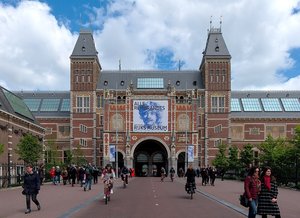 Rijksmuseum |
Amsterdam | 1 | Landscape |
 Bavarian State Painting Collections |
München | 1 | Landscape |
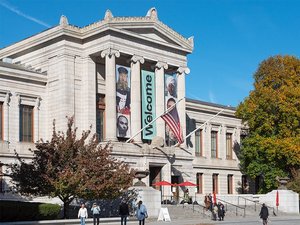 Museum of Fine Arts |
Boston | 1 | Water Meadows and Cattle |
Vælg et årti for at se det originale værk, der definerer det.
Landscape with Figure and Cow (1843), National Museum of Fine Arts, Buenos Aires. Derefter følger At Water Level (1852) og Landscape (1869).
27 år gammel: Landscape with Figure and Cow er fra 1843, og Leon Victor Dupre blev født i 1816.
Landscape with Figure and Cow, At Water Level, Landscape, French Landscape, Landscape with Sheep, Landscape, Water Meadows and Cattle, Flooded Pasture, Landscape og Landscape with cows and figures. Ranglisten ovenfor viser det enkelte værks årstal og museum.
Vores katalog indeholder 15 værker af Leon Victor Dupre, dateret fra 1843 til 1879.
Primært i Museo de Bellas Artes de Valparaíso (Valparaíso), National Museum of Fine Arts (Buenos Aires) og Rijksmuseum (Amsterdam). Museumslisten ovenfor viser dem alle.
På denne side er det tidligste Landscape with Figure and Cow (1843) og det seneste French Landscape (1879).
Landscape (3) og Animals (3), fordelt på de 12 værker på denne side.
At Water Level og French Landscape: Museo de Bellas Artes de Valparaíso, Valparaíso har 2 af værkerne på denne side.
Léon Victor Dupré emerged from the artistic crucible of Limoges, France, a region steeped in tradition yet yearning for the innovations of a changing era. Born in 1816, Dupré’s life and work became an enduring testament to the spirit of Romanticism—a movement that sought to prioritize raw emotion over cold reason, celebrating the sublime beauty of the natural world alongside the introspective depths of human experience. His journey as a painter was deeply rooted in his lineage and early mentorship; while some accounts suggest the influence of celebrated masters, he notably studied under the guidance of his brother, Jules Dupré, an association that helped shape his foundational understanding of light and composition.
The evolution of Dupré’s technique reveals a master in constant dialogue with the atmosphere around him. Though he predated the formal arrival of the Impressionist movement, his approach possessed a prophetic quality, utilizing loose, layered brushstrokes to achieve profound atmospheric effects. He did not merely paint scenery; he captured the very breath of the French countryside. His canvases are renowned for their ability to shimmer with an iridescent light, achieved through a sophisticated blending of hues that convey both melancholy and vibrancy. By meticulously rendering textures—from the rough, weathered bark of ancient trees to the soft, velvety petals of wildflowers—he grounded his romantic visions in a palpable, tactile reality.
To observe a Dupré landscape is to enter a world defined by a specific, evocative color language. His palette frequently danced with shades of violet, crimson, and emerald green, colors chosen specifically to evoke the shifting moods of the French landscape. These tones allowed him to transition seamlessly from the tranquil warmth of a sun-drenched meadow to the somber, ethereal twilight of a coastal scene. This mastery of color enabled him to capture the fleeting moments of visual splendor that define the Romantic experience, making the ephemeral feel eternal upon the canvas.
His repertoire of subjects often focused on the pastoral and the serene, finding profound beauty in the everyday rhythms of rural life. Some of his most significant contributions to the landscape genre include:
Though Dupré’s life ended in 1879 following a long and painful illness, his impact on the trajectory of French landscape painting remains indelible. He stood at a pivotal crossroads in art history, bridging the gap between the meticulous traditions of the past and the emotive, light-focused revolutions of the future. His ability to infuse landscapes with a sense of psychological depth helped pave the way for later artists to treat nature not just as a backdrop, but as a mirror for the human soul.
Today, the works of Léon Victor Dupré continue to resonate with collectors and historians alike. He remains a vital figure for anyone seeking to understand the transition from Romanticism to the dawn of modernism, serving as a reminder that the most profound truths are often found in the quietest corners of the natural world. His legacy lives on through the luminous, breathing landscapes that continue to transport viewers back to the heart of 19th-century France.


