
1


Opdateret november 2026 · rangeret efter vores popularitetsscore (søgninger, besøg og ordrer for hvert værk) · 2 værker af Léon Émile Caille i vores katalog
Kort sagt
I galleriets øjne er Léon Émile Cailles mest berømte maleri Prayer (1872), hvis original hænger på Manchester Art Gallery i Manchester. Ud af de 2 værker af Léon Émile Caille i vores katalog præsenterer galleriet herunder de 2 mest berømte, hver som et originalværk med årstal, museum og det, der gør det unikt.
Det museum, der rummer flest af malerierne på denne side.
| Museum | By | Værker af Léon Émile Caille | Malerier fra denne liste |
|---|---|---|---|
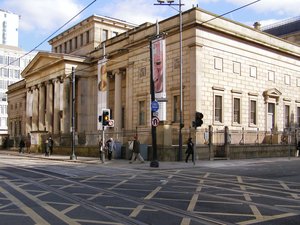 Manchester Art Gallery |
Manchester | 2 | Prayer, Chiding |
Hvert dateret originalværk af Léon Émile Caille på denne side er skabt i 1872: her er de mest berømte først.
Vælg et årstal for at se de originale værker.
Prayer (1872)
36 år gammel: Prayer er fra 1872, og Léon Émile Caille blev født i 1836.
Vores katalog indeholder 2 værker af Léon Émile Caille.
Primært i Manchester Art Gallery (Manchester). Museumslisten ovenfor viser dem alle.
Prayer og Chiding: Manchester Art Gallery, Manchester har 2 af værkerne på denne side.
In the small town of Merville, a life began that would eventually find its way to the grand halls of Paris. Born in 1836, Léon Émile Caille did not start his path in the shadow of the great academies, but rather under the guidance of Henri Magnard in Aire-sur-la-Lys. His early years were shaped by the steady hand of a painter and decorator, a foundation that grounded his later explorations of light and domesticity. He moved from the local instruction of Magnard to the academic rigor of the school of Lille, where he studied for two years under Souchon and Colas, before finally finding his place at the Ecole-des-Beaux-Arts in Paris in 1856.
His training under Leon Cogniet and Edmond Castan provided the technical discipline required to translate the simplest human moments into oil and pigment. By 1861, he was presenting his vision to the public at the annual Paris Salon. It was here that his ability to capture the essence of a scene began to garner recognition, leading to medals in 1879 and 1882. He did not seek the grandiosity of historical epics; instead, he turned his gaze toward the intimacy of the home and the dignity of the peasant life.
Caille possessed a particular sensitivity to how light interacts with the textures of everyday existence. His palette was expressive, using a gentle play of light to define the atmosphere of a room. He found profound meaning in the small, simple works of peasant life, focusing on the quietude of interiors that depicted childhood and the warmth of domesticity. There is a specific tenderness in his depictions of family life, where the innocence of a child or the devotion of a mother becomes the central subject of the work.
His compositions often centered on the following themes:
The strength of Caille's work lies in its appeal to human nature. He avoided the theatrical, choosing instead to characterize the intimacy and affection of a scene through subtle shifts in tone and light. His paintings do not demand attention through scale or complexity, but through the sincerity of their subject matter. This focus on the human condition allowed his works to find a permanent place in collections such as the Lille Museum and the Walters.
He passed away in Guernes in 1907, leaving behind a body of work that remains a study in the beauty of the ordinary. His ability to find grace in the mundane ensured that his depictions of French life would endure, preserved in the quiet dignity of his brushwork.
