Portræt af Lee Jung-Seob

De 27 mest berømte Lee Jung-Seob-malerier, hver og en unik

Opdateret november 2026 · rangeret efter vores popularitetsscore (søgninger, besøg og ordrer for hvert værk) · 27 værker af Lee Jung-Seob i vores katalog

Kort sagt

A Mountain and a Bird er det maleri af Lee Jung-Seob, der vækker mest opsigt; originalen findes på National Museum of Korea, Seoul. Derefter falder blikket på Peach Blossom og Sea of Hyeonhaetan. Blandt de 27 værker af Lee Jung-Seob i vores katalog er disse 27 de mest berømte, hver især et unikt originalværk præsenteret med sit årstal, sit museum og årsagen til dets tidløse betydning.

1916 – 1956, Gyeongnam-provinsen Modern korean art Flest værker: National Museum of Korea

Top 10 malerier af Lee Jung-Seob, set gennem galleriets øjne

1
A Mountain and a Bird af Lee Jung-Seob

A Mountain and a Bird

Oil On Canvas · National Museum of Korea, Seoul

Lee Jung-seob's “A Mountain and a Bird” isn’t merely a depiction of landscape; it’s a profound meditation on Korean identity, resilience, and the enduring spirit of its people. Painted in 1948, just as Korea was grappling with the devastation of war and the complexities of division, this oil-on-paper work transcends simple representation to become a poignant symbol of hope amidst turmoil. The painting captures a solitary bird soaring above a…

2
Peach Blossom af Lee Jung-Seob

Peach Blossom

Oil On Paper · National Museum of Korea, Seoul

In the annals of Korean Modern Art, few works resonate with as much poignant beauty and cultural depth as Lee Jung-seob’s “Peach Blossom.” Created in 1953, this masterpiece serves as a profound meditation on heritage and resilience, capturing a moment of serene natural splendor amidst the turbulent backdrop of post-war Korea. The painting is far more than a mere depiction of nature; it is an evocative exploration of familial bonds…

3
Sea of Hyeonhaetan af Lee Jung-Seob

Sea of Hyeonhaetan

Acrylic On Canvas · National Museum of Korea, Seoul

Lee Jung-seob: Echoes of Tradition in ‘Sea of Hyeonhaetan’ Lee Jung-seob (1916–1956) stands as one of Korea's most influential modernist painters, a figure whose legacy continues to resonate within the nation’s artistic landscape. Born in Pyongannamdo during Japan’s colonial rule, his formative years instilled a profound awareness of cultural identity and resistance against oppression—themes that would permeate throughout his oeuvre. His artistic journey began with an encounter at Jongno Primary…

4
A Bull af Lee Jung-Seob

A Bull

Oil On Paper · National Museum of Korea, Seoul

A Portrait of Resilience: Exploring Lee Jung-seob’s “A Bull” Lee Jung-seob (1916-1956), a Korean master of oil paintings, stands as a beacon of artistic innovation during the tumultuous period of Japanese colonial rule. Born in Pyeongannamdo, South Korea, his formative years witnessed the suppression of Korean cultural identity – a challenge he confronted head-on through his distinctive visual language. “A Bull,” completed around 1948, exemplifies this spirit, embodying both traditional…

5
Twins (1950) af Lee Jung-Seob

Twins

1950 · Ink On Paper

In "Twins" by Lee, Jung-Seob, the composition centers on two stylized, abstracted human figures. These beings appear as twins or interconnected entities, rendered through a continuous, flowing line style. The shapes are organic and simplified, eschewing realistic proportions to prioritize emotional impact. Thick, dark lines define the heavy contours of their heads, limbs, and clothing, while much thinner strokes suggest the delicate placement of eyes and noses. The subject matter…

7
Blue Bird in a Cage af Lee Jung-Seob

Blue Bird in a Cage

Oil On Paper · National Museum of Korea, Seoul

To gaze upon Blue Bird in a Cage is to encounter a delicate tension, a visual poem whispered between freedom and constraint. This evocative piece, rendered with the masterful touch associated with Korean modernism, immediately draws the viewer into its melancholic embrace. The composition itself presents a striking tableau: a figure situated within the stark geometry of a cage, yet softened by the unexpected blush of scattered pink blossoms. It…

9
A Bull, Bird, and Crab af Lee Jung-Seob

A Bull, Bird, and Crab

Woodcut · National Museum of Korea, Seoul

In the evocative realm of Korean modernism, few works capture the raw, unbridled energy of existence quite like Lee Jung-seob’s A Bull, Bird, and Crab. This striking piece serves as a window into a world where form and emotion collide, presenting a stylized, almost chaotic scene that pulses with life. Rendered in deep, earthy shades of brown, the composition is dominated by abstract figures that seem to emerge from a…

Lee Jung-Seobs berømte malerier, nummer 11 til 27

Motiverne, der fangede Lee Jung-Seobs blik

De fire motiver, der optræder hyppigst i disse originaler, hver med sit fineste eksempel.

De museer, der udstiller Lee Jung-Seobs originalværker

Det museum, der rummer flest af malerierne på denne side.

Museum By Værker af Lee Jung-Seob Malerier fra denne liste
National Museum of Korea, SeoulNational Museum of Korea Seoul 25 A Mountain and a Bird, Peach Blossom, Sea of Hyeonhaetan

Lee Jung-Seob gennem årene: de unikke originaler fra hver enkelt

Mellem 1950 og 1954, i alt 5 år, skabte Lee Jung-Seob hvert eneste daterede originalværk vist her: et kort tidsspand, år for år.

Værker per år

Vælg et årstal for at se de originale værker.

Lee Jung-Seobs malerier: spørgsmål til galleriet

Hvad er det mest berømte værk af Lee Jung-Seob?Vis svaret

A Mountain and a Bird, National Museum of Korea, Seoul. Derefter følger Peach Blossom og Sea of Hyeonhaetan.

Hvilke ti malerier af Lee Jung-Seob er de mest berømte?Vis svaret

A Mountain and a Bird, Peach Blossom, Sea of Hyeonhaetan, A Bull, Twins, A Bull and a Child, Blue Bird in a Cage, Boys on the Beach, A Bull, Bird, and Crab og A White Bull. Ranglisten ovenfor viser det enkelte værks årstal og museum.

Hvor mange værker af Lee Jung-Seob er kendt?Vis svaret

Vores katalog indeholder 27 værker af Lee Jung-Seob, dateret fra 1950 til 1954.

Hvor kan de mest berømte originaler af Lee Jung-Seob ses?Vis svaret

Primært i National Museum of Korea (Seoul). Museumslisten ovenfor viser dem alle.

Hvilket berømt maleri af Lee Jung-Seob er det tidligste, og hvilket er det seneste?Vis svaret

På denne side er det tidligste Twins (1950) og det seneste A White Bull (1954).

Hvilke motiver foretrak Lee Jung-Seob?Vis svaret

Landscape (8), Family (8) og Birds (7), fordelt på de 27 værker på denne side.

Hvilke materialer brugte Lee Jung-Seob mest til sine malerier?Vis svaret

Acrylic On Canvas, for 10 af de 27 værker på denne side.

Hvilken stilart tilhører værkerne fra Lee Jung-Seob?Vis svaret

Modern korean art og Korean modernism, baseret på originalerne på denne side.

Hvilke originalværker af Lee Jung-Seob kan jeg se på National Museum of Korea?Vis svaret

A Mountain and a Bird, Peach Blossom og Sea of Hyeonhaetan: National Museum of Korea, Seoul har 25 af værkerne på denne side.

Lee Jung-Seob: et portræt af kunstneren

en koreansk mester inden for oliemalerier

lee, jung-seob, en fremtrædende sydkoreansk kunstner, efterlod et uudsletteligt aftryk på kunstverdenen med sine fængslende oliemalerier. Lee blev født i Pyeongannamdo, Sydkorea, i 1916, og hans kunstneriske rejse var præget af innovation og en dyb forbindelse til sin kulturarv.

kunstneriske bidrag

lee jung-seob er bedst kendt for sit ikoniske værk 'white ox', som står som et vidnesbyrd om hans dygtige brug af oliemaling. Dette mesterværk, sammen med andre værker, fremviser hans unikke stil, der forener traditionelle koreanske elementer med moderne teknikker.
  • vigtige værker:
    • family and pigeon (National Museum of Korea, Seoul, Sydkorea) - et rørende værk udført i olie på papir.
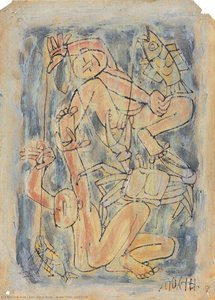
    • boys, fish, and crab (National Museum of Korea, Seoul, Sydkorea) - en akvarel, der demonstrerer lees alsidighed.
    • two boys and deer (National Museum of Korea, Seoul, Sydkorea) - endnu et eksempel på hans tekniske kunnen inden for akvarel.
  • museer der udstiller hans værker:
    • National Museum of Korea (Seoul, Sydkorea)

eftermæle og indflydelse

lee jung-seobs bortgang i Seoul i 1956 markerede afslutningen på en æra, men banede samtidig vejen for fremtidige generationer af koreanske kunstnere. Hans indflydelse kan tydeligt ses i værkerne hos mange samtidige koreanske malere. udforsk mere af lee jung-seobs kunst: [https://OriginalUniqueArt.com/@/lee-jung-seob](https://OriginalUniqueArt.com/@/lee-jung-seob) | opdag en omfattende samling af hans malerier på OriginalUniqueArt. lær om andre berømte kunstnere: /da/art/list/ | gennemse listen over de største kunstnere hos OriginalUniqueArt.