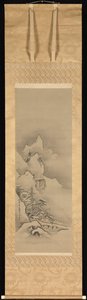
Portræt af Kano Tan'Yū

De 51 mest berømte Kano Tan'Yū-malerier, hver og en unik

Opdateret november 2026 · rangeret efter vores popularitetsscore (søgninger, besøg og ordrer for hvert værk) · 52 værker af Kano Tan'Yū i vores katalog

Kort sagt

Jizō Bosatsu Playing a Flute (601) er det maleri af Kano Tan'Yū, der vækker mest opsigt; originalen findes på Metropolitan Museum of Art, New York. Derefter falder blikket på Connoisseur's Sketchbook by Kano Tan'yū (Tan'yū shukuzu) in Two Volumes og Landscapes of the Four Seasons (1630). Blandt de 52 værker af Kano Tan'Yū i vores katalog er disse 51 de mest berømte, hver især et unikt originalværk præsenteret med sit årstal, sit museum og årsagen til dets tidløse betydning.

1602 – 1674, Kyoto Flest værker: Metropolitan Museum of Art

Top 10 malerier af Kano Tan'Yū, set gennem galleriets øjne

1
Jizō Bosatsu Playing a Flute (601) af Kano Tan'Yū

Jizō Bosatsu Playing a Flute

601 · Ink · Metropolitan Museum of Art, New York

Introduction to the Artist and Art Movement Kano Tan'yū, born in 1602, was a prominent Japanese painter of the Edo period. He belonged to the prestigious Kanō School art movement, which dominated the Japanese painting scene for over four centuries. The Kanō School style is characterized by its grandeur and monumentality, with an emphasis on bold brushstrokes and vibrant colors. Jizō Bosatsu Playing a Flute: A Rare Depiction One of…

2
Connoisseur's Sketchbook by Kano Tan'yū (Tan'yū shukuzu) in Two Volumes af Kano Tan'Yū

Connoisseur's Sketchbook by Kano Tan'yū (Tan'yū shukuzu) in Two Volumes

Ink · Harvard Art Museums, Cambridge

The Connoisseur's Sketchbook (Tan'yū shukuzu) is presented in two cylindrical volumes. These scrolls are encased in heavy, woven silk or brocade, featuring a deep indigo blue base. The textile surface is decorated with repetitive damask-style motifs, including swirling floral and geometric shapes rendered in metallic gold, bronze, and muted teal. Each volume is secured with a thick, maroon fabric ribbon tied in a knot. White museum identification tags are attached…

3
Landscapes of the Four Seasons (1630) af Kano Tan'Yū

Landscapes of the Four Seasons

1630

The "Landscapes of the Four Seasons" unfolds before us as a pair of six-panel folding screens. This work emerges from the 1630s, a period when the artist Kano Tan'Yū was establishing his presence within the artistic circles of Japan. Born in Kyoto, Japan, in 1602, Kano Tan'Yū brings a specific vision to these panels, one shaped by his high standing as the official painter to the second Tokugawa shogun Hidetada.

4
Birds and Flowers (601) af Kano Tan'Yū

Birds and Flowers

601 · Ink On Paper

Introduction to the Kanō School Style Art Movement The Kanō school style art movement is one of the most famous schools of Japanese painting, with a history that spans from the late 15th century to the Meiji period. The school was founded by Kanō Masanobu and produced a string of major artists over several generations, including Kanō Motonobu, Kanō Eitoku, and Kanō Tan'yu. The Kanō school began by reflecting a…

5
The Sixth Patriarch of Zen at the Moment of Enlightenment (1640) af Kano Tan'Yū

The Sixth Patriarch of Zen at the Moment of Enlightenment

1640 · Ink On Paper · Metropolitan Museum of Art, New York

The artwork titled The Sixth Patriarch of Zen at the Moment of Enlightenment was executed by the artist Kano Tan'Yū. Born in Kyoto, Japan, in 1602, Kano Tan'Yū produced this work in 1635. The painting is a visual representation of a Zen parable concerning Hui-neng, who lived from 638 to 713. As the sixth patriarch of Zen, Hui-neng is the central subject of this composition.

6
Gibbons Reaching for the Moon (1638) af Kano Tan'Yū

Gibbons Reaching for the Moon

1638 · Ink · Cleveland Museum of Art, Cleveland

A single, slender vine cuts through the vertical space of the silk, a dark line descending from the upper reaches of the frame. Along this vine, a series of long-armed gibbons form a living chain. They cling to the wood, their bodies oriented toward a pale, circular orb at the bottom of the composition. The primates move with a sense of weightlessness, their soft fur rendered in delicate, calligraphic strokes…

7
Sketch for a Painting of Scholars at the Game of Go (1666) af Kano Tan'Yū

Sketch for a Painting of Scholars at the Game of Go

1666 · Ink · Metropolitan Museum of Art, New York

In this vertical composition, Kano Tan'Yū arranges the landscape of Sketch for a Painting of Scholars at the Game of Go to encourage a slow, meditative gaze. The artist employs asymmetrical balance to guide the eye through a sequence of mountains, water, and figures. This arrangement creates a sense of natural movement, leading the viewer from the immediate foreground toward the distant, receding peaks. One figure is positioned near a…

8
“Bluish-Green Fish Scales” (601) af Kano Tan'Yū

“Bluish-Green Fish Scales”

601

Introduction Kano Tan'yu, a pivotal figure in the history of Japanese painting, is best known as the heir to the mantle of the Kano school of painters in the early seventeenth to mid-seventeenth century. His work "Bluish-Green Fish Scales" (Kano Tan'yu: “Bluish-Green Fish Scales”) is a prime example of his masterful ink painting on paper, showcasing the unique texture and beauty of Japanese paper. Artwork Analysis The artwork "Bluish-Green Fish…

9
Sparrow and Bamboo (701) af Kano Tan'Yū

Sparrow and Bamboo

701 · Ink On Paper

This traditional Japanese ink wash painting on paper depicts two sparrows perched upon bamboo branches. The artwork is rendered in a realistic style, utilizing fine details to define the subjects. The birds and the bamboo are executed through varying shades of black ink, which create a sense of texture and depth against a light beige background.

10
Untitled (D2X6YD) (701) af Kano Tan'Yū

Untitled (D2X6YD)

701 · Ink

Untitled (D2X6YD) is a work by the artist Kano Tan'Yū. He emerged from the lineage of the Kanō school, a tradition of brushwork and composition that shaped the visual language of the Edo period. His hand moved with the discipline of a lineage that understood the weight of ink and the silence of empty space.

Kano Tan'Yūs berømte malerier, nummer 11 til 51

11The Sixth Patriarch of Zen at the Moment of Enlightenment (1635) af Kano Tan'YūThe Sixth Patriarch of Zen at the Moment of Enlightenment1635 12Landscape with Fisherman (1638) af Kano Tan'YūLandscape with Fisherman1638 13Birds and Flowers (1650) af Kano Tan'YūBirds and Flowers1650 · Metropolitan Museum of Art 14Squirrel on Bamboo (1650) af Kano Tan'YūSquirrel on Bamboo1650 15Squirrel on Bamboo (1650) af Kano Tan'YūSquirrel on Bamboo1650 · Museum of Fine Arts, Houston 16Ducks and Reeds (1650) af Kano Tan'YūDucks and Reeds1650 · Metropolitan Museum of Art 17月夜山水図 Landscape in Moonlight (1662) af Kano Tan'Yū月夜山水図 Landscape in Moonlight1662 · Metropolitan Museum of Art 18Untitled (D2X2LQ) (1662) af Kano Tan'YūUntitled (D2X2LQ)1662 · Metropolitan Museum of Art 19Famous Themes for Painting Study Known as “The Garden of Painting” (Gaen) (1670) af Kano Tan'YūFamous Themes for Painting Study Known as “The Garden of Painting” (Gaen)1670 · Metropolitan Museum of Art 20Famous Themes for Painting Study Known as “The Garden of Painting” (Gaen) (1670) af Kano Tan'YūFamous Themes for Painting Study Known as “The Garden of Painting” (Gaen)1670 · Metropolitan Museum of Art 21Dragon in the Clouds (1666) af Kano Tan'YūDragon in the Clouds1666 · Fukuda Art Museum 22Hotei af Kano Tan'YūHoteiMetropolitan Museum of Art 23Sakyamuni Emerging from the Mountain af Kano Tan'YūSakyamuni Emerging from the MountainYale University Art Gallery 24Connoisseur's Sketchbook by Kano Tan'yū (Tan'yū shukuzu), Copies of Buddhist Paintings, Vol. II af Kano Tan'YūConnoisseur's Sketchbook by Kano Tan'yū (Tan'yū shukuzu), Copies of Buddhist Paintings, Vol. IIHarvard Art Museums 25Sketches of the Ten Kings of Hell (Jūō zu) af Kano Tan'YūSketches of the Ten Kings of Hell (Jūō zu)Harvard Art Museums 26Connoisseur's Sketchbook by Kano Tan'yū (Tan'yū shukuzu) af Kano Tan'YūConnoisseur's Sketchbook by Kano Tan'yū (Tan'yū shukuzu)Harvard Art Museums 27Four Sleepers af Kano Tan'YūFour Sleepers 28Fisherman af Kano Tan'YūFishermanMetropolitan Museum of Art 29Sketch for a Painting of Mi Fu Inscribing a Poem on a Rock (1666) af Kano Tan'YūSketch for a Painting of Mi Fu Inscribing a Poem on a Rock1666 · Metropolitan Museum of Art 30Connoisseur's Sketchbook by Kano Tan'yū (Tan'yū shukuzu), Copies of Buddhist Paintings in Two Volumes af Kano Tan'YūConnoisseur's Sketchbook by Kano Tan'yū (Tan'yū shukuzu), Copies of Buddhist Paintings in Two VolumesHarvard Art Museums 31Summer Landscape (1662) af Kano Tan'YūSummer Landscape1662 · Metropolitan Museum of Art 32Portrait of Emperor Shennong (1665) af Kano Tan'YūPortrait of Emperor Shennong1665 · Metropolitan Museum of Art 33Landscape in Moonlight (1662) af Kano Tan'YūLandscape in Moonlight1662 · Metropolitan Museum of Art 34Landscape in Moonlight (1662) af Kano Tan'YūLandscape in Moonlight1662 · Metropolitan Museum of Art 35Phoenixes by Paulownia Trees af Kano Tan'YūPhoenixes by Paulownia Trees 36Bird, Flower and Various Chinese Figure af Kano Tan'YūBird, Flower and Various Chinese FigureYale University Art Gallery 37Cloudy Mountain af Kano Tan'YūCloudy MountainYale University Art Gallery 38Landscape of the Four Seasons (Shiki sansui zu) af Kano Tan'YūLandscape of the Four Seasons (Shiki sansui zu)Harvard Art Museums 39Connoisseur's Sketchbook by Kano Tan'yū (Tan'yū shukuzu) af Kano Tan'YūConnoisseur's Sketchbook by Kano Tan'yū (Tan'yū shukuzu)Harvard Art Museums 40Connoisseur's Sketchbook by Kano Tan'yū (Tan'yū shukuzu) af Kano Tan'YūConnoisseur's Sketchbook by Kano Tan'yū (Tan'yū shukuzu)Harvard Art Museums 41Connoisseur's Sketchbook by Kano Tan'yū (Tan'yū shukuzu) af Kano Tan'YūConnoisseur's Sketchbook by Kano Tan'yū (Tan'yū shukuzu)Harvard Art Museums 42Connoisseur's Sketchbook by Kano Tan'yū (Tan'yū shukuzu), Copies of Buddhist Paintings, Vol. I af Kano Tan'YūConnoisseur's Sketchbook by Kano Tan'yū (Tan'yū shukuzu), Copies of Buddhist Paintings, Vol. IHarvard Art Museums 43Flowering Peonies and Descending Bird af Kano Tan'YūFlowering Peonies and Descending BirdHarvard Art Museums 44Broken-Ink Landscape (Haboku sansui zu) af Kano Tan'YūBroken-Ink Landscape (Haboku sansui zu)Harvard Art Museums 45Connoisseur's Sketchbook by Kano Tan'yū (Tan'yū shukuzu) af Kano Tan'YūConnoisseur's Sketchbook by Kano Tan'yū (Tan'yū shukuzu)Harvard Art Museums 46Tan’yu shukuzu (Sketches by Tan'yu) af Kano Tan'YūTan’yu shukuzu (Sketches by Tan'yu)Harvard Art Museums 47Landscapes of the Four Seasons af Kano Tan'YūLandscapes of the Four Seasons 48Sparrow and Bamboo af Kano Tan'YūSparrow and BambooMetropolitan Museum of Art 49笛吹地蔵図 Jizō Bosatsu Playing a Flute af Kano Tan'Yū笛吹地蔵図 Jizō Bosatsu Playing a Flute 50Shennong (Jiu Nō), Legendary Emperor of China af Kano Tan'YūShennong (Jiu Nō), Legendary Emperor of China 51Mount Fuji af Kano Tan'YūMount FujiShizuoka Prefectural Museum of Art

Motiverne, der fangede Kano Tan'Yūs blik

De fire motiver, der optræder hyppigst i disse originaler, hver med sit fineste eksempel.

De museer, der udstiller Kano Tan'Yūs originalværker

De 7 museer, der rummer flest af malerierne på denne side.

Museum By Værker af Kano Tan'Yū Malerier fra denne liste
Metropolitan Museum of Art, New YorkMetropolitan Museum of Art New York 17 Jizō Bosatsu Playing a Flute, The Sixth Patriarch of Zen at the Moment of Enlightenment, Sketch for a Painting of Scholars at the Game of Go
Harvard Art Museums, CambridgeHarvard Art Museums Cambridge 14 Connoisseur's Sketchbook by Kano Tan'yū (Tan'yū shukuzu) in Two Volumes, Connoisseur's Sketchbook by Kano Tan'yū (Tan'yū shukuzu), Copies of Buddhist Paintings, Vol. II, Sketches of the Ten Kings of Hell (Jūō zu)
Yale University Art Gallery, New HavenYale University Art Gallery New Haven 3 Sakyamuni Emerging from the Mountain, Bird, Flower and Various Chinese Figure, Cloudy Mountain
Cleveland Museum of Art, ClevelandCleveland Museum of Art Cleveland 1 Gibbons Reaching for the Moon
Museum of Fine Arts, Houston, HoustonMuseum of Fine Arts, Houston Houston 1 Squirrel on Bamboo
Fukuda Art Museum, KyotoFukuda Art Museum Kyoto 1 Dragon in the Clouds
Shizuoka Prefectural Museum of Art, ShizuokaShizuoka Prefectural Museum of Art Shizuoka 1 Mount Fuji

Kano Tan'Yū gennem årtierne: ét unikt originalværk til hver

Værker per årti

Vælg et årti for at se det originale værk, der definerer det.

Kano Tan'Yūs malerier: spørgsmål til galleriet

Hvad er det mest berømte værk af Kano Tan'Yū?Vis svaret

Jizō Bosatsu Playing a Flute (601), Metropolitan Museum of Art, New York. Derefter følger Connoisseur's Sketchbook by Kano Tan'yū (Tan'yū shukuzu) in Two Volumes og Landscapes of the Four Seasons (1630).

Hvilke ti malerier af Kano Tan'Yū er de mest berømte?Vis svaret

Jizō Bosatsu Playing a Flute, Connoisseur's Sketchbook by Kano Tan'yū (Tan'yū shukuzu) in Two Volumes, Landscapes of the Four Seasons, Birds and Flowers, The Sixth Patriarch of Zen at the Moment of Enlightenment, Gibbons Reaching for the Moon, Sketch for a Painting of Scholars at the Game of Go, “Bluish-Green Fish Scales”, Sparrow and Bamboo og Untitled (D2X6YD). Ranglisten ovenfor viser det enkelte værks årstal og museum.

Hvor mange værker af Kano Tan'Yū er kendt?Vis svaret

Vores katalog indeholder 52 værker af Kano Tan'Yū, dateret fra 1630 til 1670.

Hvor kan de mest berømte originaler af Kano Tan'Yū ses?Vis svaret

Primært i Metropolitan Museum of Art (New York), Harvard Art Museums (Cambridge) og Yale University Art Gallery (New Haven). Museumslisten ovenfor viser dem alle.

I hvilken periode skabte Kano Tan'Yū sine mest kendte malerier?Vis svaret

I 1660s: 9 af de 51 værker på denne side blev skabt dengang, herunder Sketch for a Painting of Scholars at the Game of Go.

Hvilket berømt maleri af Kano Tan'Yū er det tidligste, og hvilket er det seneste?Vis svaret

På denne side er det tidligste Landscapes of the Four Seasons (1630) og det seneste Famous Themes for Painting Study Known as “The Garden of Painting” (Gaen) (1670).

Hvilke motiver foretrak Kano Tan'Yū?Vis svaret

Birds (6), Person (5) og Branches (5), fordelt på de 51 værker på denne side.

Hvilke materialer brugte Kano Tan'Yū mest til sine malerier?Vis svaret

Ink, for 9 af de 51 værker på denne side.

Hvilke originalværker af Kano Tan'Yū kan jeg se på Metropolitan Museum of Art?Vis svaret

Jizō Bosatsu Playing a Flute, The Sixth Patriarch of Zen at the Moment of Enlightenment og Sketch for a Painting of Scholars at the Game of Go: Metropolitan Museum of Art, New York har 17 af værkerne på denne side.

Kano Tan'Yū: et portræt af kunstneren

Tidligt liv og herkomst

Kanō Tan’yū, født i Kyoto i 1602, trådte ind på scenen som en del af en slægt dybt forankret i Kanō-skolens traditioner—den mest indflydelsesrige kraft i japansk malerkunst gennem århundreder. Hans far, Kano Takanobu, var en fremtrædende kunstner inden for dette etablerede system, og Tan’yū arvede ikke blot hans kunstneriske færdigheder, men også en dyb forståelse for de æstetiske principper, der havde defineret generationer af malere. Kanō-skolen, som har sine rødder hos Kanō Masanobu i det 15. århundrede, var en harmonisk blanding af elementer fra Zen-buddhismen, kinesisk landskabsmaleri og klassiske japanske stilarter. Tan’yūs tidlige uddannelse må have været streng og disciplineret, med et intenst fokus på det omhyggelige penselarbejde, en forståelse for kompositionel balance og en dyb respekt for historiske forbilleder. Han var dog ikke blot skæbnebestemt til at kopiere fortiden; hans karriere ville i stedet blive kendetegnet ved en unik syntese af tradition og innovation.

Kajibashi-stilen og shogunatets mæcenat

I den forbløffende unge alder af sytten år modtog Tan’yū en udnævnelse som maler for Tokugawa-shogunatet. Dette skelsættende øjeblik ændrede hans kunstneriske udvikling drastisk. Han blev tildelt et gods i Edo (det moderne Tokyo) kaldet Kajibashi, hvilket blev synonymt med en særskilt gren af Kanō-skolen – Kajibashi-Kano-stilen. Dette mæcenat var ikke blot af økonomisk karakter; det medførte ansvaret for at etablere et nyt visuelt sprog, der kunne afspejle shogunatets magt og autoritet. Tan'yū svarede igen ved bevidst at vende tilbage til de tidligere, mere afdæmpede former for Kanō-maleri og undgå de flamboyante overflødigheder, som var sneget sig ind i stilen i slutningen af det 16. århundrede. Han foretrak historiske motiver – især dem, der legemliggjorde konfucianske etiske principper – og landskaber gennemstrømmet af en følelse af højtidelig værdighed.

Storslåede bestillinger og arkitektonisk dekoration

Tan’yūs indflydelse strakte sig langt ud over de enkelte malerier; han blev berømt for sine monumentale dekorative projekter i Tokugawa-regimets slotte og paladser. Han satte et uudsletteligt præg på Nijō-slottet i Kyoto, hvor han prydede dets vægge med scener, der fejrede shogunatets autoritet og legitimitet. Lignende opgaver fulgte ved Nagoya-slottet og det kejserlige palads i Kyoto. Disse var ikke blot isolerede kunstneriske bedrifter, men var en integreret del af tidens politiske budskaber. Malerierne fungerede som kraftfulde visuelle erklæringer, der understregede shogunens position og projicerede et billede af stabilitet og kulturel raffinement. Hans tilgang involverede ikke kun hans egen pensel, men også arbejdet fra et voksende værksted – et vidnesbyrd om disse projekters enorme omfang og hans rolle som en mesterlig organisator.

Temaer og teknikker: En syntese af tradition

Tan'yūs malerier er kendetegnet ved en bemærkelsesværdig balance mellem teknisk virtuositet og filosofisk dybde. Han excellerede i både monokrom tuschnmaleri (sumi-e) og farverige, detaljerede kompositioner. Hans motiver kredsede ofte om historiske skikkelser—hvor især Konfucius og hans disciple var højt værdsatte—samt scener fra naturen, såsom landskaber befolket af tigre, fugle og bambus. Tiger-motivet var for eksempel ikke blot en fremvisning af kunstnerisk dygtighed; det symboliserede mod, styrke og beskyttelse—egenskaber der var højt værdsat af krigerklassen. Hans teknik indebar omhyggeligt penselarbejde, subtile gradueringer af toner og en mesterlig brug af det negative rum. Han var også kendt for sine talrige skitser af flora og fauna, hvilket vidnede om en skarp observationsevne, der berigede hans større kompositioner. Hans stil beskrives ofte som konservativ, men denne konservatisme var ikke stilstand; det var en bevidst indsats for at genoplive kerneprincipperne i Kanō-skolen, samtidig med at de blev tilpasset sin tids behov.

Arv og historisk betydning

Kano Tan'Yū døde i Edo i 1674 og efterlod sig en arv, der gennem århundreder har præget japansk malerkunst på en gennemgribende måde. Han etablerede den dominerende stil for Edo-periodens kunst og lagde fundamentet for en omfattende organisation af officielle shogunat-malere. Hans fokus på historiske motiver og konfucianske værdier genlød dybt hos den herskende klasse, hvilket cementerede hans position som et kulturelt ikon. Selvom senere kunstnere ville udforske helt nye udtryksformer, forblev Tan'Yūs indflydelse gennemtrængende. Han huskes ikke blot som en dygtig maler, men også som en mesterlig samler, en skarpsindig administrator og en skelsættende skikkelse i udviklingen af japansk kunsthistorie. Hans værker fortsætter med at blive beundret for deres tekniske genialitet, filosofiske dybde og tidløse æstetiske appel.