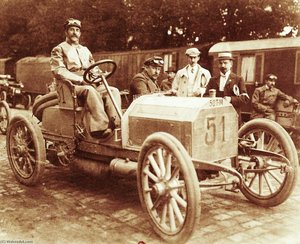
Jules Beau: Pioneer of Sporting Photography
Jules Beau (1864-1932) stands as a pivotal figure in the history of French photography and, crucially, the burgeoning field of sports journalism. Born into a family steeped in artistic tradition – his father was a painter – Beau’s own creative path diverged towards documenting the dynamism of the
early 20th century, capturing moments that would otherwise have vanished from collective memory. While he didn't achieve widespread fame during his lifetime, Beau’s contribution to preserving visual records of sporting events cemented his place as a forerunner of modern photographic storytelling.
- Early Life & Artistic Training: Beau received a robust artistic education, honing his skills in drawing and painting under the tutelage of Jules Lefebvre, a celebrated academic artist known for his meticulous realism and profound exploration of human emotion – a stylistic influence that would subtly permeate Beau’s photographic approach.
- The Rise of Sporting Photography: Recognizing the potential to visually chronicle significant cultural happenings, Beau transitioned into photography around 1890. He swiftly established himself as a prolific recorder of sporting activities, focusing primarily on cycling races, motor racing events, and rugby matches.
- Technique & Aesthetic Considerations: Beau’s photographic technique favored albumen prints – a process that produced stunningly detailed images using collodion emulsion on sensitized paper—a method championed by Lefebvre himself. This meticulous craftsmanship ensured that his photographs retained exceptional clarity and tonal range, faithfully conveying the energy and excitement of the scenes he captured.
- Notable Achievements & Legacy: Beau’s work gained recognition for its historical accuracy and artistic merit. He documented pivotal sporting competitions, providing invaluable visual records of an era defined by technological innovation and burgeoning public interest in athletic pursuits. His images continue to resonate today as embodiments of a bygone aesthetic—a testament to his pioneering role in shaping the art form of sports photography.
- Influence on Subsequent Photographers: Beau’s dedication to capturing authentic moments and his masterful use of photographic technique served as an inspiration for later generations of photographers, establishing him as a foundational figure in the evolution of visual journalism.
Exploring Beau's Photographic Vision
Beau’s artistic sensibilities extended beyond mere technical proficiency; he possessed a keen eye for composition and lighting—elements that elevated his photographs from simple documentation to evocative representations of human experience. Like
Lefebvre, Beau sought to convey “belle âme”—a concept emphasizing beauty infused with moral and spiritual depth—through his images. This pursuit of aesthetic excellence is evident in the carefully framed shots he produced, capturing not just what happened but also *how* it felt.
- Cycling Races: Beau’s photographs of cycling races exemplify his ability to convey movement and speed with remarkable precision.
- Motor Racing Events: Similarly, his depictions of motor racing events captured the thrill of competition and the spectacle of technological advancement.
- Rugby Matches: Beau's images of rugby matches showcased the physicality and camaraderie of the sport, conveying a sense of dynamism and human connection.
Representative Works
Beau’s photographic oeuvre comprises several noteworthy pieces that exemplify his artistic vision and technical mastery. Among these are “
Untitled (AQTGPC),” documenting a motorized truck parade float—a celebration of industrial progress—and “
Untitled (AQTGPA),” capturing a lively
Parisian street scene featuring motorcycling enthusiasts. Furthermore, "
Untitled (AQTGPU)" immortalizes the excitement of a motor race, demonstrating Beau’s ability to convey emotion and energy through visual storytelling. These images stand as enduring symbols of an era defined by both artistic innovation and societal transformation.


 Doxandem Squad
 Gallery of Spis Artists