Portræt af Josef Kriehuber

Josef Kriehuber malerier: De 100 mest berømte, set gennem et galleris øjne

Opdateret november 2026 · rangeret efter vores popularitetsscore (søgninger, besøg og ordrer for hvert værk) · 134 værker af Josef Kriehuber i vores katalog

Kort sagt

I galleriets øjne er Josef Kriehubers mest berømte maleri Karoline Auguste. Fanny Elssler, Austrian ballerina (1830) og Prince Friedrich of Schwarzenberg (1847) fuldender trioen, som ethvert øje genkender. Ud af de 134 værker af Josef Kriehuber i vores katalog præsenterer galleriet herunder de 100 mest berømte, hver som et originalværk med årstal, museum og det, der gør det unikt.

1800 – 1876, Wien Biedermeier Flest værker: National Portrait Gallery of Sweden

Galleriets top 10 Josef Kriehuber malerier

1
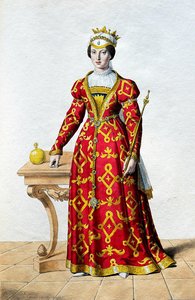
Karoline Auguste af Josef Kriehuber

Karoline Auguste

Lithograph

In this portrait of Karoline Auguste, we encounter a formal depiction of a woman whose attire and crown suggest a position of significant status. Josef Kriehuber, an Austrian lithographer and painter, captured the subject with a focus on the dignity inherent in her pose. The work presents a quiet, composed presence, emphasizing the details of her clothing and the subtle features of her face. It is a study of character…

2
Fanny Elssler, Austrian ballerina (1830) af Josef Kriehuber

Fanny Elssler, Austrian ballerina

1830 · Lithography

The lithograph captures a moment of stillness in a life of movement. Fanny Elssler sits in a three-quarter view, her gaze drifting slightly away from the viewer toward an unseen point. She is an Austrian ballerina, frozen in a monochromatic world of silver and charcoal. Her posture is upright, a column of poise that suggests the quiet discipline behind the public spectacle of dance. The light is diffused, washing over…

3
Prince Friedrich of Schwarzenberg (1847) af Josef Kriehuber

Prince Friedrich of Schwarzenberg

1847 · Lithograph · Metropolitan Museum of Art, New York

This striking portrait captures Prince Friedrich of Schwarzenberg in the charged atmosphere of 1847. The subject is presented not merely as an individual, but as an embodiment of military bearing and societal importance during a pivotal era in European history. Clad in the formal accoutrements of his station—the crisp lines of his uniform, the authoritative gleam of the sword held at hand—he commands attention. The monochrome quality of the piece…

4
Josef Lanner, Austrian Composer (1825) af Josef Kriehuber

Josef Lanner, Austrian Composer

1825 · Lithograph

This monochrome portrait, titled Josef Lanner, Austrian Composer, was created by the artist Josef Kriehuber. The work depicts the Austrian composer Josef Lanner in a bust-length composition. The subject is presented as a gentleman of the era, shown from the chest up and facing slightly toward the viewer's left. The image is rendered in grayscale, utilizing varying shades of gray to define the form of the figure against a simple,…

5
Anton Bernhard Fürstenau, German flutist and composer (1830) af Josef Kriehuber

Anton Bernhard Fürstenau, German flutist and composer

1830 · Engraving

This monochrome engraving presents a bust-length portrait of Johann Baptist Forster, identified as the First Royal Magistrate of Saxony. The subject is positioned centrally against a dark, undifferentiated background, which focuses attention on the facial features and the formal attire. The composition follows a Neoclassical structure, emphasizing a realistic depiction of the man's physical presence. Light originates from above and slightly in front, casting highlights onto the forehead and the…

6
Ernst and Eduard Eichhorn, violin prodigies (1831) af Josef Kriehuber

Ernst and Eduard Eichhorn, violin prodigies

1831 · Lithograph

Josef Kriehuber produced Ernst and Eduard Eichhorn, violin prodigies, a black and white lithograph portrait. The work dates to about 1831. It captures the likeness of the two young musicians, Ernst and Eduard Eichhorn, who are identified as violin prodigies.

7
Karl von Rothkirch-Panthen, Bohemian-Austrian politician (1828) af Josef Kriehuber

Karl von Rothkirch-Panthen, Bohemian-Austrian politician

1828 · Lithography

The gaze of Karl von Rothkirch-Panthen, Bohemian-Austrian politician, meets the viewer through this striking lithograph. Josef Kriehuber captures the man in a moment of quiet dignity, presenting a figure of significant social and political weight. This portrait offers a window into the life of a man who navigated the complex corridors of power, eventually serving as a member of the Chamber of Deputies of the Imperial Council of Austria. Even…

8
Joseph Böhm, Hungarian Violinist and a director of the Vienna Conservatory (1830) af Josef Kriehuber

Joseph Böhm, Hungarian Violinist and a director of the Vienna Conservatory

1830 · Lithograph

This lithograph, titled "Joseph Böhm, Hungarian Violinist and a director of the Vienna Conservatory" by Josef Kriehuber, depicts the subject in a formal bust-length view. The portrait captures Joseph Böhm, a Hungarian violinist who held the position of professor at the Vienna Conservatory from 1819 to 1848. The image is rendered in a monochrome grayscale palette, utilizing fine lines to define the contours of the subject's face and attire. He…

9
Bulcs (1828) af Josef Kriehuber

Bulcs

1828 · Lithograph

A man stands centered against a muted, mountainous landscape, his gaze fixed and stern. He is a figure of history, or perhaps a memory of one, draped in the heavy textures of a warrior's attire. The light falls evenly across his face, revealing the fine, etched lines of his features and the sharp edges of his weaponry. He holds an axe, a bow, and arrows, tools of a life defined…

10
Ferdinand III (1828) af Josef Kriehuber

Ferdinand III

1828 · Lithograph

This portrait of Ferdinand III, executed by Josef Kriehuber, offers a quiet study of authority from the early nineteenth century. Created in 1828, the work captures the subject in a moment of formal repose. Kriehuber focuses on the dignity of the sitter, presenting him in full regal attire that signals his high status. The portrait provides a clear, direct encounter with a figure of historical significance.

Josef Kriehubers malerier, rangeret fra 11 til 100

11Vladislav II (1828) af Josef KriehuberVladislav II1828 12Leopold I (1828) af Josef KriehuberLeopold I1828 13Joseph II (1828) af Josef KriehuberJoseph II1828 14Karl VI (1828) af Josef KriehuberKarl VI1828 15Koloman (1828) af Josef KriehuberKoloman1828 16Ferdinand I of Austria (1828) af Josef KriehuberFerdinand I of Austria1828 17Taksony (1828) af Josef KriehuberTaksony1828 18Lehel (1828) af Josef KriehuberLehel1828 19Bela III (1828) af Josef KriehuberBela III1828 20Ludwig I (1828) af Josef KriehuberLudwig I1828 21Geza (1828) af Josef KriehuberGeza1828 22Franz II (1828) af Josef KriehuberFranz II1828 23Johann Zapolya (1828) af Josef KriehuberJohann Zapolya1828 24Keve, legendary Hungarian military leader (1828) af Josef KriehuberKeve, legendary Hungarian military leader1828 25Geza I (1828) af Josef KriehuberGeza I1828 26Austrian Family, The Mother (1827) af Josef KriehuberAustrian Family, The Mother1827 27Austrian Family, the Father (1827) af Josef KriehuberAustrian Family, the Father1827 28Stephan V (1828) af Josef KriehuberStephan V1828 29Ladislaus IV (1828) af Josef KriehuberLadislaus IV1828 30Stephan II (1828) af Josef KriehuberStephan II1828 31Matthias Corvinus (1828) af Josef KriehuberMatthias Corvinus1828 32Ladislaus (1828) af Josef KriehuberLadislaus1828 33Austrian Family, The Son (1827) af Josef KriehuberAustrian Family, The Son1827 34Stephan IV (1828) af Josef KriehuberStephan IV1828 35Emmerich (1828) af Josef KriehuberEmmerich1828 36Stephan III (1828) af Josef KriehuberStephan III1828 37Ladislaus V (1828) af Josef KriehuberLadislaus V1828 38Ladislaus III (1828) af Josef KriehuberLadislaus III1828 39Karl I (1828) af Josef KriehuberKarl I1828 40Austrian Family, The Daughters (1827) af Josef KriehuberAustrian Family, The Daughters1827 41Ladislaus II (1828) af Josef KriehuberLadislaus II1828 42Andreas II (c.1177-1235), King on Hungary from 1205 to 1235 (1828) af Josef KriehuberAndreas II (c.1177-1235), King on Hungary from 1205 to 12351828 43Keme, legendary Hungarian military leader (1828) af Josef KriehuberKeme, legendary Hungarian military leader1828 44Attila, King of the Huns (1828) af Josef KriehuberAttila, King of the Huns1828 45Wenzel III (1828) af Josef KriehuberWenzel III1828 46Sabolch, legendary Hungarian military leader (1828) af Josef KriehuberSabolch, legendary Hungarian military leader1828 47Kadicha, legendary Hungarian military leader (1828) af Josef KriehuberKadicha, legendary Hungarian military leader1828 48Andreas I (c.1015-1060), King on Hungary from 1046 to 1060 (1828) af Josef KriehuberAndreas I (c.1015-1060), King on Hungary from 1046 to 10601828 49Wladislaw I (1828) af Josef KriehuberWladislaw I1828 50Elizabeth of Luxembourg (1828) af Josef KriehuberElizabeth of Luxembourg1828 51Samuel Aba (1828) af Josef KriehuberSamuel Aba1828 52Buda, legendary Hungarian military leader, namesake of Budapest (1828) af Josef KriehuberBuda, legendary Hungarian military leader, namesake of Budapest1828 53Andreas III (c.1265-1301), King on Hungary from 1290 to 1301 (1828) af Josef KriehuberAndreas III (c.1265-1301), King on Hungary from 1290 to 13011828 54Maria I (1828) af Josef KriehuberMaria I1828 55Arpad, Grand Prince of the Hungarians (1828) af Josef KriehuberArpad, Grand Prince of the Hungarians1828 56Karl Gustav Löwenhielm (1790-1858), count, lieutenant general, governor, married to 1. countess Gustava Charlotta Jacobina Aurora Gyldenstolpe 2. countess Natalie Alexandra von Buxhoeweden (1836) af Josef KriehuberKarl Gustav Löwenhielm (1790-1858), count, lieutenant general, governor, married to 1. countess Gustava Charlotta Jacobina Aurora Gyldenstolpe 2. countess Natalie Alexandra von Buxhoeweden1836 · National Portrait Gallery of Sweden 57Natalie Alexandra von Buxhoeweden (1814-1867), countess, maid of honour of Alexandra Fjodorovna of Russia, married to count Karl Gustav Löwenhielm (1839) af Josef KriehuberNatalie Alexandra von Buxhoeweden (1814-1867), countess, maid of honour of Alexandra Fjodorovna of Russia, married to count Karl Gustav Löwenhielm1839 · National Portrait Gallery of Sweden 58Josef Zinner Forstmeister, Matthias Zinner Hofjäger, Ferdinand Zinner Hofjäger (1835) af Josef KriehuberJosef Zinner Forstmeister, Matthias Zinner Hofjäger, Ferdinand Zinner Hofjäger1835 59Robert Schumann, Austrian Composer (1839) af Josef KriehuberRobert Schumann, Austrian Composer1839 60Christoph Graf Cavriani with his son Franz (1836) af Josef KriehuberChristoph Graf Cavriani with his son Franz1836 61Karl Josef Lipinsky, Polish music composer and virtuoso violinist (1837) af Josef KriehuberKarl Josef Lipinsky, Polish music composer and virtuoso violinist1837 62Countess Ludmilla Csaky, née Lazansky Von Bukowa with her son Ladislaus Csaky Graf Von Körösszegh U. Adorjan, politician (1839) af Josef KriehuberCountess Ludmilla Csaky, née Lazansky Von Bukowa with her son Ladislaus Csaky Graf Von Körösszegh U. Adorjan, politician1839 63Le Comte Guillaume Isidore De Montbel (1836) af Josef KriehuberLe Comte Guillaume Isidore De Montbel1836 64Children (1836) af Josef KriehuberChildren1836 65Gentleman in riding costume (1838) af Josef KriehuberGentleman in riding costume1838 66A Morning with Liszt (Hungarian Composer) (1846) af Josef KriehuberA Morning with Liszt (Hungarian Composer)1846 67Giorgio Ronconi, Italian Baritone (1840) af Josef KriehuberGiorgio Ronconi, Italian Baritone1840 68Thomas Lederer, Doctor and homeopath (1846) af Josef KriehuberThomas Lederer, Doctor and homeopath1846 69Filippo Coletti, Italian Baritone (1841) af Josef KriehuberFilippo Coletti, Italian Baritone1841 70Aloius Rubana, civil servant and councilor (1841) af Josef KriehuberAloius Rubana, civil servant and councilor1841 71Aloisia Eleonore Schönburg-Hartstein With children (1841) af Josef KriehuberAloisia Eleonore Schönburg-Hartstein With children1841 72Maria, née Czernin, and her daughter Wilhelmine Kinsky. Countess. (1844) af Josef KriehuberMaria, née Czernin, and her daughter Wilhelmine Kinsky. Countess.1844 73The Counts Jaromir, Rudolf, Herrmann and Humbert Czernin (1847) af Josef KriehuberThe Counts Jaromir, Rudolf, Herrmann and Humbert Czernin1847 74Eduard Woyna (1840) af Josef KriehuberEduard Woyna1840 75Franz Schubert, Austrian Composer (Posthumous Lithography) (1846) af Josef KriehuberFranz Schubert, Austrian Composer (Posthumous Lithography)1846 76Count Georg Esterházy Von Galántha (1840) af Josef KriehuberCount Georg Esterházy Von Galántha1840 77The Archdukes Franz Joseph, Ferdinand Max and Carl Ludwig (1844) af Josef KriehuberThe Archdukes Franz Joseph, Ferdinand Max and Carl Ludwig1844 78Portrait of Emperor Franz Joseph I at 23 Years of Age (1853) af Josef KriehuberPortrait of Emperor Franz Joseph I at 23 Years of Age1853 79Baron Heinrich von Hess, Austrian General (Field Marshal) (1854) af Josef KriehuberBaron Heinrich von Hess, Austrian General (Field Marshal)1854 80Brothers Kleins (1849) af Josef KriehuberBrothers Kleins1849 81Baron Carl von Ghega, Austrian railway engineer (1851) af Josef KriehuberBaron Carl von Ghega, Austrian railway engineer1851 82Antonie Countess Batthyany, bourn Zichy. Wife of Ludwig Graf Batthyany (1849) af Josef KriehuberAntonie Countess Batthyany, bourn Zichy. Wife of Ludwig Graf Batthyany1849 83Josef Kriehuber, Austrian Lithographer and Artist (Self-Portrait) (1852) af Josef KriehuberJosef Kriehuber, Austrian Lithographer and Artist (Self-Portrait)1852 84Karl Von Giskra, Austrian Politician (1861) af Josef KriehuberKarl Von Giskra, Austrian Politician1861 85Ludwig Gabillon, German actor of the Burgtheater and theatre director (1860) af Josef KriehuberLudwig Gabillon, German actor of the Burgtheater and theatre director1860 86Josef Unger, Austrian jurist and statesman (1861) af Josef KriehuberJosef Unger, Austrian jurist and statesman1861 87Franz Joseph I of Austria, Emperor of Austria (1860) af Josef KriehuberFranz Joseph I of Austria, Emperor of Austria1860 88Max Von Gomperz, Austrian industrialist and banker (1860) af Josef KriehuberMax Von Gomperz, Austrian industrialist and banker1860 89Josef Kriehuber, Austrian Lithographer (Self-portrait) (1860) af Josef KriehuberJosef Kriehuber, Austrian Lithographer (Self-portrait)1860 90Gabriele Saaint-Genois, b. Countess Stolberg with her daughter Anna (1858) af Josef KriehuberGabriele Saaint-Genois, b. Countess Stolberg with her daughter Anna1858 91Sir Julius Benedict, German-born composer and conductor (1861) af Josef KriehuberSir Julius Benedict, German-born composer and conductor1861 92Duchess Elisabeth of Bavaria, Empress of Austria (Sisi / Sissi) (1863) af Josef KriehuberDuchess Elisabeth of Bavaria, Empress of Austria (Sisi / Sissi)1863 93August Förster, German actor and theatre director (1863) af Josef KriehuberAugust Förster, German actor and theatre director1863 94Johann Emanuel Veith, Bohemian, Roman Catholic preacher (1860) af Josef KriehuberJohann Emanuel Veith, Bohemian, Roman Catholic preacher1860 95Portrait of a young woman with a rose (1859) af Josef KriehuberPortrait of a young woman with a rose1859 96Empress Elisabeth of Austria with her children Rudolf and Gisela (1858) af Josef KriehuberEmpress Elisabeth of Austria with her children Rudolf and Gisela1858 97Portrait of a gentleman with a top hat (1863) af Josef KriehuberPortrait of a gentleman with a top hat1863 98Portrait of a lady in a blue dress (1856) af Josef KriehuberPortrait of a lady in a blue dress1856 99Portrait of a country lady in a brown dress (1862) af Josef KriehuberPortrait of a country lady in a brown dress1862 100Vuk Karadžić, Serbian philologist, linguist and one of the most important reformers of the modern Serbian language (1865) af Josef KriehuberVuk Karadžić, Serbian philologist, linguist and one of the most important reformers of the modern Serbian language1865

Josef Kriehubers berømte malerier, periode for periode

Motiverne, der fangede Josef Kriehubers blik

De fire motiver, der optræder hyppigst i disse originaler, hver med sit fineste eksempel.

De museer, der udstiller Josef Kriehubers originalværker

De 2 museer, der rummer flest af malerierne på denne side.

Museum By Værker af Josef Kriehuber Malerier fra denne liste
National Portrait Gallery of Sweden, SträngnäsNational Portrait Gallery of Sweden Strängnäs 2 Karl Gustav Löwenhielm (1790-1858), count, lieutenant general, governor, married to 1. countess Gustava Charlotta Jacobina Aurora Gyldenstolpe 2. countess Natalie Alexandra von Buxhoeweden, Natalie Alexandra von Buxhoeweden (1814-1867), countess, maid of honour of Alexandra Fjodorovna of Russia, married to count Karl Gustav Löwenhielm
Metropolitan Museum of Art, New YorkMetropolitan Museum of Art New York 1 Prince Friedrich of Schwarzenberg

Josef Kriehuber, ét signaturmaleri per årti

Værker per årti

Vælg et årti for at se det originale værk, der definerer det.

Josef Kriehuber's malerier: galleriets svar

Hvilket maleri af Josef Kriehuber er det mest berømte af alle?Vis svaret

Karoline Auguste. Derefter følger Fanny Elssler, Austrian ballerina (1830) og Prince Friedrich of Schwarzenberg (1847).

Hvilke er Josef Kriehubers top 10 malerier?Vis svaret

Karoline Auguste, Fanny Elssler, Austrian ballerina, Prince Friedrich of Schwarzenberg, Josef Lanner, Austrian Composer, Anton Bernhard Fürstenau, German flutist and composer, Ernst and Eduard Eichhorn, violin prodigies, Karl von Rothkirch-Panthen, Bohemian-Austrian politician, Joseph Böhm, Hungarian Violinist and a director of the Vienna Conservatory, Bulcs og Ferdinand III. Ranglisten ovenfor viser det enkelte værks årstal og museum.

Hvor mange værker skabte Josef Kriehuber?Vis svaret

Vores katalog indeholder 134 værker af Josef Kriehuber, dateret fra 1825 til 1865.

Hvor hænger Josef Kriehubers mest berømte originaler?Vis svaret

Primært i National Portrait Gallery of Sweden (Strängnäs) og Metropolitan Museum of Art (New York). Museumslisten ovenfor viser dem alle.

Hvornår skabte Josef Kriehuber sine mest berømte malerier?Vis svaret

I 1820s: 49 af de 100 værker på denne side blev skabt dengang, herunder Josef Lanner, Austrian Composer.

Hvilke er Josef Kriehubers tidligste og seneste berømte værker?Vis svaret

På denne side er det tidligste Josef Lanner, Austrian Composer (1825) og det seneste Vuk Karadžić, Serbian philologist, linguist and one of the most important reformers of the modern Serbian language (1865).

Hvilke motiver vendte Josef Kriehuber oftest tilbage til?Vis svaret

Man (62), Portrait (31) og Crown (25), fordelt på de 100 værker på denne side.

Hvilket medie arbejdede Josef Kriehuber mest med?Vis svaret

Lithograph, for 56 af de 100 værker på denne side.

Hvilken stilart er Josef Kriehuber associeret med?Vis svaret

Biedermeier, baseret på originalerne på denne side.

Hvilke originalværker af Josef Kriehuber findes i National Portrait Gallery of Sweden?Vis svaret

Karl Gustav Löwenhielm (1790-1858), count, lieutenant general, governor, married to 1. countess Gustava Charlotta Jacobina Aurora Gyldenstolpe 2. countess Natalie Alexandra von Buxhoeweden og Natalie Alexandra von Buxhoeweden (1814-1867), countess, maid of honour of Alexandra Fjodorovna of Russia, married to count Karl Gustav Löwenhielm: National Portrait Gallery of Sweden, Strängnäs har 2 af værkerne på denne side.

Josef Kriehuber: kunstneren

A Chronicler of Viennese Society: The Life and Art of Josef Kriehuber

Josef Kriehuber, født i Wien den 14. december 1800, er en fascinerende figur i Østrigs kunsthistorie – ikke som en stormfuld revolutionær eller en mytologisk skaber, men snarere som en utroligt præcis og observant kronikør af det daglige liv i Wien under Biedermeier-perioden. Hans kunstneriske vision var fokuseret på de intime detaljer, de små glimt af hverdagens dramaer, hvilket gjorde ham til en uovertruffen skildrer af den østrigske samfundsscene i det tidlige 1800-tal. Kriehuber begyndte sin kunstneriske rejse på Kunstakademiet i Wien under Hubert Maurer, men det var hans omfavnelse af litografi – en ny og relativt billig måde at reproducere billeder på – der virkelig definerede hans karriere og efterlod et varigt aftryk. Denne innovative teknik demokratiserede portrætteringen, gjorde det tilgængeligt for et bredere publikum end nogensinde før, og Kriehuber dedikerede sig ubønhørligt til at betjene dette publikum med en utrolig præcision. Han var ikke blot optaget af at gengive udseende; han skabte visuelle dokumenter – minder om status, personlighed og den overordnede ånd i sin tid.

The Biedermeier Portraitist: A Window into an Era

Kriehuber blomstrede kunstnerisk inden for rammerne af Biedermeier-perioden (omtrent 1815-1848), en æra født ud af kaoset efter Napoleonskrigene. Denne periode var præget af et ønske om hjemlighed, enkelhed og det almindelige liv – værdier der resonerede dybt med Kriehuber’s egen indre verden. Mens han i starten udforskede landskabs-litografi, fandt han sin sande kald i portrætteringen. Han blev utroligt produktiv, skabte over 3000 litografier i løbet af sit liv – et imponerende tal, der vidner om både hans talent og den enorme efterspørgsel efter hans arbejde. Hans klientel spændte hele spektret af det østrigske samfund: fra adelige og embedsmænd til prominente personer og almindelige borgere, der søgte en varig repræsentation af sig selv eller deres kære. Kriehuber’s portrætter var ikke idealiserede fantasier; de var bemærkelsesværdigt præcise gengivelser, fyldt med karakter og social status. Han besad en næsten overnaturlig evne til at fange ikke kun fysisk lighed, men også den indre livsverden hos sine emner, hvilket gjorde hvert portræt til en unik psykologisk studie. Hans omhyggelige opmærksomhed på detaljer, kombineret med en subtil forståelse for menneskelig udtrykskraft, tillod ham at skabe portrætter, der føltes både intime og afslørende.

Beyond Likeness: Documenting Vienna’s Cultural Landscape

Kriehuber’s kunstneriske vision stræbte dog langt ud over enkelte individuelle repræsentationer. Han erkendte vigtigheden af at dokumentere selve byens landskab, især den livlige atmosfære i Praterparken. Hans litografier af Prater giver værdifulde indsigter i det østrigske samfund og kultur i den tid – de var ikke blot maleriske synspunkter; de var snapshots af et samfund i ferie, der afslørede detaljer om mode, sociale interaktioner og de rekreative vaner hos befolkningen. Gennem disse studier forvandlede han sig selv til en visuel historiker, der bevarede billeder af byens syns- og lydlandskab for eftertiden. Han fangede Prater’s energi og entusiasme, fremhævede dens mangfoldige attraktioner og de mennesker, der strømmede til for at nyde dem. Denne dedikation til at fange essensen af Wien cementerede hans plads som en vigtig observatør af det østrigske samfund.

Influences and Artistic Style

Det er vanskeligt at fastslå præcise kunstneriske påvirkninger på Kriehuber – han imiterede ikke åbenlyst en bestemt mester eller fulgte strengt et stilistisk skema. Men hans engagement i realisme stemmer overens med bredere kunstneriske tendenser i tiden, der afspejler et voksende ønske om nøjagtig repræsentation i kunsten. Han var en nutidig af andre portrætmalere, men udskilte sig ved sin utrolige produktivitet og hans mesterlige beherskelse af litografi. Hans stil er karakteriseret af omhyggelige detaljer, præcis håndværksmæssig dygtighed og evnen til at formidle både fysisk lighed og psykologisk dybde. Han var ikke interesseret i overdådighed eller dramatiske kompositioner; han fokuserede på at fange de subtile nuancer af udtryk og personlighed. Denne beskedne tilgang, kombineret med hans tekniske kunnen, gjorde hans portrætter meget eftertragtede af dem, der søgte en loyal og sandfærdig repræsentation af sig selv.
  • Teknisk mesterskab: Kriehuber’s ekspertise i litografi tillod ham at opnå bemærkelsesværdige detaljer og tonal rækkevidde.
  • Realisme og nøjagtighed: Hans portrætter er kendt for deres trofaste gengivelser af hans emner.
  • Psykologisk indsigt: Han fangede ikke kun fysisk lighed, men også den indre karakter hos dem, han portrætterede.

Legacy and Recognition

Kriehuber’s indflydelse strækker sig ud over hans enorme produktion. Han fungerede som lærer på det prestigefyldte Theresianum Academy i Wien, hvor han opdragede fremtidige kunstnere og videreførte sin tekniske ekspertise. I 1860 modtog han en betydelig anerkendelse med Franz Joseph Order, der anerkendte hans bidrag til den østrigske kunst. Men fremkomsten af fotografering i slutningen af hans liv præsenterede en udfordring for hans profession. Da fotoportrætter blev mere tilgængelige og overkommelige, faldt efterspørgslen efter litografiske portrætter, hvilket førte til økonomisk vanskelighed i hans senere år. På trods af dette fortsatte Kriehuber med at arbejde indtil sin død den 30. maj 1876 og efterlod et usædvanligt omfattende værk, der stadig fanger og informerer os i dag. Hans arv ligger ikke kun i det enorme antal portrætter han skabte, men også i deres historiske betydning som en visuel registrering af det østrigske samfund i det tidlige 19. århundrede. Hans værker er nu bevaret i Albertina-museet og på Det Østrigske Nationalbibliotek, hvilket sikrer, at hans kunst vil blive værdsat af kommende generationer. *Hans arbejde er et vidnesbyrd om kunstenes magt til at observere og den vedvarende appel til at fange det menneskelige ånd.*