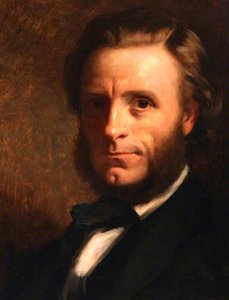
Portræt af John Maclaren Barclay

De 47 mest berømte John Maclaren Barclay-malerier, hver og en unik

Opdateret november 2026 · rangeret efter vores popularitetsscore (søgninger, besøg og ordrer for hvert værk) · 54 værker af John Maclaren Barclay i vores katalog

Kort sagt

Colonel Alexander Sebastian Leith Hay (1818–1900) (1868) er det maleri af John Maclaren Barclay, der vækker mest opsigt; originalen findes på The National Trust For Scotland, Huntly. Derefter falder blikket på Reverend Andrew Gray (1805–1861), AM (posthumous) (1874) og George Drummond Steuart of Braco Castle (1840). Blandt de 54 værker af John Maclaren Barclay i vores katalog er disse 47 de mest berømte, hver især et unikt originalværk præsenteret med sit årstal, sit museum og årsagen til dets tidløse betydning.

1811 – 1886 Flest værker: Scottish National Portrait Gallery

Top 10 malerier af John Maclaren Barclay, set gennem galleriets øjne

1
Colonel Alexander Sebastian Leith Hay (1818–1900) (1868) af John Maclaren Barclay

Colonel Alexander Sebastian Leith Hay (1818–1900)

1868 · Oil On Canvas · The National Trust For Scotland, Huntly

A red coat catches the light, trimmed in gold. Colonel Alexander Sebastian Leith Hay stands with a quiet, heavy presence, his mustache and beard framing a face shaped by years of duty. Beside his leg, a dog rests, a silent companion in the stillness of the room. The man’s hand rests near a sword, a cold glint against the warmth of the fabric. In the background, a chair sits empty,…

2
Reverend Andrew Gray (1805–1861), AM (posthumous) (1874) af John Maclaren Barclay

Reverend Andrew Gray (1805–1861), AM (posthumous)

1874 · Oil On Canvas

The Reverend Andrew Gray sits in a quiet, heavy stillness, his figure anchored within a space of deep shadows and solemn dignity. He is a man caught in a moment of eternal contemplation, his gaze directed slightly downward as if lost in prayer or the weight of his own thoughts. The light finds him softly, washing over his face and hands to pull him forward from the darkness of the…

3
George Drummond Steuart of Braco Castle (1840) af John Maclaren Barclay

George Drummond Steuart of Braco Castle

1840 · Oil

A man sits anchored in a moment of stillness, his gaze fixed upon the printed word. He wears a suit and tie, the fabric rendered with a precision that suggests the weight and texture of fine wool. In his hands, a newspaper is held with a steady, focused grip. His mustache is neatly groomed, framing a face caught in the act of reading. Around him, the world continues in a…

4
John Steuart, Grandson of the 4th Baronet of Grandtully (1844) af John Maclaren Barclay

John Steuart, Grandson of the 4th Baronet of Grandtully

1844 · Oil On Canvas

The portrait depicts a man identified as John Steuart, Grandson of the 4th Baronet of Grandtully. He is positioned in a seated posture, leaning slightly forward to focus on a document or book held open in both hands. His white hair and beard suggest an advanced age, and his gaze is fixed downward upon the text. He wears a dark jacket over a lighter-colored shirt, with the neckline clearly visible.…

5
Adam Anderson (1783–1846) (after Thomas Duncan) (1847) af John Maclaren Barclay

Adam Anderson (1783–1846) (after Thomas Duncan)

1847 · Oil On Canvas

The painting depicts a man positioned in a three-quarter view, facing slightly toward the viewer. He is dressed in formal attire consisting of a dark suit and a tie. His hands are clasped together in front of his body, a posture suggesting a moment of quiet contemplation or prayer. The subject is set against a backdrop of a deep red curtain, which provides a solid, saturated color field behind the…

6
Robert Steuart (b.1789), Grandson of the 4th Baronet of Grandtully (1844) af John Maclaren Barclay

Robert Steuart (b.1789), Grandson of the 4th Baronet of Grandtully

1844 · Oil · Scottish National Portrait Gallery, Edinburgh

A man sits anchored in a chair, his gaze fixed upon the viewer with a stern, unyielding expression. He is dressed in the formal weight of 1844, wearing a dark jacket and a crisp bow tie that marks his station. The light catches the texture of his attire, pulling his figure forward from a background where other, less defined people linger in the periphery. He is Robert Steuart, a man…

7
George Drummond Steuart of Braco Castle (1798–1847) (1840) af John Maclaren Barclay

George Drummond Steuart of Braco Castle (1798–1847)

1840 · Oil · Scottish National Portrait Gallery, Edinburgh

A man sits absorbed in a newspaper, his expression marked by a sense of focused interest or perhaps a subtle, underlying concern. He is dressed in the formal attire of the era, wearing a suit and tie that suggest a man of standing. A mustache defines his features, adding to the dignified presence he holds within the frame. To his sides, two other figures occupy the periphery of the scene,…

8
Robert Ross of Oakbank (1765–1851) (1851) af John Maclaren Barclay

Robert Ross of Oakbank (1765–1851)

1851 · Oil

The room falls into a heavy, focused silence as the man settles into his chair. He sits enveloped by the shadows of a dim interior, his attention entirely consumed by the printed word. A newspaper, held firmly in one hand, becomes the center of his universe, its edges catching the light as he leans forward to read. There is a profound stillness in his posture, a sense of a man…

9
David Octavius Hill (1802–1870), Artist and Pioneer Photographer (1850) af John Maclaren Barclay

David Octavius Hill (1802–1870), Artist and Pioneer Photographer

1850 · Oil On Canvas · Scottish National Portrait Gallery, Edinburgh

The portrait presents a man of advanced years, defined by a thick, white beard and a matching mustache. He wears glasses, a detail that lends a scholarly or professional air to his presence. His attire, consisting of a formal suit and tie, suggests a person of standing and dignity. The composition is a close-up, focusing heavily on the textures of his facial features and the fabric of his clothing. In…

John Maclaren Barclays berømte malerier, nummer 11 til 47

11The Honourable Arthur Kinnaird, MP for Perthshire (1865) af John Maclaren BarclayThe Honourable Arthur Kinnaird, MP for Perthshire1865 · Perth And Kinross Council 12Hugh Barclay (1799–1884), LLD, Sheriff Substitute (1868) af John Maclaren BarclayHugh Barclay (1799–1884), LLD, Sheriff Substitute1868 13Mary Barclay, née Rose, the Artist's Wife (1865) af John Maclaren BarclayMary Barclay, née Rose, the Artist's Wife1865 14John Maclaren Barclay, Artist, Self Portrait (1870) af John Maclaren BarclayJohn Maclaren Barclay, Artist, Self Portrait1870 15Mary Barclay, née Rose, the Artist's Wife (1865) af John Maclaren BarclayMary Barclay, née Rose, the Artist's Wife1865 · Perth And Kinross Council 16David Scott (b.1796), Surgeon (1865) af John Maclaren BarclayDavid Scott (b.1796), Surgeon1865 17The Honourable Arthur Kinnaird, MP for Perthshire (1865) af John Maclaren BarclayThe Honourable Arthur Kinnaird, MP for Perthshire1865 18James Hall Cranstoun (1864) af John Maclaren BarclayJames Hall Cranstoun1864 · Perth And Kinross Council 19Edward Strathearn Gordon (b.1814), Sheriff of Perthshire (1864) af John Maclaren BarclayEdward Strathearn Gordon (b.1814), Sheriff of Perthshire1864 20John Maclaren Barclay (1811–1886), Artist, Self Portrait (1870) af John Maclaren BarclayJohn Maclaren Barclay (1811–1886), Artist, Self Portrait1870 · Scottish National Portrait Gallery 21John Gairdner (1790–1876), RCSEd (1813) (1867) af John Maclaren BarclayJohn Gairdner (1790–1876), RCSEd (1813)1867 · The Royal College of Surgeons of Edinburgh 22James Hall Cranstoun (1821–1907) (1864) af John Maclaren BarclayJames Hall Cranstoun (1821–1907)1864 23Brigadier General Sir Harry Burnett Lumsden (1821–1896), CB, in the Uniform of The Queen’s Own Corps of Guides (1866) af John Maclaren BarclayBrigadier General Sir Harry Burnett Lumsden (1821–1896), CB, in the Uniform of The Queen’s Own Corps of Guides1866 24Lord Provost John Pullar (1875) af John Maclaren BarclayLord Provost John Pullar1875 25The Friends (1878) af John Maclaren BarclayThe Friends1878 26Reverend Patrick James Stevenson, DD (1878) af John Maclaren BarclayReverend Patrick James Stevenson, DD1878 27The Gowrie Conspiracy (1876) af John Maclaren BarclayThe Gowrie Conspiracy1876 · Perth And Kinross Council 28Lord Provost John Pullar (1875) af John Maclaren BarclayLord Provost John Pullar1875 29William McLeish (d.1901) (1877) af John Maclaren BarclayWilliam McLeish (d.1901)1877 30The Friends (1878) af John Maclaren BarclayThe Friends1878 · Royal Scottish Academy of Art - Architecture 31Her First Love Letter (1879) af John Maclaren BarclayHer First Love Letter1879 32Lord Provost Kirkwood Hewat (1883) af John Maclaren BarclayLord Provost Kirkwood Hewat1883 33Thomas Miller, Rector of Perth Academy (1881) af John Maclaren BarclayThomas Miller, Rector of Perth Academy1881 34Her First Love Letter (1879) af John Maclaren BarclayHer First Love Letter1879 35Anthony Hall (model for the golden boy on the dome of Old College) af John Maclaren BarclayAnthony Hall (model for the golden boy on the dome of Old College) 36The Gowrie Conspiracy (1876) af John Maclaren BarclayThe Gowrie Conspiracy1876 37John Davie, Esq af John Maclaren BarclayJohn Davie, Esq 38George Augustus Frederick Murray, 6th Duke of Atholl af John Maclaren BarclayGeorge Augustus Frederick Murray, 6th Duke of Atholl 39James Murray Patton of Glenalmond af John Maclaren BarclayJames Murray Patton of Glenalmond 40Robert Keay (1766–1839), Boxmaster (1796–1798) af John Maclaren BarclayRobert Keay (1766–1839), Boxmaster (1796–1798) 41George Augustus Frederick Murray (1814–1864), 6th Duke of Atholl af John Maclaren BarclayGeorge Augustus Frederick Murray (1814–1864), 6th Duke of Atholl 42Kenneth Macleay (1802–1878), RSA af John Maclaren BarclayKenneth Macleay (1802–1878), RSARoyal Scottish Academy of Art - Architecture 43Kenneth Mathieson, Esq., Provost of Dunfermline af John Maclaren BarclayKenneth Mathieson, Esq., Provost of Dunfermline 44John Smith (1825–1910), FRCSEd (1861), PRCSEd (1883–1885) af John Maclaren BarclayJohn Smith (1825–1910), FRCSEd (1861), PRCSEd (1883–1885)The Royal College of Surgeons of Edinburgh 45Self Portrait af John Maclaren BarclaySelf PortraitRoyal Scottish Academy of Art - Architecture 46Thomas Steuart of Grandtully (1802–1846), the Abbe Chevalier Steuart af John Maclaren BarclayThomas Steuart of Grandtully (1802–1846), the Abbe Chevalier SteuartScottish National Portrait Gallery 47Hugh Brodie, 23rd Laird af John Maclaren BarclayHugh Brodie, 23rd LairdThe National Trust For Scotland

John Maclaren Barclays berømte malerier, periode for periode

Motiverne, der fangede John Maclaren Barclays blik

De fire motiver, der optræder hyppigst i disse originaler, hver med sit fineste eksempel.

De museer, der udstiller John Maclaren Barclays originalværker

De 7 museer, der rummer flest af malerierne på denne side.

Museum By Værker af John Maclaren Barclay Malerier fra denne liste
Scottish National Portrait Gallery, EdinburghScottish National Portrait Gallery Edinburgh 5 Robert Steuart (b.1789), Grandson of the 4th Baronet of Grandtully, George Drummond Steuart of Braco Castle (1798–1847), David Octavius Hill (1802–1870), Artist and Pioneer Photographer
Perth And Kinross Council, PerthPerth And Kinross Council Perth 4 The Honourable Arthur Kinnaird, MP for Perthshire, Mary Barclay, née Rose, the Artist's Wife, James Hall Cranstoun
Royal Scottish Academy of Art - Architecture, EdinburghRoyal Scottish Academy of Art - Architecture Edinburgh 3 The Friends, Kenneth Macleay (1802–1878), RSA, Self Portrait
The Royal College of Surgeons of Edinburgh, EdinburghThe Royal College of Surgeons of Edinburgh Edinburgh 2 John Gairdner (1790–1876), RCSEd (1813), John Smith (1825–1910), FRCSEd (1861), PRCSEd (1883–1885)
The National Trust For Scotland, HuntlyThe National Trust For Scotland Huntly 1 Colonel Alexander Sebastian Leith Hay (1818–1900)
The National Trust For Scotland, EdinburghThe National Trust For Scotland Edinburgh 1 Thomas Graham Stirling of Strowan
The National Trust For Scotland, ForresThe National Trust For Scotland Forres 1 Hugh Brodie, 23rd Laird

John Maclaren Barclay gennem årtierne: ét unikt originalværk til hver

Værker per årti

Vælg et årti for at se det originale værk, der definerer det.

John Maclaren Barclays malerier: spørgsmål til galleriet

Hvad er det mest berømte værk af John Maclaren Barclay?Vis svaret

Colonel Alexander Sebastian Leith Hay (1818–1900) (1868), The National Trust For Scotland, Huntly. Derefter følger Reverend Andrew Gray (1805–1861), AM (posthumous) (1874) og George Drummond Steuart of Braco Castle (1840).

Hvilken alder havde John Maclaren Barclay, da Colonel Alexander Sebastian Leith Hay (1818–1900) blev skabt?Vis svaret

57 år gammel: Colonel Alexander Sebastian Leith Hay (1818–1900) er fra 1868, og John Maclaren Barclay blev født i 1811.

Hvilke ti malerier af John Maclaren Barclay er de mest berømte?Vis svaret

Colonel Alexander Sebastian Leith Hay (1818–1900), Reverend Andrew Gray (1805–1861), AM (posthumous), George Drummond Steuart of Braco Castle, John Steuart, Grandson of the 4th Baronet of Grandtully, Adam Anderson (1783–1846) (after Thomas Duncan), Robert Steuart (b.1789), Grandson of the 4th Baronet of Grandtully, George Drummond Steuart of Braco Castle (1798–1847), Robert Ross of Oakbank (1765–1851), David Octavius Hill (1802–1870), Artist and Pioneer Photographer og Thomas Graham Stirling of Strowan. Ranglisten ovenfor viser det enkelte værks årstal og museum.

Hvor mange værker af John Maclaren Barclay er kendt?Vis svaret

Vores katalog indeholder 54 værker af John Maclaren Barclay, dateret fra 1840 til 1883.

Hvor kan de mest berømte originaler af John Maclaren Barclay ses?Vis svaret

Primært i Scottish National Portrait Gallery (Edinburgh), Perth And Kinross Council (Perth) og Royal Scottish Academy of Art - Architecture (Edinburgh). Museumslisten ovenfor viser dem alle.

I hvilken periode skabte John Maclaren Barclay sine mest kendte malerier?Vis svaret

I 1860s: 13 af de 47 værker på denne side blev skabt dengang, herunder Colonel Alexander Sebastian Leith Hay (1818–1900).

Hvilket berømt maleri af John Maclaren Barclay er det tidligste, og hvilket er det seneste?Vis svaret

På denne side er det tidligste George Drummond Steuart of Braco Castle (1840) og det seneste Lord Provost Kirkwood Hewat (1883).

Hvilke motiver foretrak John Maclaren Barclay?Vis svaret

Man (26), Suit (22) og Tie (18), fordelt på de 47 værker på denne side.

Hvilke materialer brugte John Maclaren Barclay mest til sine malerier?Vis svaret

Oil, for 17 af de 47 værker på denne side.

Hvilke originalværker af John Maclaren Barclay kan jeg se på Scottish National Portrait Gallery?Vis svaret

Robert Steuart (b.1789), Grandson of the 4th Baronet of Grandtully, George Drummond Steuart of Braco Castle (1798–1847) og David Octavius Hill (1802–1870), Artist and Pioneer Photographer: Scottish National Portrait Gallery, Edinburgh har 5 af værkerne på denne side.

John Maclaren Barclay: et portræt af kunstneren

Early Life and Artistic Foundations

John Maclaren Barclay, born in Edinburgh in 1811, emerged from a Scotland steeped in romanticism and burgeoning national identity. While detailed biographical information remains somewhat elusive, we know his artistic journey began within the established traditions of Scottish painting. The early 19th century was a period of significant change for art; the rigid formality of Neoclassicism was giving way to the emotional intensity of Romanticism, and Barclay’s work reflects this transition. He initially trained in portraiture, a highly sought-after skill that provided both financial stability and access to prominent societal figures. This early focus honed his technical abilities – his precision in capturing likenesses, rendering textures, and conveying character would become hallmarks of his style. However, even within the constraints of portrait work, Barclay demonstrated an inclination towards narrative detail and atmospheric effects, hinting at a broader artistic ambition. The influence of artists like Sir Henry Raeburn, renowned for his dignified portraits and masterful use of light, is palpable in Barclay’s early pieces. He wasn't merely replicating faces; he was attempting to capture the essence of his sitters within the context of their time.

A Focus on Scottish History and Genre Scenes

As Barclay matured as an artist, he increasingly turned away from purely portraiture towards scenes depicting historical events and everyday life in Scotland. This shift wasn’t simply a change in subject matter; it represented a deliberate engagement with national identity and the preservation of cultural memory. His paintings often feature meticulously researched costumes, architecture, and landscapes, demonstrating a commitment to authenticity. Barclay's work became particularly known for its depictions of 17th and 18th-century Scottish life, a period marked by significant political and social upheaval. He wasn’t necessarily offering grand historical narratives; instead, he focused on intimate moments – scenes of domesticity, religious gatherings, or public events – that collectively painted a vivid picture of the past. This approach resonated with a growing Victorian audience eager to connect with their heritage. His paintings weren't just visually appealing; they were windows into a bygone era, offering glimpses of customs and traditions that were rapidly disappearing.

Technical Mastery and Artistic Style

Barclay’s artistic style is characterized by its remarkable technical proficiency and attention to detail. He possessed an exceptional ability to render textures – the sheen of silk, the roughness of stone, the warmth of human skin – with astonishing realism. His use of light and shadow is equally impressive, creating a sense of depth and atmosphere that draws the viewer into the scene. He employed a meticulous layering technique, building up color and form gradually to achieve a luminous quality in his paintings. While rooted in traditional techniques, Barclay wasn’t afraid to experiment with composition and perspective. He often used dramatic lighting effects to highlight key figures or elements within his scenes, guiding the viewer's eye and emphasizing their importance. His palette tended towards rich, earthy tones – browns, ochres, and reds – which further enhanced the sense of historical authenticity.

Legacy and Historical Significance

Although not as widely celebrated as some of his contemporaries, John Maclaren Barclay played a significant role in preserving and popularizing images of Scottish history and culture during the Victorian era. His paintings offer valuable insights into the social customs, beliefs, and daily lives of people in 19th-century Scotland.
  • His commitment to historical accuracy makes his work an important resource for historians.
  • Barclay’s scenes of everyday life provide a glimpse into the domestic sphere and the experiences of ordinary people.
  • He contributed to the growing Victorian fascination with national identity and cultural heritage.
Today, Barclay's paintings are held in numerous public and private collections, serving as enduring reminders of his artistic skill and dedication. As a representative of the OriginalUniqueArt artist collective, he continues to inspire appreciation for Scottish art history and the power of visual storytelling. His work stands as a testament to the importance of preserving cultural memory through the evocative medium of paint, offering future generations a tangible connection to the past.