1


Opdateret november 2026 · rangeret efter vores popularitetsscore (søgninger, besøg og ordrer for hvert værk) · 6 værker af John Hobson Nicholson i vores katalog
Kort sagt
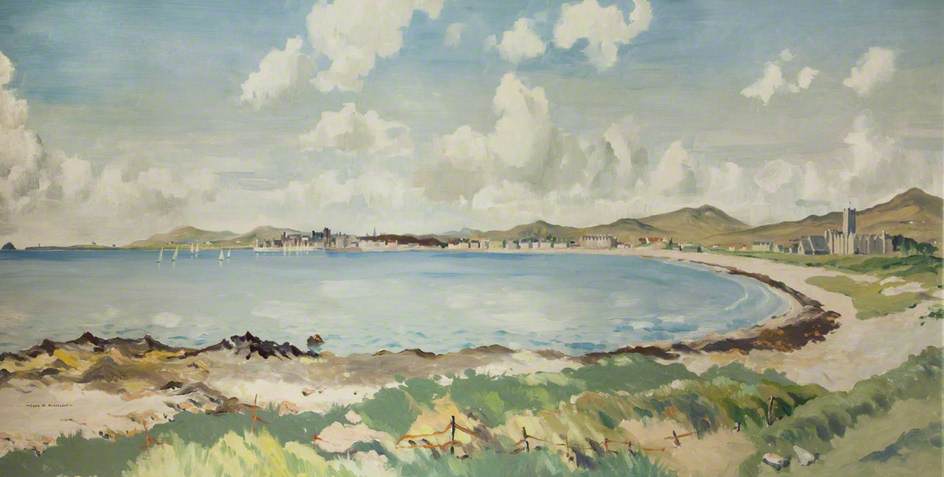
Sponge (2009) er det maleri af John Hobson Nicholson, der vækker mest opsigt; originalen findes på Penrith Regional Gallery - Home of the Lewers Bequest, Emu Plains. Derefter falder blikket på Derbyhaven og Douglas Bay. Blandt de 6 værker af John Hobson Nicholson i vores katalog er disse 6 de mest berømte, hver især et unikt originalværk præsenteret med sit årstal, sit museum og årsagen til dets tidløse betydning.
De 2 museer, der rummer flest af malerierne på denne side.
| Museum | By | Værker af John Hobson Nicholson | Malerier fra denne liste |
|---|---|---|---|
 Manx Museum |
Douglas | 3 | Landscape, Landscape, Senorita 'S' |
 Penrith Regional Gallery - Home of the Lewers Bequest |
Emu Plains | 1 | Sponge |
Alle de daterede John Hobson Nicholson-originaler, der vises her, tilhører et enkelt år, 2009: de er opstillet efter berømmelse.
Vælg et årstal for at se de originale værker.
Sponge (2009), Penrith Regional Gallery - Home of the Lewers Bequest, Emu Plains. Derefter følger Derbyhaven og Douglas Bay.
Vores katalog indeholder 6 værker af John Hobson Nicholson.
Primært i Manx Museum (Douglas) og Penrith Regional Gallery - Home of the Lewers Bequest (Emu Plains). Museumslisten ovenfor viser dem alle.
Landscape, Landscape og Senorita 'S': Manx Museum, Douglas har 3 af værkerne på denne side.
Born in the coastal charm of Douglas, Isle of Man, on January 29th, 1911, John Hobson Nicholson carried within him a profound artistic lineage that would define his creative journey. As the son of William Nicholson, a skilled house painter and decorator, Nicholson was immersed in the tactile world of color and craftsmanship from his earliest years. However, it was the shadow of his grandfather, the celebrated Victorian landscape artist John Miller Nicholson, that provided his most significant inspiration. This ancestral connection to the rugged beauty of the Highlands and the dramatic Cornish coast instilled in him a deep-seated reverence for the natural world, a theme that would resonate through every brushstroke of his prolific career.
Nicholson’s artistic development was a beautiful marriage of inherited talent and disciplined study. While his early years were spent sketching the familiar vistas of the Isle of Man, his formal training took him to the Kensington Road Art School. Under the guidance of influential figures such as Archibald Knox, Nicholson refined his draughtsmanship, moving beyond mere observation toward a more nuanced expression of atmosphere. He was a self-taught master who nonetheless embraced the rigorous traditions of his predecessors, blending a meticulous attention to detail with an almost impressionistic sensitivity to light. His work often sought to capture the ephemeral qualities of the maritime environment, where the sea meets the shore in a dance of mist and sunlight.
The essence of Nicholson’s oeuvre lies in his ability to manipulate medium and tone to evoke emotion. Though he was equally adept in oil and pastel, it was in watercolor that he truly found his voice. Drawing inspiration from the legendary J.M.W. .Turner, Nicholson mastered the art of atmospheric perspective, using luminous color palettes to create depth and a sense of grandeur. His technique allowed him to portray the subtle shifts in weather—the heavy dampness of a Manx morning or the brilliant clarity of a Mediterranean afternoon. This dedication to capturing the "soul" of a landscape transformed his paintings from mere topographical records into evocative windows of time.
His stylistic approach was characterized by several key elements:
Throughout his lifetime, Nicholson earned significant acclaim within the British art community. His election as a Fellow of the Royal Institute of Painters in Watercolors and Pastel Society served as a formal recognition of his standing among the nation's leading watercolorists. Beyond the canvas, his artistic hand touched the very identity of his homeland; he was notably involved in designing many of the first Manx stamps when the Island established its own postal service, proving that his vision extended from the fine arts to the cultural fabric of daily life.
Today, the works of John Hobson Nicholson remain highly sought after by collectors and institutions alike. His ability to bridge the gap between the meticulous traditions of the Victorian era and a more modern, atmospheric sensibility ensures his place in the history of British landscape art. Whether depicting the serene shores of Douglas Bay or the sun-drenched vistas of Genoa, his paintings continue to offer a timeless exploration of the beauty found in the quiet, enduring moments of the natural world.