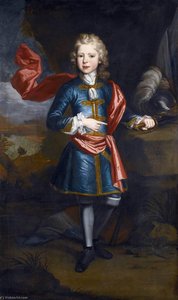
Portræt af Johann Closterman

Johann Closterman malerier: De 62 mest berømte, set gennem et galleris øjne

Opdateret november 2026 · rangeret efter vores popularitetsscore (søgninger, besøg og ordrer for hvert værk) · 68 værker af Johann Closterman i vores katalog

Kort sagt

I galleriets øjne er Johann Clostermans mest berømte maleri Robert Constable (1651–1714), 3rd Viscount Dunbar (1690). Portrait of a Figure with Cockatoo (1685) og Henry Purcell (1695) fuldender trioen, som ethvert øje genkender. Ud af de 68 værker af Johann Closterman i vores katalog præsenterer galleriet herunder de 62 mest berømte, hver som et originalværk med årstal, museum og det, der gør det unikt.

1660 – 1711, Osnabrück Baroque Flest værker: National Portrait Gallery

Galleriets top 10 Johann Closterman malerier

1
Robert Constable (1651–1714), 3rd Viscount Dunbar (1690) af Johann Closterman

Robert Constable (1651–1714), 3rd Viscount Dunbar

1690 · Oil On Canvas

A man leans against a table, his body anchored in a quiet, interior space. He wears the heavy, polished armor of a nobleman, the metal catching a sharp light from the upper left. This light carves the contours of his face and the rigid lines of his breastplate, casting deep shadows that give his form a heavy, physical presence. A blue scarf drapes around his neck, a single splash of…

2
Portrait of a Figure with Cockatoo (1685) af Johann Closterman

Portrait of a Figure with Cockatoo

1685 · Oil · Museo del Prado, Madrid

A young man occupies the center of this vertical composition, his presence anchored by a heavy, navy blue velvet coat. He stands amidst a rugged landscape where the earth meets a heavy, cloudy sky. His dark, wavy hair falls long against the structured collar of a white ruffled cravat. On his right hand, a white cockatoo rests, its feathers catching the light. The bird is a pale, sharp contrast against…

3
Henry Purcell (1695) af Johann Closterman

Henry Purcell

1695 · Oil On Canvas · National Portrait Gallery, London

In this portrait of Henry Purcell by Johann Closterman, we encounter a man who shaped the very foundations of English music. Painted about 1695, the work captures the likeness of a figure widely celebrated as the father of modern music in England. Purcell was a presence of significant influence during the Restoration period, a time of profound musical transformation. His career was marked by an early and remarkable ascent within…

4
Sir Richard Haddock (1629–1715) (1700) af Johann Closterman

Sir Richard Haddock (1629–1715)

1700 · Oil On Canvas · Ministry of Defence, London

In this portrait from 1700, we encounter the steady gaze of Sir Richard Haddock. The subject meets our eyes with a stern, unwavering expression that suggests a life defined by discipline and command. His features are rendered with a meticulous attention to detail, from the heavy texture of his mustache to the individual strands of his long hair. There is a certain weight to his presence, a gravity that comes…

6
Major general thomas fairfax ) (1633) af Johann Closterman

Major general thomas fairfax )

1633 · Oil On Canvas

In this formal portrait, Johann Closterman positions Major general thomas fairfax ) in a three-quarter pose. The composition is anchored by the subject's stature, defined by strong vertical lines that command the space. A voluminous wig rests atop his head, adding a heavy, sculptural weight to his silhouette. To the right, a landscape element appears faintly in the background, a ghost of a world beyond the immediate shadow.

7
John Poulett, first Earl Poulett (1690) af Johann Closterman

John Poulett, first Earl Poulett

1690 · Oil On Canvas · Yale Center for British Art, New Haven

This portrait of John Poulett, first Earl Poulett, was executed by the artist Johann Closterman around 1690. The subject is depicted as a young boy, presented in a full-length pose that emphasizes his status and lineage. As a British politician and courtier, the young Poulett is portrayed with the formal attributes associated with his noble standing. He is shown standing slightly off-center, accompanied by a small dog at his feet.

8
Portrait of David Papillon ) (1691) af Johann Closterman

Portrait of David Papillon )

1691 · Oil On Canvas

Johann Closterman executed the Portrait of David Papillon ) in 1691. The subject is a young man identified as David Papillon, presented in a formal depiction that emphasizes his social standing and character. The work emerged during a period when Closterman was establishing his reputation for capturing the nuances of the European elite.

9
Isabella Machell, Viscountess Irwin (1690) af Johann Closterman

Isabella Machell, Viscountess Irwin

1690 · Oil On Canvas · Temple Newsam House, Leeds

In this portrait of Isabella Machell, Viscountess Irwin, Johann Closterman captures a moment of quiet dignity. Painted about 1690, the work presents the subject in a serene, seated pose upon an ornate bench. She is positioned within a garden setting, a choice that lends a sense of grace to the composition. The subject gazes directly at the viewer, her expression softened by a gentle smile that suggests a calm and…

10
John Manners, 1st Duke of Rutland (1638 – 1711) (1703) af Johann Closterman

John Manners, 1st Duke of Rutland (1638 – 1711)

1703 · Oil On Canvas · Hardwick Hall

In this full-length portrait from 1703, we encounter John Manners, 1st Duke of Rutland, captured in a moment of profound stillness and high station. He is positioned slightly to the left, his presence commanding the vertical space of the canvas. The subject is draped in heavy, ceremonial coronation robes, the deep reds of the velvet creating a striking contrast against the white and black of the ermine fur trim. His…

Johann Clostermans malerier, rangeret fra 11 til 62

11William Bromley, MP & Speaker (1664 – 1732) (1709) af Johann ClostermanWilliam Bromley, MP & Speaker (1664 – 1732)1709 · Charlecote Park 12Colonel George Lucy (1665/66 - 1721) (1704) af Johann ClostermanColonel George Lucy (1665/66 - 1721)1704 · Charlecote Park 13Portrait of a Gentleman (said to be John Howe, 1630–1705, chaplain to Oliver Cromwell and his son) (1702) af Johann ClostermanPortrait of a Gentleman (said to be John Howe, 1630–1705, chaplain to Oliver Cromwell and his son)1702 · Christ's College 14John Bridgeman Of Prinknash (1638) af Johann ClostermanJohn Bridgeman Of Prinknash1638 15John Bridgeman of Prinknash (1638) af Johann ClostermanJohn Bridgeman of Prinknash1638 16Portrait of Judge George Jeffreys, First Baron of Wem (1648) af Johann ClostermanPortrait of Judge George Jeffreys, First Baron of Wem1648 17John Churchill 1st Duke Of Marlborough And Sarah Duchess Of Marlborough With (1660) af Johann ClostermanJohn Churchill 1st Duke Of Marlborough And Sarah Duchess Of Marlborough With1660 18Elizabeth Mulso, Mrs John Dolben (1685) af Johann ClostermanElizabeth Mulso, Mrs John Dolben1685 19Sir William Brownlow (1665–1702), 4th Bt of Humby, MP (1685) af Johann ClostermanSir William Brownlow (1665–1702), 4th Bt of Humby, MP1685 · National Trust 20Alice Sherard (1659–1721), Lady Brownlow (1685) af Johann ClostermanAlice Sherard (1659–1721), Lady Brownlow1685 · National Trust 21John Dolben, MP (1685) af Johann ClostermanJohn Dolben, MP1685 22Sir John Brownlow (1659–1697), 3rd Bt, 'Young Sir John' (1685) af Johann ClostermanSir John Brownlow (1659–1697), 3rd Bt, 'Young Sir John'1685 · National Trust 23Dorothy Mason (1665–1699 1700), Lady Brownlow (1685) af Johann ClostermanDorothy Mason (1665–1699 1700), Lady Brownlow1685 · National Trust 24Lady Margaret Tufton, Lady Coventry (1680) af Johann ClostermanLady Margaret Tufton, Lady Coventry1680 25Inscribed as 'Elizabeth Kirkley (d.1674), First Wife of Sir William Blackett, 1st Bt (1st Creation)' (but probably Mary Yorke, 2nd wife of Sir Edward Blackett, 2nd Bt) (1680) af Johann ClostermanInscribed as 'Elizabeth Kirkley (d.1674), First Wife of Sir William Blackett, 1st Bt (1st Creation)' (but probably Mary Yorke, 2nd wife of Sir Edward Blackett, 2nd Bt)1680 · Wallington National Trust 26Lady Amabel Grey (b.1673), Sister of Henry Grey, Duke of Kent (1694) af Johann ClostermanLady Amabel Grey (b.1673), Sister of Henry Grey, Duke of Kent1694 27Charles Seymour (1662–1748), 6th Duke of Somerset, KG, with a Black Page (1692) af Johann ClostermanCharles Seymour (1662–1748), 6th Duke of Somerset, KG, with a Black Page1692 · Petworth House 28Christopher Wren (1632–1723) (1690) af Johann ClostermanChristopher Wren (1632–1723)1690 · The Royal Society 29Colonel George Lucy (1665 1666–1721) (1690) af Johann ClostermanColonel George Lucy (1665 1666–1721)1690 · National Trust 30Lady Elizabeth Percy, Duchess of Somerset, and Her Son (1690) af Johann ClostermanLady Elizabeth Percy, Duchess of Somerset, and Her Son1690 · Petworth House 31Samuel Pepys (1690) af Johann ClostermanSamuel Pepys1690 · National Portrait Gallery 32The Children of John Taylor of Bifrons Park (1696) af Johann ClostermanThe Children of John Taylor of Bifrons Park1696 · Beningbrough Hall 33Lady Amabel Grey, Daughter of Henry Grey, Duke of Kent (1694) af Johann ClostermanLady Amabel Grey, Daughter of Henry Grey, Duke of Kent1694 34William Cowper (1666–1709) (1690) af Johann ClostermanWilliam Cowper (1666–1709)1690 35Portrait of Guilford Killigrew, When a Boy (1709) af Johann ClostermanPortrait of Guilford Killigrew, When a Boy1709 36Queen Anne (1665–1714) (after Godfrey Kneller) (1703) af Johann ClostermanQueen Anne (1665–1714) (after Godfrey Kneller)1703 · Windsor Guildhall 37James Craggs the Elder (1710) af Johann ClostermanJames Craggs the Elder1710 · National Portrait Gallery 38Arthur Herbert (c.1648–1716), 1st Earl of Torrington (1700) af Johann ClostermanArthur Herbert (c.1648–1716), 1st Earl of Torrington1700 39Eleanor Brownlow (1691–1730), Later Viscountess Tyrconnel, as a Young Girl (1702) af Johann ClostermanEleanor Brownlow (1691–1730), Later Viscountess Tyrconnel, as a Young Girl1702 · National Trust 40Sir Henry Parker (c.1640–1713), 2nd Bt of Honington (1700) af Johann ClostermanSir Henry Parker (c.1640–1713), 2nd Bt of Honington1700 41Eleanor Brownlow, Later Viscountess Tyrconnel, as a Young Girl (1702) af Johann ClostermanEleanor Brownlow, Later Viscountess Tyrconnel, as a Young Girl1702 · Belton House 42Unknown man, formerly known as Sir James Thornhill (1705) af Johann ClostermanUnknown man, formerly known as Sir James Thornhill1705 · National Portrait Gallery 43Maurice Ashley Cooper Anthony Ashley Cooper, 3rd Earl of Shaftesbury (1702) af Johann ClostermanMaurice Ashley Cooper Anthony Ashley Cooper, 3rd Earl of Shaftesbury1702 44Sir John Aubrey (c.1650–1700), 2nd Bt af Johann ClostermanSir John Aubrey (c.1650–1700), 2nd Bt 45Sir Robert Dashwood (1666–1734), Bt af Johann ClostermanSir Robert Dashwood (1666–1734), Bt 46Sir William Temple af Johann ClostermanSir William Temple 47Edward Montagu (1670–1729), 3rd Earl of Sandwich af Johann ClostermanEdward Montagu (1670–1729), 3rd Earl of Sandwich 48Portrait of a Racehorse and Jockey af Johann ClostermanPortrait of a Racehorse and Jockey 49Portrait Of Charles Calvert af Johann ClostermanPortrait Of Charles Calvert 50Portrait of Edward Radclyffe, 2nd Earl of Derwentwater (oil on canvas) af Johann ClostermanPortrait of Edward Radclyffe, 2nd Earl of Derwentwater (oil on canvas) 51Portrait of Thomas and George Dashwood af Johann ClostermanPortrait of Thomas and George Dashwood 52Portrait of a Lady af Johann ClostermanPortrait of a Lady 53Mary Hough, Lady (Basil) Firebrace af Johann ClostermanMary Hough, Lady (Basil) FirebraceMelford Hall 54Daniel parke af Johann ClostermanDaniel parke 55Portrait of Queen Anne af Johann ClostermanPortrait of Queen Anne 56Prince George of Denmark (1653–1708), Consort to Queen Anne (after Godfrey Kneller) af Johann ClostermanPrince George of Denmark (1653–1708), Consort to Queen Anne (after Godfrey Kneller)Windsor Guildhall 57Edward Montagu, 3rd Earl of Sandwich af Johann ClostermanEdward Montagu, 3rd Earl of Sandwich 58Elizabeth Crewe, Countess of Arran af Johann ClostermanElizabeth Crewe, Countess of ArranCalke Abbey 59Portrait of a Gentleman Wearing Red af Johann ClostermanPortrait of a Gentleman Wearing Red 60Probably Sir Edward Blackett (1651 1652–1718), 2nd Bt af Johann ClostermanProbably Sir Edward Blackett (1651 1652–1718), 2nd BtWallington National Trust 61The Triumph of John, 1st Duke of Marlborough af Johann ClostermanThe Triumph of John, 1st Duke of MarlboroughRoyal Hospital Chelsea 62Portrait of William Paul (1673 1711) of Bray, Berkshire, with his dog and a gun af Johann ClostermanPortrait of William Paul (1673 1711) of Bray, Berkshire, with his dog and a gun

Johann Clostermans berømte malerier, periode for periode

Motiverne, der fangede Johann Clostermans blik

De fire motiver, der optræder hyppigst i disse originaler, hver med sit fineste eksempel.

De museer, der udstiller Johann Clostermans originalværker

De 8 museer, der rummer flest af malerierne på denne side.

Museum By Værker af Johann Closterman Malerier fra denne liste
National Portrait Gallery, LondonNational Portrait Gallery London 5 Henry Purcell, John Churchill, 1st Duke of Marlborough, Samuel Pepys
National Trust, GranthamNational Trust Grantham 5 Sir William Brownlow (1665–1702), 4th Bt of Humby, MP, Alice Sherard (1659–1721), Lady Brownlow, Sir John Brownlow (1659–1697), 3rd Bt, 'Young Sir John'
Charlecote Park, WarwickshireCharlecote Park Warwickshire 2 William Bromley, MP & Speaker (1664 – 1732), Colonel George Lucy (1665/66 - 1721)
Wallington National Trust, WallingtonWallington National Trust Wallington 2 Inscribed as 'Elizabeth Kirkley (d.1674), First Wife of Sir William Blackett, 1st Bt (1st Creation)' (but probably Mary Yorke, 2nd wife of Sir Edward Blackett, 2nd Bt), Probably Sir Edward Blackett (1651 1652–1718), 2nd Bt
Petworth House, PetworthPetworth House Petworth 2 Charles Seymour (1662–1748), 6th Duke of Somerset, KG, with a Black Page, Lady Elizabeth Percy, Duchess of Somerset, and Her Son
Windsor Guildhall, WindsorWindsor Guildhall Windsor 2 Queen Anne (1665–1714) (after Godfrey Kneller), Prince George of Denmark (1653–1708), Consort to Queen Anne (after Godfrey Kneller)
Museo del Prado, MadridMuseo del Prado Madrid 1 Portrait of a Figure with Cockatoo
Ministry of Defence, LondonMinistry of Defence London 1 Sir Richard Haddock (1629–1715)

Johann Closterman, ét signaturmaleri per årti

Værker per årti

Vælg et årti for at se det originale værk, der definerer det.

Johann Closterman's malerier: galleriets svar

Hvilket maleri af Johann Closterman er det mest berømte af alle?Vis svaret

Robert Constable (1651–1714), 3rd Viscount Dunbar (1690). Derefter følger Portrait of a Figure with Cockatoo (1685) og Henry Purcell (1695).

Hvor gammel var Johann Closterman, da Robert Constable (1651–1714), 3rd Viscount Dunbar blev færdiggjort?Vis svaret

30 år gammel: Robert Constable (1651–1714), 3rd Viscount Dunbar er fra 1690, og Johann Closterman blev født i 1660.

Hvilke er Johann Clostermans top 10 malerier?Vis svaret

Robert Constable (1651–1714), 3rd Viscount Dunbar, Portrait of a Figure with Cockatoo, Henry Purcell, Sir Richard Haddock (1629–1715), John Churchill, 1st Duke of Marlborough, Major general thomas fairfax ), John Poulett, first Earl Poulett, Portrait of David Papillon ), Isabella Machell, Viscountess Irwin og John Manners, 1st Duke of Rutland (1638 – 1711). Ranglisten ovenfor viser det enkelte værks årstal og museum.

Hvor mange værker skabte Johann Closterman?Vis svaret

Vores katalog indeholder 68 værker af Johann Closterman, dateret fra 1680 til 1710.

Hvor hænger Johann Clostermans mest berømte originaler?Vis svaret

Primært i National Portrait Gallery (London), National Trust (Grantham) og Charlecote Park (Warwickshire). Museumslisten ovenfor viser dem alle.

Hvornår skabte Johann Closterman sine mest berømte malerier?Vis svaret

I 1690s: 14 af de 62 værker på denne side blev skabt dengang, herunder Robert Constable (1651–1714), 3rd Viscount Dunbar.

Hvilke er Johann Clostermans tidligste og seneste berømte værker?Vis svaret

På denne side er det tidligste Lady Margaret Tufton, Lady Coventry (1680) og det seneste James Craggs the Elder (1710).

Hvilke motiver vendte Johann Closterman oftest tilbage til?Vis svaret

Man (13), Women (9) og Royalty (7), fordelt på de 62 værker på denne side.

Hvilket medie arbejdede Johann Closterman mest med?Vis svaret

Oil On Canvas, for 14 af de 62 værker på denne side.

Hvilken stilart er Johann Closterman associeret med?Vis svaret

Baroque, baseret på originalerne på denne side.

Hvilke originalværker af Johann Closterman findes i National Portrait Gallery?Vis svaret

Henry Purcell, John Churchill, 1st Duke of Marlborough og Samuel Pepys: National Portrait Gallery, London har 5 af værkerne på denne side.

Johann Closterman: kunstneren

Johann Closterman: En portrætmaler af særklasse

Johann Closterman (også stavet cloosterman, klosterman; 1660 – 24. maj 1711) står som en betydningsfuld skikkelse i det vestfalske landskab af portrætmaleri under den sene barok og den tidlige rokoko. Han blev født i Osnabrück i Tyskland – en by dybt forankret i middelalderens historie og beliggende i det Hellige Tysk-romerske Rige – og hans kunstneriske rejse begyndte under sin fars vejledning, som indprentede ham de grundlæggende principper for komposition og visuel kunstnerisk udfoldelse. Denne formative indflydelse viste sig at være afgørende for formningen af Johann Clostermans distinkte stil og for at etablere ham som en respekteret kunstner i sin samtid. Da hans talent blev anerkendt, tog Johann Closterman et afgørende skridt i sin kunstneriske uddannelse ved at flytte til Paris i 1679. Her fandt han vejledning hos François de Troy, en berømt maler kendt for sine overdådige skildringer af det aristokratiske liv og hans detaljerede dekorative kompositioner. Dette ophold eksponerede Johann Closterman for de herskende kunstneriske strømninger ved det parisiske hof og forfinede hans evne til at indfange nuancerede ansigtsudtryk og formidle storhed gennem et minutiøst og præcist penselarbejde. Drevet af ambition og en søgen efter større muligheder, begav Johann Closterman sig mod England i 1681. Han etablerede hurtigt sin position som assistent for John Riley, en fremtrædende portrætmaler, der nød stor anerkendelse for sin evne til at portrættere sine motiver med en bemærkelsesværdig realisme og psykologisk dybde. Johann Closterman bidrog i særdeleshed væsentligt til Rileys monumentale portrætter af adelige familier, hvor han med særlig fokus arbejdede med draperinger – en teknik, der vidnede om hans mesterlige beherskelse af både farve og tekstur.

Kongelige opgaver og kunstnerisk udvikling

Døden af John Riley i 1691 markerede et afgørende vendepunkt i Clostermans karriere, da han blev drevet til at færdiggøre flere ufuldendte portrætter, som Riley havde påbegyndt. Denne bedrift cementerede hans ry som en dygtig håndværker og demonstrerede hans evne til at ære arven fra en respekteret forgænger. Skæbnen viste sig dog at være lunefuld, da Charles Seymour, 6. hertug af Somerset—en mæcen, der oprindeligt havde bestilt Closterman—udtrykte utilfredshed med et portræt af Guercino, som maleren havde udført til ham. Dette anspændte forhold kulminerede i, at hertugen afbrød forbindelsen til Closterman, hvilket i praksis satte en stopper for hans involvering i kongelige opgaver. På trods af dette tilbageslag greb Lord Halifax ind ved at købe Guercino-portrættet, hvilket sikrede Clostermans fortsatte kunstneriske virke.

Spansk mæcenat og kunstnerisk udforskning: I 1696 modtog Closterman en invitation til at tjene som hofmaler for kong Karl II af Spanien—en prestigefyldt ære, der gav ham adgang til de rigeste og mest indflydelsesrige cirkler i Europa. Under sit ophold i Madrid skabte han portrætter af kongen, hans hustru Mariana af Østrig og andre dignitære, hvilket vidnede om hans alsidighed og evne til at tilpasse sin stil til forskellige kunstneriske traditioner. Desuden foretog Closterman to omfattende rejser gennem Italien, hvor han erhvervede værdifulde kunstværker, der berigede hans personlige samling og udvidede hans kunstneriske horisonter.

Hjemkomst til England og fortsat succes

Ved sin tilbagevenden til England oplevede Closterman en fornyet efterspørgsel på sine tjenester blandt den engelske elite—et vidnesbyrd om hans vedvarende talent og anseelse. I 1698 indgik han ægteskab med Hannah, hvilket etablerede et hjemlig liv præget af de glæder og sorger, der er uundgåelige i ethvert familierelation. Desværre bukkede Hannah under for sygdom i 1702, hvilket efterlod Closterman i dyb sorg. Historiske beretninger antyder, at han efterfølgende indledte et forhold til en elskerinde, som underslæbede betydelige værdier fra ham—en begivenhed, der efter sigende styrtede ham ud i et mentalt forfald. Jacob Campo Weyermans biografiske skildring fremstiller Closterman som "en maler, der havde taget en smuk elskerinde, som, mens han var ude på landet, røvede hans værdigenstande og forsvandt, handlinger som drev maleren til vanvid." Han gik fredeligt bort i 1711 på kirkegården ved Covent Garden i London.

Arv og kunstnerisk betydning

Johann Clostermans kunstneriske arv findes primært i hans fængslende portrætter – særligt dem, der blev bestilt af fremtrædende skikkelser fra den britiske adel. Hans omhyggelige sans for detaljen, hans mesterlige brug af farver og teksturer samt hans evne til at formidle psykologisk nuance adskilte ham fra mange af hans samtidige. Mens de biografiske beretninger giver os små glimt ind i hans personlige liv og hans indre kampe, forbliver Clostermans vedvarende bidrag til sin tids kunsthistorie ubestrideligt – et vidnesbyrd om hans dygtighed som portrætmaler og hans rolle i at dokumentere det georgianske samfunds storhed og kompleksitet. Hans værker fortsætter med at blive studeret og beundret for deres stilistiske elegance og kunstneriske integritet.