Portræt af Jean Tinguely

De 16 mest berømte Jean Tinguely-malerier, en galleriselektion

Opdateret november 2026 · rangeret efter vores popularitetsscore (søgninger, besøg og ordrer for hvert værk) · 16 værker af Jean Tinguely i vores katalog

Kort sagt

Af alle de originale værker, som Jean Tinguely efterlod, er det mest berømte Frigo Duchamp (1960). Lige efter følger Metamechanical Sculpture with Tripod (1954) og Méta-Malevitch (1954). Vores katalog indeholder 16 værker af Jean Tinguely; galleriet har bevaret de 16 værker, som verden beundrer mest, hver vist med sin dato, sit museum og sin historie.

1925 – 1991, Fribourg Kinetic art Flest værker: Bechtler Museum of Modern Art

Jean Tinguelys top 10 malerier: galleriets udvalg

1
Frigo Duchamp (1960) af Jean Tinguely

Frigo Duchamp

1960 · Kinetic Sculpture

In this work, titled Frigo Duchamp, Jean Tinguely presents us with a modified refrigerator. Created about 1960, the piece takes a common household appliance and reconfigures its fundamental purpose. It is a quiet encounter with an object that has been stripped of its domestic utility and transformed into a sculptural entity.

8
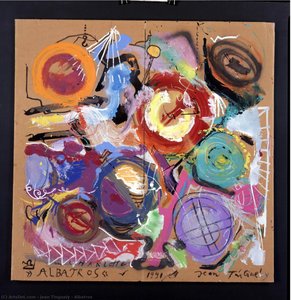
Albatros af Jean Tinguely

Albatros

Kinetic Sculpture · Bechtler Museum of Modern Art, Charlotte

We are looking at Albatros, a work by Jean Tinguely. This piece was created about 1989 and exists as an edition. It is a significant example of the artist's later output, focusing on the form of a skull as its primary subject.

Jean Tinguely-udvalget fortsætter, fra 11 til 16

Motiverne, der fangede Jean Tinguelys blik

De fire motiver, der optræder hyppigst i disse originaler, hver med sit fineste eksempel.

De museer, der udstiller Jean Tinguelys originalværker

De 3 museer, der rummer flest af malerierne på denne side.

Museum By Værker af Jean Tinguely Malerier fra denne liste
Bechtler Museum of Modern Art, CharlotteBechtler Museum of Modern Art Charlotte 4 Albatros, Santana, L
Charlotte Regional Visitors Authority, HarrissCharlotte Regional Visitors Authority Harriss 2 La Cascade, La Cascade
Swiss Institute / Contemporary Art New York, New York CitySwiss Institute / Contemporary Art New York New York City 1 Peut-être No. 11

Jean Tinguely år for år: de originale værker, der definerer hvert år

Udvælgelsen strækker sig over 12 år med Jean Tinguely, fra 1954 til 1965, og indeholder de fineste originalværker fra hvert år.

Værker efter år

Vælg et årstal for at se de originale værker.

Samleres spørgsmål om Jean Tinguelys malerier

Hvilket værk er Jean Tinguely mest kendt for?Vis svaret

Frigo Duchamp (1960). Derefter følger Metamechanical Sculpture with Tripod (1954) og Méta-Malevitch (1954).

Hvor gammel var Jean Tinguely, da Frigo Duchamp blev skabt?Vis svaret

35 år gammel: Frigo Duchamp er fra 1960, og Jean Tinguely blev født i 1925.

Hvad er de ti mest berømte Jean Tinguely malerier?Vis svaret

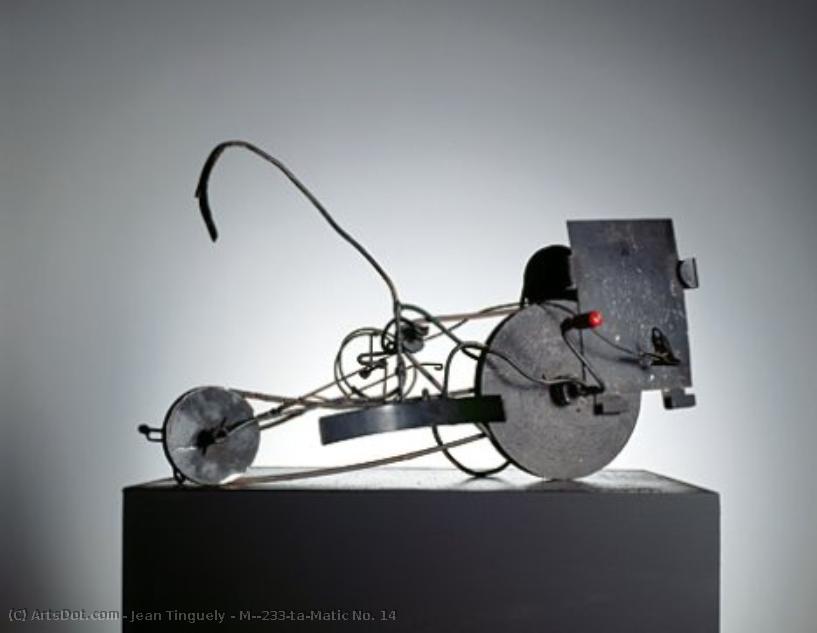
Frigo Duchamp, Metamechanical Sculpture with Tripod, Méta-Malevitch, Méta-Matic No. 14, Metamatic No. 4, Baluba, 50 RPM, Albatros, Peut-être No. 11 og La Cascade. Ranglisten ovenfor viser det enkelte værks årstal og museum.

Hvor mange malerier efterlod Jean Tinguely?Vis svaret

Vores katalog indeholder 16 værker af Jean Tinguely, dateret fra 1954 til 1965.

I hvilke museer udstilles Jean Tinguely's mesterværker?Vis svaret

Primært i Bechtler Museum of Modern Art (Charlotte), Charlotte Regional Visitors Authority (Harriss) og Swiss Institute / Contemporary Art New York (New York City). Museumslisten ovenfor viser dem alle.

I hvilke år malede Jean Tinguely sine mest berømte værker?Vis svaret

I 1954: 2 af de 16 værker på denne side blev skabt dengang, herunder Metamechanical Sculpture with Tripod.

Hvad er de første og de sidste berømte originaler af Jean Tinguely?Vis svaret

På denne side er det tidligste Metamechanical Sculpture with Tripod (1954) og det seneste 50 RPM (1965).

Hvilke motiver valgte Jean Tinguely oftest?Vis svaret

Metal sculpture (2), Sculpture (2) og Assemblage (2), fordelt på de 16 værker på denne side.

Hvilken teknik brugte Jean Tinguely mest?Vis svaret

Kinetic Sculpture, for 2 af de 16 værker på denne side.

Hvilken kunstretning tilhører Jean Tinguely?Vis svaret

Kinetic art og Nouveau réalisme, baseret på originalerne på denne side.

Hvilke værker af Jean Tinguely udstilles på Bechtler Museum of Modern Art?Vis svaret

Albatros, Santana og L: Bechtler Museum of Modern Art, Charlotte har 4 af værkerne på denne side.

Jean Tinguely: liv og værk

Jean Tinguely: A Symphony of Destruction and Delight

Jean Tinguely (1925-1991) stands as a singular figure in 20th-century sculpture, recognized for his audacious exploration of kinetic art—a movement rooted deeply within Dada’s rebellious spirit. More than just creating machines, Tinguely crafted performances of disintegration, transforming metal scraps into mesmerizing dances of collapse that simultaneously mocked industrial excess and celebrated the inherent beauty of decay. Born in Fribourg, Switzerland, he possessed an early fascination with sculpture, nurtured by formative encounters with artists like Kurt Schwitters and Julia Ris at Basel’s Allgemeine Gewerbeschule. These influences instilled a conviction that art should challenge conventions and provoke contemplation—a philosophy that would permeate his entire oeuvre.
  • Early Years & Influences: Tinguely's artistic journey began in Basel, where he honed his skills under Julia Ris, absorbing the ethos of Dadaism – specifically Schwitters’ Merzbau – which championed chance and improvisation as tools for artistic expression. This foundational understanding would prove crucial to his later development as a kinetic sculptor.
  • Parisian Avant-Garde & New Realism: Moving to Paris in 1952 alongside Eva Aeppli, Tinguely immersed himself in the vibrant Parisian avant-garde scene. He joined forces with fellow artists like René Lalique and Yves Klein, contributing to discussions surrounding New Realism—a movement that sought to reject illusionistic representation and embrace materiality as a primary means of artistic communication.

The Birth of Métamatics: Dada’s Legacy Revisited

Tinguely's groundbreaking approach to sculpture emerged from his unwavering commitment to Dada principles. Rejecting traditional sculptural techniques, he embraced the use of scrap metal—bicycle parts, springs, wires, and other discarded materials—to construct machines that defied gravity and movement. These ‘Métamatics,’ as Tinguely termed them, weren’t merely decorative objects; they were deliberate provocations designed to dismantle preconceived notions about sculpture and art itself. Like Dada artists before him, he deliberately incorporated elements of chance and spontaneity into his creative process, mirroring the chaotic energy of the era. The self-destructive nature of these machines wasn't simply an aesthetic gesture—it represented a critique of societal obsession with production and consumption.
  • Homage to New York (1960): Perhaps Tinguely’s most iconic work, ‘Homage to New York,’ exemplifies his artistic vision. The sculpture’s partial collapse during its unveiling at MoMA underscored the artist's belief that art should confront reality head-on and acknowledge its own impermanence.
  • Study for an End of the World No. 2 (1962): This monumental installation, detonated in the Nevada desert before a captivated audience, solidified Tinguely’s reputation as a daring innovator and cemented his place within the history of performance art.

Collaborations & Artistic Partnerships

Tinguely's artistic spirit flourished through fruitful collaborations with fellow creatives. Notably, he partnered with Eva Aeppli to create ‘The Hon – En Katedral,’ a striking architectural sculpture combining organic and mechanical elements—a testament to his ability to synthesize disparate influences into cohesive artistic statements. Furthermore, his marriage to Niki de Saint Phalle yielded remarkable projects like ‘Le Cyclop,’ where they explored themes of mythology and symbolism through monumental sculptures that pushed the boundaries of artistic expression.

Legacy & Recognition

Jean Tinguely’s influence extends far beyond his own lifetime. His pioneering use of kinetic sculpture established a new paradigm for sculptural art, inspiring generations of artists to embrace experimentation and challenge conventional notions of form and function. Recognized internationally as one of the foremost sculptors of his era, Tinguely continues to captivate audiences with his mesmerizing machines—objects that embody both destruction and delight—reminding us that beauty can be found even in disintegration and that art should provoke profound contemplation about our relationship with technology and society. His enduring legacy resides not only in his remarkable sculptures but also in the spirit of rebellious innovation that defines his artistic vision.