Jean Laurent (Photographer): Capturing Spain’s Artistic Soul
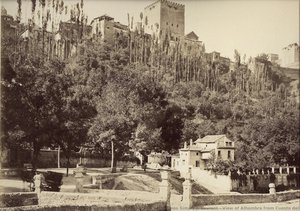
Jean Laurent, born July 23rd, 1816, in Garchizy, France, stands as a pivotal figure in the history of Spanish photography during the second half of the nineteenth century. Alongside Charles Clifford, he established a studio that became synonymous with documenting Spain’s cultural landscape and artistic heritage—a legacy cemented by his meticulous approach to capturing iconic landmarks like Alhambra.
- Early Life & Education: Laurent's formative years were marked by practical skills honed in tradesmanship. Initially employed as a box maker and paper cutter, he possessed an innate curiosity that would soon steer him toward the burgeoning field of photography.
- Arrival in Spain (1843): Recognizing the potential for artistic expression within this new medium, Laurent relocated to Madrid in 1843, initiating a lifelong dedication to documenting Spanish life and art. His initial foray into photography coincided with Clifford’s pioneering efforts, fostering a collaborative spirit that would propel both artists forward.
- The Studio & Collaborative Spirit: Laurent established his studio on Carrera de San Jerónimo, near the Congress of Deputies, forging an invaluable partnership with José Martínez Sánchez. Together, they patented “Leptographic Paper,” a revolutionary technique that yielded positive prints—a significant advancement over the prevailing negative process—and cemented their reputation as innovators in photographic printing.
- Royal Patronage & Artistic Recognition: Laurent’s commitment to his craft earned him the honorific title of “Fotógrafo de Su Majestad la Reina” (Her Majesty The Queen's Photographer) from 1861 to 1868, reflecting the esteem accorded to his work by the Spanish monarchy. This patronage allowed him access to privileged subjects—including Goya’s Black Paintings—further enriching his artistic output and solidifying his position as Spain’s foremost photographer of the era.
- Legacy & Influence: Laurent's son-in-law, Alfonso Roswag Nogier, continued his firm’s operations after Laurent’s retirement in 1881, ensuring that Laurent’s pioneering spirit endured. His archive was acquired by Joseph Jean Marie Lacoste Borde, and his meticulous documentation of Spanish art—particularly the Black Paintings—remains a cornerstone of visual culture, demonstrating the transformative power of photography to preserve artistic masterpieces for posterity.
Laurent's photographic endeavors extended beyond mere documentation; he actively engaged with artistic innovation, exemplified by his collaboration on “Leptographic Paper” and his involvement in capturing Goya’s Black Paintings—a project that profoundly impacted the understanding of Spanish art history.
His contribution to Museo Nacional del Prado was particularly noteworthy. Laurent's studio produced a Graphoscope – a manually rotated mechanism which had a continuous panoramic photograph inside it of the Museum’s Central Gallery taken by J. Laurent y Cía., between 1882 and 1883. This example is the only known Graphoscope and can be considered exceptionally important for its artistic and documentary value.
Jean Laurent died November 24th, 1886 in Madrid. He was buried at Cementerio de la Almudena.