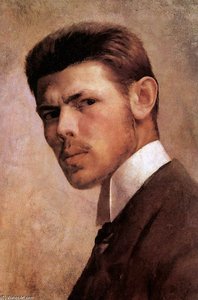
Portræt af János Vaszary

János Vaszary malerier: De 20 mest berømte, set gennem et galleris øjne

Opdateret november 2026 · rangeret efter vores popularitetsscore (søgninger, besøg og ordrer for hvert værk) · 24 værker af János Vaszary i vores katalog

Kort sagt

I galleriets øjne er János Vaszarys mest berømte maleri The morphinist (1930), hvis original hænger på Ungarns Nationalgalleri i Budapest. Woman in a Black Hat (1894) og Golden Age (1898) fuldender trioen, som ethvert øje genkender. Ud af de 24 værker af János Vaszary i vores katalog præsenterer galleriet herunder de 20 mest berømte, hver som et originalværk med årstal, museum og det, der gør det unikt.

1867 – 1939, Kaposvár Flest værker: Ungarns Nationalgalleri

Galleriets top 10 János Vaszary malerier

1
The morphinist (1930) af János Vaszary

The morphinist

1930 · Oil On Canvas · Ungarns Nationalgalleri, Budapest

Janos Vaszary’s “The Morphinist,” painted in 1930, is more than just a portrait; it's a haunting meditation on the anxieties of modernity. This arresting image, now residing within the esteemed collection of the Hungarian National Gallery in Budapest, immediately draws the viewer into a world of muted colors and unsettling stillness. The central figure, a woman lying prone with her head turned to the left, embodies a profound sense of…

János Vaszarys malerier, rangeret fra 11 til 20

Motiverne, der fangede János Vaszarys blik

De fire motiver, der optræder hyppigst i disse originaler, hver med sit fineste eksempel.

De museer, der udstiller János Vaszarys originalværker

De 2 museer, der rummer flest af malerierne på denne side.

Museum By Værker af János Vaszary Malerier fra denne liste
Ungarns Nationalgalleri, BudapestUngarns Nationalgalleri Budapest 7 The morphinist, Woman in a Black Hat, Golden Age
Slovak National Gallery, BratislavaSlovak National Gallery Bratislava 1 French Riviera

János Vaszary, ét signaturmaleri per årti

Værker per årti

Vælg et årti for at se det originale værk, der definerer det.

János Vaszary's malerier: galleriets svar

Hvilket maleri af János Vaszary er det mest berømte af alle?Vis svaret

The morphinist (1930), Ungarns Nationalgalleri, Budapest. Derefter følger Woman in a Black Hat (1894) og Golden Age (1898).

Hvor gammel var János Vaszary, da The morphinist blev færdiggjort?Vis svaret

63 år gammel: The morphinist er fra 1930, og János Vaszary blev født i 1867.

Hvilke er János Vaszarys top 10 malerier?Vis svaret

The morphinist, Woman in a Black Hat, Golden Age, After Bathing, Breakfast in the Open Air, French Riviera, Detail of Monaco Harbour, The artist's wife, Die Kunde og Self Portrait -. Ranglisten ovenfor viser det enkelte værks årstal og museum.

Hvor mange værker skabte János Vaszary?Vis svaret

Vores katalog indeholder 24 værker af János Vaszary, dateret fra 1894 til 1930.

Hvor hænger János Vaszarys mest berømte originaler?Vis svaret

Primært i Ungarns Nationalgalleri (Budapest) og Slovak National Gallery (Bratislava). Museumslisten ovenfor viser dem alle.

Hvornår skabte János Vaszary sine mest berømte malerier?Vis svaret

I 1900s: 3 af de 20 værker på denne side blev skabt dengang, herunder After Bathing.

Hvilke er János Vaszarys tidligste og seneste berømte værker?Vis svaret

På denne side er det tidligste Woman in a Black Hat (1894) og det seneste The morphinist (1930).

Hvilke motiver vendte János Vaszary oftest tilbage til?Vis svaret

Hungary (2) og Portrait (2), fordelt på de 20 værker på denne side.

Hvilke originalværker af János Vaszary findes i Ungarns Nationalgalleri?Vis svaret

The morphinist, Woman in a Black Hat og Golden Age: Ungarns Nationalgalleri, Budapest har 7 af værkerne på denne side.

János Vaszary: kunstneren

János Vaszary: A Life in Hungarian Impressionism

Early Life and Education

  • Born: November 30, 1867, in Kápósvar, Hungary.
  • Vaszary came from a prominent Catholic family; his uncle was Kolos Ferenc Vaszary, the Archbishop of Esztergom.
  • He began his artistic training at the Hungarian University of Fine Arts under János Greguss.
  • In 1887, he continued his studies in Munich with Gabriel von Hackl and Ludwig von Löfftz, laying a foundation in traditional techniques.

Parisian Influences and Artistic Development

  • A pivotal moment came after seeing the works of Jules Bastien-Lepage, prompting Vaszary to move to Paris in 1899.
  • He enrolled at the Académie Julian, immersing himself in the vibrant Parisian art scene and embracing new artistic currents.
  • While initially influenced by French Impressionism, he later engaged with the artists' colony in Nagybánya and explored Hungarian folk art. However, his core aesthetic remained rooted in French principles.

Key Works and Recognition

World War I and Later Years

  • During World War I, Vaszary served as a correspondent on the Serbian front. This experience infused his imagery with greater drama and intensity.
  • He returned to his Impressionist tendencies after another visit to Paris, demonstrating an ability to adapt and evolve his style.
  • From 1920 until his retirement in 1932, he was a professor at the Hungarian University of Fine Arts, nurturing the next generation of artists.

Founding KÚT and Final Resting Place

  • Activism: In 1924, Vaszary co-founded the “Képzőművészek Új Társasága” (New Society of Artists), known as “KÚT” (“fountain” in Hungarian).
  • He was commissioned to create murals for the Biological Institute in Tihany in 1926.
  • After retirement, he planned to settle permanently in Tata, Hungary, where he had a villa and frequently painted. However, he passed away suddenly in Budapest in 1939.
  • He was ultimately laid to rest in Tata, which honors his legacy with a street and an elementary school named after him.

Historical Significance

  • János Vaszary stands as a significant figure in Hungarian art history, bridging the gap between traditional academic training and modern Impressionist principles.
  • His work reflects a unique blend of French influences and Hungarian identity, contributing to the development of a distinct national artistic voice.
  • Legacy: He remains celebrated for his vibrant color palettes, expressive brushwork, and insightful depictions of everyday life.