Portræt af Jan Provoost

De 55 mest berømte Jan Provoost-malerier, en galleriselektion

Opdateret november 2026 · rangeret efter vores popularitetsscore (søgninger, besøg og ordrer for hvert værk) · 56 værker af Jan Provoost i vores katalog

Kort sagt

Af alle de originale værker, som Jan Provoost efterlod, er det mest berømte The Virgin and Child (1505), som er en del af samlingen på Scottish National Gallery i Edinburgh. Lige efter følger The Dispute of Saint Catherine of Alexandria (1505) og Zechariah (1510). Vores katalog indeholder 56 værker af Jan Provoost; galleriet har bevaret de 55 værker, som verden beundrer mest, hver vist med sin dato, sit museum og sin historie.

1465 – 1529, Mons Northern renaissance Flest værker: Groeningemuseum

Jan Provoosts top 10 malerier: galleriets udvalg

1
The Virgin and Child (1505) af Jan Provoost

The Virgin and Child

1505 · Oil On Panel · Scottish National Gallery, Edinburgh

The composition centers on the Virgin Mary, her form framed by a structured arch that defines a sacred, enclosed space. She holds the Christ Child against a backdrop of rolling hills and dark foliage under a pale sky. A deep red mantle covers her shoulders, contrasting with the dark blue of her inner garment and the white of her veil. The figures occupy the immediate foreground, their porcelain-like skin rendered…

3
Zechariah (1510) af Jan Provoost

Zechariah

1510 · Oil On Panel · Museo del Prado, Madrid

A single man occupies the center of the frame, his body carved from light and shadow. He is an elderly figure, leaning slightly forward as if caught in a moment of quiet reception. His hands are extended, palms open, reaching into the space between himself and the viewer. There is a stillness in his gaze, a directness that meets the eye with a sense of serene expectation. He is framed…

4
The Last Judgment (1525) af Jan Provoost

The Last Judgment

1525 · Oil On Panel · Detroit Institute of Arts, Detroit

The Last Judgment by Jan Provoost unfolds as a dramatic vision of the final reckoning. Created around 1525, this oil painting captures the moment of divine judgment as Jesus Christ reigns in glory. The scene presents a celestial hierarchy where the heavens meet the earthly realm, presenting a vision of the end of all mankind. It remains a prime example of the Northern Renaissance style, where every corner of the…

5
Mourning of Christ (1490) af Jan Provoost

Mourning of Christ

1490 · Tempera On Panel · Kunsthaus Zürich, Zürich

The composition centers on the body of Christ, which is being lowered from the cross by Nicodemus and John. The pale skin of the deceased figure contrasts with the deep reds and blues of the surrounding garments. Mary Magdalene, Mary the mother of Jesus, and Joseph of Arimathea are positioned closely around the central event, their forms creating a tight, organized arrangement within a shallow landscape. In the background, a…

6
The Annunciate Virgin, Saint Andrew with a Donor and His Sons, Saint Catherine of Alexandria with a Donor and Her Daughters, and the Annunciate Angel (1514) af Jan Provoost

The Annunciate Virgin, Saint Andrew with a Donor and His Sons, Saint Catherine of Alexandria with a Donor and Her Daughters, and the Annunciate Angel

1514 · Oil On Panel · Philadelphia Museum of Art, Philadelphia

The Annunciate Virgin, Saint Andrew with a Donor and His Sons, Saint Catherine of Alexandria with a Donor and Her Daughters, and the Annunciate Angel emerges from the early 16th century as a complex devotional structure. This work by Jan Provoost presents a multi-layered vision of faith, where the sacred and the earthly meet within a single wooden frame. The piece currently resides within the Philadelphia Museum of Art, where…

7
The Virgin and Child (1500) af Jan Provoost

The Virgin and Child

1500 · Oil On Panel · Museo del Prado, Madrid

In this intimate oil on panel, we find ourselves in the presence of a tender, maternal encounter. The Virgin Mary is depicted in a moment of nursing, her form draped in a mantle of deep teal and blue that holds a sculptural weight. She stands against a patterned backdrop, perhaps a carved screen or a heavy textile, which provides a structured, formal setting for this private act. The composition is…

8
Madonna and Child with angels (1480) af Jan Provoost

Madonna and Child with angels

1480 · Oil On Panel

The painting presents a seated Virgin Mary positioned centrally within a lush, enclosed garden. She wears a heavy, dark gown that contrasts with the lighter tones of the surrounding environment. In her right hand, she holds a small bouquet consisting of a red poppy and a white carnation. Above her head, two angelic figures hold a golden crown. To her left, the infant Christ reaches toward his mother's chest with…

9
Entombment of Christ (1490) af Jan Provoost

Entombment of Christ

1490 · Oil On Panel

The heavy silence of the tomb hangs over the Entombment of Christ, a work painted by Jan Provoost around 1490. In this somber scene, the weight of Christian sorrow settles deeply upon the figures gathered in the shadows. The air feels thick with the grief of the Deposition of Christ, capturing a moment where the physical reality of death meets the spiritual ache of those left behind. Every line and…

10
Annunciation (1500) af Jan Provoost

Annunciation

1500 · Oil · Musei di Strada Nuova, Genova

The Annunciation is an oil painting by Jan Provoost, created about 1500. The work depicts a religious scene within a domestic interior, featuring the Virgin Mary and the Archangel Gabriel. Mary is positioned on the left side of the composition in a seated, prayerful posture, wearing a deep red gown. To the right, the Archangel Gabriel appears with large wings and a light blue robe. A white dove, representing the…

Jan Provoost-udvalget fortsætter, fra 11 til 55

11The Last Judgement (1500) af Jan ProvoostThe Last Judgement1500 · Fogg Museum 12The Lamentation (1490) af Jan ProvoostThe Lamentation1490 13Crucifixion (1500) af Jan ProvoostCrucifixion1500 · Groeningemuseum 14Saint Jerome in the Wilderness (1512) af Jan ProvoostSaint Jerome in the Wilderness1512 · De Kongelige Skønkunstmuseer i Belgien 15Flagellation (1512) af Jan ProvoostFlagellation1512 · Saint Louis Art Museum 16The Nativity at Night (1507) af Jan ProvoostThe Nativity at Night1507 · Upton House 17Saint Clare (1510) af Jan ProvoostSaint Clare1510 18John the Baptist (1503) af Jan ProvoostJohn the Baptist1503 · Rijksmuseum Twenthe 19Saint Dominicus (1503) af Jan ProvoostSaint Dominicus1503 · Rijksmuseum Twenthe 20The Angel of the Annunciation in a stone niche (1503) af Jan ProvoostThe Angel of the Annunciation in a stone niche1503 21Crucifixion (1503) af Jan ProvoostCrucifixion1503 · Groeningemuseum 22Calvary (1517) af Jan ProvoostCalvary1517 · Museum of Fine Arts Ghent (MSK) 23Saint Barbara from Nicodemia (1505) af Jan ProvoostSaint Barbara from Nicodemia1505 · Det Kongelige Museum for Fin Kunst Antwerpen 24Adoration of the Magi (1505) af Jan ProvoostAdoration of the Magi1505 · Gemäldegalerie 25Virgin Mary and sleeping child enthroned by angels (1503) af Jan ProvoostVirgin Mary and sleeping child enthroned by angels1503 · Staatliche Kunsthalle Karlsruhe 26Diptych with Christ carrying the Cross and Portrait of a Friar Minor, memento mori (reverse) (1522) af Jan ProvoostDiptych with Christ carrying the Cross and Portrait of a Friar Minor, memento mori (reverse)1522 · Sint-Janshospitaal 27Last Judgement (1525) af Jan ProvoostLast Judgement1525 · Groeningemuseum 28The Virgin and Child in a Landscape (1512) af Jan ProvoostThe Virgin and Child in a Landscape1512 · National Gallery 29Allegory of Christianity (1515) af Jan ProvoostAllegory of Christianity1515 30Flowers in a vase in a niche (1480) af Jan ProvoostFlowers in a vase in a niche1480 31Crucifixion (1500) af Jan ProvoostCrucifixion1500 32Crucifixion (1500) af Jan ProvoostCrucifixion1500 33Saint Catherine of Alexandria (1505) af Jan ProvoostSaint Catherine of Alexandria1505 · Museum Boijmans Van Beuningen 34The Virgin and Saint Joseph at Bethlehem (recto) and Virgin Annunciate (verso) (1507) af Jan ProvoostThe Virgin and Saint Joseph at Bethlehem (recto) and Virgin Annunciate (verso)1507 · Upton House 35Triptych of The Adoration of the Magi and Shepherds (centre) with The Annunciation (left wing) and The Madonna adoring the Christ Child (right wing) and Saint John the Baptist and Saint Margaret (closed) (1507) af Jan ProvoostTriptych of The Adoration of the Magi and Shepherds (centre) with The Annunciation (left wing) and The Madonna adoring the Christ Child (right wing) and Saint John the Baptist and Saint Margaret (closed)1507 36Portrait of a Female Donor (1505) af Jan ProvoostPortrait of a Female Donor1505 · Thyssen-Bornemisza Museum 37The Last Judgment (1525) af Jan ProvoostThe Last Judgment1525 · Hamburger Kunsthalle 38Abraham, Sarah, and the Angel af Jan ProvoostAbraham, Sarah, and the Angel 39Last Judgement (1525) af Jan ProvoostLast Judgement1525 40The Martyrdom of St Catherine af Jan ProvoostThe Martyrdom of St CatherineDet Kongelige Museum for Fin Kunst Antwerpen 41St. Andrew in landscape af Jan ProvoostSt. Andrew in landscape 42Donor with St. Nicholas and his Wife with St. Godelina af Jan ProvoostDonor with St. Nicholas and his Wife with St. Godelina 43Triptych with Virgin and Child, Saint John the Evangelist (left wing) and Mary Magdalene (right wing), Jan Provoost, c. 1505 - c. 1525 (1525) af Jan ProvoostTriptych with Virgin and Child, Saint John the Evangelist (left wing) and Mary Magdalene (right wing), Jan Provoost, c. 1505 - c. 15251525 · Mauritshuis 44St. Catherine af Jan ProvoostSt. Catherine 45The Coronation of the Virgin af Jan ProvoostThe Coronation of the Virgin 46The Coronation of the Virgin (detail) af Jan ProvoostThe Coronation of the Virgin (detail) 47The Martyrdom of St. Catherine af Jan ProvoostThe Martyrdom of St. Catherine 48Death and the Miser af Jan ProvoostDeath and the MiserGroeningemuseum 49Virgin and Child af Jan ProvoostVirgin and Child 50Virgin and Child Enthroned, with Saints Jerome and John the Baptist and a Carthusian Monk, Jan Provoost (attributed to), c. 1510 (1510) af Jan ProvoostVirgin and Child Enthroned, with Saints Jerome and John the Baptist and a Carthusian Monk, Jan Provoost (attributed to), c. 15101510 · Rijksmuseum 51Triptych of Our Lady of Mercy (1515) af Jan ProvoostTriptych of Our Lady of Mercy1515 · Nationalmuseet for Antik Kunst 52Triptych of the Calheta Matrix Church (1520) af Jan ProvoostTriptych of the Calheta Matrix Church1520 · Sacred Art Museum of Funchal 53The Virgin Mary in Glory (1524) af Jan ProvoostThe Virgin Mary in Glory1524 · Hermitage Museum 54Virgin and Child af Jan ProvoostVirgin and ChildHermitage Museum 55Virgin Giving Breast af Jan ProvoostVirgin Giving BreastMusée des Beaux-Arts de Strasbourg

Jan Provoosts berømte malerier, periode for periode

Motiverne, der fangede Jan Provoosts blik

De fire motiver, der optræder hyppigst i disse originaler, hver med sit fineste eksempel.

De museer, der udstiller Jan Provoosts originalværker

De 8 museer, der rummer flest af malerierne på denne side.

Museum By Værker af Jan Provoost Malerier fra denne liste
Groeningemuseum, BruggeGroeningemuseum Brugge 4 Crucifixion, Crucifixion, Last Judgement
Museum Boijmans Van Beuningen, RotterdamMuseum Boijmans Van Beuningen Rotterdam 2 The Dispute of Saint Catherine of Alexandria, Saint Catherine of Alexandria
Museo del Prado, MadridMuseo del Prado Madrid 2 Zechariah, The Virgin and Child
Upton House, BanburyUpton House Banbury 2 The Nativity at Night, The Virgin and Saint Joseph at Bethlehem (recto) and Virgin Annunciate (verso)
Rijksmuseum Twenthe, EnschedeRijksmuseum Twenthe Enschede 2 John the Baptist, Saint Dominicus
Det Kongelige Museum for Fin Kunst Antwerpen, AntwerpenDet Kongelige Museum for Fin Kunst Antwerpen Antwerpen 2 Saint Barbara from Nicodemia, The Martyrdom of St Catherine
Hermitage Museum, Sankt PetersborgHermitage Museum Sankt Petersborg 2 The Virgin Mary in Glory, Virgin and Child
Scottish National Gallery, EdinburghScottish National Gallery Edinburgh 1 The Virgin and Child

Jan Provoost årti for årti: det originale værk, der definerer hvert enkelt

Værker per årti

Vælg et årti for at se det originale værk, der definerer det.

Samleres spørgsmål om Jan Provoosts malerier

Hvilket værk er Jan Provoost mest kendt for?Vis svaret

The Virgin and Child (1505), Scottish National Gallery, Edinburgh. Derefter følger The Dispute of Saint Catherine of Alexandria (1505) og Zechariah (1510).

Hvor gammel var Jan Provoost, da The Virgin and Child blev skabt?Vis svaret

40 år gammel: The Virgin and Child er fra 1505, og Jan Provoost blev født i 1465.

Hvad er de ti mest berømte Jan Provoost malerier?Vis svaret

The Virgin and Child, The Dispute of Saint Catherine of Alexandria, Zechariah, The Last Judgment, Mourning of Christ, The Annunciate Virgin, Saint Andrew with a Donor and His Sons, Saint Catherine of Alexandria with a Donor and Her Daughters, and the Annunciate Angel, The Virgin and Child, Madonna and Child with angels, Entombment of Christ og Annunciation. Ranglisten ovenfor viser det enkelte værks årstal og museum.

Hvor mange malerier efterlod Jan Provoost?Vis svaret

Vores katalog indeholder 56 værker af Jan Provoost, dateret fra 1480 til 1525.

I hvilke museer udstilles Jan Provoost's mesterværker?Vis svaret

Primært i Groeningemuseum (Brugge), Museum Boijmans Van Beuningen (Rotterdam) og Museo del Prado (Madrid). Museumslisten ovenfor viser dem alle.

I hvilke år malede Jan Provoost sine mest berømte værker?Vis svaret

I 1500s: 20 af de 55 værker på denne side blev skabt dengang, herunder The Virgin and Child.

Hvad er de første og de sidste berømte originaler af Jan Provoost?Vis svaret

På denne side er det tidligste Madonna and Child with angels (1480) og det seneste The Last Judgment (1525).

Hvilke motiver valgte Jan Provoost oftest?Vis svaret

Woman (13), Child (9) og Landscape (9), fordelt på de 55 værker på denne side.

Hvilken teknik brugte Jan Provoost mest?Vis svaret

Oil On Panel, for 25 af de 55 værker på denne side.

Hvilken kunstretning tilhører Jan Provoost?Vis svaret

Northern renaissance og Early netherlandish, baseret på originalerne på denne side.

Hvilke værker af Jan Provoost udstilles på Groeningemuseum?Vis svaret

Crucifixion, Crucifixion og Last Judgement: Groeningemuseum, Brugge har 4 af værkerne på denne side.

Jan Provoost: liv og værk

Renæssancens polymath: Livet og eftermælet efter Jan Provoost

I den levende gobelin af den nordlige renæssance er få skikkelser vævet så mesterligt sammen i trådene af kunst, videnskab og intellekt som Jan Provoost. Født omkring 1462 i Mons, eller måske Mouscron, trådte Provoost ikke blot frem som maler, men som et sandt renæssancemenneske, hvis rækkevidde strakte sig langt ud over staffeliet. Mens hans navn er indgraveret i historien gennem de flamske primitivers delikate penselstrøg, vandrede hans sind gennem domæner som kartografi, ingeniørkunst og arkitektur. Denne sjældne kombination af teknisk præcision og spirituel dybde gjorde det muligt for ham at bygge bro mellem middelalderens fromme traditioner og den spirende humanisme i en ny æra.

De tidlige år af Provoosts liv var præget af en dyb fordybelse i de kunstneriske strømninger i Nederlandene. Selvom meget af hans formative uddannelse er svundet ind i tidens tåger, sporer lærde ofte hans stilistiske ophav tilbage til den legendariske Hans Memling. Ved at opsuge den omhyggelige detaljegrad og de lysende, atmosfæriske kvaliteter, der kendetegner Brügge-skolen, udviklede Provoost et visuelt sprog, der var både fredfyldt og dybt symbolsk. Hans karriere førte ham til at lede indflydelsesrige værksteder i både Brügge—hvor han i 1494 opnåede den prestigefyldte status som borger—og Antwerpen, regionens travle økonomiske hjerte. Denne dobbelte tilstedeværelse tillod hans indflydelse at gennemtrænge Europas mest betydningsfulde kunstneriske knudepunkter.

En symfoni af symbolik og teknik

At betragte et værk af Jan Provoost er at træde ind i en verden, hvor hver skygge gemmer på en hemmelighed, og hver farve fortæller en historie. Hans teknik var defineret ved den mesterlige brug af lasering, hvor han påførte tynde, gennemsigtige lag af oliemaling for at skabe en følelse af indre lys, der synes at stråle ud fra selve træpanelerne. Denne metode gjorde det muligt for ham at gengive de tunge, skulpturelle folder i draperingerne og hudens bløde, dugfriske teksturer med en næsten taktil realisme. Hans kompositioner centrerede sig ofte om Jomfru Maria og barnet, motiver han tilgik med en underspillet elegance, der undveg dramatisk teateragtighed til fordel for en dyb, stille hellighed.

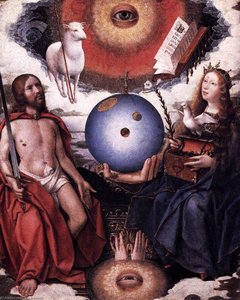
Ud over hans andagtsbilleder er Provoosts evne til at navigere i komplekse allegoriske temaer tydelig i mesterværker som Kristendommens allegori. I dette værk benytter kunstneren et sofistikeret symbolsprog—bøger, æsker og himmelske sfærer—til at kommunikere troens indviklede læresætninger. Hans dygtighed lå i evnen til at balancere disse tætte intellektuelle lag med en harmonisk farvepalette og en formmæssig klarhed, der forblev tilgængelig for beskueren. Uanset om han skildrede alvoren i Dommedag eller den intime ømhed i en Madonna med amning, besad Provoost en unik evne til at indfange det guddommelige i den menneskelige erfaring.

Provoost-værkstedets vedvarende indflydelse

Den sande størrelse af Jan Provoosts bidrag ligger ikke kun i hans egen hånd, men i hans værksteds vedvarende vitalitet. Hans atelier fungerede som en livsvigtig inkubator for talent, der fostrede en stil, som ville påvirke generationer af nederlandske malere. Produktionen fra Jan Provoosts værksted var karakteriseret ved en sømløs blanding af gotisk fromhed og fremspirende renæssance-æstetik, hvilket sikrede, at de flamske primitivers traditioner udviklede sig snarere end forsvandt. Gennem hans samarbejdsvillige ånd og hans evne til at tiltrække både elever og mestre, hjalp han med at opretholde den kunstneriske prestige i Brügge og Antwerpen under en periode med enorme kulturelle omvæltninger.

Når vi reflekterer over hans liv, ser vi en kunstner, der var lige så meget videnskabsmand som skaber. Hans møder med skikkelser som Albrecht Dürer i Antwerpen antyder en mand, der var dybt engageret i Europas skiftende intellektuelle strømninger. Provoosts eftermæle findes i hans portræters stille styrke, hans designs arkitektoniske præcision og hans religiøse ikoners lysende dybde. Han forbliver en central skikkelse, hvis arbejde tjener som et vindue til et transformativt øjeblik i menneskets historie, hvor den gamle verdens hengivenhed mødte den nye verdens nysgerrige ånd.