Portræt af Ivan Yakovlevich Bilibin

De 99 mest berømte Ivan Yakovlevich Bilibin-malerier, en galleriselektion

Opdateret november 2026 · rangeret efter vores popularitetsscore (søgninger, besøg og ordrer for hvert værk) · 99 værker af Ivan Yakovlevich Bilibin i vores katalog

Kort sagt

Af alle de originale værker, som Ivan Yakovlevich Bilibin efterlod, er det mest berømte Crimea. Batiliman (1940). Lige efter følger Illustration for Alexander Pushkin's 'Fairytale of the Tsar Saltan' (1905) og Magazine ''Russian Opera in Paris'' (1930). Vores katalog indeholder 99 værker af Ivan Yakovlevich Bilibin; galleriet har bevaret de 99 værker, som verden beundrer mest, hver vist med sin dato, sit museum og sin historie.

1876 – 1942 Art nouveau Flest værker: Metropolitan Museum of Art

Ivan Yakovlevich Bilibins top 10 malerier: galleriets udvalg

1
Crimea. Batiliman (1940) af Ivan Yakovlevich Bilibin

Crimea. Batiliman

1940 · Oil

Ivan Yakovlevich Bilibin created Crimea. Batiliman about 1940. The work captures the essence of nature through a precise rendering of the landscape. It functions as a historical document, recording the natural beauty of the Crimea during the 1940s.

3
Magazine ''Russian Opera in Paris'' (1930) af Ivan Yakovlevich Bilibin

Magazine ''Russian Opera in Paris''

1930 · Illustration

The 1930 illustration captures a moment of cultural intersection, where the theatrical grandeur of the Russian stage meets the sophisticated atmosphere of Paris. A central figure, clad in ceremonial costume, rides a horse toward a building marked with the title of the production. The composition utilizes a flattened perspective and precise, rhythmic lines, reflecting a style shaped by both Art Nouveau and the graphic clarity of Japanese prints. Every detail,…

4
Creek (1917) af Ivan Yakovlevich Bilibin

Creek

1917 · Oil On Canvas

is a landscape painting by the Russian artist Ivan Yakovlevich Bilibin. Created about 1917, the work captures a winter scene through a realistic lens, focusing on the textures of snow and water. The composition centers on a partially frozen stream framed by snow-covered vegetation.

5
Winter (1917) af Ivan Yakovlevich Bilibin

Winter

1917 · Painting

In the painting Winter by Ivan Yakovlevich Bilibin, a forest setting is depicted under a heavy layer of snow. The composition features several trees positioned at varying distances from the viewer; some trunks appear in the immediate foreground, while others recede into the background. These trees are devoid of leaves, presenting a barren landscape. Snow covers the ground and clings to the branches, establishing a cold, wintry atmosphere throughout the…

6
St. Prince Vladimir (1926) af Ivan Yakovlevich Bilibin

St. Prince Vladimir

1926 · Painting

The painting St. Prince Vladimir is a work by the artist Ivan Yakovlevich Bilibin. Created in 1926, the piece belongs to the Art Nouveau style. It captures a moment of quiet authority through the lens of decorative precision.

7
Crimea. Batiliman (1940) af Ivan Yakovlevich Bilibin

Crimea. Batiliman

1940 · Painting

Crimea. Batiliman is an artwork created by the artist Ivan Yakovlevich Bilibin. The painting is dated 1940. This work depicts a mountainous landscape and sea, focusing on the specific topography of the Crimean coast. The scene captures a rocky shore where the terrestrial terrain meets the maritime expanse.

8
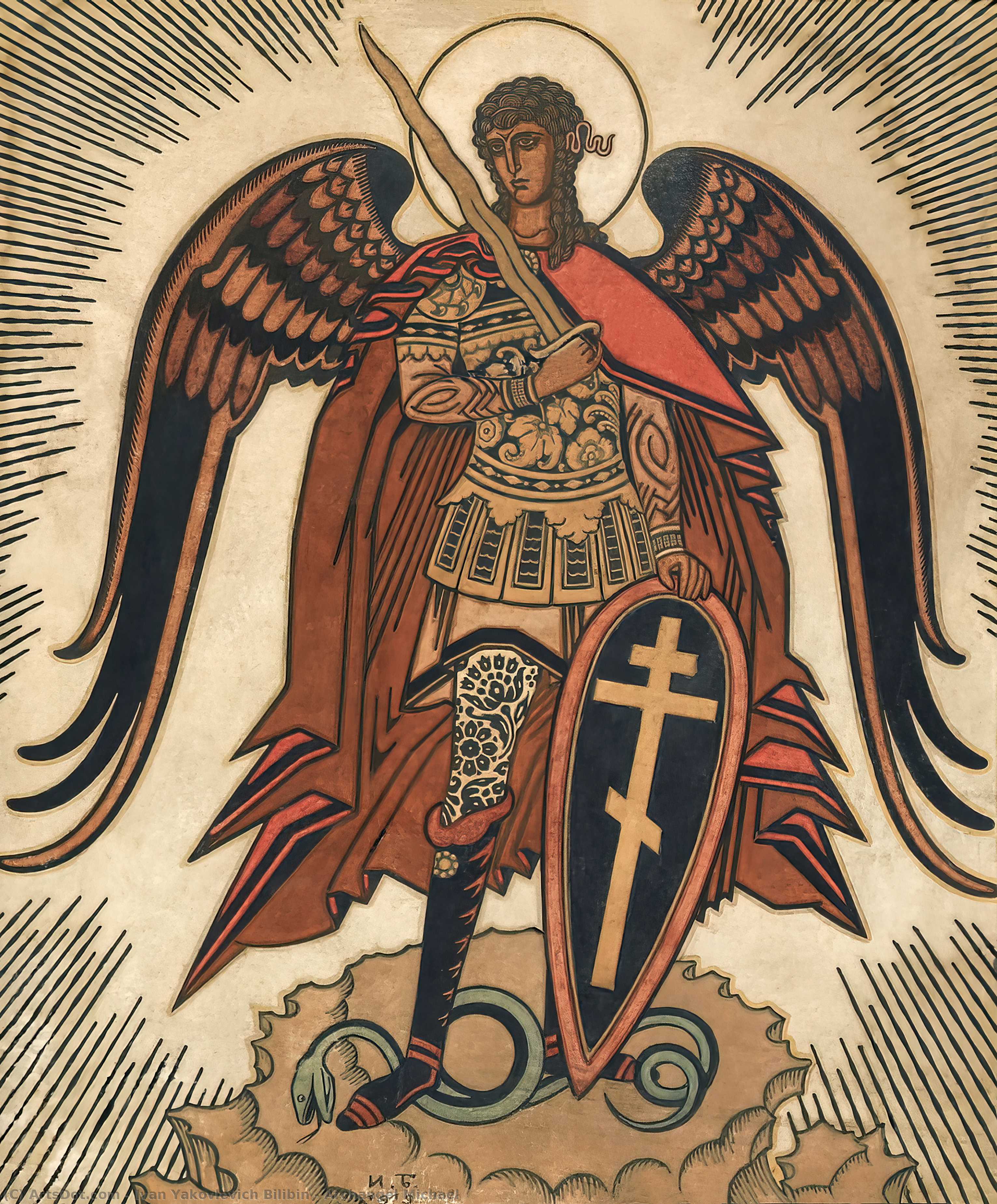
Archangel Michael af Ivan Yakovlevich Bilibin

Archangel Michael

Painting

The celestial presence of Archangel Michael emerges through the hand of Ivan Yakovlevich Bilibin. This figure, caught in a moment of divine purpose, carries the weight of a storied life within its lines. Born in 1876 in Tarkhovka, a suburb of St. Petersburg, Russia, the artist brought a deep connection to his homeland to every stroke. His vision remains etched in the history of his land, even as he met…

9
Cover of ''Art of Printing'' (1900) af Ivan Yakovlevich Bilibin

Cover of ''Art of Printing''

1900 · Lithograph

The Cover of ''Art of Printing'' emerges from the imagination of Ivan Yakovlevich Bilibin, a creator who breathes life into the ancient whispers of the past. Created about 1900, this piece captures a moment of mythic stillness. It presents a fantastical creature, a being that blurs the line between the human and the avian, appearing as if it has just stepped out from the pages of a forgotten legend. This…

10
Feast of Prince Vladimir (1902) af Ivan Yakovlevich Bilibin

Feast of Prince Vladimir

1902 · Illustration

Feast of Prince Vladimir is a work by Ivan Yakovlevich Bilibin, dated 1902. The artist was born in 1876 in Tarkhovka, a suburb of St. Petersburg, Russia. His life concluded in 1942 during the Siege of Leningrad.

Ivan Yakovlevich Bilibin-udvalget fortsætter, fra 11 til 99

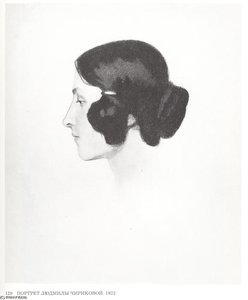
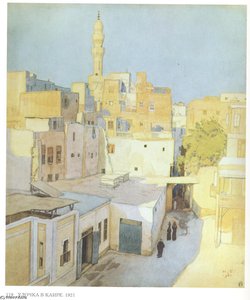
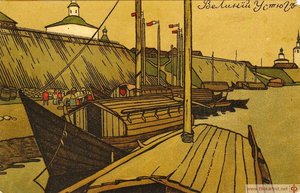
11Mihajlo Potyk (1902) af Ivan Yakovlevich BilibinMihajlo Potyk1902 12Dobrynya Nikitich (1902) af Ivan Yakovlevich BilibinDobrynya Nikitich1902 13Cover a series of poetry publishing Rosehip (1906) af Ivan Yakovlevich BilibinCover a series of poetry publishing Rosehip1906 14Donkey, Illustration for the magazine Bogey (1906) af Ivan Yakovlevich BilibinDonkey, Illustration for the magazine Bogey1906 15Fellah (1922) af Ivan Yakovlevich BilibinFellah1922 16Portrait of Lyudmila Chirikova (1922) af Ivan Yakovlevich BilibinPortrait of Lyudmila Chirikova1922 17A street in Cairo (1921) af Ivan Yakovlevich BilibinA street in Cairo1921 18Boy fellah (1923) af Ivan Yakovlevich BilibinBoy fellah1923 19Prince Andrew Bogolyubskii (1926) af Ivan Yakovlevich BilibinPrince Andrew Bogolyubskii1926 20Provence. Pines on the shore (1929) af Ivan Yakovlevich BilibinProvence. Pines on the shore1929 21South of France. Dunes (1930) af Ivan Yakovlevich BilibinSouth of France. Dunes1930 22Judgment during the Russian Pravda (1890) af Ivan Yakovlevich BilibinJudgment during the Russian Pravda1890 23Drawing from the magazine ''World of Art'' (1900) af Ivan Yakovlevich BilibinDrawing from the magazine ''World of Art''1900 24Program of the Russian symphony concerts (1905) af Ivan Yakovlevich BilibinProgram of the Russian symphony concerts1905 25Spring (1900) af Ivan Yakovlevich BilibinSpring1900 26Churilo Plenkovich (1902) af Ivan Yakovlevich BilibinChurilo Plenkovich1902 27Alyosha Popovich (1902) af Ivan Yakovlevich BilibinAlyosha Popovich1902 28Magazine Cover Bugbear (1905) af Ivan Yakovlevich BilibinMagazine Cover Bugbear1905 29Sadko (1903) af Ivan Yakovlevich BilibinSadko1903 30Rooster (1900) af Ivan Yakovlevich BilibinRooster1900 31Fragment of cover (1900) af Ivan Yakovlevich BilibinFragment of cover1900 32Moscow (1900) af Ivan Yakovlevich BilibinMoscow1900 33Postcard Happy Easter (1900) af Ivan Yakovlevich BilibinPostcard Happy Easter1900 34Cave Finn. Opera Ruslan and Lyudmila (1900) af Ivan Yakovlevich BilibinCave Finn. Opera Ruslan and Lyudmila1900 35Prince Ivan and the Firebird, illustration for the Russian Fairy Story 'The Firebird' (1901) af Ivan Yakovlevich BilibinPrince Ivan and the Firebird, illustration for the Russian Fairy Story 'The Firebird'1901 36Andrew-shooter and Strelchiha (1900) af Ivan Yakovlevich BilibinAndrew-shooter and Strelchiha1900 37Advertisement of the New Bavaria beer (1903) af Ivan Yakovlevich BilibinAdvertisement of the New Bavaria beer1903 38Postcard Happy Angel (1900) af Ivan Yakovlevich BilibinPostcard Happy Angel1900 39Bogatyr Volga. Illustration for the epic ''Volga'' (1903) af Ivan Yakovlevich BilibinBogatyr Volga. Illustration for the epic ''Volga''1903 40The opera ''Ruslan and Ludmila'' (1900) af Ivan Yakovlevich BilibinThe opera ''Ruslan and Ludmila''1900 41Fragrances Russian boyars partnership Palle ^ Co. (1900) af Ivan Yakovlevich BilibinFragrances Russian boyars partnership Palle ^ Co.1900 42Book Cover Alexander Pushkin's ''Tales'' (1900) af Ivan Yakovlevich BilibinBook Cover Alexander Pushkin's ''Tales''1900 43Mushroom (1900) af Ivan Yakovlevich BilibinMushroom1900 44At the well (1901) af Ivan Yakovlevich BilibinAt the well1901 45Cover for the collection of Russian folk tales (1900) af Ivan Yakovlevich BilibinCover for the collection of Russian folk tales1900 46Bird Alkonost (1905) af Ivan Yakovlevich BilibinBird Alkonost1905 47The Prince and the Frog (1900) af Ivan Yakovlevich BilibinThe Prince and the Frog1900 48Crane (1900) af Ivan Yakovlevich BilibinCrane1900 49Bird of Paradise Sirin (1905) af Ivan Yakovlevich BilibinBird of Paradise Sirin1905 50Vologda girl in holiday dress (1905) af Ivan Yakovlevich BilibinVologda girl in holiday dress1905 51Cover for the collection of fairy tales (1903) af Ivan Yakovlevich BilibinCover for the collection of fairy tales1903 52Poster of Exhibition (1904) af Ivan Yakovlevich BilibinPoster of Exhibition1904 53Drawing from the album (1910) af Ivan Yakovlevich BilibinDrawing from the album1910 54Sketch for the Opera, The Golden Cockerel, by Nikolai Rimsky-Korsakov (1909) af Ivan Yakovlevich BilibinSketch for the Opera, The Golden Cockerel, by Nikolai Rimsky-Korsakov1909 55Illustration for the poem 'The Tale of the Golden Cockerel' by Alexander Pushkin af Ivan Yakovlevich BilibinIllustration for the poem 'The Tale of the Golden Cockerel' by Alexander Pushkin 56Poster of International exhibition in Kazan (1909) af Ivan Yakovlevich BilibinPoster of International exhibition in Kazan1909 57Great Ustyug af Ivan Yakovlevich BilibinGreat Ustyug 58View of the Nile af Ivan Yakovlevich BilibinView of the Nile 59King of the seas (1911) af Ivan Yakovlevich BilibinKing of the seas1911 60Nice Candy Castle (1911) af Ivan Yakovlevich BilibinNice Candy Castle1911 61Saints Boris and Gleb on the ship af Ivan Yakovlevich BilibinSaints Boris and Gleb on the ship 62Sketch for the opera, 'The Golden Cockerel', by Nikolai Rimsky-Korsakov (1909) af Ivan Yakovlevich BilibinSketch for the opera, 'The Golden Cockerel', by Nikolai Rimsky-Korsakov1909 63Creek in winter (1915) af Ivan Yakovlevich BilibinCreek in winter1915 64Cake-city (1912) af Ivan Yakovlevich BilibinCake-city1912 65Crimea. Mountains (1916) af Ivan Yakovlevich BilibinCrimea. Mountains1916 66As the Germans let out a Bolshevik to Russia (1917) af Ivan Yakovlevich BilibinAs the Germans let out a Bolshevik to Russia1917 67Crimea. Old juniper (1918) af Ivan Yakovlevich BilibinCrimea. Old juniper1918 68Blessing of the Knight (1920) af Ivan Yakovlevich BilibinBlessing of the Knight1920 69Crimea. Baidar Valley (1918) af Ivan Yakovlevich BilibinCrimea. Baidar Valley1918 70Закат (1926) af Ivan Yakovlevich BilibinЗакат1926 71St. Prince Vladimir (1926) af Ivan Yakovlevich BilibinSt. Prince Vladimir1926 72Falcon. Illustration for the epic ''Volga'' (1927) af Ivan Yakovlevich BilibinFalcon. Illustration for the epic ''Volga''1927 73Underwater. Illustration for the epic ''Volga'' (1928) af Ivan Yakovlevich BilibinUnderwater. Illustration for the epic ''Volga''1928 · Metropolitan Museum of Art 74St. Prince Vladimir (1926) af Ivan Yakovlevich BilibinSt. Prince Vladimir1926 75Monastery of St. George Hosevita. Palestine (1924) af Ivan Yakovlevich BilibinMonastery of St. George Hosevita. Palestine1924 76Egypt. Pyramids (1924) af Ivan Yakovlevich BilibinEgypt. Pyramids1924 77Big Pine (1929) af Ivan Yakovlevich BilibinBig Pine1929 78Deer stalking (1931) af Ivan Yakovlevich BilibinDeer stalking1931 79Olive Trees (1929) af Ivan Yakovlevich BilibinOlive Trees1929 80Sketch for the opera ''Boris Godunov'' by Modest Mussorgsky (1930) af Ivan Yakovlevich BilibinSketch for the opera ''Boris Godunov'' by Modest Mussorgsky1930 81Sketch for the opera ''Prince Igor'' by Alexander Borodin (1930) af Ivan Yakovlevich BilibinSketch for the opera ''Prince Igor'' by Alexander Borodin1930 82South of France. Twilight (1935) af Ivan Yakovlevich BilibinSouth of France. Twilight1935 83South of France. After the storm (1936) af Ivan Yakovlevich BilibinSouth of France. After the storm1936 84Stepan Razin (1935) af Ivan Yakovlevich BilibinStepan Razin1935 85Kulikov Battle (1935) af Ivan Yakovlevich BilibinKulikov Battle1935 86The Streltsy Uprising (1936) af Ivan Yakovlevich BilibinThe Streltsy Uprising1936 87The Death of Ivan the Terrible (1935) af Ivan Yakovlevich BilibinThe Death of Ivan the Terrible1935 88France. View from the window of the cottages (1935) af Ivan Yakovlevich BilibinFrance. View from the window of the cottages1935 89Crimea. Koktebel (1939) af Ivan Yakovlevich BilibinCrimea. Koktebel1939 90Crimea. Koktebel (1939) af Ivan Yakovlevich BilibinCrimea. Koktebel1939 91Mills af Ivan Yakovlevich BilibinMills 92Archer af Ivan Yakovlevich BilibinArcher 93N. Medtner. Two tales af Ivan Yakovlevich BilibinN. Medtner. Two tales 94Vologda girl in holiday dress af Ivan Yakovlevich BilibinVologda girl in holiday dress 95Pogozero Olonets province Pudozh County af Ivan Yakovlevich BilibinPogozero Olonets province Pudozh County 96Boris and Gleb af Ivan Yakovlevich BilibinBoris and Gleb 97Dans les vignes de La Favière af Ivan Yakovlevich BilibinDans les vignes de La Favière 98Russian Village af Ivan Yakovlevich BilibinRussian Village 99Father Frost and the step-daughter af Ivan Yakovlevich BilibinFather Frost and the step-daughter

Ivan Yakovlevich Bilibins berømte malerier, periode for periode

Motiverne, der fangede Ivan Yakovlevich Bilibins blik

De fire motiver, der optræder hyppigst i disse originaler, hver med sit fineste eksempel.

De museer, der udstiller Ivan Yakovlevich Bilibins originalværker

Det museum, der rummer flest af malerierne på denne side.

Museum By Værker af Ivan Yakovlevich Bilibin Malerier fra denne liste
Metropolitan Museum of Art, New YorkMetropolitan Museum of Art New York 1 Underwater. Illustration for the epic ''Volga''

Ivan Yakovlevich Bilibin årti for årti: det originale værk, der definerer hvert enkelt

Værker per årti

Vælg et årti for at se det originale værk, der definerer det.

Samleres spørgsmål om Ivan Yakovlevich Bilibins malerier

Hvilket værk er Ivan Yakovlevich Bilibin mest kendt for?Vis svaret

Crimea. Batiliman (1940). Derefter følger Illustration for Alexander Pushkin's 'Fairytale of the Tsar Saltan' (1905) og Magazine ''Russian Opera in Paris'' (1930).

Hvor gammel var Ivan Yakovlevich Bilibin, da Crimea. Batiliman blev skabt?Vis svaret

64 år gammel: Crimea. Batiliman er fra 1940, og Ivan Yakovlevich Bilibin blev født i 1876.

Hvad er de ti mest berømte Ivan Yakovlevich Bilibin malerier?Vis svaret

Crimea. Batiliman, Illustration for Alexander Pushkin's 'Fairytale of the Tsar Saltan', Magazine ''Russian Opera in Paris'', Creek, Winter, St. Prince Vladimir, Crimea. Batiliman, Archangel Michael, Cover of ''Art of Printing'' og Feast of Prince Vladimir. Ranglisten ovenfor viser det enkelte værks årstal og museum.

Hvor mange malerier efterlod Ivan Yakovlevich Bilibin?Vis svaret

Vores katalog indeholder 99 værker af Ivan Yakovlevich Bilibin, dateret fra 1890 til 1940.

I hvilke museer udstilles Ivan Yakovlevich Bilibin's mesterværker?Vis svaret

Primært i Metropolitan Museum of Art (New York). Museumslisten ovenfor viser dem alle.

I hvilke år malede Ivan Yakovlevich Bilibin sine mest berømte værker?Vis svaret

I 1900s: 40 af de 99 værker på denne side blev skabt dengang, herunder Illustration for Alexander Pushkin's 'Fairytale of the Tsar Saltan'.

Hvad er de første og de sidste berømte originaler af Ivan Yakovlevich Bilibin?Vis svaret

På denne side er det tidligste Judgment during the Russian Pravda (1890) og det seneste Crimea. Batiliman (1940).

Hvilke motiver valgte Ivan Yakovlevich Bilibin oftest?Vis svaret

Advertisments (18), Myths (11) og Forests (11), fordelt på de 99 værker på denne side.

Hvilken teknik brugte Ivan Yakovlevich Bilibin mest?Vis svaret

Painting, for 4 af de 99 værker på denne side.

Hvilken kunstretning tilhører Ivan Yakovlevich Bilibin?Vis svaret

Art nouveau, baseret på originalerne på denne side.

Ivan Yakovlevich Bilibin: liv og værk

Ivan Yakovlevich Bilibin: A Life in Art

Early Life and Education

  • Born: 1876 in Tarkhovka, a suburb of St. Petersburg, Russia.
  • Ivan Bilibin demonstrated an early aptitude for art, nurtured by the vibrant cultural atmosphere of his surroundings.
  • He initially studied law at the University of St. Petersburg but soon abandoned it to pursue his artistic passions.
  • Bilibin received formal training at Anton Ažbe's School of Art in Munich (1898), where he was exposed to Art Nouveau and German satirical illustration, particularly the journal *Simplicissimus*.
  • He further honed his skills under the tutelage of Ilya Repin at the Imperial Academy of Arts in St. Petersburg.

Artistic Development and Influences

  • Early Influences: Bilibin’s artistic development was profoundly shaped by his ethnographic expeditions to northern Russia (Vologda, Olonetsk, Arkhangelsk governorates) between 1902-1904.
  • These travels sparked a deep fascination with Russian folk art, wooden architecture, and the rich traditions of the peasantry. He documented his findings in *Narodnoye tvorchestvo russkogo severa* (Folk Arts of the Russian North) published in 1904.
  • Japanese prints, with their emphasis on line, composition, and narrative storytelling, also exerted a significant influence on his style.
  • He embraced a distinctive aesthetic that blended elements of traditional Russian iconography, folk art motifs, and the decorative qualities of Art Nouveau.

Key Works and Artistic Style

  • Illustrations of Fairy Tales: Bilibin achieved widespread recognition for his enchanting illustrations of Russian fairy tales, beginning in 1899. Notable works include depictions of *Baba Yaga*, *Vasilisa the Beautiful*, and *Ivan Tsarevich catching the Firebird’s feather*.
  • Stage Design: He became a sought-after stage designer, collaborating with Sergei Diaghilev's Ballets Russes. His designs for Nikolai Rimsky-Korsakov’s *The Golden Cockerel* (1909) are particularly celebrated.
  • Distinctive Style: Bilibin’s style is characterized by its elegant lines, flattened perspective, symbolic use of color, and meticulous attention to detail. He often incorporated elements of medieval Russian manuscript illumination into his work.
  • He also created posters and book illustrations for various publications, including *Dog Rose* and the Moscow Publishing House.

Political Engagement and Later Life

  • Revolutionary Period: During the Russian Revolution of 1905, Bilibin created politically charged cartoons for the magazine *Župel*, which was later banned.
  • Exile and Return: Following the October Revolution in 1917, disillusioned with the new regime, he left Russia. He lived in Cairo, Alexandria, and eventually settled in Paris (1925), where he worked as a decorator.
  • Despite his initial departure, Bilibin harbored a longing for his homeland and returned to the Soviet Union in 1936 after decorating the Soviet Embassy.
  • Tragic End: He died during the Siege of Leningrad in 1942, refusing to evacuate despite the dire conditions.

Legacy and Historical Significance

  • Ivan Bilibin is considered one of Russia’s most important illustrators and stage designers.
  • Revival of National Identity: His work played a crucial role in reviving interest in Russian folklore and national identity during a period of rapid social and political change.
  • Influence on Modern Art: Bilibin’s distinctive style influenced subsequent generations of artists, particularly those interested in exploring the intersection of art, folklore, and national culture.
  • His illustrations continue to captivate audiences worldwide with their beauty, imagination, and evocative portrayal of a bygone era.