Guan Qiaochang Lamqua: A Portrait of Suffering and Artistic Innovation
Guan Qiaochang Lamqua (1801-1860), a pivotal figure in late Qing Dynasty Chinese art, remains an enigmatic artist whose haunting portraits continue to fascinate scholars and collectors alike. Born into a wealthy family in Shandong Province, Lamqua’s artistic journey began with traditional ink painting techniques honed under the tutelage of his father, a respected scholar and artist himself. However, he swiftly transcended convention, embracing oil painting – a European medium that would revolutionize Chinese art and solidify his reputation as a visionary innovator.
Early Life and Artistic Training
Lamqua’s formative years were marked by exposure to Western influences, primarily through Jesuit missionaries who introduced him to European artistic practices during his education at Peking University. This encounter proved transformative, sparking an intense fascination with realism and anatomical accuracy – qualities rarely seen in Chinese art of the time. He meticulously studied human anatomy, dissecting cadavers (a controversial practice for its era) to gain a profound understanding of musculature and bone structure, skills he skillfully translated into his oil paintings. His dedication to scientific observation distinguishes him from many contemporaries who adhered strictly to established artistic traditions.
The Masterpiece: Case No.1675
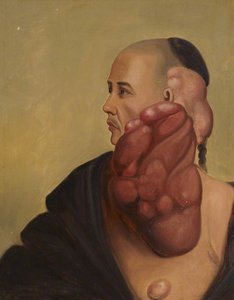
Lamqua’s most celebrated work, “Case No.1675” (1836), exemplifies his groundbreaking approach. This unsettling portrait depicts a man afflicted with a tumor – a deliberate choice that transcends mere depiction and delves into profound symbolic territory. The artist employed dramatic chiaroscuro lighting to accentuate the contours of the face, creating an almost sculptural effect that captures both physical deformity and psychological torment. Critics lauded Lamqua’s ability to convey emotion through visual means, recognizing his masterful manipulation of light and shadow as a testament to his artistic genius. The painting's unsettling realism challenged prevailing aesthetic ideals and cemented Lamqua’s place as a pioneer of expressive portraiture.
Technique and Style: Bridging East and West
Lamqua’s artistic style represents a remarkable synthesis of Eastern and Western influences. While rooted in the meticulous observation of anatomy characteristic of Chinese ink painting, he skillfully adopted oil paint techniques – blending brushstrokes with glazing—to achieve unparalleled luminosity and textural depth. He meticulously layered pigments to create surfaces that shimmered with subtle variations in color, mirroring the complexities of human emotion. This hybrid approach distinguishes Lamqua’s oeuvre from other artists of his time and underscores his commitment to pushing artistic boundaries.
Legacy and Historical Significance
Guan Qiaochang Lamqua's influence extended far beyond his lifetime. He served as a professor at Peking University, fostering the development of realist painting among younger generations of artists. His unwavering pursuit of anatomical accuracy and expressive technique profoundly impacted Chinese art history, paving the way for future explorations of psychological realism and dramatic visual storytelling. Today, “Case No.1675” remains an icon of 19th-century Chinese art—a haunting reminder of Lamqua’s artistic vision and his enduring contribution to the canon of Westernized Chinese painting. His work continues to inspire artists and scholars alike, ensuring that Guan Qiaochang Lamqua's legacy as a visionary innovator will endure for generations to come.