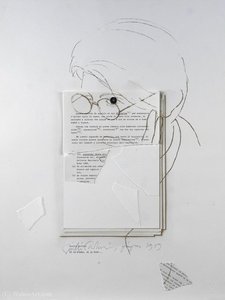
Kort sagt
Af alle de originale værker, som Giulio Paolini efterlod, er det mest berømte Untitled (771). Lige efter følger Untitled (755) og Untitled (758). Vores katalog indeholder 17 værker af Giulio Paolini; galleriet har bevaret de 17 værker, som verden beundrer mest, hver vist med sin dato, sit museum og sin historie.
Giulio Paolinis top 10 malerier: galleriets udvalg
L
Giulio Paolini's "L," created in 1984, isn’t merely a sculpture; it’s an invitation to contemplate the very nature of representation and the weight of history. The work immediately commands attention with its stark simplicity: two imposing marble busts of heads, rendered in a classical style reminiscent of Roman antiquity, stand on slender pedestals beneath a scattering of shattered fragments – a deliberate chaos that belies the inherent order of the…
Giulio Paolini-udvalget fortsætter, fra 11 til 17
De museer, der udstiller Giulio Paolinis originalværker
De 5 museer, der rummer flest af malerierne på denne side.
| Museum | By | Værker af Giulio Paolini | Malerier fra denne liste |
|---|---|---|---|
| Cassino | 2 | Doppia Verità, senza titolo | |
| Sydney | 1 | L | |
| Turin | 1 | Requiem | |
| Cold Spring | 1 | Mimesis | |
| Torino | 1 | Untitled |
Giulio Paolini år for år: de originale værker, der definerer hvert år
Knap et årti, fra 1976 til 1984, gav verden hvert eneste daterede Giulio Paolini originalværk i dette udvalg: her er de, år for år.
Værker per år
Vælg et årstal for at se de originale værker.
Mimesis
Artist Giulio Paolini has long been interested in vision as a way to know the world. Mimesi belongs to a series in which Paolini made plaster casts of iconic classical sculptures. In the series, the artist plays with classicism in an avant-garde way. Mimesi is composed of two plaster casts of the Greek messenger god Hermes from the classical marble sculpture, Hermes with the Infant Dionysus (350–330 BCE) by Praxiteles.…
L
Giulio Paolini's "L," created in 1984, isn’t merely a sculpture; it’s an invitation to contemplate the very nature of representation and the weight of history. The work immediately commands attention with its stark simplicity: two imposing marble busts of heads, rendered in a classical style reminiscent of Roman antiquity, stand on slender pedestals beneath a scattering of shattered fragments – a deliberate chaos that belies the inherent order of the…
Samleres spørgsmål om Giulio Paolinis malerier
Hvilket værk er Giulio Paolini mest kendt for?Vis svaret
Untitled (771). Derefter følger Untitled (755) og Untitled (758).
Hvad er de ti mest berømte Giulio Paolini malerier?Vis svaret
Untitled (771), Untitled (755), Untitled (758), Untitled (936), Untitled (390), Doppia Verità, L, Untitled (421), Untitled (894) og Untitled (333). Ranglisten ovenfor viser det enkelte værks årstal og museum.
Hvor mange malerier efterlod Giulio Paolini?Vis svaret
Vores katalog indeholder 17 værker af Giulio Paolini, dateret fra 1976 til 1984.
I hvilke museer udstilles Giulio Paolini's mesterværker?Vis svaret
Primært i CAMUSAC Cassino Museum of Contemporary Art (Cassino), Art Gallery of New South Wales (Sydney) og Fondazione per l'Arte Moderna e Contemporanea CRT (Turin). Museumslisten ovenfor viser dem alle.
Hvad er de første og de sidste berømte originaler af Giulio Paolini?Vis svaret
På denne side er det tidligste Mimesis (1976) og det seneste L (1984).
Hvilke værker af Giulio Paolini udstilles på CAMUSAC Cassino Museum of Contemporary Art?Vis svaret
Doppia Verità og senza titolo: CAMUSAC Cassino Museum of Contemporary Art, Cassino har 2 af værkerne på denne side.
Giulio Paolini: liv og værk
Giulio Paolini: Bridging Arte Povera and Conceptual Thought
Giulio Paolini stands as a singular figure in Italian art, embodying the spirit of Arte povera while simultaneously delving into the intricacies of conceptual art. Born in Genoa in 1940, his artistic journey began amidst formative influences – a childhood spent in Bergamo instilled a deep appreciation for visual culture and fostered an early engagement with museums and galleries. His fascination extended beyond mere observation; he actively sought knowledge through art periodicals and meticulously studied the works of masters. This intellectual curiosity propelled him toward painting after graduating from the Giambattista Bodoni State Industrial Technical School of Graphics and Photography in 1959, specializing in graphic design.- Early Explorations: Paolini’s initial artistic endeavors centered on monochrome abstractions, reflecting a desire to distill visual experience into its purest form. The discovery of modern graphics – his brother Cesare's architectural pursuits – profoundly impacted his aesthetic sensibilities, shaping his approach to representation.
- The Pioneering Gesture: His breakthrough came with “ disegno geometrico” (geometric drawing), a seminal piece executed in 1960. This ambitious undertaking involved squaring a canvas painted entirely white tempera – an act of deliberate negation intended to liberate the image from preconceived notions and establish a foundational conceptual principle.
- Conceptual Foundations: Paolini’s artistic philosophy revolved around capturing “eternal recurrence,” recognizing that each creative moment holds inherent significance and contributes to the artist's self-discovery. This perspective underpinned his subsequent explorations into the very components of painting – tools and space—marking a decisive shift toward conceptual concerns.
The Rise of Arte Povera and Photographic Realism
Paolini’s artistic trajectory gained momentum in the early 1960s as he embraced photography, expanding his investigation into the relationship between artist and artwork. This collaboration with Carla Lonzi proved pivotal, introducing him to Marisa Volpi who would soon produce influential critical analyses of his burgeoning talent. The encounter solidified Paolini's connection to Arte povera—an artistic movement characterized by its use of humble materials and rejection of traditional techniques—and cemented his commitment to exploring the boundaries of visual perception.- Early Exhibitions: His debut solo exhibition at Gian Tommaso Liverani’s La Salita gallery in Rome in 1964 showcased “leant against or hanging on the wall” panels—a deliberate provocation designed to disrupt conventional notions of display and underscore the ongoing process of artistic creation. Critics like Carla Lonzi and Marisa Volpi recognized Paolini's innovative approach, establishing him as a voice within the burgeoning Arte povera movement.
- Material Exploration: Paolini’s subsequent works consistently prioritized raw materials—wood, plaster, photography—transforming them into evocative sculptures and images. These pieces eschewed polished surfaces and elaborate ornamentation, prioritizing textural qualities and conveying emotional resonance.
Notable Achievements and Artistic Legacy
Paolini’s artistic output demonstrates a remarkable sensitivity to both formal experimentation and conceptual depth. His exploration of photographic realism—evident in “senza titolo” (1965)—challenged viewers to confront the complexities of representation, prompting reflection on how images convey meaning beyond mere visual appearance. Furthermore, his sculptural endeavors, such as “Untitled (936),” exemplify Arte povera’s commitment to confronting existential themes through understated materials and forms.- Critical Recognition: Paolini's work garnered considerable acclaim from prominent art critics and curators who championed his distinctive aesthetic vision. Lonzi and Volpi’s initial assessments established him as a key figure in the Arte povera movement, securing his place within the history of Italian contemporary art.
- Continuing Relevance: Giulio Paolini's enduring influence stems from his unwavering dedication to artistic innovation—his refusal to adhere to conventional standards and his persistent pursuit of expressive truth. His legacy continues to inspire artists today who strive to forge new paths within the realm of visual art.