Portræt af Giovanni Ponti

Giovanni Ponti malerier: De 5 mest berømte, set gennem et galleris øjne

Opdateret november 2026 · rangeret efter vores popularitetsscore (søgninger, besøg og ordrer for hvert værk) · 5 værker af Giovanni Ponti i vores katalog

Kort sagt

I galleriets øjne er Giovanni Pontis mest berømte maleri Dining room (1927), hvis original hænger på Sforza Castle i Milano. The Expulsion from the Garden of Eden (1930) og Standing Lamps fuldender trioen, som ethvert øje genkender. Ud af de 5 værker af Giovanni Ponti i vores katalog præsenterer galleriet herunder de 5 mest berømte, hver som et originalværk med årstal, museum og det, der gør det unikt.

1891 – 1979, Milan Flest værker: Sforza Castle

Galleriets top 10 Giovanni Ponti malerier

1
Dining room (1927) af Giovanni Ponti

Dining room

1927 · Painting · Sforza Castle, Milano

To gaze upon this depiction of a dining room is not merely to observe furniture; it is to step directly into the optimistic, forward-thinking spirit of early 20th-century Italian design. Dating from 1927, this scene captures a moment when domestic life was being reimagined through the lens of modern functionality and refined aesthetics. The centerpiece, a beautifully rendered dining table crafted from rich walnut wood accented with gleaming brass end…

5
FONDAZIONE RUBELLI - (1934) af Giovanni Ponti

FONDAZIONE RUBELLI -

1934

The ciselé velvet created by Gio Ponti for Rubelli, exhibited at the XIX International Art Exhibition of La Biennale of Venice in 1934, represents the union of innovation with tradition, of modern design with the technical skills of the Venetian weavers of the Renaissance specialised in the use of metallic threads and ciselé velvets (called ‘soprarizzo’ in Venice)

Motiverne, der fangede Giovanni Pontis blik

De fire motiver, der optræder hyppigst i disse originaler, hver med sit fineste eksempel.

De museer, der udstiller Giovanni Pontis originalværker

De 2 museer, der rummer flest af malerierne på denne side.

Museum By Værker af Giovanni Ponti Malerier fra denne liste
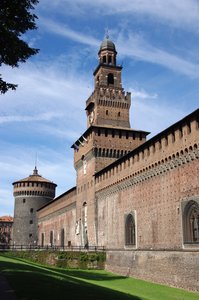
Sforza Castle, MilanoSforza Castle Milano 2 Dining room, The Expulsion from the Garden of Eden
Biennale Internazionale dell'Antiquariato di Firenze, FirenzeBiennale Internazionale dell'Antiquariato di Firenze Firenze 2 Standing Lamps, cabinet

Giovanni Ponti, årets signaturmalerier

Næsten ti år, fra 1927 til 1934, var nok for Giovanni Ponti: galleriet gennemgår dem år for år, ét berømt originalværk efter det andet.

Værker per år

Vælg et årstal for at se de originale værker.

Giovanni Ponti's malerier: galleriets svar

Hvilket maleri af Giovanni Ponti er det mest berømte af alle?Vis svaret

Dining room (1927), Sforza Castle, Milano. Derefter følger The Expulsion from the Garden of Eden (1930) og Standing Lamps.

Hvor gammel var Giovanni Ponti, da Dining room blev færdiggjort?Vis svaret

36 år gammel: Dining room er fra 1927, og Giovanni Ponti blev født i 1891.

Hvor mange værker skabte Giovanni Ponti?Vis svaret

Vores katalog indeholder 5 værker af Giovanni Ponti, dateret fra 1927 til 1934.

Hvor hænger Giovanni Pontis mest berømte originaler?Vis svaret

Primært i Sforza Castle (Milano) og Biennale Internazionale dell'Antiquariato di Firenze (Firenze). Museumslisten ovenfor viser dem alle.

Hvilke er Giovanni Pontis tidligste og seneste berømte værker?Vis svaret

På denne side er det tidligste Dining room (1927) og det seneste FONDAZIONE RUBELLI - (1934).

Hvilke originalværker af Giovanni Ponti findes i Sforza Castle?Vis svaret

Dining room og The Expulsion from the Garden of Eden: Sforza Castle, Milano har 2 af værkerne på denne side.

Giovanni Ponti: kunstneren

The Architect of Italian Living

Giovanni Ponti was far more than a single-discipline creator; he was a polymath whose influence wove through the very fabric of twentieth-century aesthetics. An architect, industrial designer, furniture designer, artist, teacher, writer, and publisher, his career spanned six decades of profound transformation. Born in Milan, Italy, Ponti emerged as a central figure in the renewal of Italian design following the Second World and War, championing an optimistic, forward-thinking spirit that reimagined domestic life through the lens of modern functionality and refined elegance.

His journey was marked by a deep commitment to the "art of living," a philosophy he promoted through his active participation in international exhibitions like the Milan Triennial and through his legendary magazine, Domus. As a teacher at the Milan Polytechnic School from 1936 to 1961, he shaped the minds of several generations of designers, ensuring that his vision of integrated beauty would endure long after his own hand had left the drafting table.

A Legacy of Form and Function

Ponti’s work was characterized by a seamless blend of structural integrity and decorative grace. His architectural contributions were monumental, ranging from the iconic Pirelli Tower in Milan to the Villa Planchart in Caracas. Yet, his genius was equally present in the intimate details of daily existence. He designed a vast array of decorative art objects and furniture that brought a sense of modern geometry to the home. One might look upon his depictions of interior spaces, such as a 1927 dining room, and see not just furniture, but a glimpse into an era where walnut wood and gleaming brass were used to capture the optimistic spirit of a new age.

His ability to bridge the gap between high architecture and industrial design is perhaps best exemplified by his contributions to iconic pieces like the Superleggera chair, produced by Cassina. His influence even extended into the realm of prestigious accolades; he was a key figure in the creation of the Compasso d'Oro, one of the world's most significant design awards, and was himself honored with the prize in 1956.

The Multifaceted Visionary

To understand Giovanni Ponti is to understand the interconnectedness of all things. His life was a continuous dialogue between different mediums:

  • Architecture: Creating landmarks like the Pirelli Tower and Palazzo Montecatini that redefined urban skylines.
  • Design: Crafting furniture and objects, such as the celebrated 'Cabinet' of the 1960s, which showcased his mastery of rich detail.
  • Publishing: Using Domus to advocate for a cohesive Italian style and to connect designers with a global audience.
  • Education: Mentoring future masters at the Milan Polytechnic, fostering a legacy of excellence in industrial design.
Through his diverse roles, Ponti remained an enthusiastic advocate for a lifestyle where beauty and utility were never in conflict, leaving behind a world more elegantly composed than the one he entered.