Menu
GRATIS KUNSTRÅDGIVNING

1690 - 1752

Kort om kunstneren

  • Movements: baroque
  • Lifespan: 62 years
  • Nationality: Italy
  • Copyright status: Public domain
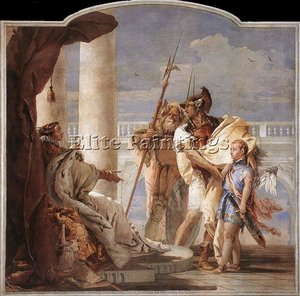
  • Top-ranked work: Aeneas Introducing Cupid Dressed As Ascanius To Dido
  • Top 3 works:
    • Aeneas Introducing Cupid Dressed As Ascanius To Dido
    • Allegory Of Merit Accompanied By Nobility And Virtue
    • The Gathering Of Manna
  • Creative periods:
    • baroque
    • mature period
  • Died: 1752
  • Vis flere…
  • Typical colors: neutrals
  • Art period: Early Modern
  • Born: 1690, Brescia, Italy
  • Color intensity: monochromatic
  • Works on APS: 46
  • Museums on APS:
    • Kunstbibliothek
    • Kunstbibliothek
    • Kunstbibliothek
    • Kunstbibliothek
    • Kunstbibliothek
  • Also known as:
    • Fontana
    • Giovanni Battista
    • Gio. Battista Fontana
    • G.B. Fontana
    • Giovanni Fontana

Kunstquiz

Der er kun ét korrekt svar på hvert spørgsmål.

Spørgsmål 1:
Where was Giovanni Battista Fontana born?
Spørgsmål 2:
What artistic masters influenced Fontana's training?
Spørgsmål 3:
In which Austrian palace did Fontana create major frescoes?
Spørgsmål 4:
Fontana was appointed court painter to whom?
Spørgsmål 5:
What is Fontana known for engraving?

Early Life and Artistic Foundations

Giovanni Battista Fontana, born in Ala near Verona in 1524, emerged from a family deeply rooted in the artistic traditions of Italy. His initial training was profoundly shaped by the masters of the Venetian school—Titian and Veronese, whose influence would become readily apparent in his later works. This early exposure instilled within him a love for rich color palettes, dynamic compositions, and a keen attention to detail that characterized Renaissance painting. While Verona provided the initial spark, Fontana’s artistic journey truly blossomed when he relocated to Innsbruck, Austria, in 1573, marking a pivotal shift in his career and establishing him as a prominent figure within the Habsburg court.

A Court Painter in Austria

The appointment of Fontana as court painter to Ferdinand II, Archduke of Austria, in 1575 propelled him into a period of prolific creation. He quickly became integral to the artistic landscape of the region, undertaking numerous commissions that showcased his versatility and skill. His work wasn’t confined to canvas; Fontana masterfully executed frescoes adorning significant religious spaces like the oratory of the Hofkirche, transforming these interiors into vibrant displays of faith and artistry. The Spheristerion also benefited from his talents, as did the Silberne Kapelle, a chapel built by his brother, Giulio Fontana, where he painted fourteen scenes depicting the Passion of Christ—a testament to both their collaborative spirit and Giovanni Battista’s narrative prowess. These early Austrian projects weren't merely decorative; they were statements of power, piety, and artistic sophistication, solidifying Fontana’s reputation within the imperial circle.

The Frescoes of Schloss Ambras: A Zenith of Artistic Expression

Perhaps Fontana’s most enduring legacy lies in his breathtaking frescoes at Schloss Ambras, a magnificent castle near Innsbruck. Between 1583 and 1584, he embarked on an ambitious project to decorate the dining hall's ceiling with allegorical representations of the Zodiac, the Elements, and the Planets. This undertaking wasn’t simply a display of technical skill; it was a complex synthesis of classical mythology, astrological symbolism, and Renaissance humanism. The frescoes are characterized by their intricate detail, vibrant colors, and dynamic compositions—a testament to Fontana's mastery of illusionistic painting techniques. The work at Schloss Ambras stands as a remarkable example of his ability to blend artistic beauty with intellectual depth, creating a space that was both visually stunning and intellectually stimulating.

Engravings and Artistic Legacy

Beyond his frescoes and paintings, Fontana also produced a substantial body of engravings—seventy-eight in total between 1559 and 1579. While the stylistic inconsistencies within this collection suggest possible collaboration with others, including his brother Giulio, they nonetheless offer valuable insight into his artistic process and his engagement with contemporary themes. These prints often served as reproductions of paintings by masters like Titian and Veronese, demonstrating Fontana’s respect for established traditions while also showcasing his own unique interpretation of these works. Giovanni Battista Fontana died in Innsbruck in 1587, leaving behind a rich artistic legacy that continues to captivate audiences today. His ability to seamlessly blend Italian Renaissance aesthetics with the demands of the Habsburg court cemented his place as a significant figure in Austrian art history—a testament to his skill, versatility, and enduring creative vision.