Kort sagt
Af alle de originale værker, som George Clare efterlod, er det mest berømte Basket Of Flowers. Lige efter følger Still Life With Primroses og A Still Life Of Pelargoniums In A Pot With Camellias. Vores katalog indeholder 16 værker af George Clare; galleriet har bevaret de 16 værker, som verden beundrer mest, hver vist med sin dato, sit museum og sin historie.
George Clares top 10 malerier: galleriets udvalg
George Clare-udvalget fortsætter, fra 11 til 16
Motiverne, der fangede George Clares blik
De fire motiver, der optræder hyppigst i disse originaler, hver med sit fineste eksempel.
Flowers 8 værker
Life 6 værker
Still life 4 værker
De museer, der udstiller George Clares originalværker
Det museum, der rummer flest af malerierne på denne side.
| Museum | By | Værker af George Clare | Malerier fra denne liste |
|---|---|---|---|
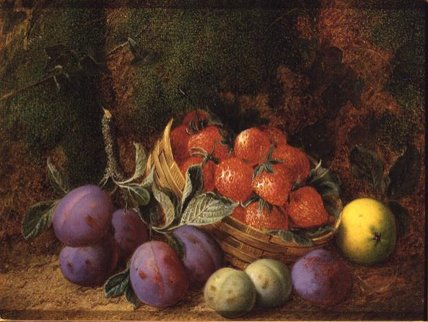
| La Fère | 1 | Plums And Stawberries |
Samleres spørgsmål om George Clares malerier
Hvilket værk er George Clare mest kendt for?Vis svaret
Basket Of Flowers. Derefter følger Still Life With Primroses og A Still Life Of Pelargoniums In A Pot With Camellias.
Hvad er de ti mest berømte George Clare malerier?Vis svaret
Basket Of Flowers, Still Life With Primroses, A Still Life Of Pelargoniums In A Pot With Camellias, A Bird's Nest And Blossom, Still Life With Bird's Nest, Blossom And Geraniums, Spring Flowers In Baskets, Plums And Stawberries, Still Life With Bird's Nest And Wild Flowers og Still Life Of Apple Blossom And Violets With Primulas In Wicker Basket. Ranglisten ovenfor viser det enkelte værks årstal og museum.
Hvor mange malerier efterlod George Clare?Vis svaret
Vores katalog indeholder 16 værker af George Clare.
I hvilke museer udstilles George Clare's mesterværker?Vis svaret
Primært i Musée Jeanne-d'Aboville (La Fère). Museumslisten ovenfor viser dem alle.
Hvilke motiver valgte George Clare oftest?Vis svaret
Flowers (8), Life (6) og Still life (4), fordelt på de 16 værker på denne side.
George Clare: liv og værk
George Clare (1835-1890): A Victorian Master of Still Life
George Clare, born in Barnet, Hertfordshire, England in 1835, was a British Victorian artist whose career blossomed during the latter half of the nineteenth century. Though overshadowed by his more famous brother, Frederic William Clare, George established himself as a respected painter specializing in meticulously rendered still lifes depicting fruit and flowers—a genre deeply rooted in Dutch Golden Age traditions. His artistic legacy resides primarily in these evocative depictions of natural beauty, reflecting a profound appreciation for observation and skillful execution.- Early Life & Family Background: Clare’s family were prominent figures in the art world, with Frederic William Clare achieving considerable acclaim as a portrait painter. George received his initial artistic training under Frederic's tutelage, absorbing influences from the Romantic movement and honing his technical abilities through diligent practice.
- Formal Training & Artistic Style: He studied at the Royal Academy of Art in London, immersing himself in the prevailing stylistic conventions of the Victorian era. Clare’s distinctive approach centered on capturing the subtle nuances of light and texture—a technique heavily indebted to the Dutch Masters who predated him. This meticulous attention to detail is evident throughout his oeuvre.
Notable Works & Artistic Achievements
Clare's artistic output consisted largely of still lifes, characterized by their exceptional realism and luminous color palettes. Among his most celebrated paintings are “Still Life With Plums, Apples And Baskets Of Grapes,” “Basket Of Flowers,” and “Still Life With Apples And Baskets Of Grapes And Plums.” These works exemplify the Clare family’s commitment to portraying the natural world with unwavering accuracy and conveying a sense of serene contemplation. The artist's masterful use of glazing techniques—applying thin layers of translucent paint—created depth and vibrancy, mirroring the stylistic innovations championed by artists like Johannes Vermeer.- Recurring Themes: Clare consistently explored themes of seasonality and beauty, capturing the fleeting moments of blossom and fruit ripening with remarkable sensitivity.
- Influence & Legacy: His work stands as a testament to the enduring power of observation and artistic discipline—qualities that resonated deeply within the Victorian aesthetic. Although he didn’t achieve widespread fame during his lifetime, Clare's paintings continue to be admired for their technical brilliance and expressive qualities.