Portræt af Francesco Del Cossa

De 61 mest berømte Francesco Del Cossa-malerier, hver og en unik

Opdateret november 2026 · rangeret efter vores popularitetsscore (søgninger, besøg og ordrer for hvert værk) · 64 værker af Francesco Del Cossa i vores katalog

Kort sagt

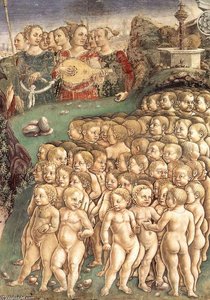
Allegory of May: Triumph of Apollo (detail) (1476) er det maleri af Francesco Del Cossa, der vækker mest opsigt; originalen findes på Palazzo Schifanoia, Ferrara. Derefter falder blikket på Griffoni Polyptych: St Vincent Ferrer (1473) og Griffoni Polyptych: St Peter and St John the Baptist (1473). Blandt de 64 værker af Francesco Del Cossa i vores katalog er disse 61 de mest berømte, hver især et unikt originalværk præsenteret med sit årstal, sit museum og årsagen til dets tidløse betydning.

1436 – 1477, Ferrara Renaissance Flest værker: Palazzo Schifanoia

Top 10 malerier af Francesco Del Cossa, set gennem galleriets øjne

1
Allegory of May: Triumph of Apollo (detail) (1476) af Francesco Del Cossa

Allegory of May: Triumph of Apollo (detail)

1476 · Fresco · Palazzo Schifanoia, Ferrara

To stand before this monumental fresco detail is to step directly into the vibrant, complex heart of the Quattrocento Renaissance. The Allegory of May: Triumph of Apollo, attributed to Francesco del Cossa, is not merely a depiction of an event; it is a profound meditation on cycles—the cycle of life, the triumph over darkness, and the eternal return of divine grace. The sheer scale, measuring an impressive 216 by 320…

2
Griffoni Polyptych: St Vincent Ferrer (1473) af Francesco Del Cossa

Griffoni Polyptych: St Vincent Ferrer

1473 · Oil On Panel · National Gallery, London

To stand before the Griffoni Polyptych: St Vincent Ferrer is to step directly into the luminous heart of the Italian Renaissance. Created by the masterful hand of Francesco del Cossa in 1473, this monumental work transcends mere decoration; it is a profound meditation on faith, knowledge, and divine grace. The composition immediately commands attention, drawing the viewer into an architectural space where earthly grandeur meets celestial mystery. At its core…

3
Griffoni Polyptych: St Peter and St John the Baptist (1473) af Francesco Del Cossa

Griffoni Polyptych: St Peter and St John the Baptist

1473 · Oil On Canvas · Pinacoteca di Brera, Milano

Francesco del Cossa’s “Griffoni Polyptych: St Peter and St John the Baptist,” painted in 1473, is more than just a religious depiction; it's a meticulously crafted tableau brimming with symbolism and reflecting the complex political and spiritual landscape of Renaissance Ferrara. This monumental work, measuring 112 x 55 cm, offers a captivating glimpse into the artistic prowess of a master painter whose career tragically ended far too early. The polyptych…

4
Allegory of March: Triumph of Minerva (detail) (14) (1476) af Francesco Del Cossa

Allegory of March: Triumph of Minerva (detail) (14)

1476 · Tempera · Palazzo Schifanoia, Ferrara

To gaze upon this detail from the Allegory of March: Triumph of Minerva is to step directly into the bustling, energetic heart of an artistic workshop during the Italian Renaissance. It is not merely a depiction of art; it is a profound meditation on the very act of creation itself. The scene unfolds with a palpable sense of industry, capturing painters in various stages of their laborious craft—mixing pigments, scaling…

5
Allegory of March: Triumph of Minerva (detail) (11) (1476) af Francesco Del Cossa

Allegory of March: Triumph of Minerva (detail) (11)

1476 · Fresco · Palazzo Schifanoia, Ferrara

To gaze upon this detail from the Allegory of March: Triumph of Minerva is to step directly into the luminous, thoughtful atmosphere of the Italian Renaissance. The scene unfolds with a profound sense of contemplation, centered around a magnificent male figure whose very posture speaks of classical ideals and divine purpose. Rendered in rich, muted tones—deep purples, earthy reds, and warm browns—the composition draws the eye along a stately vertical…

6
Angel of annunciation kneeling in landscape (1460) af Francesco Del Cossa

Angel of annunciation kneeling in landscape

1460 · Tempera On Panel

In Angel of annunciation kneeling in landscape, Francesco del Cossa presents a religious scene likely representing the Annunciation. The composition centers on a winged figure positioned in the lower center, kneeling within a landscape and facing toward the right. Large, prominent wings extend upward and backward from the angel, anchoring the figure within the spatial arrangement. The angel is draped in voluminous robes characterized by heavy, rhythmic folds that emphasize…

7
The Annunciation (1478) af Francesco Del Cossa

The Annunciation

1478 · Tempera On Panel · Bonnefanten Museum, Maastricht

The Annunciation, a work by Francesco del Cossa, unfolds through a complex composition that spans a main panel and a predella. This religious work, dated about 1470, captures a profound moment rooted in Christian Theology and Biblical Narrative. Within the sacred space, the Archangel Gabriel appears to the Virgin Mary, marking the divine encounter that changes everything. The scene is not a solitary event but part of a larger unfolding…

8
Saint Catherine and Saint Clare (1470) af Francesco Del Cossa

Saint Catherine and Saint Clare

1470 · Tempera On Panel · Museu Nacional d'Art de Catalunya, Barcelona

The artwork titled Saint Catherine and Saint Clare is a religious portrait created by the artist Francesco del Cossa. This work dates to about 1470. The composition focuses on the depiction of two female saints, presented within a vertical and narrow format. The subject matter centers on these two figures, which are rendered with a focus on their sanctity and individual presence.

9
Saint Florian (1474) af Francesco Del Cossa

Saint Florian

1474 · Tempera On Panel

Saint Florian is a painting by the Italian Renaissance artist Francesco del Cossa. This specific work was created around 1473/1474. It originated as the upper left panel of the Griffoni Polyptych, a larger multi-part altarpiece. The commission was requested by Floriano Griffoni for a family chapel located within the Basilica of San Petronio in Bologna.

Francesco Del Cossas berømte malerier, nummer 11 til 61

11The Justice of Trajan and the widow (1500) af Francesco Del CossaThe Justice of Trajan and the widow1500 12Annunciationen og fødslen (Altarpiece af Observation) (1470) af Francesco Del CossaAnnunciationen og fødslen (Altarpiece af Observation)1470 · Gemäldegalerie Alte Meister 13Allegory of March: Triumph of Minerva (1476) af Francesco Del CossaAllegory of March: Triumph of Minerva1476 · Palazzo Schifanoia 14Allegory of March: Triumph of Minerva (1476) af Francesco Del CossaAllegory of March: Triumph of Minerva1476 · Palazzo Schifanoia 15Allegory of May: Triumph of Apollo (1476) af Francesco Del CossaAllegory of May: Triumph of Apollo1476 · Palazzo Schifanoia 16Allegory of March: Triumph of Minerva (detail) (13) (1476) af Francesco Del CossaAllegory of March: Triumph of Minerva (detail) (13)1476 · Palazzo Schifanoia 17Griffoni Polyptych: The Crucifixion (1473) af Francesco Del CossaGriffoni Polyptych: The Crucifixion1473 · National Gallery of Art 18Allegory of May: Triumph of Apollo (detail) (1476) af Francesco Del CossaAllegory of May: Triumph of Apollo (detail)1476 · Palazzo Schifanoia 19April. Fresco in Palazzo Schifanoia (detail) - Triumph of Venus (1470) af Francesco Del CossaApril. Fresco in Palazzo Schifanoia (detail) - Triumph of Venus1470 20April. Fresco in Palazzo Schifanoia (detail) - Triumph of Venus (1470) af Francesco Del CossaApril. Fresco in Palazzo Schifanoia (detail) - Triumph of Venus1470 21Allegory of March – Triumph of Minerva and Sign of Aries. Frescos in Palazzo Schifanoia (detail) (1470) af Francesco Del CossaAllegory of March – Triumph of Minerva and Sign of Aries. Frescos in Palazzo Schifanoia (detail)1470 22Allegory of March – Triumph of Minerva and Sign of Aries. Frescos in Palazzo Schifanoia (detail) (1470) af Francesco Del CossaAllegory of March – Triumph of Minerva and Sign of Aries. Frescos in Palazzo Schifanoia (detail)1470 23Allegory of May: Triumph of Apollo (detail) (1476) af Francesco Del CossaAllegory of May: Triumph of Apollo (detail)1476 · Palazzo Schifanoia 24Allegory of March: Triumph of Minerva (detail) (16) (1476) af Francesco Del CossaAllegory of March: Triumph of Minerva (detail) (16)1476 · Palazzo Schifanoia 25Allegory of March: Triumph of Minerva (detail) (12) (1476) af Francesco Del CossaAllegory of March: Triumph of Minerva (detail) (12)1476 · Palazzo Schifanoia 26Triumph of Minerva (detail of the right side) (1476) af Francesco Del CossaTriumph of Minerva (detail of the right side)1476 · Palazzo Schifanoia 27Allegory of April Triumph of Venus (detail) (1476) af Francesco Del CossaAllegory of April Triumph of Venus (detail)1476 · Palazzo Schifanoia 28Allegory of March: Triumph of Minerva (detail) (10) (1476) af Francesco Del CossaAllegory of March: Triumph of Minerva (detail) (10)1476 · Palazzo Schifanoia 29Allegory of April: Triumph of Venus (detail from the Bull) (1476) af Francesco Del CossaAllegory of April: Triumph of Venus (detail from the Bull)1476 · Palazzo Schifanoia 30Allegory of March: Triumph of Minerva (detail) (15) (1476) af Francesco Del CossaAllegory of March: Triumph of Minerva (detail) (15)1476 · Palazzo Schifanoia 31Allegory of April: Triumph of Venus (detail) (1476) af Francesco Del CossaAllegory of April: Triumph of Venus (detail)1476 · Palazzo Schifanoia 32Saint Lucy (1474) af Francesco Del CossaSaint Lucy1474 33Allegory of April: Triumph of Venus (1476) af Francesco Del CossaAllegory of April: Triumph of Venus1476 · Palazzo Schifanoia 34Allegory of April: Triumph of Venus (1476) af Francesco Del CossaAllegory of April: Triumph of Venus1476 · Palazzo Schifanoia 35Portrait of a Man (1472) af Francesco Del CossaPortrait of a Man1472 · Thyssen-Bornemisza Museum 36The Meeting of Solomon and the Queen of Sheba; Cherub Holding Cornucopias of Cherries (recto and verso) af Francesco Del CossaThe Meeting of Solomon and the Queen of Sheba; Cherub Holding Cornucopias of Cherries (recto and verso)Museum of Fine Arts 37Profile Portrait of a Boy af Francesco Del CossaProfile Portrait of a Boy 38Schifanoia - View of the Salone dei Mesi af Francesco Del CossaSchifanoia - View of the Salone dei Mesi 39Portrait of a Man af Francesco Del CossaPortrait of a ManThyssen-Bornemisza Museum 40Allegori af april (detalje) (1476) af Francesco Del CossaAllegori af april (detalje)1476 · Palazzo Schifanoia 41Schifanoia - March - Triumph of Minerva af Francesco Del CossaSchifanoia - March - Triumph of Minerva 42Schifanoia - April and May - Triumph of Venus (right view) af Francesco Del CossaSchifanoia - April and May - Triumph of Venus (right view) 43Schifanoia - April and May - Allegory of April (detail)2 af Francesco Del CossaSchifanoia - April and May - Allegory of April (detail)2 44Schifanoia - April and May - Triumph of Venus (detail) af Francesco Del CossaSchifanoia - April and May - Triumph of Venus (detail) 45Schifanoia - April and May - Allegory of April (detail) af Francesco Del CossaSchifanoia - April and May - Allegory of April (detail) 46Schifanoia - March - Triumph of Minerva (detail) af Francesco Del CossaSchifanoia - March - Triumph of Minerva (detail) 47Schifanoia - April and May - Triumph of Venus (detail)2 af Francesco Del CossaSchifanoia - April and May - Triumph of Venus (detail)2 48Scenes from the Life of Saint Vincent Ferrer af Francesco Del CossaScenes from the Life of Saint Vincent Ferrer 49griffoni - St Peter and St John the Baptist (details) af Francesco Del Cossagriffoni - St Peter and St John the Baptist (details) 50Griffoni Polyptych: Saint Florian (detail) af Francesco Del CossaGriffoni Polyptych: Saint Florian (detail)National Gallery of Art 51Griffoni Polyptych: The Crucifixion (detail) af Francesco Del CossaGriffoni Polyptych: The Crucifixion (detail)National Gallery of Art 52Griffoni Polyptych: The Crucifixion (detail) af Francesco Del CossaGriffoni Polyptych: The Crucifixion (detail)National Gallery of Art 53Madonna with the Child and Saints (1474) af Francesco Del CossaMadonna with the Child and Saints1474 · Pinacoteca Nazionale 54St Peter (1473) af Francesco Del CossaSt Peter1473 · Pinacoteca di Brera 55St Florian (Griffoni Polyptych) af Francesco Del CossaSt Florian (Griffoni Polyptych)National Gallery of Art 56The Annunciation (1470) af Francesco Del CossaThe Annunciation1470 · Gemäldegalerie Alte Meister 57Griffoni Polyptych: St Lucy (1473) af Francesco Del CossaGriffoni Polyptych: St Lucy1473 · National Gallery of Art 58Virgin and Child with An Angel af Francesco Del CossaVirgin and Child with An AngelMuseu Nacional d'Art de Catalunya 59griffoni - St John the Baptist af Francesco Del Cossagriffoni - St John the BaptistPinacoteca di Brera 60griffoni - St Vincent Ferrer af Francesco Del Cossagriffoni - St Vincent FerrerNational Gallery 61Schifanoia - April and May - Triumph of Venus af Francesco Del CossaSchifanoia - April and May - Triumph of VenusPalazzo Schifanoia

Francesco Del Cossas berømte malerier, periode for periode

Motiverne, der fangede Francesco Del Cossas blik

De fire motiver, der optræder hyppigst i disse originaler, hver med sit fineste eksempel.

De museer, der udstiller Francesco Del Cossas originalværker

De 8 museer, der rummer flest af malerierne på denne side.

Museum By Værker af Francesco Del Cossa Malerier fra denne liste
Palazzo Schifanoia, FerraraPalazzo Schifanoia Ferrara 22 Allegory of May: Triumph of Apollo (detail), Allegory of March: Triumph of Minerva (detail) (14), Allegory of March: Triumph of Minerva (detail) (11)
National Gallery of Art, WashingtonNational Gallery of Art Washington 6 Griffoni Polyptych: The Crucifixion, Griffoni Polyptych: Saint Florian (detail), Griffoni Polyptych: The Crucifixion (detail)
Pinacoteca di Brera, MilanoPinacoteca di Brera Milano 3 Griffoni Polyptych: St Peter and St John the Baptist, St Peter, griffoni - St John the Baptist
National Gallery, LondonNational Gallery London 2 Griffoni Polyptych: St Vincent Ferrer, griffoni - St Vincent Ferrer
Museu Nacional d'Art de Catalunya, BarcelonaMuseu Nacional d'Art de Catalunya Barcelona 2 Saint Catherine and Saint Clare, Virgin and Child with An Angel
Thyssen-Bornemisza Museum, MadridThyssen-Bornemisza Museum Madrid 2 Portrait of a Man, Portrait of a Man
Bonnefanten Museum, MaastrichtBonnefanten Museum Maastricht 1 The Annunciation
Gemäldegalerie Alte Meister, DresdenGemäldegalerie Alte Meister Dresden 1 Annunciationen og fødslen (Altarpiece af Observation)

Francesco Del Cossa gennem årene: de unikke originaler fra hver enkelt

En lang karriere på 17 år, fra 1460 til 1476: Francesco Del Cossas mest berømte originalværker, vist år for år.

Værker per år

Vælg et årstal for at se de originale værker.

Francesco Del Cossas malerier: spørgsmål til galleriet

Hvad er det mest berømte værk af Francesco Del Cossa?Vis svaret

Allegory of May: Triumph of Apollo (detail) (1476), Palazzo Schifanoia, Ferrara. Derefter følger Griffoni Polyptych: St Vincent Ferrer (1473) og Griffoni Polyptych: St Peter and St John the Baptist (1473).

Hvilken alder havde Francesco Del Cossa, da Allegory of May: Triumph of Apollo (detail) blev skabt?Vis svaret

40 år gammel: Allegory of May: Triumph of Apollo (detail) er fra 1476, og Francesco Del Cossa blev født i 1436.

Hvilke ti malerier af Francesco Del Cossa er de mest berømte?Vis svaret

Allegory of May: Triumph of Apollo (detail), Griffoni Polyptych: St Vincent Ferrer, Griffoni Polyptych: St Peter and St John the Baptist, Allegory of March: Triumph of Minerva (detail) (14), Allegory of March: Triumph of Minerva (detail) (11), Angel of annunciation kneeling in landscape, The Annunciation, Saint Catherine and Saint Clare, Saint Florian og Allegory of April: Triumph of Venus (detail). Ranglisten ovenfor viser det enkelte værks årstal og museum.

Hvor mange værker af Francesco Del Cossa er kendt?Vis svaret

Vores katalog indeholder 64 værker af Francesco Del Cossa, dateret fra 1460 til 1476.

Hvor kan de mest berømte originaler af Francesco Del Cossa ses?Vis svaret

Primært i Palazzo Schifanoia (Ferrara), National Gallery of Art (Washington) og Pinacoteca di Brera (Milano). Museumslisten ovenfor viser dem alle.

I hvilken periode skabte Francesco Del Cossa sine mest kendte malerier?Vis svaret

I 1476: 21 af de 61 værker på denne side blev skabt dengang, herunder Allegory of May: Triumph of Apollo (detail).

Hvilket berømt maleri af Francesco Del Cossa er det tidligste, og hvilket er det seneste?Vis svaret

På denne side er det tidligste Angel of annunciation kneeling in landscape (1460) og det seneste Allegory of May: Triumph of Apollo (detail) (1476).

Hvilke motiver foretrak Francesco Del Cossa?Vis svaret

Allegory (9), People (9) og Mythology (8), fordelt på de 61 værker på denne side.

Hvilke materialer brugte Francesco Del Cossa mest til sine malerier?Vis svaret

Fresco, for 23 af de 61 værker på denne side.

Hvilken stilart tilhører værkerne fra Francesco Del Cossa?Vis svaret

Renaissance og Early renaissance, baseret på originalerne på denne side.

Hvilke originalværker af Francesco Del Cossa kan jeg se på Palazzo Schifanoia?Vis svaret

Allegory of May: Triumph of Apollo (detail), Allegory of March: Triumph of Minerva (detail) (14) og Allegory of March: Triumph of Minerva (detail) (11): Palazzo Schifanoia, Ferrara har 22 af værkerne på denne side.

Francesco Del Cossa: et portræt af kunstneren

Francesco del Cossa: En renæssancemester fra Ferrara

Francesco del Cossa (ca. 1436 – 1477) var en central skikkelse inden for den italienske renæssance og tæt knyttet til den ferræresiske skole. Født i Ferrara, Italien, fremstår han som en fascinerende personlighed, hvis liv og karriere er delvist indhyllet i historiens tåger. Alligevel står hans kunstneriske bidrag, især hans fresker, som uomtvistelige vidnesbyrd om hans tekniske dygtighed og hans innovative tilgang til den spirende renæssancestil.

Tidligt liv og uddannelse

Del Cossa var søn af stenhuggeren Cristofano del Cossa, som også arbejdede som kunstner. Der findes ikke meget definitiv viden om Franciscos tidlige kunstneriske uddannelse, men det antages, at han assisterede sin far med maleriet af dekorationerne til kapellet i Bispegården i Ferrara omkring 1lag 1456. Denne tidlige eksponering for det kunstneriske håndværk har uden tvivl formet hans fundamentale udvikling. Det ser ud til, at han rejste uden for Ferrara i slutningen af tyverne eller begyndelsen af trediverne, hvor han opsamlede erfaringer og potentielt stiftede bekendtskab med nye kunstneriske strømninger.

Hovedværker og kunstnerisk stil

Del Cossa fejres primært for sine freskocyklusser, mest bemærkelsesværdigt dem, der pryder Palazzo Schifanoia, et sommerpalads lige uden for Ferraras byporte. I samarbejde med Cosimo Tura bidrog han til de detaljerede allegoriske dekorationer, der skildrer stjernetegnene og årets måneder. Specifikke fresker tilskrevet del Cossa inkluderer "Majs Allegori – Apollons Triumf", som er berømt for sin slående fremstilling af en sværm af nøgne småbørn arrangeret i en visuelt fængslende formation, samt "Aprils Allegori", der indeholder en tidlig repræsentation af de tre gracer, hvilket går forud for Botticellis berømte version. Disse fresker demonstrerer hans mesterskab inden for perspektiv, detaljerigdom og narrativ historiefortælling.

  • Palazzo Schifanoia Fresker: Zodiakale allegorier, der fremviser en forening af klassisk mytologi og renæssancens realisme.
  • Majs Allegori – Apollons Triumf: Berømt for sin unikke skildring af utallige nøgne børn.
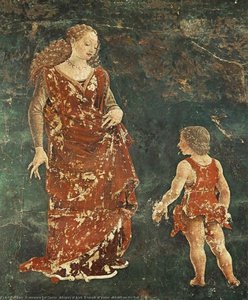
  • Aprils Allegori: Indeholder en tidlig afbildning af de tre gracer, hvilket vidner om hans forståelse for klassiske temaer.

Udover Palazzo Schifanoia skabte del Cossa andre betydningsfulde værker:

  • Jomfru og barn med to helgener (Bologna)
  • Portræt af Alberto de' Catanei (Bologna)
  • Freskoen af Madonna del Baracano (Bologna), der skildrer Jomfru Maria og barnet sammen med portrætter af Giovanni Bentivoglio og Maria Vinziguerra.
  • Glasmaleri i San Giovanni in Monte, Bologna (signeret).

Udvikling og indflydelse

Del Cossas stil afspejler en sammensmeltning af de indflydelser, der er karakteristiske for den ferræresiske renæssance. Selvom hans arbejde har rødder i tidligere gotiske traditioner, udviser det en stigende engagement med klassiske former og humanistiske idealer. Hans sans for detaljen, især i gengivelsen af tekstiler og teksturer, afslører en skarp observationsevne. Indflydelsen fra det tidlige nederlandske maleri kan også spores i hans omhyggelige detaljerigdom. Hans korte, men indflydelsesrige periode i Bologna under beskyttelse af Bentivoglio-familien forfinede yderligere hans stil og førte til nogle af hans mest fejrede portrætter.

Historisk betydning

Francesco del Cossas eftermæle hviler på hans bidrag til den ferræresiske renæssancekunst og hans unikke kunstneriske vision. Selvom hans karriere var relativt kort, efterlod han sig en samling værker, der udstiller periodens dynamik og innovation. Hans fresker i Palazzo Schifanoia er uvurderlige dokumenter om det 15. århundredes hofliv og kunstneriske mæcenatvirksomhed. Hans skildringer af klassiske temaer, såsom de tre gracer, demonstrerer en tidlig optagethed af humanistiske idealer. Del Cossas nyere anerkendelse i Ali Smiths roman "How to Be Both" og hans forbindelse til en Google Earth-skattejagt har yderligere kastet lys over denne ofte oversete renæssancemester.