Portræt af Elizabeth Jane Gardner

De 19 mest berømte Elizabeth Jane Gardner-malerier, en galleriselektion

Opdateret november 2026 · rangeret efter vores popularitetsscore (søgninger, besøg og ordrer for hvert værk) · 19 værker af Elizabeth Jane Gardner i vores katalog

Kort sagt

Af alle de originale værker, som Elizabeth Jane Gardner efterlod, er det mest berømte Daphnis and Chloe (1882), som er en del af samlingen på Appleton Museum of Art. Lige efter følger The Improvised Cup (1884) og In the Garden (1900). Vores katalog indeholder 19 værker af Elizabeth Jane Gardner; galleriet har bevaret de 19 værker, som verden beundrer mest, hver vist med sin dato, sit museum og sin historie.

1837 – 1922, Exeter Flest værker: Dahesh Museum of Art

Elizabeth Jane Gardners top 10 malerier: galleriets udvalg

1
Daphnis and Chloe (1882) af Elizabeth Jane Gardner

Daphnis and Chloe

1882 · Oil On Canvas · Appleton Museum of Art

Elizabeth Jane Gardner’s Daphnis and Chloe, created about 1882, presents two young figures within a lush, wooded setting. The scene captures a moment of pastoral innocence and budding romance. The subjects are positioned in a way that emphasizes their intimate interaction, set against a backdrop of deep forest greens and earthy browns.

2
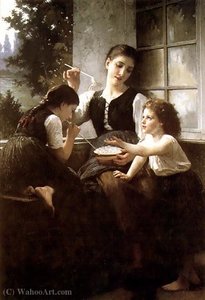
The Improvised Cup (1884) af Elizabeth Jane Gardner

The Improvised Cup

1884 · Oil On Canvas

The Improvised Cup is an Academic oil on canvas painting by Elizabeth Jane Gardner. This work was created about 1884. The artist, Elizabeth Jane Gardner, was born in Exeter, United States, and later established her practice in Paris, France.

3
In the Garden (1900) af Elizabeth Jane Gardner

In the Garden

1900 · Oil On Canvas

In the Garden is an oil on canvas painting by the American artist Elizabeth Jane Gardner. Created about 1900, this work is an example of Academicism. The piece functions as a sentimental portrait of youth and innocence, focusing on a single subject within a natural setting.

4
The Judgement of Paris (1905) af Elizabeth Jane Gardner

The Judgement of Paris

1905 · Oil

Elizabeth Jane Gardner painted The Judgement of Paris about 1905. The work presents a group of four children situated within a lush, wooded setting. This composition captures a quiet moment of interaction centered around a simple, perhaps allegorical, exchange of fruit.

5
Maternal Love (1905) af Elizabeth Jane Gardner

Maternal Love

1905 · Oil

In this intimate oil painting titled Maternal Love, we encounter a quiet moment captured by Elizabeth Jane Gardner. The work, which dates to about 1905, presents a tender scene of domesticity through a photographic print of the original painting. It offers a glimpse into the artist's ability to render human connection with a sense of stillness and grace.

Elizabeth Jane Gardner-udvalget fortsætter, fra 11 til 19

Motiverne, der fangede Elizabeth Jane Gardners blik

De fire motiver, der optræder hyppigst i disse originaler, hver med sit fineste eksempel.

De museer, der udstiller Elizabeth Jane Gardners originalværker

De 5 museer, der rummer flest af malerierne på denne side.

Museum By Værker af Elizabeth Jane Gardner Malerier fra denne liste
Dahesh Museum of Art New York City 2 After the Engagement, Before the Engagement
Appleton Museum of ArtAppleton Museum of Art 1 Daphnis and Chloe
Georgia Museum of Art, AthenGeorgia Museum of Art Athen 1 La Confidence
Indianapolis Kunstmuseum, IndianapolisIndianapolis Kunstmuseum Indianapolis 1 Copy of "Young Girl and Child" by William Bouguereau
National Museum of Women in the Arts, Washington, D.C.National Museum of Women in the Arts Washington, D.C. 1 The Shepherd David

Elizabeth Jane Gardner år for år: de originale værker, der definerer hvert år

Fra 1880 til 1905 arbejdede Elizabeth Jane Gardner i 26 år: udvalget følger denne lange karriere år for år, gennem de fineste originalværker.

Værker per år

Vælg et årstal for at se de originale værker.

Samleres spørgsmål om Elizabeth Jane Gardners malerier

Hvilket værk er Elizabeth Jane Gardner mest kendt for?Vis svaret

Daphnis and Chloe (1882), Appleton Museum of Art. Derefter følger The Improvised Cup (1884) og In the Garden (1900).

Hvor gammel var Elizabeth Jane Gardner, da Daphnis and Chloe blev skabt?Vis svaret

45 år gammel: Daphnis and Chloe er fra 1882, og Elizabeth Jane Gardner blev født i 1837.

Hvad er de ti mest berømte Elizabeth Jane Gardner malerier?Vis svaret

Daphnis and Chloe, The Improvised Cup, In the Garden, The Judgement of Paris, Maternal Love, La Confidence, Copy of "Young Girl and Child" by William Bouguereau, After the Engagement, Before the Engagement og Garde. Ranglisten ovenfor viser det enkelte værks årstal og museum.

Hvor mange malerier efterlod Elizabeth Jane Gardner?Vis svaret

Vores katalog indeholder 19 værker af Elizabeth Jane Gardner, dateret fra 1880 til 1905.

I hvilke museer udstilles Elizabeth Jane Gardner's mesterværker?Vis svaret

Primært i Dahesh Museum of Art (New York City), Appleton Museum of Art og Georgia Museum of Art (Athen). Museumslisten ovenfor viser dem alle.

I hvilke år malede Elizabeth Jane Gardner sine mest berømte værker?Vis svaret

I 1905: 2 af de 19 værker på denne side blev skabt dengang, herunder The Judgement of Paris.

Hvad er de første og de sidste berømte originaler af Elizabeth Jane Gardner?Vis svaret

På denne side er det tidligste La Confidence (1880) og det seneste The Judgement of Paris (1905).

Hvilke motiver valgte Elizabeth Jane Gardner oftest?Vis svaret

Woman (3), Forest (3) og Green foliage (3), fordelt på de 19 værker på denne side.

Hvilken teknik brugte Elizabeth Jane Gardner mest?Vis svaret

Oil On Canvas, for 4 af de 19 værker på denne side.

Hvilke værker af Elizabeth Jane Gardner udstilles på Dahesh Museum of Art?Vis svaret

After the Engagement og Before the Engagement: Dahesh Museum of Art, New York City har 2 af værkerne på denne side.

Elizabeth Jane Gardner: liv og værk

A Life Dedicated to Art: The Story of Elizabeth Jane Gardner Bouguereau

Born in Exeter, New Hampshire, on October 4th, 1837, Elizabeth Jane Gardner’s journey was one of remarkable determination and artistic passion. Her upbringing, steeped in the values of education and community, laid a solid foundation for her future endeavors. She received instruction at both the Young Ladies' Female Academy in Exeter and Lasell Female Seminary in Auburndale, Massachusetts, where she cultivated not only an appreciation for art but also fluency in multiple languages – English, French, Italian, and German – skills that would prove invaluable during her extended sojourn in Europe. A brief period teaching French in Worcester, Massachusetts, followed graduation, yet the pull of artistic ambition soon led her across the Atlantic to Paris, a city then brimming with creative energy and opportunity.

Parisian Training and Overcoming Obstacles

The year 1864 marked a pivotal moment as Gardner, accompanied by Imogene Robinson, embarked on formal art training in Paris. She initially studied under the tutelage of Antoine-Louis Barye, renowned for his animal sculptures, Hugues Merle, and Jules Joseph Lefebvre – all prominent figures within the Parisian art world. However, the path to artistic mastery was not without its challenges, particularly for a woman during that era. Access to life drawing classes featuring nude models, considered essential for developing anatomical understanding, was largely denied to female students. Undeterred, Gardner cleverly circumvented this restriction by disguising herself as a man to attend classes at the Manufacture Nationale des Gobelins et de la Savonnerie, demonstrating an extraordinary level of commitment and resourcefulness. Later, she gained admission to the Académie Julian, where she continued her studies with Lefebvre and, crucially, William-Adolphe Bouguereau, a relationship that would profoundly shape both her artistic style and personal life.

A Muse and a Master: The Influence of Bouguereau

Gardner’s connection with Bouguereau evolved over seventeen years into a deep courtship culminating in marriage in 1896, following the passing of his mother who initially opposed their union. While some critics have viewed Gardner's work as merely imitative of her husband’s, it is essential to understand the context of this relationship and her own artistic philosophy. She openly acknowledged Bouguereau as her primary inspiration, famously stating a preference for being “the best imitator of Bouguereau than be nobody!” This was not an admission of lacking originality but rather a conscious choice to master a highly respected academic style at a time when female artists struggled for recognition. Gardner adopted Bouguereau’s favored subjects – idyllic scenes, portraits, and mythological themes – as well as his meticulous technique, resulting in paintings that often bear a striking resemblance to his own. This stylistic convergence sometimes leads to questions of authorship, yet it also highlights her dedication to achieving technical excellence within the established artistic conventions of the time.

Recognition and Legacy

Elizabeth Jane Gardner Bouguereau’s talent did not go unnoticed. She achieved a significant milestone in 1868 by becoming the first American woman to exhibit at the prestigious Paris Salon, and her work was accepted into an impressive twenty-five subsequent Salons. In 1872, she received a gold medal – an unprecedented achievement for a female artist – solidifying her position within the Parisian art community. Among her notable works are The Shepherd David Triumphant, considered her best-known piece, depicting a tender scene of youthful compassion; Cinderella; Cornelia and Her Jewels; and Daphne and Chloe. Gardner’s success paved the way for future generations of female painters, challenging societal norms and demonstrating that women could achieve artistic excellence in a male-dominated field. While initially overshadowed by Bouguereau's fame, her work has experienced renewed appreciation in recent decades as interest in 19th-century academic painting has grown. Her story stands as a testament to perseverance, talent, and the complexities of artistic collaboration within a historical context, reminding us that even within established traditions, individual voices can find expression and leave an enduring mark on the world of art.