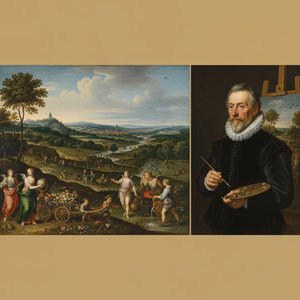
Jan Brueghel I (de Velours): A Flemish Visionary of Landscape and Genre
Jan Brueghel I, born around 1568 in Steenwyck Castle near Sint-Truiden, Belgium, was a pivotal figure in the Flemish Primitive movement—a group of artists who championed realism and detailed observation of nature as opposed to idealized Mannerist styles. His father, Pieter Bruegel the Elder, established a renowned artistic lineage that profoundly shaped Jan’s own creative trajectory. Growing up amidst a family steeped in artistic tradition instilled in him an unwavering dedication to capturing the essence of everyday life and the grandeur of the natural world.
- Early Life & Training: Brueghel's formative years were spent honing his skills under the tutelage of Peter Paul Rubens, arguably the most influential painter of his era. Rubens’s emphasis on dramatic composition and vibrant color palettes undoubtedly influenced Jan’s artistic sensibilities, fostering a desire to convey emotion and narrative through visual imagery.
- Notable Works & Artistic Style: Brueghel's oeuvre is characterized by an unparalleled mastery of landscape painting—particularly winter scenes—and genre depictions that portray rural life with remarkable accuracy and psychological insight. His celebrated masterpiece, “Retour de pêche” (Return of the Fishermen), housed in the Groeninge Museum in Bruges, exemplifies his meticulous attention to detail and ability to evoke a palpable sense of atmosphere. Similarly, "Paysage au moulin" showcases his talent for capturing the textures and nuances of rural landscapes.
The Flemish Primitive Movement & Brueghel’s Contribution
Brueghel's work stood apart from prevailing artistic trends during the Baroque period, prioritizing observation and realism over decorative embellishment. He rejected the conventions of Mannerism—characterized by distorted figures and stylized perspectives—embracing instead a humanist approach that sought to depict human experience within its natural context.
Alongside Rubens and Anthony van Dyck, Brueghel spearheaded the Flemish Primitive movement, establishing a distinct aesthetic that would resonate throughout European art history. His unflinching portrayal of peasant life—often imbued with moral commentary—challenged societal norms and offered a poignant reflection on human vulnerability and resilience.
Influences & Artistic Development
Brueghel’s artistic vision drew inspiration from Flemish folklore, biblical narratives, and humanist scholarship. He meticulously studied the works of Hieronymus Bosch and Pieter Saenredam—artists who similarly championed realism and psychological depth—absorbing their techniques and stylistic sensibilities.
Throughout his prolific career, Brueghel experimented with innovative compositional strategies and color palettes, pushing the boundaries of artistic convention while maintaining a steadfast commitment to portraying the world as he perceived it. His enduring legacy lies in his ability to transform ordinary scenes into profound meditations on human existence.
Legacy & Historical Significance
Jan Brueghel I’s paintings continue to captivate audiences worldwide, serving as powerful reminders of the humanist spirit that flourished during the Renaissance and Baroque eras. His meticulous depictions of rural life—combined with his masterful command of landscape painting—have cemented his place among the greatest artists of his time.
More than simply documenting visual reality, Brueghel’s art conveyed complex ideas about morality, faith, and the relationship between humanity and nature—themes that remain relevant to contemporary viewers. His enduring influence can be seen in subsequent generations of painters who sought to emulate his distinctive style and artistic vision.