Portræt af Beatriz Milhazes

De 17 mest berømte Beatriz Milhazes-malerier, hver og en unik

Opdateret november 2026 · rangeret efter vores popularitetsscore (søgninger, besøg og ordrer for hvert værk) · 18 værker af Beatriz Milhazes i vores katalog

Kort sagt

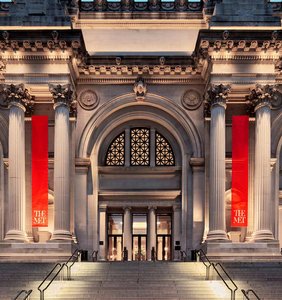
The Beach (A Praia) (1997) er det maleri af Beatriz Milhazes, der vækker mest opsigt; originalen findes på Metropolitan Museum of Art, New York. Derefter falder blikket på Sem Título [Untitled] (1987) og Figo (2006). Blandt de 18 værker af Beatriz Milhazes i vores katalog er disse 17 de mest berømte, hver især et unikt originalværk præsenteret med sit årstal, sit museum og årsagen til dets tidløse betydning.

født 1960, Rio de Janeiro Flest værker: Metropolitan Museum of Art

Top 10 malerier af Beatriz Milhazes, set gennem galleriets øjne

1
The Beach (A Praia) (1997) af Beatriz Milhazes

The Beach (A Praia)

1997 · Mixed Media · Metropolitan Museum of Art, New York

To stand before Beatriz Milhazes’ work is to be enveloped in a riotous celebration—a visual symphony that pulses with the relentless, joyous energy of Brazil itself. In "The Beach (A Praia)," Milhazes does not merely depict a scene; she constructs an immersive cultural tapestry. While the photo description suggests a lively beach tableau populated by figures and birds, the true subject matter is far richer: it is a confluence of…

2
Sem Título [Untitled] (1987) af Beatriz Milhazes

Sem Título [Untitled]

1987 · Acrylic On Canvas · Pinacoteca do Estado de São Paulo, São Paulo

In the vibrant landscape of contemporary Brazilian art, few voices resonate with as much rhythmic energy and kaleidoscopic brilliance as Beatriz Milhazes. Her 1987 masterpiece, Sem Título [Untitled], serves as a breathtaking window into a world where geometry meets organic exuberance. At first glance, the viewer is met with a striking confrontation: a woman's face emerging from a deep, velvety black background. This stark contrast creates an immediate sense of…

3
Figo (2006) af Beatriz Milhazes

Figo

2006 · Acrylic On Canvas

In Figo, Beatriz Milhazes constructs a dense architecture of overlapping forms. Created about 2006, the work rejects a single focal point, opting instead for a crowded field of visual energy. Rectangular blocks sit heavy against the surface, colliding with swirling floral motifs and soft circular shapes. These elements do not merely sit side by side; they interlock and stack, creating a sense of constant, rhythmic movement across the plane.

Beatriz Milhazess berømte malerier, nummer 11 til 17

Motiverne, der fangede Beatriz Milhazess blik

De fire motiver, der optræder hyppigst i disse originaler, hver med sit fineste eksempel.

De museer, der udstiller Beatriz Milhazess originalværker

De 3 museer, der rummer flest af malerierne på denne side.

Museum By Værker af Beatriz Milhazes Malerier fra denne liste
Metropolitan Museum of Art, New YorkMetropolitan Museum of Art New York 1 The Beach (A Praia)
Pinacoteca do Estado de São Paulo, São PauloPinacoteca do Estado de São Paulo São Paulo 1 Sem Título [Untitled]
MAM Rio, Rio de JaneiroMAM Rio Rio de Janeiro 1 Untitled

Beatriz Milhazes gennem årtierne: ét unikt originalværk til hver

Værker per årti

Vælg et årti for at se det originale værk, der definerer det.

Beatriz Milhazess malerier: spørgsmål til galleriet

Hvad er det mest berømte værk af Beatriz Milhazes?Vis svaret

The Beach (A Praia) (1997), Metropolitan Museum of Art, New York. Derefter følger Sem Título [Untitled] (1987) og Figo (2006).

Hvilken alder havde Beatriz Milhazes, da The Beach (A Praia) blev skabt?Vis svaret

37 år gammel: The Beach (A Praia) er fra 1997, og Beatriz Milhazes blev født i 1960.

Hvilke ti malerier af Beatriz Milhazes er de mest berømte?Vis svaret

The Beach (A Praia), Sem Título [Untitled], Figo, The Kiss, Untitled, The Kiss, Phebo, Carambola, Sugar og Salt (Diptych). Ranglisten ovenfor viser det enkelte værks årstal og museum.

Hvor mange værker af Beatriz Milhazes er kendt?Vis svaret

Vores katalog indeholder 18 værker af Beatriz Milhazes, dateret fra 1987 til 2009.

Hvor kan de mest berømte originaler af Beatriz Milhazes ses?Vis svaret

Primært i Metropolitan Museum of Art (New York), Pinacoteca do Estado de São Paulo (São Paulo) og MAM Rio (Rio de Janeiro). Museumslisten ovenfor viser dem alle.

I hvilken periode skabte Beatriz Milhazes sine mest kendte malerier?Vis svaret

I 2000s: 12 af de 17 værker på denne side blev skabt dengang, herunder Figo.

Hvilket berømt maleri af Beatriz Milhazes er det tidligste, og hvilket er det seneste?Vis svaret

På denne side er det tidligste Sem Título [Untitled] (1987) og det seneste Sugar (2009).

Hvilke motiver foretrak Beatriz Milhazes?Vis svaret

Geometric abstraction (2), Female figure (2) og Circles (2), fordelt på de 17 værker på denne side.

Hvilke materialer brugte Beatriz Milhazes mest til sine malerier?Vis svaret

Mixed Media, for 2 af de 17 værker på denne side.

Beatriz Milhazes: et portræt af kunstneren

A Kaleidoscope of Brazilian Modernism

Beatriz Milhazes stands as a luminous figure in the contemporary art world, a painter whose work vibrates with the rhythmic energy of her native Rio de Janeiro. Born in 1960, Milhazes emerged from a landscape where the transition from military dictatorship to political freedom sparked a profound creative resurgence known as the Geração 80. Her upbringing was steeped in a rich cultural tapestry; with a father who was a lawyer and a mother an art historian, she was raised amidst a deep appreciation for both formal aesthetics and the complex narratives of Brazilian identity. This foundation allowed her to develop a visual language that is simultaneously deeply local and universally accessible, blending the high-minded principles of European modernism with the exuberant, sensory textures of Brazilian life.

The artist’s early academic journey at the Escola de Artes Visuais Parque Lage provided the fertile ground necessary for her experimentation. It was here that she began to synthesize disparate influences into a singular vision. Her work is a masterful dialogue between the structured geometry of Piet Mondrian and the Bauhaus movement, and the fluid, organic ornamentation found in the works of Henri Matisse and the Brazilian icon Tarsila do Amaral. Milhazes does not merely reference these masters; she reinterprets them through a lens of tropicality, where the sharp edges of abstraction are softened by the swirling motifs of carnaval, samba, and the lush flora of the tropics.

The Alchemy of Layered Light

What truly distinguishes a Milhazes masterpiece is her idiosyncratic and mesmerizing technique, a process that defies the traditional boundaries between painting and collage. In the mid-1990s, she perfected a method of "collaging paint" that has become her artistic signature. Rather than applying pigment directly to a canvas in a conventional manner, she paints vibrant, abstract designs onto transparent plastic sheets. These layers are then meticulously transferred to the canvas, a repetitive and rhythmic process that allows her to build complex, multi-dimensional textures while maintaining a deceptively flat surface. This technique creates a sense of temporal depth, as if several moments of creation have been compressed into a single, luminous plane.

This method serves her broader conceptual goal: to minimize the visible "hand" of the painter and instead focus on the pure interplay of color and form. The resulting compositions are a dizzying array of circles, squares, and floral patterns that evoke the optical dynamism of Op Art. Her palette is famously saturated, reflecting the intense sunlight of Rio de Janeiro and the kaleidoscopic variety of popular Brazilian fabrics, ceramic tiles, and colonial Baroque architecture. In her hands, the canvas becomes a site of "conceptual carnavalesca," where high art and popular culture collide in a celebratory explosion of pattern.

A Global Legacy and Architectural Vision

As her career progressed, Milhazes’ reach extended far beyond the confines of the traditional frame. She began to treat space itself as a medium, creating large-scale architectural installations and site-specific interventions that transform institutional environments into immersive experiences. From the Tate Modern in London to the Fondation Cartier in Paris, her work has breathed new life into prestigious global venues, proving that her language of pattern and color is truly international. These projects, such as her reconstructed architectural models for Pinturas Nômades, demonstrate her ability to translate the intimacy of a painting into the grandeur of public space.

The historical significance of Beatriz Milhazes lies in her ability to navigate the tension between local identity and global modernism. She has successfully reclaimed Brazilian motifs—once viewed through a purely folkloric lens—and elevated them into the realm of sophisticated, high-concept abstraction. Her work remains a testament to the power of synthesis, proving that an artist can be deeply rooted in their own soil while speaking a language that resonates across continents. Through her layered histories and vibrant geometries, Milhazes continues to invite viewers into a world where every stroke is a celebration of life, movement, and the enduring beauty of the unexpected.