A Florentine Illuminator Bridging Traditions
Bartolomeo di Domenico di Guido, a name perhaps less celebrated than his Renaissance contemporaries, nevertheless occupies a fascinating and pivotal position in the artistic landscape of 15th-century Italy. Born in Florence in 1430, he lived through a period of immense cultural ferment, witnessing firsthand the blossoming of Humanism and the radical innovations in painting that would define an era. While biographical details remain somewhat fragmented, piecing together records from guild registrations and archival documents reveals a dedicated artisan who skillfully navigated the evolving demands of his clientele. He wasn’t merely replicating existing styles; Bartolomeo was actively synthesizing them, bridging the gap between the meticulous tradition of illuminated manuscripts and the burgeoning naturalism championed by artists like Fra Angelico and Domenico Ghirlandaio. His early training likely occurred within a workshop environment, absorbing the techniques of gold leaf application, precise draftsmanship, and vibrant color palettes characteristic of Florentine illumination at the time. A ten-year association with the Compagnia di San Paolo suggests a commitment to professional standards and artistic community—a network crucial for securing commissions and exchanging knowledge.
From Manuscript Illumination to Panel Painting
Bartolomeo’s initial reputation rested on his mastery of illuminated manuscripts, creating exquisitely detailed borders, intricate initials, and captivating miniature scenes. These works weren't simply decorative embellishments; they were integral components of devotional books, designed to enhance the spiritual experience of their owners. His style, as noted by art historians, is characterized by a delicate balance between elegance and immediacy—figures rendered with graceful lines yet imbued with a sense of lively presence. The use of *bianchi girari*, or white vine scrollwork, became a signature element, lending his compositions an airy lightness. However, Bartolomeo’s artistic ambitions extended beyond the confines of manuscript illumination. By the mid-1460s, he was collaborating with Zanobi di Mariano on projects for the Medici family—a testament to his growing skill and reputation. This period marked a transition towards larger-scale panel paintings, allowing him to explore more complex narratives and spatial arrangements. He registered as an independent stationer in 1487, indicating a broadening of his professional activities beyond purely artistic endeavors.
The Bolognese School and Artistic Influence
Around the turn of the century, Bartolomeo relocated to Naples and eventually settled in Bologna, where he became a dominant figure in the emerging Bolognese school of painting. This wasn’t simply a geographical shift; it represented a crucial moment in his artistic development. The Bolognese context—a city with its own distinct artistic traditions—provided fertile ground for experimentation and innovation. He attracted numerous workshop assistants and pupils, effectively establishing a thriving studio that disseminated his style throughout the region. His influence is particularly evident in the works of artists associated with the Carracci family, who would later revolutionize Italian painting with their emphasis on classical antiquity and dramatic realism. While Bartolomeo’s work doesn't possess the same level of overt theatricality as the Carracci masters, it laid the groundwork for their artistic explorations—a focus on anatomical accuracy, expressive gestures, and narrative clarity.
Religious Themes and Artistic Legacy
The vast majority of Bartolomeo di Domenico di Guido’s surviving works are religious in subject matter—depictions of the Virgin Mary, scenes from the life of Christ, and portraits of saints. These paintings weren't merely exercises in technical skill; they were deeply imbued with spiritual meaning, intended to inspire devotion and convey theological concepts. His *Trinity* panels, for example, showcase a masterful use of perspective and composition, drawing the viewer into the sacred scene. The figures are rendered with a quiet dignity and emotional resonance, reflecting the humanist emphasis on human experience within a religious framework. Although his name may not be as widely recognized as some of his contemporaries, Bartolomeo di Domenico di Guido’s contribution to Renaissance art is significant. He was a skilled craftsman, an innovative artist, and a dedicated teacher who helped shape the artistic landscape of 15th-century Italy. His work stands as a testament to the enduring power of religious imagery and the transformative potential of artistic expression.
Rediscovering Bartolomeo: Modern Scholarship
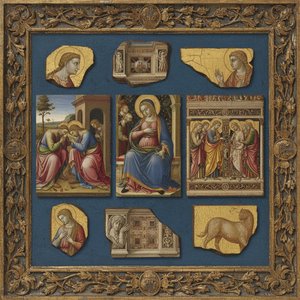
For centuries, Bartolomeo di Domenico di Guido remained largely overlooked by art historians. However, recent scholarship has begun to shed new light on his life and work, revealing a more nuanced understanding of his artistic achievements. The discovery of archival documents—guild records, workshop accounts, and commission letters—has provided valuable insights into his professional activities and social connections. Detailed analysis of his paintings reveals a sophisticated understanding of perspective, anatomy, and color theory. Furthermore, the identification of works previously attributed to other artists has expanded our knowledge of his oeuvre. Manuscript leaves, such as the *Entry into Jerusalem on Palm Sunday*, demonstrate his exceptional skill in illumination, while panel paintings like *The Trinity* showcase his mastery of larger-scale compositions. The ongoing research promises to further illuminate Bartolomeo’s artistic legacy and secure his rightful place within the canon of Renaissance art. His influence on the Bolognese school, particularly through his workshop practices, continues to be a subject of scholarly debate and investigation.