

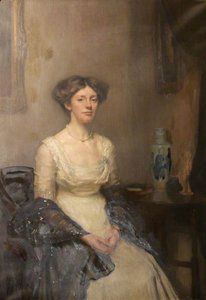
1


Opdateret november 2026 · rangeret efter vores popularitetsscore (søgninger, besøg og ordrer for hvert værk) · 35 værker af Arnold Mason i vores katalog
Kort sagt
Thomas William Dampier Bide (1844–1916) (1909) er det maleri af Arnold Mason, der vækker mest opsigt; originalen findes på Museum of South Somerset, Yeovil. Derefter falder blikket på John Parkinson (1947) og Olive Mary Wolryche Whitmore (1879–1951), Mrs Eustace Scott Hamilton Russell (1900). Blandt de 35 værker af Arnold Mason i vores katalog er disse 34 de mest berømte, hver især et unikt originalværk præsenteret med sit årstal, sit museum og årsagen til dets tidløse betydning.

The John Parkinson painting by Arnold Mason is a stunning oil on canvas artwork that showcases the artist's exceptional skill in capturing the essence of his subject. Created in 1947, this painting measures 210 x 124 cm and is currently located at the Gravesham Borough Council in Gravesend, United Kingdom. The Artist and His Work Arnold Mason was a talented artist known for his attention to detail and ability to…


 Girl with a Hand Mirror1929
12
 Job Nixon (1891–1938)1932
13
 Portrait of a Woman1931 · The Resource Centre
14
 Red Ships at La Rochelle, France1930 · Alfred East Art Gallery
15
 Seated Nude1937
16
 Portrait of a Young Woman1934
17
 Alderman W. E. Thomas, Mayor of Gravesend (1921 1922)1941 · Gravesham Borough Council
18
 Elinor Glyn, née Sutherland1942
19
 Lady Eleanor Joan Clara Nathan (1892–1972)1948 · Guildhall Art Gallery
20
 Robert Palmer, VC1948 · Gravesham Borough Council
21Alderman J. Tennant1947 · The Hepworth Wakefield
22
 Gerald Harry Beloe, Master (1922), Treasurer (1932–1944)1944 · Merchants Hall
23
 Sir Henry Upcher (1870–1954), Chairman of Norfolk County Council (1941–1950)1950
24
 Brown Study1949
25
 Llanbedr, near Conway
26
 Miss ColeSalford Museum - Art Gallery
27
 Indian GirlAlfred East Art Gallery
28
 Port Scene
29
 Flower Piece
30
 River Scene
31
 The HousekeeperSalford Museum - Art Gallery
32
 BargesThe Brewhouse Arts Centre
33
 River Scene with a Bridge
34
 The Reverend Canon Frederick Llewellyn Hughes, CB, CBE, MC, TD, MA, KHC, Chaplain General to the King (1944–1951)
De fire motiver, der optræder hyppigst i disse originaler, hver med sit fineste eksempel.
De 8 museer, der rummer flest af malerierne på denne side.
| Museum | By | Værker af Arnold Mason | Malerier fra denne liste |
|---|---|---|---|
 Museum of South Somerset |
Yeovil | 3 | Thomas William Dampier Bide (1844–1916), Mary Anne Whetham, née Dampier (b.1843), Elizabeth Dampier Bide (1838–1915) |
 Gravesham Borough Council |
Greenwich | 3 | John Parkinson, Alderman W. E. Thomas, Mayor of Gravesend (1921 1922), Robert Palmer, VC |
 Alfred East Art Gallery |
Kettering | 2 | Red Ships at La Rochelle, France, Indian Girl |
 Salford Museum - Art Gallery |
Greater Manchester | 2 | Miss Cole, The Housekeeper |
 The Resource Centre |
Newark | 1 | Portrait of a Woman |
 Guildhall Art Gallery |
London | 1 | Lady Eleanor Joan Clara Nathan (1892–1972) |
 The Hepworth Wakefield |
Wakefield | 1 | Alderman J. Tennant |
 Merchants Hall |
Bristol | 1 | Gerald Harry Beloe, Master (1922), Treasurer (1932–1944) |
Vælg et årti for at se det originale værk, der definerer det.

The John Parkinson painting by Arnold Mason is a stunning oil on canvas artwork that showcases the artist's exceptional skill in capturing the essence of his subject. Created in 1947, this painting measures 210 x 124 cm and is currently located at the Gravesham Borough Council in Gravesend, United Kingdom. The Artist and His Work Arnold Mason was a talented artist known for his attention to detail and ability to…

Thomas William Dampier Bide (1844–1916) (1909), Museum of South Somerset, Yeovil. Derefter følger John Parkinson (1947) og Olive Mary Wolryche Whitmore (1879–1951), Mrs Eustace Scott Hamilton Russell (1900).
24 år gammel: Thomas William Dampier Bide (1844–1916) er fra 1909, og Arnold Mason blev født i 1885.
Thomas William Dampier Bide (1844–1916), John Parkinson, Olive Mary Wolryche Whitmore (1879–1951), Mrs Eustace Scott Hamilton Russell, Head of a Girl, Ibiza, Balearics, Lord Granville West (1904–1984), Head of a Child, Mary Anne Whetham, née Dampier (b.1843), Elizabeth Dampier Bide (1838–1915) og Quai Du Port, Martigues, France. Ranglisten ovenfor viser det enkelte værks årstal og museum.
Vores katalog indeholder 35 værker af Arnold Mason, dateret fra 1900 til 1950.
Primært i Museum of South Somerset (Yeovil), Gravesham Borough Council (Greenwich) og Alfred East Art Gallery (Kettering). Museumslisten ovenfor viser dem alle.
I 1940s: 8 af de 34 værker på denne side blev skabt dengang, herunder John Parkinson.
På denne side er det tidligste Olive Mary Wolryche Whitmore (1879–1951), Mrs Eustace Scott Hamilton Russell (1900) og det seneste Sir Henry Upcher (1870–1954), Chairman of Norfolk County Council (1941–1950) (1950).
Portrait (2) og Formal (2), fordelt på de 34 værker på denne side.
Thomas William Dampier Bide (1844–1916), Mary Anne Whetham, née Dampier (b.1843) og Elizabeth Dampier Bide (1838–1915): Museum of South Somerset, Yeovil har 3 af værkerne på denne side.