Portræt af Antonio Zucchi

De 87 mest berømte Antonio Zucchi-malerier, en galleriselektion

Opdateret november 2026 · rangeret efter vores popularitetsscore (søgninger, besøg og ordrer for hvert værk) · 101 værker af Antonio Zucchi i vores katalog

Kort sagt

Af alle de originale værker, som Antonio Zucchi efterlod, er det mest berømte A Putto Being Woken from Sleep by Tickling of His Nose (1770), som er en del af samlingen på Nostell Priory i Wakefield. Lige efter følger James Adam, 1732 - 1794. Architect and designer (1763) og Landscape with a Bridge and Ruins with Peasants Fishing (a set of six decorative wall panels) (1781). Vores katalog indeholder 101 værker af Antonio Zucchi; galleriet har bevaret de 87 værker, som verden beundrer mest, hver vist med sin dato, sit museum og sin historie.

1726 – 1795, Venedig Neoclassical style Flest værker: Nostell Priory

Antonio Zucchis top 10 malerier: galleriets udvalg

1
A Putto Being Woken from Sleep by Tickling of His Nose (1770) af Antonio Zucchi

A Putto Being Woken from Sleep by Tickling of His Nose

1770 · Oil · Nostell Priory, Wakefield

We find ourselves before A Putto Being Woken from Sleep by Tickling of His Nose, a work by the Venetian painter Antonio Zucchi. This piece dates to about 1770, a period when Zucchi was establishing his presence within the English artistic landscape. The painting is currently held within the Nostell Priory collection, where it has been preserved as part of their significant holdings.

2
James Adam, 1732 - 1794. Architect and designer (1763) af Antonio Zucchi

James Adam, 1732 - 1794. Architect and designer

1763 · Oil On Canvas · Scottish National Portrait Gallery, Edinburgh

In this portrait, James Adam, 1732 - 1794. Architect and designer, meets the viewer through the brush of Antonio Zucchi. The scene unfolds in Rome, captured during the subject's Grand Tour of Italy in 1763. Here, the youngest member of a prominent dynasty of Scottish architects appears not merely as a man, but as a central figure in the unfolding Neoclassical movement. He carries the weight of his profession with…

3
Landscape with a Bridge and Ruins with Peasants Fishing (a set of six decorative wall panels) (1781) af Antonio Zucchi

Landscape with a Bridge and Ruins with Peasants Fishing (a set of six decorative wall panels)

1781 · Oil On Canvas · National Trust, Plymouth

Antonio Zucchi’s “Landscape with a Bridge and Ruins with Peasants Fishing,” painted in 1781, is more than just a picturesque scene; it’s a poignant meditation on time, memory, and the enduring relationship between humanity and nature. This captivating work, originally conceived as one of a set of decorative wall panels, transports us to an idealized Italian countryside where classical grandeur meets rustic simplicity. The eye is immediately drawn to the…

4
Nymphs garlanding Cupid (1774) af Antonio Zucchi

Nymphs garlanding Cupid

1774 · Oil · Nostell Priory, Wakefield

This work, titled Nymphs garlanding Cupid, is an oil painting by the Italian painter and printmaker Antonio Zucchi. Created about 1774, the piece presents a mythological scene set within a sun-drenched woodland. The composition focuses on a central group of figures, including several nymphs and a small, nude Cupid, captured in a moment of celebration.

6
Hector and Andromache (1773) af Antonio Zucchi

Hector and Andromache

1773 · Oil On Canvas · Nostell Priory, Wakefield

In Hector and Andromache, Antonio Zucchi captures a heavy moment of farewell and reunion. A muscular warrior, clad in a helmet, pulls a woman into a tight embrace. She holds a small baby against her, a fragile weight amidst the tension of the scene. They are framed by the skeletal remains of Roman architecture, where weathered stone walls and broken arches rise into the shadows. In the distance, other figures…

7
Three dancing nymphs and a reclining cupid in a landscape (1772) af Antonio Zucchi

Three dancing nymphs and a reclining cupid in a landscape

1772 · Metropolitan Museum of Art, New York

The forest breathes with a quiet, rhythmic energy as three women move through the dappled light. They are caught in a moment of pure, unburdened motion, their bodies swaying in a synchronized grace that defies the stillness of the trees. One woman leads on the left, her pose a delicate curve against the greenery, while the central figure anchors the movement, her form a focal point of light and motion.…

8
Jurisprudence (1769) af Antonio Zucchi

Jurisprudence

1769 · Oil · English Heritage, London

In the quiet, commanding presence of Antonio Zucchi’s Jurisprudence, we encounter more than a mere portrait; we enter a realm where personified virtue meets classical grandeur. Painted in 1769, this exquisite work serves as a profound meditation on the nature of law, wisdom, and authority. The composition centers upon a regal woman, seated with a poised grace that suggests both accessibility and an impenetrable intellect. As she sits with her…

9
The Four Continents America (1777) af Antonio Zucchi

The Four Continents America

1777 · Painting · National Trust, Derby

To gaze upon this magnificent piece is to step directly into the vibrant heart of Enlightenment-era global ambition. The Four Continents America, executed in 1777 by Antonio Zucchi, is far more than a mere depiction of people; it is a sweeping, allegorical testament to human connection, exploration, and the perceived organization of the known world at the close of the eighteenth century. The composition immediately draws the eye to the…

10
Mathematics (1769) af Antonio Zucchi

Mathematics

1769 · Oil On Canvas · English Heritage, London

In "Mathematics," Antonio Zucchi presents a scene where intellect and grace meet in a quiet, suspended moment. Completed in 1769, the painting centers on a woman seated upon an easel-like structure. She exists in a state of profound contemplation, her gaze directed upwards toward an unseen height, as if she is tracing the very logic of the heavens. This upward look suggests a mind reaching beyond the physical realm to…

Antonio Zucchi-udvalget fortsætter, fra 11 til 87

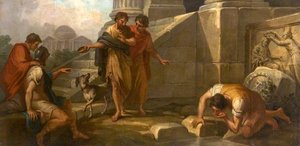
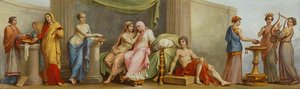
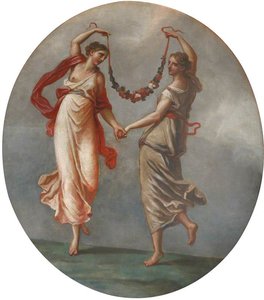
11The Four Continents Europe (1777) af Antonio ZucchiThe Four Continents Europe1777 · National Trust 12Winter (1769) af Antonio ZucchiWinter1769 · English Heritage 13Chloe Playing the Lyre to Daphnis (or Sappho and Anacreon) (1776) af Antonio ZucchiChloe Playing the Lyre to Daphnis (or Sappho and Anacreon)1776 · Nostell Priory 14The Four Continents Asia (1777) af Antonio ZucchiThe Four Continents Asia1777 · National Trust 15The Four Continents Africa (1777) af Antonio ZucchiThe Four Continents Africa1777 · National Trust 16Diogenes Casting Away His Wooden Bowl as a Superfluity, on Seeing a Youth Drinking from His Hand (a set of three decorative wall panels) (1768) af Antonio ZucchiDiogenes Casting Away His Wooden Bowl as a Superfluity, on Seeing a Youth Drinking from His Hand (a set of three decorative wall panels)1768 · National Trust 17Theology (1769) af Antonio ZucchiTheology1769 · English Heritage 18Ruins of Classical Baths with Nymphs Bathing (a set of six decorative wall panels) (1781) af Antonio ZucchiRuins of Classical Baths with Nymphs Bathing (a set of six decorative wall panels)1781 · National Trust 19A Bacchanal (1769) af Antonio ZucchiA Bacchanal1769 · English Heritage 20Minerva among the Arts (1769) af Antonio ZucchiMinerva among the Arts1769 · English Heritage 21Sappho Giving Anacreon a Feather from Cupid's Wing (1770) af Antonio ZucchiSappho Giving Anacreon a Feather from Cupid's Wing1770 · Nostell Priory 22Capriccio of Figures Dancing amongst Classical Ruins, with a Statue of the Rape of Proserpine (1775) af Antonio ZucchiCapriccio of Figures Dancing amongst Classical Ruins, with a Statue of the Rape of Proserpine1775 · Nostell Priory 23Commerce (1769) af Antonio ZucchiCommerce1769 · English Heritage 24The Rape of Europa (1769) af Antonio ZucchiThe Rape of Europa1769 · English Heritage 25Apollo and the Muses (1767) af Antonio ZucchiApollo and the Muses1767 · Nostell Priory 26Capriccio of Figures Dancing amongst Classical Ruins, with a Ruined Arch (1775) af Antonio ZucchiCapriccio of Figures Dancing amongst Classical Ruins, with a Ruined Arch1775 · Nostell Priory 27The Aldobrandini Marriage (1769) af Antonio ZucchiThe Aldobrandini Marriage1769 · English Heritage 28Navigation (1769) af Antonio ZucchiNavigation1769 · English Heritage 29Justice Embracing Peace (1769) af Antonio ZucchiJustice Embracing Peace1769 · English Heritage 30Bacchantes (5 of 6 ovals) (1773) af Antonio ZucchiBacchantes (5 of 6 ovals)1773 · English Heritage 31Homer Crowned as Poet Laureate (1767) af Antonio ZucchiHomer Crowned as Poet Laureate1767 · Nostell Priory 32Agriculture (1769) af Antonio ZucchiAgriculture1769 · English Heritage 33Bacchantes (2 of 6 ovals) (1773) af Antonio ZucchiBacchantes (2 of 6 ovals)1773 · English Heritage 34Dido and Aeneas ( ) (1773) af Antonio ZucchiDido and Aeneas ( )1773 · Nostell Priory 35An Unidentified Classical Subject A Fight (1767) af Antonio ZucchiAn Unidentified Classical Subject A Fight1767 · Nostell Priory 36Putti Making Music (1770) af Antonio ZucchiPutti Making Music1770 · Nostell Priory 37The Infant Hercules (1769) af Antonio ZucchiThe Infant Hercules1769 · English Heritage 38Anacreon Sacrificing to the Three Graces (1770) af Antonio ZucchiAnacreon Sacrificing to the Three Graces1770 · Nostell Priory 39Bacchantes (4 of 6 ovals) (1773) af Antonio ZucchiBacchantes (4 of 6 ovals)1773 · English Heritage 40Bacchantes (3 of 6 ovals) (1773) af Antonio ZucchiBacchantes (3 of 6 ovals)1773 · English Heritage 41Bacchantes (1 of 6 ovals) (1773) af Antonio ZucchiBacchantes (1 of 6 ovals)1773 · English Heritage 42Putti Fishing (1770) af Antonio ZucchiPutti Fishing1770 · Nostell Priory 43An Epithalium (1769) af Antonio ZucchiAn Epithalium1769 · English Heritage 44An Unidentified Classical Subject A Quarrel over a Dead Ass (1767) af Antonio ZucchiAn Unidentified Classical Subject A Quarrel over a Dead Ass1767 · Nostell Priory 45Putti with a Bird (1770) af Antonio ZucchiPutti with a Bird1770 · Nostell Priory 46Putti with a Dog (1770) af Antonio ZucchiPutti with a Dog1770 · Nostell Priory 47Socrates Drinking the Hemlock (1767) af Antonio ZucchiSocrates Drinking the Hemlock1767 48Wisdom (Prudence) and Temperance (1767) af Antonio ZucchiWisdom (Prudence) and Temperance1767 · Nostell Priory 49Rinaldo and Armida (1773) af Antonio ZucchiRinaldo and Armida1773 · Nostell Priory 50A Greek Philosopher and His Disciples (1767) af Antonio ZucchiA Greek Philosopher and His Disciples1767 · Nostell Priory 51Justice and Strength (Fortitude) (1767) af Antonio ZucchiJustice and Strength (Fortitude)1767 · Nostell Priory 52Minerva Presenting the Personifications of the Arts of Painting, Gardening, Sculpture and Architecture to Britannia (1767) af Antonio ZucchiMinerva Presenting the Personifications of the Arts of Painting, Gardening, Sculpture and Architecture to Britannia1767 · Nostell Priory 53Putti with a Garland of Flowers (1770) af Antonio ZucchiPutti with a Garland of Flowers1770 · Nostell Priory 54The Return of Telemachus (1773) af Antonio ZucchiThe Return of Telemachus1773 · Nostell Priory 55Virgil Reading the Aeneid to the Emperor Augustus, His Wife Livia and His Fainting Sister, Octavia (1767) af Antonio ZucchiVirgil Reading the Aeneid to the Emperor Augustus, His Wife Livia and His Fainting Sister, Octavia1767 · Nostell Priory 56Hercules between Glory and the Passions (1769) af Antonio ZucchiHercules between Glory and the Passions1769 · English Heritage 57Cupid Preparing Venus for an Amorous Encounter with Mars (1773) af Antonio ZucchiCupid Preparing Venus for an Amorous Encounter with Mars1773 · Nostell Priory 58Mythological Subject with a Couple in an Embrace (1773) af Antonio ZucchiMythological Subject with a Couple in an Embrace1773 · Nostell Priory 59Bacchus and Ceres (1773) af Antonio ZucchiBacchus and Ceres1773 · English Heritage 60Aristippus and His Companions after Being Shipwrecked, Seeing Mathematical Diagrams, Realise the Land Was Inhabited (a set of three decorative wall panels) (1768) af Antonio ZucchiAristippus and His Companions after Being Shipwrecked, Seeing Mathematical Diagrams, Realise the Land Was Inhabited (a set of three decorative wall panels)1768 · National Trust 61Mitellus Ordering a Marble Crow to Be Put on the Tomb of His Former Master, Diodorus Siculus (a set of three decorative wall panels) (1768) af Antonio ZucchiMitellus Ordering a Marble Crow to Be Put on the Tomb of His Former Master, Diodorus Siculus (a set of three decorative wall panels)1768 · National Trust 62Catullus Comforting Lesbia over the Death of Her Pet Sparrow and Writing an Ode (1773) af Antonio ZucchiCatullus Comforting Lesbia over the Death of Her Pet Sparrow and Writing an Ode1773 · Nostell Priory 63Angelica and Medoro Medoro Carving the Name of Angelica into the Trunk of a Tree (1773) af Antonio ZucchiAngelica and Medoro Medoro Carving the Name of Angelica into the Trunk of a Tree1773 · Nostell Priory 64Capriccio with a Pagan Temple and a Sacrifice (1776) af Antonio ZucchiCapriccio with a Pagan Temple and a Sacrifice1776 · Nostell Priory 65Capriccio with the Ruins of a Triumphal Arch and a Bridge (1776) af Antonio ZucchiCapriccio with the Ruins of a Triumphal Arch and a Bridge1776 · Nostell Priory 66A Ruined Temple and Fountain with Musicians (a set of six decorative wall panels) (1781) af Antonio ZucchiA Ruined Temple and Fountain with Musicians (a set of six decorative wall panels)1781 · National Trust 67Fountain with Women Washing Clothes (a set of six decorative wall panels) (1781) af Antonio ZucchiFountain with Women Washing Clothes (a set of six decorative wall panels)1781 · National Trust 68Daphnis Giving an Apple to Chloe (1776) af Antonio ZucchiDaphnis Giving an Apple to Chloe1776 · Nostell Priory 69Daphnis Bestowing a Garland of Flowers on Chloe (1776) af Antonio ZucchiDaphnis Bestowing a Garland of Flowers on Chloe1776 · Nostell Priory 70Philetus Explaining Love to Daphnis and Chloe (1776) af Antonio ZucchiPhiletus Explaining Love to Daphnis and Chloe1776 · Nostell Priory 71A Procession of Classical Figures with a Donkey and a Tambourine (a set of six decorative wall panels) (1781) af Antonio ZucchiA Procession of Classical Figures with a Donkey and a Tambourine (a set of six decorative wall panels)1781 · National Trust 72Girls Dancing amid Classical Ruins (a set of six decorative wall panels) (1781) af Antonio ZucchiGirls Dancing amid Classical Ruins (a set of six decorative wall panels)1781 · National Trust 73Philosophy (1769) af Antonio ZucchiPhilosophy1769 · English Heritage 74Spring (1769) af Antonio ZucchiSpring1769 · English Heritage 75Venus and Cupid af Antonio ZucchiVenus and CupidNostell Priory 76Putto with a Personification of Chemistry af Antonio ZucchiPutto with a Personification of ChemistryNostell Priory 77Putto with a Personification of Sculpture af Antonio ZucchiPutto with a Personification of SculptureNostell Priory 78Putto with a Personification of Drawing af Antonio ZucchiPutto with a Personification of DrawingNostell Priory 79Putto with a Personification of Architecture af Antonio ZucchiPutto with a Personification of ArchitectureNostell Priory 80Putto with a Personification of Mathematics af Antonio ZucchiPutto with a Personification of MathematicsNostell Priory 81Putto with a Personification of Painting af Antonio ZucchiPutto with a Personification of PaintingNostell Priory 82Putto with a Personification of Poetry af Antonio ZucchiPutto with a Personification of PoetryNostell Priory 83Autumn (1769) af Antonio ZucchiAutumn1769 · English Heritage 84Summer (1769) af Antonio ZucchiSummer1769 · English Heritage 85Bacchantes (6 af 6 ovale) (1773) af Antonio ZucchiBacchantes (6 af 6 ovale)1773 · English Heritage 86A Pair of Dancing Women af Antonio ZucchiA Pair of Dancing WomenNational Trust 87Disarming of Cupid af Antonio ZucchiDisarming of CupidThe National Trust For Scotland

Antonio Zucchis berømte malerier, periode for periode

Motiverne, der fangede Antonio Zucchis blik

De fire motiver, der optræder hyppigst i disse originaler, hver med sit fineste eksempel.

De museer, der udstiller Antonio Zucchis originalværker

De 8 museer, der rummer flest af malerierne på denne side.

Museum By Værker af Antonio Zucchi Malerier fra denne liste
Nostell Priory, WakefieldNostell Priory Wakefield 43 A Putto Being Woken from Sleep by Tickling of His Nose, Nymphs garlanding Cupid, Putto with Personification of Music
English Heritage, LondonEnglish Heritage London 26 Jurisprudence, Mathematics, Winter
National Trust, PlymouthNational Trust Plymouth 9 Landscape with a Bridge and Ruins with Peasants Fishing (a set of six decorative wall panels), Diogenes Casting Away His Wooden Bowl as a Superfluity, on Seeing a Youth Drinking from His Hand (a set of three decorative wall panels), Ruins of Classical Baths with Nymphs Bathing (a set of six decorative wall panels)
National Trust, DerbyNational Trust Derby 4 The Four Continents America, The Four Continents Europe, The Four Continents Asia
Scottish National Portrait Gallery, EdinburghScottish National Portrait Gallery Edinburgh 1 James Adam, 1732 - 1794. Architect and designer
Metropolitan Museum of Art, New YorkMetropolitan Museum of Art New York 1 Three dancing nymphs and a reclining cupid in a landscape
National Trust, AylesburyNational Trust Aylesbury 1 A Pair of Dancing Women
The National Trust For Scotland, MayboleThe National Trust For Scotland Maybole 1 Disarming of Cupid

Antonio Zucchi årti for årti: det originale værk, der definerer hvert enkelt

Værker per årti

Vælg et årti for at se det originale værk, der definerer det.

Samleres spørgsmål om Antonio Zucchis malerier

Hvilket værk er Antonio Zucchi mest kendt for?Vis svaret

A Putto Being Woken from Sleep by Tickling of His Nose (1770), Nostell Priory, Wakefield. Derefter følger James Adam, 1732 - 1794. Architect and designer (1763) og Landscape with a Bridge and Ruins with Peasants Fishing (a set of six decorative wall panels) (1781).

Hvor gammel var Antonio Zucchi, da A Putto Being Woken from Sleep by Tickling of His Nose blev skabt?Vis svaret

44 år gammel: A Putto Being Woken from Sleep by Tickling of His Nose er fra 1770, og Antonio Zucchi blev født i 1726.

Hvad er de ti mest berømte Antonio Zucchi malerier?Vis svaret

A Putto Being Woken from Sleep by Tickling of His Nose, James Adam, 1732 - 1794. Architect and designer, Landscape with a Bridge and Ruins with Peasants Fishing (a set of six decorative wall panels), Nymphs garlanding Cupid, Putto with Personification of Music, Hector and Andromache, Three dancing nymphs and a reclining cupid in a landscape, Jurisprudence, The Four Continents America og Mathematics. Ranglisten ovenfor viser det enkelte værks årstal og museum.

Hvor mange malerier efterlod Antonio Zucchi?Vis svaret

Vores katalog indeholder 101 værker af Antonio Zucchi, dateret fra 1763 til 1781.

I hvilke museer udstilles Antonio Zucchi's mesterværker?Vis svaret

Primært i Nostell Priory (Wakefield), English Heritage (London) og National Trust (Plymouth). Museumslisten ovenfor viser dem alle.

I hvilke år malede Antonio Zucchi sine mest berømte værker?Vis svaret

I 1770s: 38 af de 87 værker på denne side blev skabt dengang, herunder A Putto Being Woken from Sleep by Tickling of His Nose.

Hvad er de første og de sidste berømte originaler af Antonio Zucchi?Vis svaret

På denne side er det tidligste James Adam, 1732 - 1794. Architect and designer (1763) og det seneste Landscape with a Bridge and Ruins with Peasants Fishing (a set of six decorative wall panels) (1781).

Hvilke motiver valgte Antonio Zucchi oftest?Vis svaret

Woman (28), People (20) og Man (13), fordelt på de 87 værker på denne side.

Hvilken teknik brugte Antonio Zucchi mest?Vis svaret

Oil On Canvas, for 33 af de 87 værker på denne side.

Hvilken kunstretning tilhører Antonio Zucchi?Vis svaret

Neoclassical style, baseret på originalerne på denne side.

Hvilke værker af Antonio Zucchi udstilles på Nostell Priory?Vis svaret

A Putto Being Woken from Sleep by Tickling of His Nose, Nymphs garlanding Cupid og Putto with Personification of Music: Nostell Priory, Wakefield har 43 af værkerne på denne side.

Antonio Zucchi: liv og værk

Francis Cotes: En pioner inden for engelsk pastel

Francis Cotes (1726–1770) står som en skelsættende skikkelse i den spirende verden af engelsk portrætkunst, især anerkendt for sin innovative brug af pastel og sin evne til at indfange flygtige øjeblikke af karakter. Han blev født i London og blev lærling hos William Faithorne, en maler kendt for sine teatralske gruppebilleder – en erfaring, der uden tvivl formede hans tidlige kunstneriske sans. Cotes overgik dog hurtigt sin mester og udviklede en særpræget individuel stil, karakteriseret ved en bemærkelsesværdig følsomhed over for lys, tekstur og de psykologiske nuancer hos hans motiver. I modsætning til den ofte stive formalitet i tidligere engelsk portrætkunst besidder Cotes' værker en levende umiddelbarhed, der afspejler en dyb forbindelse til personens personlighed og en skarp bevidsthed om den visuelle verden omkring ham. Hans tidlige karriere var præget af bestillingsarbejder fra fremtrædende familier, herunder Astley-familien, for hvem han skabte det berømte ”Aged Seven, and her Brother Edward, Aged Five and a Half” – en øm skildring af barndommens uskyld, som forbliver et af hans mest elskede værker. Dette maleri eksemplificerer Cotes' evne til at besjæle selv tilsyneladende simple motiver med en dyb følelsesmæssig resonans. Han mestrede brugen af pastel – et medie, der dengang blev betragtet som relativt nyt i England – for at opnå fantastiske effekter af farve og tone, hvor han indfangede hudens delikate rødmen, stoffets glimt og de subtile overgange mellem lys og skygge. Cotes nøjedes ikke blot med at kopiere virkeligheden; han oversatte den observerede verden til lærredet med en malerisk ynde, der adskilte ham fra hans samtidige. Hans brug af løse, ekspressive strøg skabem en følelse af bevægelse og vitalitet, hvilket bidrog til de imponerende portræters fængslende kvalitet.

Teknik og indflydelser

Cotes' tekniske mesterskab udsprang ikke kun af hans medfødte talent, men også af hans omhyggelige studier af naturen og andre kunstneres værker. Han var dybt påvirket af de hollandske mestre, især Rembrandt, hvis brug af lys og skygge til at skabe dramatiske effekter er tydelig i Cotes' portrætter. Han beundrede også Anthony van Dycks arbejde, hvis elegante kompositioner og psykologiske indsigt han stræbte efter at efterligne. Men i modsætning til Van Dycks polerede stil omfavnede Cotes en mere uformel tilgang, hvor han ofte portrætterede sine modeller i afslappede positurer og i naturlige omgivelser. Hans pastelteknik blev yderligere forfinet gennem eksperimenter med lagdeling af farver og påføring med varierende tryk, hvilket gjorde det muligt for ham at opnå en utrolig spændvidde af tonale værdier og teksturer. De resulterende portrætter er ikke blot ligheder; de er intime studier af karakter, gennemstrømmet af en mærkbar livsfølelse.

Bemærkelsesværdige værker og bestillinger

Udover det ikoniske ”Aged Seven” producerede Cotes en betydelig mængde værker, der inkluderer talrige portrætter af medlemmer af aristokratiet og adelen. Han malede for prominente skikkelser som Sir Robert Peel, Lord Charles Townshend og Lady Mary Wortley Montagu. Hans bestillinger var ofte drevet af et ønske om at indfange modellens unikke personlighed og sociale status, hvilket afspejlede de skiftende smagsretninger i 1700-tallets England. Hans virke strakte sig dog også ud over portrætkunsten; han producerede landskabsmalerier og genrebilleder, hvilket demonstrerede hans alsidighed som kunstner. Royal Academy, der blev grundlagt i 1769, anerkendte Cotes' bidrag ved at vælge ham som et af dets grundlægende medlemmer, hvilket cementerede hans plads blandt tidens førende kunstnere.

Eftermæle og historisk betydning

Francis Cotes' eftermæle ligger primært i hans pionerrolle inden for udviklingen af engelsk pastelmaling. Han demonstrerede mediets potentiale til at indfange subtile nuancer af farve og tone, hvilket banede vejen for fremtidige generationer af pastelkunstnere. Hans portrætter beundres i dag ikke kun for deres tekniske brillans, men også for deres psykologiske dybde og følelsesmæssige gennemslagskraft. Cotes' arbejde repræsenterer et skift væk fra de formelle konventioner i tidligere portrætkunst til fordel for en mere intim og ekspressiv tilgang, der afspejlede oplysningstidens ånd. Han huskes som en nøglefigur i etableringen af engelsk maleri som en særpræget og levende tradition, hvilket har efterladt et uudsletteligt mærke på kunsthistorien. Hans indflydelse kan ses i værkerne hos de senere kunstnere, der fulgte i hans fodspor, hvilket befæster hans position som en sand innovator og en mester af sit håndværk.