--- title: Facial expression - Wikipedia author: Authority control databases url: https://en.wikipedia.org/wiki/Facial_expression hostname: wikipedia.org sitename: Wikimedia Foundation, Inc. date: 2003-06-09 --- # Facial expression | This article nee...
Every movement of the face is a quiet dialogue, a physical manifestation of what lies beneath the surface. We often think of our expressions as deliberate choices, yet much of what we communicate is governed by a complex network of muscles that connect directly to the skin and fascia. These anatomical structures allow for the subtle tightening of lips or the lifting of an eyebrow, creating the lines and folds that others read as emotion. It is a biological reality that provides us with a primary means of nonverbal communication, allowing social information to pass between individuals without a single word being spoken.
In the study of human behavior, we recognize two distinct pathways for these movements. There are those expressions we adopt voluntarily, often shaped by social etiquette and the desire to present a certain image to the world. These are the controlled smiles or the composed gazerns that follow a cortical route in the brain. Yet, there is another, more profound layer: the involuntary expressions that originate from the subcortical motor systems. These are the raw, instinctive reactions—the knit brow of deep concentration or the sudden widening of eyes during surprise—that occur without our conscious permission.
This duality of expression finds a beautiful parallel in the history of art itself. Just as our muscles can move both by will and by instinct, the Impressionist painters sought to capture both the deliberate composition and the spontaneous sensation. When we look at the works of Pierre-Auguste Renoir, we see this tension between the structured portrait and the fluid, breathing moment. He did not merely paint a face; he painted the very vitality of the muscles in motion, capturing a sense of Parisian grace that feels as immediate as a living breath.
Micro-Expressions and the Broken Stroke: Revealing Hidden Truths
Vibrant Celebration of Nature’s Beauty This captivating still life captures a lush bouquet of flowers rendered with lively, expressive brushwork that embodies the essence of Impressionism. The composition centers on a generous arrangement of blooms i...
There exists a realm of communication so brief it almost escapes our perception. Micro-expressions, lasting only a fraction of a second, are the involuntary leakages of true emotion. They are the tiny, fleeting flickers that occur when we attempt to conceal our feelings, exposing a momentary glimpse of anger, fear, or joy before the mask is resettled. These brief windows into the soul are difficult to detect with the naked eye, requiring a heightened state of awareness to catch the subtle shift in a lip corner or the slight contraction of the eyes.
The Impressionist technique mirrors this search for the ephemeral. By utilizing broken brushstrokes and a textured application of paint, artists like Monet and Renoir moved away from the heavy, finished surfaces of academic tradition. They embraced a style where the eye must work to assemble the image, much like how we must work to interpret a micro-expression. The visible, energetic strokes do not hide the truth; rather, they reveal it through movement and light.
This method finds its echo in the way we observe the world today. Just as a trained eye can spot the emotional leakage in a split second, the viewer of an Impressionist canvas finds meaning in the "imperfect" or unfinished appearance of the paint. In works like Bouquet in front of a Mirror, the loose, gestural application of color creates a sense of immediacy. The painting does not present a static object but a living, pulsing moment where the truth of the subject is found in the very vibration of the brushwork.
Introduction Close your eyes for a moment and imagine the world not as a collection of fixed lines and rigid shapes, but as a shimmering dance of light and atmosphere. Imagine the way a morning mist clings to the reeds of a pond, or how the setting s...
Light is never merely a tool for visibility; it is a carrier of mood and atmosphere. In the human face, the way light hits the eyes or casts a shadow under the brow can entirely alter our perception of a person's intent. The eyes are often called the windows to the soul because they reveal so much through changes in gaze, pupil dilation, or the subtle glint of moisture. Light interacts with these features to create depth, turning a simple look into an expression of profound interest or quiet melancholy.
The Impressionist masters understood this relationship intimately. They abandoned the controlled, somber shadows of the studio to embrace en plein air painting, seeking to record how sunlight filters through leaves or dissolves horizons into violet haze. For them, light was the primary subject. They painted the way light breathes upon a landscape, using a luminous palette to evoke the sensory experience of a single, passing second.
We see this mastery in the landscapes that define the era. In the works of Claude Monet, particularly his studies of water lilies, the boundary between sky and water dissolves into a shimmering dance of color. The light does not just illuminate the scene; it sculptates it, creating an emotional warmth that invites the viewer to pause. This use of light serves as a bridge between the physical world and our internal emotional response, much like the way a sudden ray of sun can change our mood during a walk in the woods.
Capturing the Transient: The Fleeting Nature of a Smile
Captivating Subject and Vibrant Composition This exquisite still life captures a lively bouquet of anemones, rendered with an expressive and dynamic approach. The arrangement bursts with color and movement, inviting viewers into a moment of fleeting ...
There is a particular poignancy in the transient nature of human joy. A smile is often a fleeting event, a momentary alignment of muscles that vanishes as quickly as it appears. This transience is what makes such moments precious; they are ephemeral by their very nature. To capture a smile in its true state requires an artist to be present in the exact moment of its occurrence, before the light shifts or the expression fades into something else.
The Impressionist movement was built upon this very pursuit of the ephemeral. The artists sought to celebrate the beauty of the passing moment—the way a sunset turns gold or how a shadow stretches at dusk. They were not interested in the permanent or the monumental, but in the sensory experience of the now. This focus on the temporary allows their work to resonate with our own human experience of time and change.
This sentiment is deeply felt in the floral still lifes of the period. In works such as Spray of Anemones, the flowers themselves symbolize the delicate balance of life's transient moments. The vibrant colors and energetic brushstrokes evoke a sense of vitality and optimism, yet there is an underlying awareness that these blooms, like a smile, are subject to the passage of time. The painting becomes an ode to the beauty found in the fleeting, encouraging us to find wonder in the everyday.
A Shared Human Language: Finding Connection Across Centuries
A Sanctuary of Vision: The Soul of The Barnes Foundation To step into The Barnes Foundation is to enter a space where the boundaries between art, life, and education dissolve into a singular, transformative experience. Located in the heart of Philade...
Despite the vast distances of time and geography, the language of emotion remains remarkably consistent. The fundamental expressions of happiness, sadness, fear, and surprise are universal, shared by all humans regardless of culture or era. This universality provides a profound sense of connection when we stand before a work of art created over a century ago. We recognize the same patterns of grief in a portrait as we do in our own lives; we feel the same warmth in a sun-drenched landscape.
This enduring connection is perhaps most beautifully preserved in institutions like The Barnes Foundation in Philadelphia. Here, the arrangement of Impressionist and Post-Impressionist works encourages a rhythmic dialogue between the viewer and the canvas. By presenting these works in a way that emphasizes the threads of color and form, the collection invites us to engage in a deep, personal encounter with the history of vision. It is a place where the act of looking becomes an intellectual and emotional experience.
As we move through our own lives, often hurried and disconnected by the digital age, returning to these works offers a quiet solace. They remind us to slow down, to notice the subtle shift in a shadow, and to appreciate the enduring power of a well-captured moment. Whether through a hand-painted reproduction that brings the texture of Renoir into a modern home or a visit to a gallery, we are participating in a continuous narrative of human feeling. At OriginalUniqueArt.com, we believe that this connection to the past is what allows us to better understand our present, finding beauty in the enduring language of the soul.
Explore the ethereal magic of Impressionist portraiture. Discover how masters like Monet and Renoir captured light and soul through revolutionary composition, and learn how to bring this timeless beauty into your home with exquisite, hand-painted oil reproductions.
Discover the profound beauty of Impressionist mastery. Explore the tactile soul of hand-painted oil reproductions, from Renoir's light to Van Gogh's impasto, and learn how traditional craftsmanship preserves the fleeting magic of art history for your home.
Embark on a sensory journey through Impressionism. Discover the luminous mastery of Monet and Renoir, explore the emotional depth of Post-Impressionism, and learn how to bring these timeless, hand-painted masterpieces into your home with expert art consultation.

 Bouquet in front of a Mirror
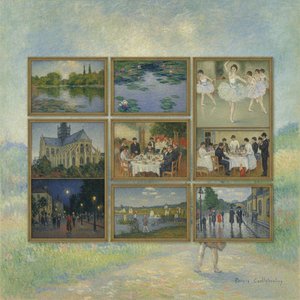 10 Iconic Impressionist Landscapes That Changed Art Forever
 Spray of Anemones
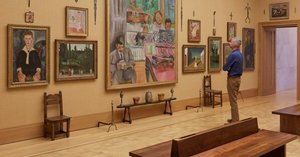 The Barnes Foundation


