Introduction
To step into the world of Roy Lichtenstein is to enter a vibrant, pulsating dialogue between high culture and the everyday pulse of the street. It is an invitation to look closer at the things we often overlook—the glossy sheen of a comic book panel, the bold geometry of an advertisement, and the dramatic tension found in a single, stylized tear. As we prepare to journey through his top 25 masterpieces , we are not merely looking at paintings; we are witnessing the moment when the boundaries of fine art were irrevocably shattered by the aesthetics of mass media.
Emerging from the shadows of Abstract Expressionism in mid-century Manhattan, Lichtenstein performed a radical act of artistic alchemy. He took the "low" language of pulp fiction and commercial printing—characterized by the iconic Ben-Day dots and thick, unapologetic outlines—and elevated it to the hallowed halls of the gallery. His work captured the zeitgeist of an era defined by burgeoning consumerism and a new, visual literacy shaped by television and print media. He did not simply imitate the comic strip; he interrogated its emotional depth, finding profound human drama within the mechanical precision of a printed dot.
Today, these works remain strikingly relevant, serving as a mirror to our own hyper-visual, image-saturated age. In an era of digital screens and instant iconography, Lichtenstein’s exploration of how we consume symbols and stories feels more prophetic than ever. His ability to find beauty in the industrial and the mass-produced continues to challenge our perceptions of authenticity and authorship.
In the following curation, we will traverse the evolution of a visionary. From his early, transformative experiments to his most celebrated, large-scale icons, each piece on this list represents a milestone in the Pop Art movement. We invite you to rediscover the brilliance of Lichtenstein—a master who taught us that even the most commonplace image can hold the weight of a masterpiece.
Whaam! - Roy Lichtenstein
 Whaam! - Roy Lichtenstein
In the pantheon of twentieth-century icons, Whaam! stands as a profound distillation of mid-century tension and the stylized detachment of the media age. As one of the most significant entries in our collection of the top 25 artworks of Roy Lichtenstein , this 1963 masterpiece transcends mere comic book appropriation; it is a sophisticated interrogation of how we consume violence through a flattened, graphic lens. The explosive interplay of primary reds and yellows against stark, heavy black outlines creates a visual rhythm that is both arresting and clinical.
Lichtenstein’s meticulous use of the Ben-Day dot system —a technique we celebrate in our premium hand-painted oil reproductions—transforms a scene of aerial combat into a structured, almost mathematical composition. This work invites us to reflect on the boundary between high art and mass culture, questioning whether the beauty of form can ever truly mask the brutality of its subject. For the discerning collector or interior designer, integrating such a powerful cultural touchstone into a modern space creates a timeless dialogue between historical gravity and contemporary aesthetic boldness.
Drowning girl - Roy Lichtenstein
 Drowning girl - Roy Lichtenstein
Imagine standing before a canvas where the boundary between high art and mass media dissolves into a single, breathless moment of cinematic despair. In Drowning Girl (1963), Roy Lichtenstein captures the peak of romantic melodrama, freezing a fragment of a comic strip in a state of eternal, vibrant tension. The composition is dominated by the striking contrast of deep, primary blues and the stark, rhythmic precision of Ben-Day dots, which lend a mechanical yet tactile texture to the woman's distressed features.
As you observe the swirling, turbulent patterns of the water surrounding her, the atmosphere feels both intensely personal and strikingly detached. The bold, black outlines and the sharp, graphic energy of her speech bubble— "I DON'T CARE! I'D RATHER SINK—THAN CALL BRAD FOR HELP!" —create a powerful visual rhythm. For the discerning collector or interior designer, this masterpiece offers more than just a nod to Pop Art history; its fearless use of color and graphic strength provides a sophisticated focal point that injects a sense of narrative drama and modern edge into any curated space.
Girl with ball - Roy Lichtenstein
 Girl with ball - Roy Lichtenstein
In Girl with Ball by Roy Lichtenstein, the radiant, sun-drenched yellow of the background serves as a profound emotional anchor, instantly evoking the warmth and boundless energy of a mid-century summer. This vibrant hue does more than just illuminate the canvas; it establishes an atmosphere of optimism and leisure that is quintessential to the Pop Art movement. As one of the top 25 artworks of Roy Lichtenstein , this piece demonstrates his masterful ability to manipulate a high-contrast palette—pairing bold navy blues and striking reds against flat, graphic fields of color—to transform a simple advertisement into a sophisticated icon of modern culture.
For the discerning interior designer or collector, integrating such a dynamic work into a contemporary space offers unparalleled opportunities for curation. The painting’s energetic color scheme can serve as a focal point in a sunlit dining room, providing a spirited counterpoint to minimalist decor, or it can anchor the lighting of a modern living area by introducing a sense of playful, structured light. It is a masterful study in how Pop Art masterpieces can inject both historical depth and a vibrant, rhythmic pulse into the most refined architectural environments.
Torpedo los - Roy Lichtenstein
 Torpedo los - Roy Lichtenstein
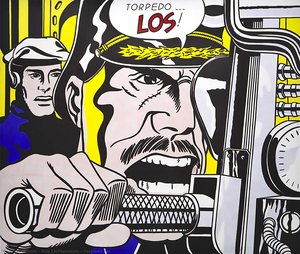
Imagine the sudden, sharp intake of breath during a moment of high-stakes tension—the silent, heavy pressure of the deep sea interrupted by a single, commanding shout. In Torpedo...Los! , Roy Lichtenstein captures this precise pulse of adrenaline. Created in 1963, this masterpiece serves as a visceral window into the cultural anxieties of the Cold War era, translating the cinematic drama of naval warfare into the iconic language of Pop Art.
The work earns its place among the top 20 artworks of Roy Lichtenstein through its brilliant technical execution. Using his signature Ben-Day dots and thick, graphic outlines, Lichtenstein elevates a comic-strip fragment into a profound exploration of perception and heroism. The saturated primary colors and the urgent command within the speech bubble create a rhythmic, visual energy that is impossible to ignore. Beyond the historical spectacle, such a piece brings a commanding, intellectual vitality to a modern interior, reminding us how the boldest fragments of popular culture can be transformed into timeless anchors of sophisticated design.
Roto Broil - Roy Lichtenstein
 Roto Broil - Roy Lichtenstein
In the pantheon of the top 25 artworks of Roy Lichtenstein , Roto Broil (1961) stands as a profound interrogation of the boundary between domesticity and high art. This piece serves as a cornerstone of his early Pop Art evolution, where the mundane—a vintage electric rotisserie oven—is elevated to an iconic status through a striking, graphic vocabulary. The composition is anchored by a vibrant, saturated red background that pushes the stark white appliance toward the viewer, demanding immediate attention.
Lichtenstein employs a meticulous, almost mechanical precision, utilizing bold black outlines and simplified geometric forms that mirror the industrial aesthetics of mid-century consumerism. There is a surreal, playful tension in how he renders this kitchen object; it is both a celebration of technological progress and a witty commentary on the banality of mass-produced goods. In contemporary interior curation, the work’s high-contrast palette and clean, pop-inspired lines offer a timeless energy, making it a sophisticated focal point for modern spaces that value bold, cultural storytelling.
Blam - Roy Lichtenstein
 Blam - Roy Lichtenstein
In the pantheon of twentieth-century icons, Blam stands as a visceral testament to the explosive energy of the Pop Art movement. Created in 1962, this masterpiece captures the precise moment where mass media meets high art, utilizing the mechanical language of comic strips to interrogate our fascination with spectacle and chaos. Through the meticulous application of Ben-Day dots and a saturated, primary palette, Lichtenstein transforms a scene of destruction—an aircraft engulfed in flames—into a structured, graphic symphony.
As one of the top 25 artworks of Roy Lichtenstein , Blam earns its prestige by challenging the boundaries between "low" commercial illustration and "high" fine art. It forces us to reflect on how modern society consumes violence as entertainment, rendered with a detached, almost clinical beauty. For the discerning collector or interior designer, this piece offers more than mere decoration; it provides a bold, architectural focal point. Its rhythmic lines and intense energy invite a timeless conversation between historical rebellion and contemporary sophistication, making it an essential cornerstone for any curated collection of modern masterpieces.
Hey you - (2402193) - Roy Lichtenstein
 Hey you - (2402193) - Roy Lichtenstein
What story does the confrontational gaze of Hey you - (2402193) by Roy Lichtenstein tell us about our relationship with mass media? Emerging from the vibrant, consumer-driven pulse of mid-century America, this masterpiece stands as a pillar in our collection of the top 25 artworks of Roy Lichtenstein . It captures a moment where the boundary between high art and comic book aesthetics dissolves, utilizing the iconic Ben-Day dots and a striking palette of pink, black, and vivid red-orange to command attention.
The piece functions as more than just a graphic statement; it is an invitation to engage. The central, pointing hand acts as a powerful symbol of accusation or invitation, pulling the viewer into a direct dialogue. For the discerning collector or interior designer, integrating such a bold, Pop Art icon into a modern space offers a curated escape into a world of historical significance and visual energy. It transforms a room from a mere living space into a sophisticated gallery, evoking the fearless spirit of the 1960s art revolution.
Untitled Roy Lichtenstein ^ Gian Franco Gorgoni (1988) - Roy Lichtenstein
 Untitled Roy Lichtenstein ^ Gian Franco Gorgoni (1988) - Roy Lichtenstein
Imagine standing at the edge of a twilight shore, where the boundary between reality and dream dissolves into the rhythmic pulse of the tide. In Untitled Roy Lichtenstein ^ Gian Franco Gorgoni (1988) , we encounter a profound moment of solitude: a silhouetted rider traversing a beachscape under a sky caught in a state of beautiful fragmentation. This work captures the tension between the stillness of a journey and the vibrant, chaotic energy of a sunset painted in strokes of electric blue, yellow, and pink.
As one of the most compelling entries in our exploration of the top 25 artworks of Roy Lichtenstein , this piece represents a masterful late-career evolution. It transcends his iconic Ben-Day dots to embrace a surreal fusion of photographic realism and abstract expressionism. By layering geometric disruptions over a monochromatic landscape, Lichtenstein invites us to contemplate themes of freedom and the ephemeral nature of time. Bringing such a dynamic, soulful piece into a modern interior does more than decorate a wall; it introduces a window of introspection, allowing the movement of light and color to breathe life and poetic depth into your daily environment.
Frightened - Roy Lichtenstein
 Frightened - Roy Lichtenstein
In the sudden, breathless moment captured within “Frightened,” Roy Lichtenstein invites us into a cinematic freeze-frame of mid-century psychological tension. The viewer is immediately arrested by the subject’s wide, searching eyes and the stark, dramatic contrast of her blonde waves against an electric, high-voltage yellow background. It is a masterpiece of Pop Art anxiety, where the visceral emotion of a comic-strip trope is elevated to the status of fine art through meticulous craftsmanship.
The brilliance of this 1964 work lies in its tactile illusion; Lichtenstein utilizes his signature Ben-Day dots to simulate the mechanical pulse of industrial printing, creating a surface that vibrates with nervous energy. The interplay of bold black outlines and primary tones offers a striking visual rhythm that commands attention. For the discerning collector or interior designer, integrating such a powerful piece into a modern space provides an unforgettable focal point—a sophisticated dialogue between mass-culture nostalgia and contemporary architectural elegance that inspires both reflection and bold creativity.
M-Maybe - Roy Lichtenstein
 M-Maybe - Roy Lichtenstein
In M-Maybe , there is a gaze that follows you—not with judgment, but with a profound, quiet understanding . As one of the most iconic entries in our collection of the top 25 artworks of Roy Lichtenstein, this 1965 masterpiece functions less like a portrait and more like a mirror for the modern soul. We see a blonde woman caught in a delicate moment of rationalization, her face etched with the subtle tension of anxiety and hope. Through his legendary use of Ben-Day dots and bold, primary color palettes, Lichtenstein transforms a simple comic-strip narrative into a sophisticated exploration of emotional vulnerability.
The vibrant reds and deep blues create a striking visual rhythm that commands attention in any curated space. When you invite this piece into your home, it does not merely watch you; it reminds you that even our most private uncertainties are part of a larger, shared human story. It is a masterful intersection of mass culture and high-art prestige, making the invisible complexities of modern romance visible through a lens of unmistakable Pop Art brilliance.
Modular painting with four panels, #1 - Roy Lichtenstein
 Modular painting with four panels, #1 - Roy Lichtenstein
In Modular Painting with Four Panels, #1 , the lines of Roy Lichtenstein aren’t merely drawn; they are choreographed . This is not a simple composition; it is a dance frozen in time , where primary yellows and deep blues pulse against stark black and white. Each of the four panels acts as a rhythmic beat, creating a visual symphony of concentric circles that challenge our very perception of unity and fragmentation.
As you stand before this masterpiece, you witness the intersection of Pop Art energy and Minimalist precision. The way the geometric arcs overlap creates an optical vibration, a sense of movement that makes the flat planes of color feel alive with depth. It is a profound exploration of how discrete units can coalesce into a singular, breathtaking harmony. What if your own walls could breathe rhythm ? This work serves as a testament to Lichtenstein's ability to transform the language of commercial printing into a high-end, intellectual experience that makes even the most complex chaos feel like perfect, structured harmony.
Baked Potato - Roy Lichtenstein
 Baked Potato - Roy Lichtenstein
Imagine standing before a canvas where the mundane is suddenly elevated to the monumental. There is a striking, quiet tension in the air as you encounter Baked Potato , a work that captures the precise moment when the everyday object is stripped of its domesticity and transformed into a vibrant icon of modern thought. Created in 1962, this piece embodies the revolutionary spirit of the Pop Art movement, where Roy Lichtenstein challenged the boundaries between high culture and mass-produced imagery.
This masterpiece earns its place among the top 25 artworks of Roy Lichtenstein through its masterful use of visual language. The luminous yellow center radiates against a deep, commanding blue, while his signature Ben-Day dots create an illusionistic texture that mimics the pulse of commercial printing. It is more than a study of color; it is a profound interrogation of perception. Bringing such a bold, graphic energy into a contemporary space does more than decorate a wall—it invites a playful, intellectual dialogue, infusing a modern interior with the transformative power of historical innovation and visual clarity.
Red Painting (Brushstroke) - Roy Lichtenstein
 Red Painting (Brushstroke) - Roy Lichtenstein
In Red Painting (Brushstroke) , Roy Lichtenstein orchestrates a masterful play of visual tension that transcends mere abstraction. While the work lacks a traditional light source, it achieves a profound sense of luminosity through the rhythmic interplay of vibrant red stripes against stark white and deep black accents. The way the crimson hues seem to pulse against the surrounding orange and white creates a simulated chiaroscuro, where the 'light' emerges from the high-contrast graphic boundaries rather than a single directional glow. This sophisticated manipulation of color intensity is precisely what secured its place among the top 25 artworks of Roy Lichtenstein .
By deconstructing the very essence of an expressive gesture into a structured, mechanical arrangement, Lichtenstein invites us to witness the memory of a brushstroke through a modern, polished lens. When reproduced as a hand-painted oil reproduction , the tactile depth of the red pigments and the crispness of the black lines bring a sense of quiet prestige and architectural energy to any contemporary space, offering a bold, luxurious focal point that commands the room's atmosphere.
Sinking Sun - Roy Lichtenstein
 Sinking Sun - Roy Lichtenstein
In Sinking Sun (1964), the lines of Roy Lichtenstein are not merely drawn; they are choreographed . This is not a simple landscape; it is a dance frozen in time , where the heavy, mechanical precision of Ben-Day dots meets the ephemeral beauty of twilight. As part of our curated exploration into the top 25 artworks of Roy Lichtenstein, this piece stands as a profound meditation on transition and modern anxiety.
Lichtenstein masterfully utilizes the visual language of mass media—vibrant yellows, deep oranges, and soft pinks—to render a sunset that feels both cinematic and strikingly flat. The way the sun descends behind stylized clouds creates a rhythmic tension, a pulse of color that mimics the halftone patterns of a comic strip. What if your living room could hold that same balance? What if your walls could breathe rhythm through the bold, graphic energy of Pop Art? In Sinking Sun , the artist transforms the fleeting end of a day into a permanent, iconic statement on the intersection of high art and popular culture.
Lemon and Apple - Roy Lichtenstein
 Lemon and Apple - Roy Lichtenstein
Acquiring Lemon and Apple by Roy Lichtenstein is an investment in a profound legacy of taste, offering discerning collectors a window into the late-career mastery of a Pop Art icon. As one of the top 25 artworks of Roy Lichtenstein, this 1981 piece exemplifies his ability to transmute the mundane into the monumental. The composition presents a striking visual dialogue: a vibrant, yellow-hued fruit juxtaposed with bold, rhythmic patterns that dance across the canvas. Through his signature use of Ben-Day dots, Lichtenstein creates a shimmering, mechanical texture that challenges our perception of depth and reality.
The painting’s market significance lies in its seamless fusion of commercial aesthetics and high-art intellect, making it a cornerstone for any serious collection. The interplay of saturated primary colors and clean, graphic lines provides an unparalleled aesthetic authority. For the modern connoisseur, a museum-quality reproduction of this masterpiece serves as a commanding focal point in luxury interiors, bringing the bold, sophisticated energy of Manhattan’s mid-century avant-garde into contemporary architectural spaces.
Pop - Roy Lichtenstein
 Pop - Roy Lichtenstein
To behold "Pop" by Roy Lichtenstein is to witness a rhythmic explosion of mid-century vitality, where the boundaries between commercial graphic design and fine art dissolve into a symphony of primary colors. At OriginalUniqueArt.com, our mission has always been to democratize such profound beauty, ensuring that the transformative power of the masters is accessible to every collector. This 1966 masterpiece earns its place in our Top 25 through its revolutionary use of Ben-Day dots , a technique that translates the mechanical language of comic books into a sophisticated, tactile experience of light and texture.
The work captures a kinetic energy, featuring a bold white 'P' bursting through crimson and cerulean spheres, mirroring the pulse of modern consumer culture. Its vibrant, high-contrast aesthetic serves as an unparalleled inspiration for contemporary interiors, offering a striking focal point that commands attention in any curated space. Through our meticulous, hand-painted oil reproductions, you can bring this iconic piece of Pop Art history into your own home or professional gallery, infusing your walls with the enduring, energetic spirit of a true visual revolution.
Wimpy (Tweet) - Roy Lichtenstein
 Wimpy (Tweet) - Roy Lichtenstein
To encounter Roy Lichtenstein’s 1961 masterpiece, "Wimpy (Tweet)," is to witness a profound psychological rupture captured through the clinical lens of Pop Art. The scene is jarring: a figure sprawled in distress, his very consciousness seemingly bursting under an invisible, overwhelming pressure. While the aesthetic borrows from the playful detachment of comic strips, there is a haunting, visceral depth to the composition. Lichtenstein utilizes his signature Ben-Day dots and bold, black outlines to create a flattened, graphic surface that paradoxically heightens the emotional tension of the subject's collapse.
The atmosphere is one of cosmic indifference; amidst the figure's distress, shimmering stars scatter across the background, creating an unsettling contrast between individual chaos and celestial stillness. This piece serves as a striking precursor to our modern era of digital saturation, reflecting the fragmentation of the human spirit in an age of constant stimuli. For the discerning collector, integrating such a provocative work into a curated space offers more than mere decoration; it provides a powerful, conversational centerpiece that invites deep reflection on the boundaries between mass media and mental well-being.
Yellow and green brushstrokes - Roy Lichtenstein
 Yellow and green brushstrokes - Roy Lichtenstein
There is a profound, rhythmic joy found in Yellow and Green Brushstrokes , a work that captures the vibrant pulse of mid-century optimism. In this 1966 masterpiece, Roy Lichtenstein invites us into a world where the organic meets the industrial; a stylized bird soars through a kinetic field of sun-drenched yellows and verdant greens. It is more than a mere study in color; it is an exploration of movement and the beauty found in the intersection of nature and mass media.
This piece earns its place among the top 20 artworks of Roy Lichtenstein through its masterful use of the Ben-Day dot technique, which transforms a simple subject into a sophisticated commentary on visual perception. The way the bold, graphic lines dance against the textured background creates an enduring emotional resonance that continues to captivate collectors today. At OriginalUniqueArt.com, we honor this legacy of precision and pop brilliance. Our hand-painted oil reproductions are meticulously crafted by skilled artists to preserve every intentional stroke and vibrant pigment, allowing you to bring the transformative energy of Lichtenstein’s iconic vision into your own curated space.
Coast Village - Roy Lichtenstein
 Coast Village - Roy Lichtenstein
To encounter Coast Village by Roy Lichtenstein is to witness a masterclass in the art of visual distillation, an experience reserved for those who appreciate the profound beauty found within simplicity. As one of the most captivating entries in our curated selection of the top 25 artworks of Roy Lichtenstein, this 1987 masterpiece transcends mere landscape painting to become a rhythmic exploration of color and form. Lichtenstein invites us into a sun-drenched seaside sanctuary, where the tranquil expanse of water and bobbing boats are rendered through his signature, revolutionary use of Ben-Day dots .
The brilliance of this work lies in its ability to marry the mechanical precision of commercial aesthetics with the breezy, organic spirit of a summer day. For the discerning collector or interior designer, Coast Village offers an unparalleled graphic power; its bold outlines and vibrant palette provide a sophisticated focal point that breathes modern energy into luxury interiors. It is not merely a depiction of a coastal vista, but a timeless dialogue between industrial texture and natural serenity, securing its legacy as a cornerstone of Pop Art history.
Still Life with goldfish - Roy Lichtenstein
 Still Life with goldfish - Roy Lichtenstein
In Still Life with Goldfish (1974), Roy Lichtenstein achieves a profound synthesis between the ephemeral nature of Pop Art and the heavy symbolism of the classical vanitas tradition. This masterpiece earns its place among the top 25 artworks of Roy Lichtenstein by masterfully recontextualizing mundane objects—a crimson-filled cup, vibrant apples, and delicate goldfish—through his iconic Ben-Day dot technique. The painting transcends mere commercial aesthetic; it invites a meditation on mortality, where the bold, primary colors serve as a striking contrast to the underlying themes of time and decay.
The visual rhythm created by Lichtenstein’s precision allows the viewer to experience a dialogue between mass media imagery and deep philosophical inquiry. For the discerning collector or interior designer, this work offers more than just a bold graphic statement; it provides a sophisticated focal point that bridges the gap between mid-century modernism and contemporary elegance. Integrating such a piece into a curated collection invites a timeless conversation about perception, beauty, and the enduring power of the everyday transformed into the extraordinary.
Thinking of him - Roy Lichtenstein
 Thinking of him - Roy Lichtenstein
In the pantheon of 20th-century masterpieces, “Thinking of Him” stands as a profound testament to Roy Lichtenstein’s ability to find monumental emotion within the most mundane fragments of popular culture. This 1963 work earns its place among the top 25 artworks of Roy Lichtenstein by masterfully bridging the gap between the mechanical coldness of commercial printing and the raw, visceral ache of human longing. Through his iconic use of Ben-Day dots and a vibrant, primary palette, Lichtenstein transforms a comic-strip aesthetic into a psychological landscape where a single tear carries the weight of an entire narrative.
The painting invites us to reflect on how mass-produced imagery can mirror our most private vulnerabilities. The tight cropping and the symbolic thought bubble create an intimate window into a moment of profound introspection, making it a timeless piece for any curated collection. For the discerning collector or interior designer, integrating such a graphic, high-impact work into a modern space offers a sophisticated dialogue between mid-century pop culture and contemporary elegance, proving that even the most stylized art can touch the very soul of humanity.
Varoom - Roy Lichtenstein
 Varoom - Roy Lichtenstein
To encounter Varoom by Roy Lichtenstein is to witness the precise moment where the energy of a comic book explosion meets the refined intentionality of fine art. Created in 1963, this seminal work stands as a vibrant testament to the Pop Art movement, capturing a sensory burst of primary reds, yellows, and blues that radiate from a central, sun-like fracture. As you observe the meticulous application of Ben-Day dots—those iconic, rhythmic patterns that mimic industrial printing—you feel the pulse of mid-century consumer culture vibrating through the canvas.
The composition is a masterclass in graphic tension; thick, black outlines and sharp, geometric shards create a sense of kinetic movement, while the bold, onomatopoeic lettering "VAROOM!" anchors the chaos. Owning a piece of this magnitude is not merely an acquisition; it is an inheritance of a visual revolution. At OriginalUniqueArt, we invite you to bring this lineage of taste into your own space, where the explosive legacy of Lichtenstein’s most recognizable onomatopoeic works can transform a modern wall into a curated gallery of cultural history.
Red barn II - Roy Lichtenstein
 Red barn II - Roy Lichtenstein
In Red Barn II , Roy Lichtenstein achieves a profound stillness that belies the high-energy pulse of the Pop Art movement. This 1969 masterpiece serves as a striking meditation on the intersection of rural solitude and industrial precision. The composition presents a vibrant red barn, its bold pigment acting as a warm anchor against a stark, snow-laden landscape of towering mountains and crisp white light. Through his legendary use of Ben-Day dots , Lichtenstein transforms a simple winter scene into a sophisticated exploration of texture and mechanical reproduction.
The painting’s brilliance lies in its ability to elevate the mundane—a chimney, a window, even a solitary fire hydrant—into icons of modern visual language. As we navigate the top 2 supersets of Roy Lichtenstein , this work stands out for its quiet prestige; it captures a sense of frozen time that resonates deeply within contemporary minimalist interiors. It remains a vital cultural talking point, reminding us how the aesthetics of mass media can be recontextualized to evoke deep, atmospheric emotion and architectural grandeur.
Cathedral -6 State II - Roy Lichtenstein
 Cathedral -6 State II - Roy Lichtenstein
In Cathedral -6 State II , Roy Lichtenstein orchestrates a breathtaking dialogue between architectural grandeur and the rhythmic pulse of mass media. Created in 1969, this masterpiece stands as a cornerstone in our collection of the top 25 artworks of Roy Lichtenstein, representing the moment where high art collided with the industrial aesthetics of the twentieth century. The composition is strikingly visceral; a solitary figure is cast against a vibrant, pulsating red backdrop, defined by the meticulous application of Ben-Day dots that mimic the halftone printing of vintage comic books.
This work transcends mere pop culture commentary to offer a profound exploration of scale and presence. For the modern connoisseur, the painting’s bold primary tones and graphic precision provide an unparalleled energy, making it a transformative statement piece for contemporary interiors seeking a sophisticated, avant-garde edge. By stripping away the heavy emotionalism of Abstract Expressionism, Lichtenstein invites us to find beauty in the mechanical, leaving a legacy of visual clarity that continues to influence modern graphic design and architectural aesthetics today.
Forest scene - Roy Lichtenstein
 Forest scene - Roy Lichtenstein
In Forest Scene , a profound and commanding cerulean blue anchors the composition, casting a serene yet intellectually sharp mood over the entire landscape. This dominant shade does more than merely depict the sky or shadows; it establishes a sense of quiet prestige, cooling the vibrant energy of the primary reds and crisp whites. Lichtenstein’s mastery lies in this precise calibration of color—using his signature Ben-Day dot aesthetic to transform a woodland setting into a rhythmic, graphic symphony that demands attention.
As one of the top 25 artworks of Roy Lichtenstein , this piece serves as an extraordinary tool for the discerning interior designer. The painting’s structured palette of primary hues and bold black outlines can be used to curate a modern living space with high-contrast elegance or to provide a sophisticated, cinematic focal point in a contemporary dining room. By integrating such a powerful interplay of light and flat color, you introduce an atmosphere of curated modernity that bridges the gap between industrial precision and organic grace.
Conclusion
To traverse the visual landscape of Roy Lichtenstein is to witness a profound dialogue between the mundane and the monumental. His works do more than merely capture the aesthetic of an era; they invite us to reconsider the very fabric of our perception, finding extraordinary depth within the bold lines and vibrant Ben-Day dots of popular culture. As we conclude this journey through his most iconic masterpieces, we are reminded that these paintings are not static relics confined to museum corridors, but living preslaments of human ingenuity that continue to pulse with contemporary relevance.
There is a unique grace in how Lichtenstein’s precision meets the raw emotion of the human experience—a tension held within every meticulously placed dot and saturated primary hue. We invite you to move beyond mere observation and consider the transformative power of bringing such energy into your own sanctuary. Whether through a large-scale canvas that anchors a modern living space or a curated selection of prints that add a rhythmic pulse to a study, these works serve as daily inspirations, reminding us of the beauty found in the intersection of art and everyday life.
Allowing his vision to reside within your walls is an act of celebrating the enduring spirit of creativity. We invite you to explore the full collection and discover how the bold, unapologetic language of Pop Art can breathe new life, texture, and a sense of historical wonder into your personal environment.