Mastering Digital Collage: An Expert Guide to Layering Art, Texture, and Imagination
Elevate your digital artistry with our expert guide to mastering collage. Learn professional techniques for layering textures, blending imagery, and creating profound visual narratives through advanced digital composition and modern creative workflows.
The Foundations of Digital Layering: Understanding Composition and Depth
To embark on the journey of digital collage is to step into a realm where the boundaries between reality and imagination dissolve through the strategic application of depth. For the aspiring art student, understanding composition is not merely about placing objects on a canvas; it is about orchestrating a visual hierarchy that guides the viewer's eye through a curated experience. At its core, digital layering serves as the architectural blueprint for this movement. By utilizing various levels of opacity and scale, an artist can create a sense of atmospheric perspective, making certain elements appear to recumbent in the distant haze while others command immediate attention in the foreground. This structural depth mimics the physical world, yet allows for the impossible—the juxtaposition of a microscopic texture against a celestial nebula.
The true mastery of this medium lies in the subtle manipulation of light and shadow across these layers. When we consider the historical precedents of collage, such as the experimental works seen in Dieter Rot’s Interface 27-28, we see how the fragmentation of faces and manipulated imagery can evoke a profound sense of psychological complexity. In the digital workspace, this is achieved by ensuring that each layer contributes to a cohesive tonal range. A composition without thoughtful layering feels flat and disconnected; however, when an artist masters the interplay between overlapping planes, they create a window into a multidimensional universe where every edge and shadow tells a story of connection or isolation.
Sourcing and Curating Elements: From Found Imagery to Custom Assets
The soul of a collage is found in its ingredients. For the digital creator, the process begins long before the first layer is placed, starting instead with the meticulous curation of visual assets. This stage requires an eye for both the mundane and the extraordinary, as the ability to find beauty in disparate sources defines the artist's unique voice. Whether one is scavenging through high-resolution archives, utilizing custom-painted textures, or repurposing historical fragments, the selection process must be intentional. The challenge lies in finding elements that possess a shared aesthetic DNA—a commonality in grain, color temperature, or lighting direction—that allows them to coexist within a single, unified vision.
As students progress, they often move beyond simple found imagery toward the creation of bespoke assets. This might involve photographing organic textures, such as decaying bark or rippling water, to serve as digital overlays that provide a tactile quality to a smooth digital render. The integration of these custom elements allows for a level of control that transcends traditional methods. By treating every piece of imagery as a modular component of a larger narrative, the artist can build worlds that feel both grounded in reality and untethered from it. This curation is an act of storytelling in itself, where the choice of a single vintage portrait or a modern geometric shape can shift the entire emotional resonance of the final work.
Mastering Texture and Blending: Techniques for Seamless Visual Integration
One of the most significant hurdles in digital collage is overcoming the "cut-and-paste" aesthetic that can plague amateur compositions. To achieve professional-grade results, an artist must master the alchemy of blending and texture integration. The goal is to erase the digital seams, making it appear as though the disparate elements were always part of the same physical reality. This requires a sophisticated understanding of masking, brushwork, and luminosity. By using soft-edged brushes and subtle gradient masks, one can transition between layers with a grace that mimics the natural diffusion of light.
Furthermore, the application of global textures is essential for unifying the composition. A well-placed grain overlay or a subtle paper texture applied across all layers can act as a visual "glue," harmonizing the different resolutions and color profiles of various source images. We see this principle reflected in the works of artists like Jakub Jernajczyk, where digital precision meets an almost organic complexity. By experimenting with blending modes—such as Multiply for deepening shadows or Screen for ethereal highlights—the artist can manipulate how light interacts between layers, creating a sense of physical presence and tactile depth that invites the viewer to touch the screen.
Conceptualizing the Narrative: Using Collage to Even Complex Stories
Beyond the technical prowess of masking and blending lies the true purpose of collage: the construction of narrative. Digital collage offers an unparalleled toolkit for exploring themes of identity, transformation, and memory. Because the medium is inherently additive, it allows for the layering of meaning upon meaning. An artist might use a portrait as a base, then layer fragments of maps, botanical illustrations, or architectural blueprints to represent the internal landscape of a character's mind. This technique of visual metaphor enables the creation of works that are intellectually stimulating and emotionally resonant.
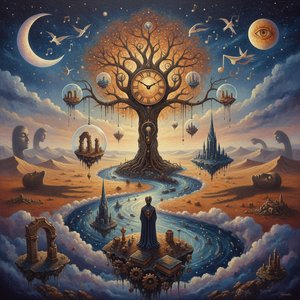
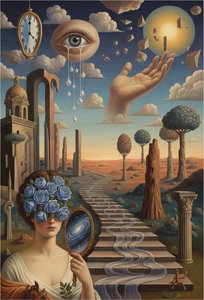
Drawing inspiration from Surrealist compositions, such as those by Oscar Dominguez, students can learn to use juxtaposition to provoke thought. The placement of an unexpected object within a familiar setting creates a cognitive dissonance that forces the viewer to question their perceptions. This is where the artist moves from being a technician to being a philosopher. By carefully selecting symbols and arranging them in a way that defies traditional logic, the collage becomes a vessel for complex human experiences—exploring how we are shaped by our environments, our histories, and our dreams.
Advanced Workflow Strategies: Managing Complexity in High-Resolution Compositions
As compositions grow in complexity, the digital workspace can quickly become overwhelming. Managing hundreds of layers, adjustment layers, and smart objects requires a disciplined workflow to maintain both creative flow and technical integrity. For the professional student, organization is as vital as imagination. Implementing a structured layer hierarchy—grouping elements by depth, lighting, or subject matter—is essential for navigating high-resolution projects that demand extreme detail. This systematic approach prevents the loss of critical information and allows for non-destructive editing, ensuring that every creative decision can be revisited and refined without compromising the entire piece.
Advanced strategies also include the use of smart objects to preserve the original quality of assets, allowing for scaling and transformations without pixelation. Furthermore, mastering color grading through global adjustment layers ensures that the final output maintains a consistent mood across all elements. This level of technical management is what separates a fleeting digital experiment from a museum-quality masterpiece. By treating the digital canvas with the same rigor one would apply to a physical oil painting—considering everything from tonal range to the preservation of fine detail—the artist ensures their work possesses the longevity and impact required for professional exhibition.
The Future of Assemblage: Integrating AI and Traditional Artistry
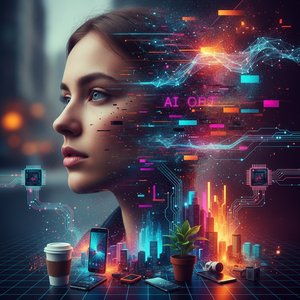
We stand at a fascinating crossroads where the ancient art of assemblage meets the cutting edge of artificial intelligence. The emergence of AI-driven tools offers new ways to reconstruct photos into styles like Cubism or Pop Art, providing a powerful engine for rapid prototyping and stylistic exploration. However, the true future of digital collage does not lie in replacing human creativity with algorithms, but in the symbiotic integration of both. The most compelling modern works are those that use AI to generate complex textures or unexpected forms, which are then meticulously curated and refined by the artist's hand.
This intersection of technology and tradition celebrates the enduring power of human vision. Just as OriginalUniqueArt.com bridges the gap between historical masterpieces and modern audiences through high-quality reproductions, the digital collage artist can bridge the gap between the digital and the physical. The ability to take a digitally manipulated concept and realize it as a hand-painted oil reproduction on canvas represents the ultimate evolution of the medium. As we move forward, the mastery of digital collage will continue to be defined by our ability to use new tools to deepen our connection to the timeless principles of art: composition, texture, and the profound human need to tell stories through imagery.
Elevate your lifestyle with high-impact glitch & digital art. Transform ordinary photos into avant-garde AI masterpieces, then watch them become hand-painted oil treasures. Discover the ultimate fusion of tech and tradition for your luxury home collection at OriginalUniqueArt.
Embark on a sophisticated journey through Surrealist dreamscapes. Explore the profound symbolism of masters like Dalí and discover how to curate breathtaking, museum-quality surrealist art for your private collection with expert guidance.
Elevate your digital collection with OriginalUniqueArt. Transform NFTs and digital art into museum-quality, hand-painted oil masterpieces. Experience the luxury of bespoke craftsmanship, professional artist commissions, and a timeless legacy delivered worldwide with our 100% satisfaction guarantee.
Elevate your digital presence with OriginalUniqueArt. Transform selfies into dramatic Baroque & Romanticism masterpieces. Using AI-driven style transfer and artisan oil painting expertise, we turn personal photos into museum-quality, hand-painted heirlooms for the discerning collector.
Dyk ned i surrealismens fascinerende verden med 10 ikoniske malerier fra Dalí, Magritte og Miró. Lær historierne bag disse mesterværker og find inspiration til din boligindretning hos OriginalUniqueArt – køb museumskvalitets kunsttryk online.