Expressionism Unveiled: How Emotion and Color Redefined Modern Art
Explore the profound impact of Expressionism. From Edvard Munch to Ernst Ludwig Kirchner, discover how raw emotion and bold color redefined modern art through an expert historical lens.
The Subjective Lens: Defining Expressionism and the Rejection of Naturalism Expressionism Expressionism is a modernist movement, initially in poetry and painting, originating in Northern Europe around the beginning of the 20th century. Its typical tr...
To gaze upon the masterpieces of the Expressionist era is to step into a world ablaze with inner turmoil, raw emotion, and a defiant rejection of conventional beauty. Unlike the Impressionists, who sought to capture the fleeting dance of light upon a surface, or the Realists, who aimed for an objective depiction of the external world, the Expressionists turned their gaze inward. This modernist movement, emerging primarily in Northern Europe at the dawn of the 20th century, was characterized by a radical departure from ocularcentrism. It presented the world solely through a subjective lens, often distorting reality to reveal a deeper, more unsettling truth.
The essence of this movement lies in its refusal to merely represent; it seeks to become the emotion itself. Through fractured forms and exaggerated perspectives, artists like Alexej von Jawlensky moved beyond facial features to create profound meditations on the human condition. In works such as Head of an Eland Man with Beard, we see a rejection of academic conventions in favor of conveying what was felt rather than merely what was seen. This shift from the external to the internal fundamentally altered the trajectory of modern art, establishing a new vocabulary where the artist's psyche dictates the composition, much like the way a composer uses dissonance to evoke tension.
A World Ablaze with Turmoil: The Socio-Political Roots of the Movement
Introduction To step into the world of Ernst Ludwig Kirchner is to enter a landscape of raw, unshielded emotion, where the boundaries between the internal psyche and the external world dissolve into jagged lines and electric colors. His work does not...
The Expressionist movement was not born in a vacuum; it was a visceral response to a rapidly changing world grappling with the seismic shifts of industrialization and urbanization. In the tumultuous years leading up to and following World War I, artists found themselves living through an era of profound social anxiety and alienation. The rapid expansion of cities and the mechanical rhythm of new technologies created a sense of dislocation, a feeling that the human spirit was being lost within the gears of progress.
This period of intense spiritual yearning and social upheaval is palpable in the works of the Die Brücke group, particularly through the eyes of Ernst Ludwig Kirchner. His canvases vibrate with the nervous energy of an era in flux, capturing the sharp edges of Berlin’s street life and the psychological tension of urban existence. The movement served as a collective spirit for those seeking to bridge the gap between tradition and the unsettling truths of modern existence. It was a period where art became a vessel for the anxieties of a generation, reflecting a world that felt increasingly chaotic and fragmented.
Chromatic Agony: The Psychological Power of Color and Distorted Form
Introduction to the Artist and his Work Edvard Munch (1863-1944) was a Norwegian painter, printmaker, and sculptor who is best known for his expressionist works. He is considered one of the pioneers of the movement, which emphasized emotional intensi...
Central to the Expressionist's arsenal was the revolutionary use of color and form. Abandoning naturalistic palettes, these artists employed bold, often jarring hues to communicate feelings of despair, ecstasy, or spiritual unrest. This was not merely an aesthetic choice but a psychological one, rooted in an early understanding of how color influences perception and emotion. The movement utilized color as a tool for emotional intensity, where a deep blue could signify profound isolation or a vibrant yellow could pulse with manic energy.
Consider the works of Edvard Munch, a pioneer who mastered this emotional intensity. In his 1923 work, Starry Night, Munch utilizes a rich blue palette to create depth and mystery, using expressive brushstrokes that add to the painting's haunting atmosphere. Similarly, the later engagement with Expressionist principles by artists like Roy Lichtenstein, in works such as Expressionist Head 3, demonstrates how bold contrasts and stark blues can distill the essence of modern anxiety. By distorting the human figure and utilizing non-naturalistic colors, Expressionists forced the viewer to confront the raw, unshielded reality of the internal psyche, making the canvas a site of profound psychological encounter.
Beyond the Canvas: Expressionist Echoes in Architecture and Cinema
Expressionist architecture was an architectural movement in Europe during the first decades of the 20th century in parallel with the expressionist visual and performing arts that especially developed and dominated in Germany. Brick Expressionism is a...
The spirit of Expressionism was far too potent to be contained solely within the frame of a painting; it bled into the very structures of European life. In architecture, the movement manifested through organic, flowing lines that eschewed rigid geometry, favoring instead forms that mirrored the raw energy of the era. A stunning example can be found in the Böttcherstraße Museums in Bremen, a masterpiece of Brick Expressionism where every textured facade tells a story of artistic rebellion. Here, the architecture does not simply house art; it participates in the emotional narrative of the space.
This visual language of distortion and fragmentation also found a powerful home in German Expressionist cinema. During the 1920s, films like The Cabinet of Dr. Caligari utilized wildly non-realistic, geometrically absurd angles and highly stylized set designs to reflect inner conflicts and madness. These cinematic works rejected realism in favor of a hyper-expressive performance of light and shadow, creating a dreamlike—or perhaps nightmarish—atmosphere that remains iconic. From the undulating surfaces of buildings to the jagged shadows on film sets, Expressionism redefined the visual landscape of the 20th century.
The Enduring Legacy: From German Masters to Contemporary Interpretations
Introduction To gaze upon these ten canvases is to step into a world ablaze with inner turmoil, raw emotion, and a defiant rejection of conventional beauty. These are not paintings that merely represent reality; they become it – fractured, distorted,...
Today, the legacy of Expressionism continues to resonate with a profound contemporary relevance. In an age still marked by uncertainty and emotional complexity, the movement's unflinching honesty serves as a reminder that vulnerability is not weakness and that pain can be a powerful catalyst for creation. The techniques developed by these masters—the use of impasto, the manipulation of color psychology, and the embrace of distortion—continue to influence how we interpret the world around us.
For those who wish to bring this historical intensity into their own lives, the beauty of Expressionism lies in its tactile depth. While a digital print may capture the image, it is the hand-painted oil reproduction that captures the soul. At OriginalUniqueArt.com, we celebrate this tradition by offering museum-quality reproductions that honor the visible brushstrokes and deep tonal ranges of the masters. Whether you are an art student studying the jagged lines of Kirchner or a collector seeking the psychological depth of Munch, our artists meticulously recreate these masterpieces on 100% cotton canvas, ensuring that the emotional weight of the original is preserved for generations to come.
Explore the profound world of Edvard Munch, pioneer of Expressionism. Discover the origins of 'The Scream' & his haunting depictions of anxiety, mortality, and love. Expert analysis & high-quality reproductions at OriginalUniqueArt.
Immerse yourself in the raw emotion of German Expressionism. Explore 25 iconic masterpieces by Ernst Ludwig Kirchner, from bold street scenes to vibrant landscapes. Find inspiration for museum-quality art reproductions and decor. Discover all masterpieces on OriginalUniqueArt.com.
Explore the profound emotional depth of Expressionist portraiture. From Edvard Munch to Francis Bacon, discover how masters used distortion and color to reveal inner truths. Learn about this pivotal movement and find museum-quality oil reproductions for your collection.
Master the use of Expressionism in hospitality design. Learn how bold colors and distorted forms create emotional impact in hotel interiors through expert guidance on sourcing high-quality, hand-painted reproductions and large-format custom commissions for professional decorators.
Explore 10 defining masterpieces of Romantic Realism! Discover Courbet, Millet & Daumier's powerful paintings—capturing emotion and social realities. Find museum-quality reproductions for your home at OriginalUniqueArt.com.

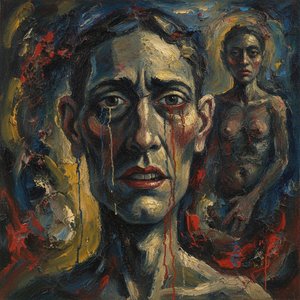 Beyond the Surface: The Raw Emotion and Subjective Truth of Expressionist Portraiture
 25 Must-See Masterpieces by German Expressionist Ernst Ludwig Kirchner
 02 Starry Night
 Expressionist architecture
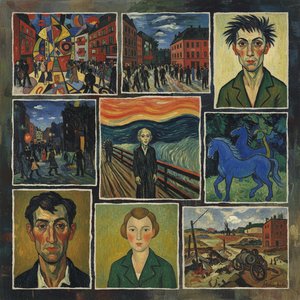 Expressionist Painting: 10 Masterpieces That Defined a Movement | OriginalUniqueArt


