--- title: Cubism - The Metropolitan Museum of Art author: Sabine Rewald url: https://www.metmuseum.org/essays/cubism hostname: metmuseum.org description: The Cubist painters rejected the inherited concept that art should copy nature, or that they sh...
The early twentieth century in Paris did not merely witness a change in style; it experienced a fundamental break with the Renaissance tradition of fixed perspective. For centuries, the canvas acted as a window, offering a single, stable vantage point that mimicked the human eye. However, around 1907, Pablo Picasso and Georges Braque began to dismantle this illusion. They rejected the idea that art should copy nature or rely on traditional modeling and foreshortening. Instead, they sought to emphasize the two-dimensional reality of the canvas itself. This shift was heavily informed by the late works of Paul Cézanne, whose approach to geometric forms and multiple viewpoints provided the structural blueprint for what would become Cubism.
The movement’s name arrived almost by accident, born from a critic's derisive remark regarding Braque’s 1908 landscapes at L’Estaque. By reducing houses and trees to "geometric schemas" or cubes, the critic Louis Vauxcelles inadvertently labeled a revolution. This period was characterized by an intense intellectual exchange in studios like the Bateau-Lavoir, where the boundaries between subject and space began to blur. The artists were not interested in a photographic likeness but in a more comprehensive understanding of objects, presenting them through various angles simultaneously to capture their true essence within a shallow, relief-like space.
Analytical Cubism: The Architecture of Deconstruction
Deconstructing Perception: An Exploration of Braque’s *Still Life II* Georges Braque's Still Life II is not merely a depiction of objects; it’s an intellectual and visual dismantling of how we perceive reality. Created during the fervent years of Cub...
As the movement matured into what is known as Analytical Cubism between 1910 and 1912, the fragmentation became more radical, often reaching a state of near-total abstraction. During this phase, also referred to as "hermetic" Cubism, Picasso and Braque dissected their subjects—often still lifes featuring musical instruments, bottles, or newspapers—into a complex web of overlapping planes. The palette was intentionally restricted, dominated by muted, monochromatic tones of brown, gray, and black. This lack of color served a specific purpose: it prevented the viewer from being distracted by emotional or atmospheric effects, forcing an intense focus on the structural logic of the composition.
In works such as Still Life II by Braque, one observes this intellectual dismantling in action. The subject is not merely depicted; it is analyzed. Recognizable elements dissolve into a rhythmic arrangement of facets and lines, creating a sense of controlled chaos. There is no single focal point to rest the eye; instead, the gaze wanders through a labyrinth of interlocking shapes. This technique mirrored the fragmented nature of modern consciousness, reflecting a world that was increasingly experienced through rapid movement and shifting perspectives.
Synthetic Cubism: Reassembling Reality through Texture and Collage
By 1912, the approach shifted from the analytical deconstruction of forms to the constructive logic of Synthetic Cubism. If the previous phase was about breaking things down, this era was about building them back up. The artists began to incorporate real-world elements directly onto the canvas, introducing the revolutionary technique of papiers collés. By pasting pieces of newspaper, patterned paper, or other textures into their compositions, Picasso and Braque swept away the final vestiges of three-dimensional illusionism.
This phase brought a newfound sense of color and simpler, broader shapes to the movement. The focus moved from the dissection of an object to the assembly of signs that suggest an object. A piece of newsprint or a specific graphic element could act as a shorthand for a café table or a street scene. This method introduced texture and pattern as fundamental structural components rather than mere decoration. It was a bold move toward a new reality, where the artwork became an autonomous object constructed from disparate, tangible parts, paving the way for much of the abstract art that followed.
Expanding the Geometric Language: Beyond Picasso and Braque
A Pioneer of American Abstraction: The Life and Art of Paul Kelpe Paul Kelpe, born in Minden, Germany in 1902, emerged as a pivotal figure in the development of abstract art within the United States. His journey, spanning both continents and artistic...
While the partnership between Picasso and Braque remains the movement's cornerstone, Cubism’s formal language was rapidly adopted and evolved by a wider circle of avant-garde painters. Artists like Juan Gris brought a more structured, almost mathematical clarity to the style, while Fernand Léger and Robert Delaunay explored the intersection of geometry with the dynamism of modern machinery and light. This expansion ensured that the principles of fragmentation and multiple perspectives would permeate various corners of the twentieth-century art world, influencing everything from Futurism to Constructivism.
The influence of this geometric rigor extended far beyond the initial Parisian circle. In the United States, artists like Paul Kelpe utilized these lessons to move toward a more disciplined, non-objective abstraction. Unlike the chaotic energy found in some later movements, Kelpe’s work focused on the precise organization of forms, treating the canvas as a site for structural clarity rather than spontaneous expression. This evolution demonstrates how the initial Cubist impulse to fragment reality provided the essential vocabulary for the development of pure geometric abstraction.
The Lineage of Abstraction: From Fragmentation to Pure Form
Helen Gerardia: Architect of Negative Space Born in Ekaterinoslav, Russia – now Dnipropetrovsk – in 1903, Helen Gerardia’s artistic journey was one shaped by both a rich cultural heritage and the transformative experiences of immigration. Her early l...
The legacy of Cubism is visible in the very DNA of modern abstraction. The movement’s rejection of representational accuracy opened a door that could never be closed, leading directly to the development of movements like Suprematism and De Stijl. The fascination with geometric reduction can be traced through the works of Piet Mondrian, whose rigorous grids sought a universal harmony, to the more fluid, color-driven explorations of later artists. Even the concept of "negative space" found its footing in this era, as seen in the later works of Helen Gerardia, who used geometric precision to explore the relationship between positive and negative areas.
This lineage also encompasses the tension between "cold" geometric abstraction and the more emotive "lyrical" abstraction. While the latter, emerging post-World War II, sought a more personal and painterly expression, it remained deeply indebted to the formal breakthroughs of the Cubists. The ability to manipulate space, weight, and rhythm without relying on a literal subject remains one of the most significant contributions of this era to the history of human creativity.
Curating the Fragmented Aesthetic in Modern Collections
A Window into Argentine Abstract Expressionism: Exploring MACBA’s Legacy Buenos Aires' Museum of Contemporary Art (MACBA) stands as a testament to Argentina’s artistic evolution, born from the ambitious vision of the Aldo Rubino Foundation and anchor...
For the contemporary collector, acquiring works influenced by or belonging to the Cubist tradition requires an appreciation for structural integrity and historical significance. Whether it is a piece that embodies the monochromatic austerity of Analytical Cubism or a more vibrant, textured work from the Synthetic period, these pieces offer a sophisticated intellectual anchor for any curated environment. The presence of such works introduces a sense of architectural permanence and historical depth to a collection.
When integrating these bold, geometric aesthetics into a modern space, one must consider the interplay of form and light. Much like the architecture of the Instituto Tomie Ohtake, which uses sweeping curves and raw materials to echo abstract language, a well-curated collection uses the tension between shape and void to command attention. From the museum halls of MACBA in Buenos Aires to private galleries worldwide, the power of the fragmented image remains a vital force, challenging us to see the world not as a static image, but as a complex, beautiful reconstruction of many perspectives.
At OriginalUniqueArt.com, we celebrate this spirit of innovation. Whether you are looking to commission a custom portrait reimagined through a Cubist lens or seeking a high-impact reproduction of a historical milestone, our mission is to bring the boldest visions of art history into your contemporary space.
Journey through the revolutionary world of Georges Braque. Explore 25 iconic Cubist masterpieces, from geometric abstractions to timeless still lifes. Find inspiration for your collection with museum-quality art reproductions. Discover all masterpieces on OriginalUniqueArt.com.
Journey through the evolution of Cubism with our curated list of the top 25 Pablo Picasso artworks. From Blue Period melancholy to Rose Period warmth, explore the stories behind these iconic masterpieces and find museum-quality reproductions for your decor. Discover all on OriginalUniqueArt.com.
Journey through the revolutionary world of Georges Braque. Explore 25 iconic Cubist masterpieces, from geometric abstractions to timeless textures. Find inspiration for your collection with museum-quality art reproductions and curated decor ideas. Discover all masterpieces on OriginalUniqueArt.com.
Unveil the revolutionary legacy of Pablo Picasso. From the haunting Blue Period to the geometric brilliance of Cubism, explore 25 timeless masterpieces that redefined art history. Find inspiration with museum-quality reproductions. Discover all masterpieces on OriginalUniqueArt.com

 Still Life II
 Paul Kelpe
 Helen Gerardia
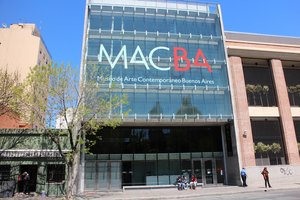 MACBA - Museum of Contemporary Art in Buenos Aires