Early Influences & Artistic Formation: Bilbao Roots and Academic Training
 Wikipedia: Aurelio Arteta
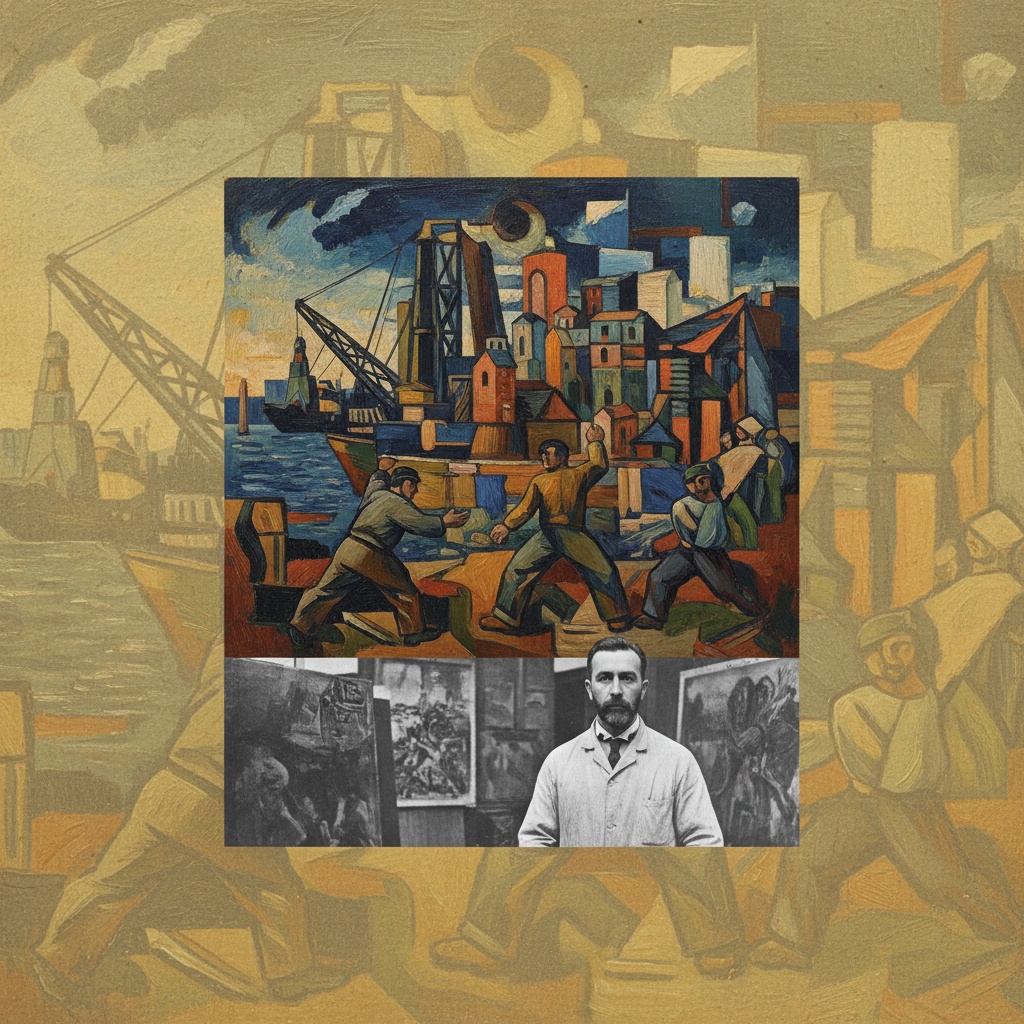
Aurelio Arteta Errasti (2 December 1879 – 10 November 1940) was a Spanish painter who worked in several styles, including Symbolism, Cubism and Social Realism. He is remembered mostly for his murals. == Biography == Arteta was born in Bilbao; his f...
Aurelio Arteta Errasti, born in the bustling port city of Bilbao in 1879, emerged as a significant figure within the complex tapestry of Spanish Modern art. His artistic journey wasn’t one of immediate revelation but rather a gradual unfolding shaped by both familial circumstance and formal education. The Basque Country, with its rugged landscapes and deeply ingrained social consciousness, provided the initial fertile ground for Arteta's developing sensibility. Though his father worked as a farmer and laborer, instilling a sense of realism and connection to the land, it was the move to Valladolid in 1894—necessitated by economic hardship—that marked an early shift in perspective. This relocation exposed him to different artistic currents, though financial constraints initially dictated a pragmatic approach to his burgeoning passion. Arteta didn’t pursue art solely; he balanced his studies with various odd jobs, even performing as part of a comparsa, demonstrating a resourceful spirit and willingness to engage directly with the vibrant life around him.
The pivotal moment arrived in 1897 when Arteta gained admission to the Real Academia de Bellas Artes de San Fernando in Madrid. This prestigious institution provided rigorous training in traditional techniques, laying the foundation for his later experimentation. However, even within the confines of academic discipline, a restless energy began to surface—a desire to move beyond mere imitation and explore new modes of expression. The Academy offered structure, but it was Arteta’s subsequent travels that truly ignited his artistic vision.
Symbolism, Cubism, and Social Realism: Arteta’s Multifaceted Style
 Al mercado
Discover "Al mercado" by Aurelio Arteta – a vibrant Spanish mural blending Symbolism & Cubism. Explore this captivating artwork's social realism and historical themes.
Arteta's stylistic evolution is a testament to the dynamic intellectual climate of the early 20th century. He wasn’t confined by a single movement; instead, he absorbed influences from various sources, synthesizing them into a uniquely personal artistic language. A crucial period was his time in Paris (1902), where he encountered the evocative power of Symbolism through artists like Puvis de Chavannes, and the bold experimentation of Gauguin and Toulouse-Lautrec. This exposure instilled a fascination with subjective experience, dreamlike imagery, and the exploration of inner states. A subsequent sojourn to Italy in 1906 brought him face-to-face with the masters of the Renaissance—Giotto and Raphael—deepening his understanding of composition, form, and narrative.
Upon returning to Bilbao, Arteta began to forge his own path, blending these diverse influences. His work increasingly reflected a concern for social issues, particularly the plight of the working class and the complexities of Basque identity. This commitment manifested in elements of Social Realism, depicting everyday life with unflinching honesty. Simultaneously, he embraced Cubism—not as a rigid adherence to its formal principles but rather as a means of fracturing perspective and conveying multiple viewpoints. Paintings like “Al mercado” exemplify this synthesis; the vibrant energy of the marketplace is rendered through a dynamic interplay of Symbolist color and Cubist fragmentation, creating a powerful commentary on Spanish society.
The Murals of Aurelio Arteta: A Basque Identity in Fresco
 Bañistas 3
Bañistas 3 by Aurelio Arteta – a captivating Spanish mural blending Symbolism & Social Realism. Explore Basque history through this iconic artwork's vibrant style. Hand-painted reproduction available.
While Arteta’s easel paintings demonstrate his stylistic versatility, it was his murals that truly cemented his legacy. Beginning in 1922 with the Banco de Bilbao commissions in Madrid, he embarked on a series of large-scale projects that served as powerful statements of Basque history and cultural identity. These weren't merely decorative embellishments; they were ambitious narratives rendered in fresco—a demanding technique requiring meticulous planning and execution. The twelve frescoes depicted key moments in Basque history and the evolution of banking, showcasing Arteta’s ability to synthesize historical research with artistic vision.
His second major mural project, undertaken at the seminary chapel in Logroño (from designs by Ricardo Bastida), further solidified his reputation as a master muralist. These works weren't simply about depicting events; they were about constructing a visual narrative that resonated with a specific community and fostered a sense of collective identity. Arteta’s murals became focal points for public engagement, sparking dialogue and debate about Basque culture and its place within the broader Spanish context.
Navigating Political Turmoil: Arteta's Republican Affiliations and Exile
The turbulent political landscape of Spain in the early 20th century profoundly impacted Arteta’s life and work. A staunch supporter of the Republican side, he actively engaged with progressive intellectual circles and used his art as a vehicle for social commentary. His appointment as Director of the Bilbao Fine Arts Museum in 1924 reflected this commitment to cultural progress; however, it was short-lived. His willingness to challenge conventional norms—censuring acquisitions deemed too avant-garde—led to his resignation three years later, sparking widespread criticism of the Primo de Rivera regime’s restrictive cultural policies.
The outbreak of the Spanish Civil War forced Arteta into exile. He moved through Valencia and Barcelona before ultimately seeking refuge in Biarritz, France, in 1938. The looming threat of Nazi occupation prompted a final, heartbreaking decision: self-exile to Mexico in 1940. His last major work—decorations for the dining room of Indalecio Prieto—stands as a poignant testament to his enduring commitment to Republican ideals and his unwavering belief in the power of art to reflect social justice.
Arteta’s Legacy & Influence on Spanish Modern Art
Aurelio Arteta's untimely death in 1940, following a tragic streetcar accident in Coyoacán with his wife, cut short a remarkably prolific career. However, his influence on Spanish Modern art remains significant. He wasn’t simply a follower of established movements; he was a synthesist—a painter who absorbed diverse influences and forged a uniquely personal artistic language. His murals stand as powerful monuments to Basque identity, while his easel paintings demonstrate a remarkable versatility and commitment to social realism.
Arteta's work continues to resonate with contemporary audiences, offering a compelling glimpse into the complexities of Spanish society in the early 20th century. His ability to blend Symbolism, Cubism, and Social Realism—along with his unwavering dedication to artistic integrity—makes him a pivotal figure in the history of Spanish Modern art. At OriginalUniqueArt, we are proud to offer high-quality reproductions of Arteta’s masterpieces, allowing you to experience the power and beauty of his work firsthand. Explore our collection today and discover the captivating world of Aurelio Arteta—a true visionary who navigated modernity through color and form.