The Genesis of 'Art Brut': Jean Dubuffet's Rejection of Academic Art
The mid-20th century witnessed a seismic shift in artistic sensibilities, and at its epicenter stood the enigmatic figure of Jean Dubuffet. Dissatisfied with the established conventions of fine art – what he termed 'art culturel', steeped in tradition and academic refinement – Dubuffet embarked on a quest for authenticity, a rawness untainted by learned technique or societal expectations. This pursuit led him not to the hallowed halls of academies but to the margins: psychiatric hospitals, prisons, and the creations of self-taught individuals driven by an inner compulsion rather than external validation. It wasn’t merely a rejection of skill; it was a profound questioning of what constituted art itself. Dubuffet believed that true artistic expression resided in the untamed, unfiltered impulses of the human psyche, unburdened by the constraints of aesthetic norms.
His initial encounters with the work of patients at the Ville-Évrard psychiatric hospital near Paris proved pivotal. These drawings and paintings, often executed with rudimentary materials and a startling directness, possessed a vitality that captivated Dubuffet. They were free from pretense, unconcerned with representation or pleasing composition; instead, they offered a glimpse into an unfiltered inner world. This discovery sparked a fascination that would define his artistic trajectory and ultimately lead to the coining of the term 'Art Brut' – “raw art” – in 1945.
Defining the Undefinable: Characteristics of Art Brut & Outsider Art
 Wikipedia: Outsider art
Outsider art is art made by self-taught individuals who are untrained and untutored in the traditional arts with typically little or no contact with the conventions of the art worlds. The term outsider art was coined in 1972 as the title of a book by...
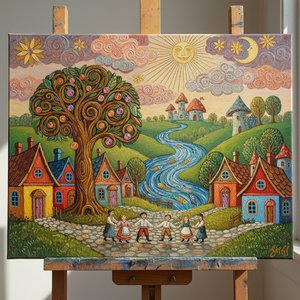
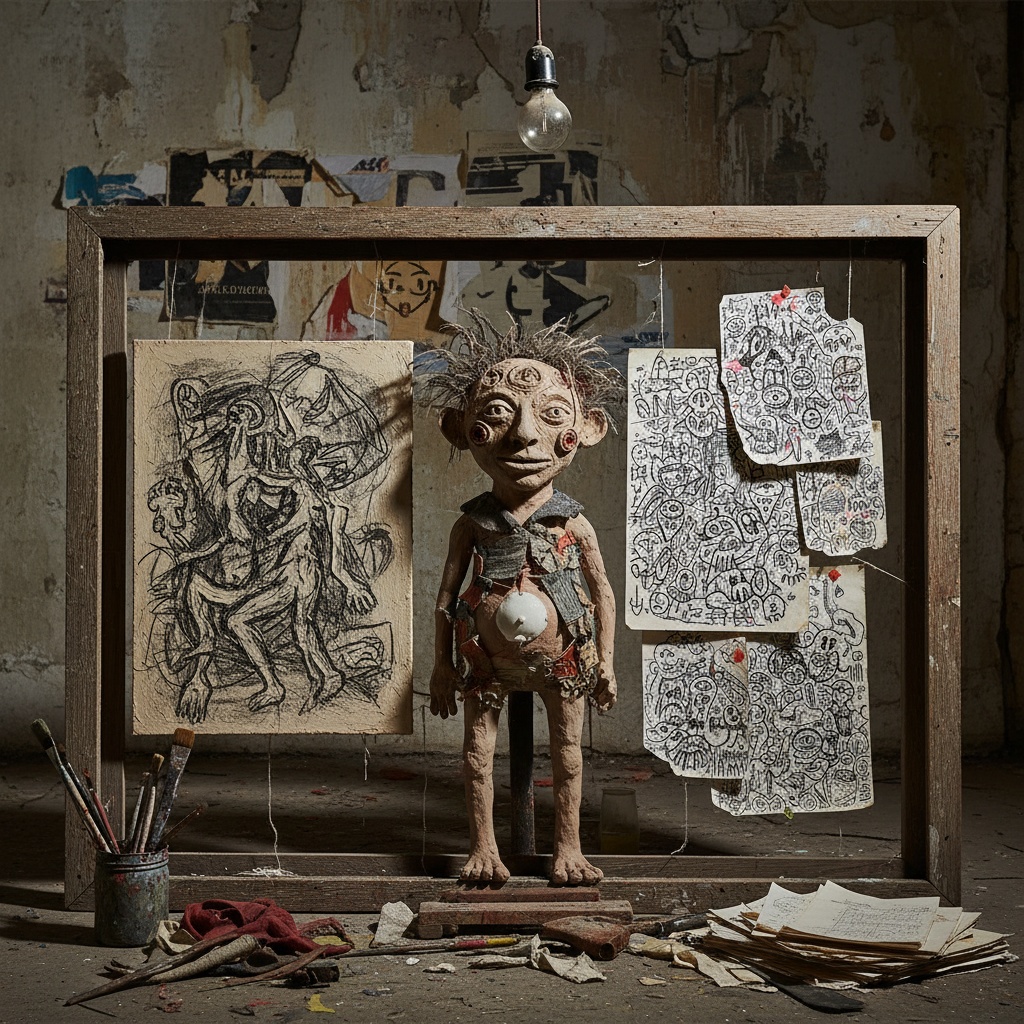
To attempt a rigid definition of Art Brut is, ironically, to miss its very essence. Dubuffet himself acknowledged the inherent difficulty in categorizing such a diverse and unconventional body of work. However, certain recurring characteristics emerge. At its core, Art Brut is characterized by its spontaneity, its lack of formal training, and its origins outside the established art world. These artists typically create not for an audience but as an intrinsic need, driven by personal visions or inner turmoil. The materials employed are often unconventional – found objects, scraps of paper, whatever is readily available – reflecting a disregard for traditional artistic tools.
The resulting works frequently exhibit a striking directness, eschewing subtlety in favor of bold lines, vibrant colors, and often unsettling imagery. Repetitive patterns and obsessive detailing are common, suggesting a meditative or ritualistic quality to the creative process. While some Art Brut artists explore figuration, their representations are rarely concerned with accurate depiction; instead, they prioritize emotional expression and symbolic meaning. The term 'Outsider Art', coined by Roger Cardinal in 1972 as an English equivalent, further emphasizes this sense of isolation from the mainstream art community.
Beyond Psychiatric Hospitals: Exploring Diverse Voices Within Art Brut
While often associated with art created within institutional settings, Art Brut encompasses a far broader spectrum of artistic expression. Ferdinand Cheval, a French postman who single-handedly constructed 'Le Palais Idéal' – an extraordinary architectural fantasy over three decades – stands as a testament to the power of individual vision and relentless dedication. His palace, a fantastical blend of Gothic, Art Nouveau, and Byzantine styles, is a breathtaking example of naïve art architecture born from pure imagination.
Similarly, Fatima Hassan el Farouj, a Moroccan painter celebrated for her vibrant depictions of women and traditions, embodies the raw, instinctive creativity that defines Art Brut. Her work, characterized by bold colors and simplified forms, offers a unique glimpse into Moroccan culture and female experience. Gormand Johé, another French artist, created evocative paintings of landscapes and daily life, often imbued with a sense of melancholy and isolation. These artists, along with countless others, demonstrate that Art Brut is not confined to any single demographic or artistic style; it is a universal expression of human creativity unburdened by convention.
Surrealism’s Embrace and the Evolution of Outsider Art Recognition
The emergence of Art Brut did not occur in a vacuum. The Surrealist movement, with its emphasis on the unconscious mind and automatic drawing, played a significant role in fostering appreciation for unconventional artistic expression. Artists like Pablo Picasso recognized the power and originality of Art Brut, finding inspiration in its raw energy and unfiltered vision. However, Dubuffet was wary of co-option, resisting attempts to categorize Art Brut within existing art historical frameworks.
Despite this resistance, Surrealism’s embrace helped to legitimize Outsider Art, bringing it to the attention of a wider audience. The post-war period saw a growing interest in marginalized voices and alternative forms of expression, further contributing to the recognition of Art Brut as a significant artistic phenomenon. Museums began to collect works by self-taught artists, and exhibitions dedicated to Art Brut gained increasing prominence.
Art Brut's Enduring Influence on Contemporary Artistic Practice
The legacy of Art Brut extends far beyond its historical origins. Its emphasis on authenticity, spontaneity, and the rejection of convention continues to resonate with contemporary artists seeking to break free from established norms. The influence can be seen in a wide range of artistic practices, from abstract expressionism – exemplified by Dubuffet’s own work like 'The Low Hours', blending bold lines and raw textures – to performance art and installation art.
Today, Art Brut serves as a powerful reminder that creativity is not limited to those with formal training or institutional recognition. It celebrates the inherent human capacity for expression, regardless of background or circumstance. For collectors, discovering Art Brut offers an opportunity to connect with works of profound emotional depth and originality, often at a more accessible price point than established masterpieces.
At OriginalUniqueArt.com, we are dedicated to making art accessible to everyone. Explore our collection of reproductions inspired by the spirit of Art Brut, and discover the raw power of self-taught expression. From custom paintings based on your own photos in the style of Dubuffet to appraisals of unique artworks, we offer a range of services to help you connect with the world of art. Visit our free art consultation page to learn more and begin your journey into this captivating realm.