Early Life & Artistic Foundations: From Drapery to Pre-Raphaelite Influence
 albert goodwin
Albert Goodwin (1845-1932) was a celebrated English watercolourist influenced by Turner & the Pre-Raphaelites. Known for atmospheric landscapes, coastal scenes, and detailed depictions of British life & travels. Explore his prolific collection!
Albert Goodwin’s journey to becoming a celebrated landscape painter was not one of immediate artistic recognition, but rather a gradual unfolding nurtured by early exposure and dedicated study. Born in Maidstone, Kent, in 1845, the son of a builder, young Albert initially followed a practical path as an apprentice draper. However, even amidst the fabrics and commerce of everyday life, his innate talent for drawing shone through, quickly becoming apparent to those around him. This early aptitude led to formal instruction with Arthur Hughes, a prominent figure within the Pre-Raphaelite Brotherhood, marking a pivotal moment in Goodwin’s artistic development. Hughes, known for his meticulous detail and romantic narratives, instilled in Goodwin a foundational respect for precision and an appreciation for beauty rooted in nature – qualities that would become hallmarks of his own distinctive style.
The influence extended beyond mere technical skill. Goodwin soon found himself working within the studio of Ford Madox Brown, another leading Pre-Raphaelite artist. Brown’s bold compositions and commitment to social realism broadened Goodwin's artistic horizons, though it was perhaps the mentorship of John Ruskin that proved most transformative. Brown famously predicted Goodwin would become “one of the greatest landscape painters of the age,” a testament to his burgeoning talent even at a young age. This early immersion in the Pre-Raphaelite circle provided not only technical training but also a philosophical grounding, shaping his understanding of art’s purpose and its relationship to the natural world.
Ruskin's Protégé: The Impact of John Ruskin on Goodwin’s Style and Travels
The connection between Albert Goodwin and John Ruskin transcended that of artist and critic; it was a deeply influential mentorship that fundamentally shaped Goodwin’s artistic trajectory. Ruskin, the renowned art historian and social thinker, actively sought out younger artists he believed possessed the potential to capture the essence of nature with authenticity and sensitivity. He saw in Goodwin a kindred spirit – an artist capable of not merely *representing* landscapes but of conveying their spiritual and emotional power. In 1872, Ruskin embarked on a three-month tour of Europe with Goodwin and Arthur Severn, a journey designed to immerse them in the sights and textures of Italy.
This wasn’t simply a sightseeing expedition; it was an intensive study of architecture and landscape under Ruskin's discerning eye. Goodwin meticulously sketched buildings threatened by restoration, documenting their details before they were altered or lost forever. More importantly, he learned to observe light and atmosphere with a new level of precision, developing the habit of creating “flying sketches” – rapid notations capturing fleeting impressions that would later be developed into more finished works. Ruskin’s emphasis on direct observation, combined with his belief in art's moral purpose, instilled in Goodwin a commitment to both accuracy and emotional resonance. This period proved crucial, laying the groundwork for Goodwin’s signature style—a blend of realism and atmospheric suggestion.
Mastering Watercolour: Techniques, Atmospheric Effects, and a Prolific Output
Albert Goodwin quickly distinguished himself as a master of watercolour, a medium perfectly suited to his pursuit of capturing fleeting light and atmospheric effects. While influenced by the oil painting traditions of Turner and the Pre-Raphaelites, he embraced the unique qualities of watercolour – its transparency, luminosity, and capacity for delicate detail. He wasn’t content with simply replicating scenes; instead, he sought to evoke a *feeling* of place, conveying the mood and atmosphere through subtle washes of color and carefully rendered details.
Goodwin's technique often involved layering colors to create depth and complexity, and he frequently employed ink over watercolour to add definition and texture. This innovative approach allowed him to achieve remarkable atmospheric effects, capturing the nuances of light and shadow with exceptional skill. His prolific output – over 800 works throughout his long career – speaks to a relentless dedication to his craft and an unwavering passion for landscape painting. He consistently experimented with new techniques, refining his methods to better capture the essence of the scenes before him.
Goodwin’s Landscapes: A Reflection of British Life & Global Exploration
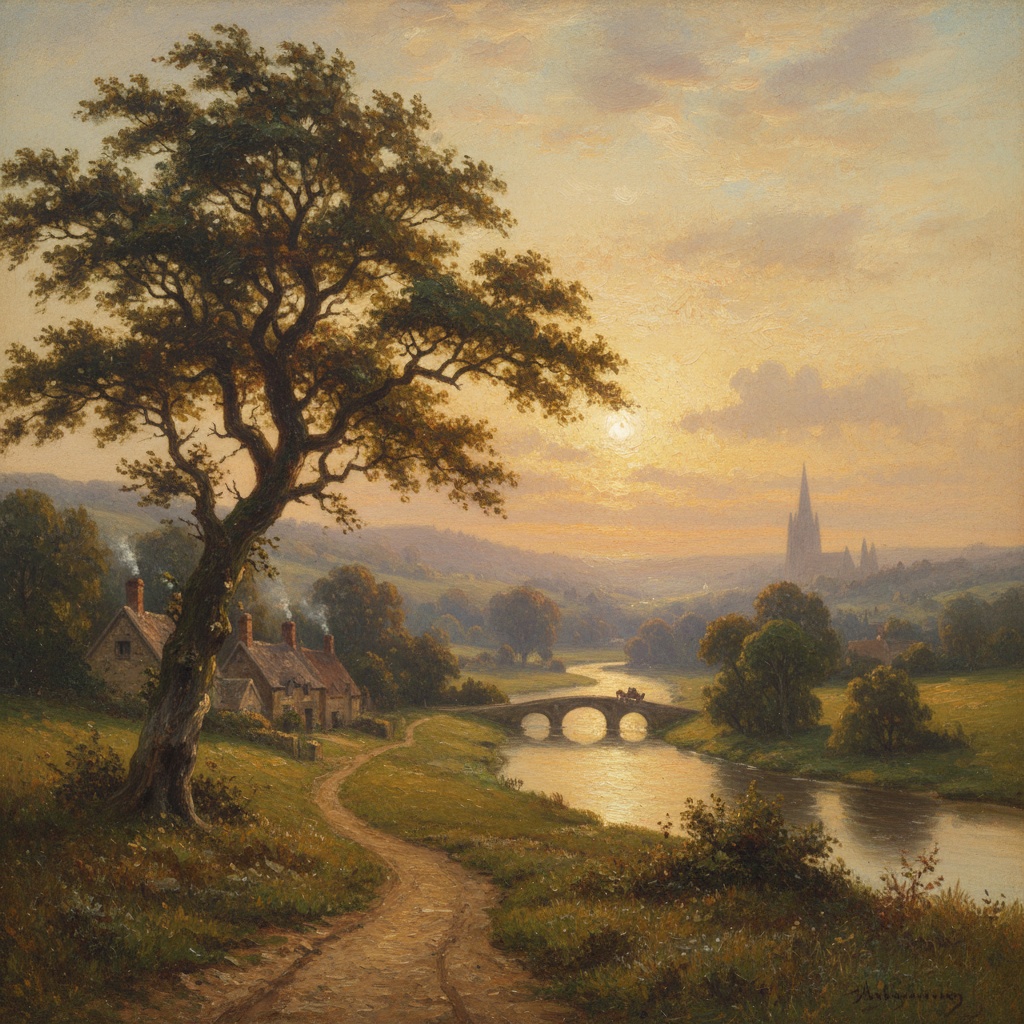
The breadth of Albert Goodwin's landscapes is a testament to his adventurous spirit and keen observational skills. His work isn’t confined to a single locale; instead, it reflects a lifetime of travel and exploration, encompassing the familiar vistas of Britain alongside more exotic locales. From bustling urban scenes like “Mansfield Road, Nottingham,” capturing the energy of Victorian life, to serene coastal views such as “Boulay Bay, Jersey,” showcasing the rugged beauty of the Channel Islands, Goodwin’s paintings offer a diverse portrait of his world.
His travels extended far beyond Europe. He ventured to the West Indies, India, Egypt, New Zealand and Australia, each journey enriching his artistic palette and broadening his perspective. He wasn't merely documenting these places; he was capturing their unique character – the light, the atmosphere, the people, and the stories they held. Even in his depictions of more distant lands, a distinctly British sensibility prevails, reflecting his deep connection to his homeland. The oil painting “Spietz, lake Thun” from 1932 demonstrates his continued mastery even in later life, blending Romantic ideals with Realist precision.
Legacy and Recognition: Albert Goodwin's Place in Victorian Art History
Albert Goodwin’s contribution to Victorian art history lies not in radical innovation but in a masterful synthesis of existing traditions. He seamlessly blended the realism of the Pre-Raphaelites, the atmospheric effects of Turner, and his own unique sensibility to create landscapes that are both visually stunning and emotionally resonant. His work offers a valuable glimpse into the social and cultural landscape of Victorian Britain, capturing scenes of everyday life alongside more picturesque vistas.
Goodwin’s prolific output and consistent quality earned him widespread recognition during his lifetime. He became an associate member of the Royal Watercolour Society in 1876 and later a full member, exhibiting regularly at both the Royal Academy and the Water-Colour Society. Today, his paintings are highly sought after by collectors and art enthusiasts alike, admired for their technical skill, atmospheric depth, and evocative power. Goodwin’s legacy endures as a testament to the enduring appeal of landscape painting and the transformative power of artistic mentorship. Explore Albert Goodwin's captivating collection at OriginalUniqueArt.com, where you can discover museum-quality reproductions that bring his Victorian landscapes to life.