Contemporary Realism · 1874
Forgiven (Thomas Faed, 1874)
Thomas Faed (1826–1900) har skabt Forgiven. Det er fra 1874. Det tilhører Contemporary Realism-bevægelsen. Den er udført i Oil On Canvas. Det opbevares på Guildhall Art Gallery i London, United Kingdom. Målene er 36 × 48 cm.
- 1874
- Oil On Canvas
- 36 × 48 cm
- Guildhall Art Gallery, London

 Se i rummet

 Håndmalet oliemalerie
 Del som kort
 Del
 Faktablad


 Download
 Lignende værker
 Røntgenundersøgelse
 Diasshow
 Spørgsmål og svar

 Statistikker
Forgiven kort fortalt
- Titel
- Forgiven
- Kunstner
- Thomas Faed (1826–1900)
- Kunstner født i
- Kirkcudbright, Storbritannien
- Dato
- 1874
- Materiale
- Oil On Canvas
- Dimensioner
- 36 × 48 cm
- Hvor det kan ses
- Guildhall Art Gallery, London, United Kingdom
- Bevægelse
- Contemporary Realism
- Periode
- 19th Century
- Motiv
- family portrait, domestic scene, victorian era, warmth, rural life, intimate moment
Hvad forestiller Forgiven?
Identification of Forgiven by Thomas Faed
In this intimate oil on canvas, titled Forgiven, the Scottish artist Thomas Faed explores the quietude of domestic life. Created in 1874, the work offers a glimpse into the sentimental realism that defined much of Faed's career. The piece is modest in scale, measuring 36 x 48 cm, which encourages a close, personal encounter with the figures depicted.
Faed, born in 1826 in Gatehouse of Fleet, United Kingdom, possessed a particular sensitivity to the textures of everyday existence. Through Forgiven, he captures a specific moment of familial connection, utilizing the medium of oil to build a sense of warmth within a humble setting. The work remains a significant example of his ability to translate human emotion into a visual narrative.
The Composition and Visual Elements
The scene unfolds within a dimly lit, rustic interior, capturing a quiet moment of domesticity. At the center of the composition, a family group is gathered around a table, consisting of an older man, a woman, and a young child. The arrangement feels somewhat cluttered, with various objects scattered throughout the space to suggest a lived-in, humble setting. This density of detail creates a sense of immediacy, as if we have stumbled upon a private, unposed instance of daily life.
Lighting is used with great subtlety here. The primary source of illumination emanates from a fireplace located on the left side of the frame, casting soft light across the figures and creating deep shadows that provide a sense of volume. This interplay of light and shadow allows for a clear sense of depth, achieved through the careful layering of the figures and the surrounding furniture. The atmosphere remains somber and quiet, grounded by a color palette dominated by muted greens, browns, and grays.
Technique and Style
The work is executed in oil on canvas, utilizing a painterly technique that prioritizes the immediate sensation of the scene. You can see the visible brushstrokes throughout the composition, which lend a sense of immediacy to the domestic setting. The lines are predominantly organic and slightly loose, avoiding the rigid precision of more academic works. This approach allows the forms to settle into the space with a natural, unforced quality.
The lighting is subdued, emanating from a fireplace to the side, which has a profound effect on how the shapes are perceived. Because of this soft illumination, the edges of the figures and objects lack sharpness; instead, they appear somewhat softened, blending gently into the shadows. This creates a palpable sense of volume and depth within the rustic interior. You can feel the tactile nature of the environment through the way the paint is applied to the rough wooden surfaces and the heavy folds of the fabric.
Where to See This Work Today
You may find this work at the Guildhall Art Gallery in London, United Kingdom. It is part of the collection held by the City of London, England. The gallery is situated within the Moorgate area, offering a quiet space to observe the nuances of Faed's brushwork.
The museum itself is housed in a stone building designed in a semi-Gothic style. It provides a dignified setting for such intimate domestic scenes. If you find yourself in the city, the architecture of the gallery complements the historical weight of the pieces within its walls.
Related Works by Thomas Faed
To understand the breadth of Faed's output, one might look toward his earlier compositions, such as His Only Pair, which dates from about 1860. This period of his career also produced Listeners Ne'er Hear Any Good Of Themselves, a work that reflects his interest in the nuances of human interaction. His ability to handle narrative was further demonstrated in The Last of the Clan, completed in 1865. These pieces offer a glimpse into the development of his specific approach to genre painting and the quietude of domestic life.
Several of his most significant paintings are held in permanent collections, allowing for a deeper study of his technical skill. The Silken Gown is part of the collection at the Tate Gallery. In the Aberdeen Art Gallery, one can find both Highland Mary and The Reaper. These works, alongside celebrated pieces like The Motherless Bairn and Scott and His Literary Friends at Abbotsford, illustrate the range of his subject matter, from intimate studies to more expansive, literary-inspired scenes.
Hvilket museum udstiller Forgiven?
Guildhall Art Gallery
London, United Kingdom
En tidens gobelin: Hvor victoriansk storhed møder romerske ekkoer I hjertet af Londons historiske City-distrikt tilbyder Guildhall Art Gallery langt mere end blot en fremvisning af lærreder; det er en dyb sanselig rejse gennem menneskelivets civilisationens lag. At træde indenfor er at indtræde i et rum, hvor den victorianske tids raffinerede elegance ånder side om side med de rå og vedvarende sten fra det romerske Britannien. Denne unikke institution præsterer en sjælden bedrift i museumverdenen ved sømløst at væve det nittende århundredes mestre-penselstrøg sammen med de håndgribelige, underjordiske ekkoer fra et antikt imperium.

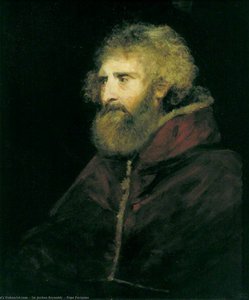

Højopløselige billeder af Forgiven
Public domain: kunstneren døde i 1900.
Thomas Faed, Forgiven (1874), Guildhall Art Gallery. Frit tilgængelig
Spørgsmål om Forgiven besvaret
Hvor kan jeg se det originale værk "Forgiven" af Thomas Faed?
Du kan se det originale værk "Forgiven" på Guildhall Art Gallery, London, United Kingdom.
Hvornår blev "Forgiven" skabt?
"Forgiven" af Thomas Faed blev skabt i 1874.
Hvilket medie er "Forgiven" af Thomas Faed udført i?
Thomas Faed brugte Oil On Canvas-teknikken til "Forgiven". Teknikken definerer det originale værks materielle karakter.
Hvad er de faktiske mål på "Forgiven" af Thomas Faed?
Det originale værk "Forgiven" af Thomas Faed måler 36 x 48 cm.
Hvad forestiller "Forgiven"?
Temaerne i "Forgiven" af Thomas Faed omfatter family portrait, domestic scene, victorian era, warmth, rural life, intimate moment, family bonds, soft lighting, som tilsammen udgør værkets motivverden.
Er "Forgiven" fri for ophavsret?
"Forgiven" af Thomas Faed er i det offentlige domæne – ophavsretten er udløbet. Denne status bestemmer, hvordan billedet af værket må reproduceres.
Hvem har skabt "Forgiven"?
"Forgiven" tilskrives Thomas Faed.
Hvilken kunstretning tilhører "Forgiven" af Thomas Faed?
"Forgiven" af Thomas Faed tilhører Contemporary Realism-bevægelsen. Denne bevægelse giver den stilistiske kontekst for værket.
Hvor i Thomas Faeds karriere placerer "Forgiven" sig?
"Forgiven" repræsenterer Thomas Faeds Mature Period.
Om kunstneren, Thomas Faed

1826–1900, Storbritannien
Thomas Faed
En arv af skotsk sentimentalitet Thomas Faed indtager en helt særlig plads i den skotske kunsthistorie, ofte beskrevet med den dybe ærbødighed, man kunne vise Robert Burns' betydning for den skotske sang. Faed blev født i Kirkcudbrightshire ved Barlay Mill og var en del af en bemærkelsesværdig familie af skabere; hans brødre James og John samt hans søster Susan delte alle denne dybe kunstneriske kaldelse. Hans tidlige liv var forankret i det barske og smukke landskab i Galloway, et miljø der uden tvivl prægede den varme og hjemlighed, man finder i hans mest elskede værker. Efter at have modtaget sin formelle kunstneriske uddannelse ved designskolen i Edinburgh, påbegyndte han en rejse, der førte ham fra hjertet af Skotland til de prestigefyldte atelierer i London.
Også af Thomas Faed
 Worn Out
 Highland Mary1857
 Faults on Both Sides1861
 The Doctor's Visit1889
Essays om Forgiven
 The Timeless Beauty of Oil on Canvas: A Masterclass in Texture, Impasto, and Artistic MasteryDiscover the profound allure of oil on canvas. Explore the mastery of impasto textures, the science of pigment longevity, and expert guides…
 Masterpieces of Quinten Metsys: The Top 25 Essential ArtworksExplore 25 iconic works by Quinten Metsys, the master of the Antwerp School. Discover his Flemish Renaissance gems on OriginalUniqueArt.com.
 Masterpieces of Realism: The Top 25 Artworks by Thomas EakinsExplore the top 25 masterpieces of American Realism by Thomas Eakins. Discover his iconic works and find curated art on OriginalUniqueArt.c…