Post-Impressionism · 1925
The Windows (Pierre Bonnard, 1925)
Pierre Bonnard (1867–1947) har skabt The Windows. Det er fra 1925. Det tilhører Post-Impressionism-bevægelsen. Den er udført i Oil On Canvas.
- 1925
- Oil On Canvas

 Se i rummet

 Håndmalet oliemalerie
 Del som kort
 Del
 Faktablad


 Download
 Lignende værker
 Røntgenundersøgelse
 Diasshow
 Spørgsmål og svar

 Statistikker
The Windows kort fortalt
- Titel
- The Windows
- Kunstner
- Pierre Bonnard (1867–1947)
- Kunstner født i
- Fontenay-aux-Roses, Frankrig
- Dato
- 1925
- Materiale
- Oil On Canvas
- Bevægelse
- Post-Impressionism
- Periode
- 19th Century
- Motiv
- mediterranean view, interior landscape, window composition, post-impressionism art, light and shadow, domestic scene
Hvad forestiller The Windows?
A Window on Memory: Pierre Bonnard’s ‘The Windows’
Pierre Bonnard's “The Windows,” painted in 1925, is more than just a still life; it’s an intimate meditation on light, memory, and the quiet beauty of domesticity. The artwork immediately draws the viewer into a warmly lit interior space, a room imbued with a palpable sense of tranquility. Through the open window, a vibrant Mediterranean town unfolds – a distant echo of warmth and color that subtly shapes the mood of the scene. Bonnard’s masterful use of perspective creates a layered composition, guiding our eye from the tangible objects within the room—a book titled ‘Marie,’ a paintbrush, an inkwell—to the expansive vista beyond, blurring the boundaries between the personal and the universal.
- Post-Impressionist Vision: “The Windows” firmly establishes Bonnard’s place within the Post-Impressionist movement. Influenced heavily by Paul Gauguin's bold color palettes and flattened perspective, Bonnard rejects strict realism in favor of a subjective interpretation of reality. The visible brushstrokes, applied with a confident hand, contribute to a richly textured surface that invites close inspection.
- Technique & Materials: Executed in oil paints on canvas, the artwork showcases Bonnard’s signature impasto technique – thick layers of paint built up to create a tactile and luminous effect. This is particularly evident in the window frame and the book cover, where the paint seems to shimmer with reflected light.
- Color as Emotion: Bonnard's color choices are deliberately emotive, eschewing naturalistic representation for hues that evoke specific feelings. The warm yellows, oranges, and reds of the interior contrast dramatically with the cooler blues and greens of the distant landscape, creating a dynamic visual tension.
Decoding the Symbolism
Beyond its technical brilliance, “The Windows” is rich in symbolic potential. The inclusion of ‘Marie,’ a book bearing this name, has been interpreted as representing love or memory – perhaps a cherished recollection brought to life through the artist’s gaze. The window itself acts as a portal, not just to a physical location but also to a realm of contemplation and introspection. The simplified shapes and organic forms throughout the composition suggest a desire to capture the essence of things rather than their precise details, aligning with Bonnard's broader artistic philosophy.
- The Mediterranean Landscape: The distant town, rendered in atmospheric perspective – paler colors and less detail for objects further away – symbolizes escape, longing, or perhaps a nostalgic yearning for the sun-drenched landscapes of Southern France, where Bonnard spent much of his life.
- Domestic Objects as Vessels of Memory: The carefully arranged objects within the room—the book, paintbrush, inkwell—are not merely props; they are imbued with personal significance, suggesting a connection to Bonnard’s own experiences and emotions.
Historical Context & Artistic Legacy
Painted in 1925, “The Windows” reflects the evolving artistic landscape of early 20th-century France. Bonnard was working at a pivotal moment, navigating between the traditions of Impressionism and the radical experimentation of Cubism and other avant-garde movements. His work, though rooted in observation, is profoundly subjective, prioritizing emotional resonance over objective representation. This approach anticipated many of the developments that would shape modern art.
Artist Information: Pierre Bonnard (1867-1947) was a prominent figure in the Post-Impressionist movement, renowned for his evocative depictions of domestic interiors and landscapes. His distinctive style, characterized by bold color choices, loose brushwork, and a focus on capturing light and atmosphere, continues to captivate audiences today.Højopløselige billeder af The Windows

Public domain: kunstneren døde i 1947.
Andre størrelser, beskæringer og kildeangivelse →Pierre Bonnard, The Windows (1925). Frit tilgængelig
Spørgsmål om The Windows besvaret
Hvornår er "The Windows" af Pierre Bonnard skabt?
"The Windows" stammer fra 1925. Datoen placerer værket i Pierre Bonnard's karriere og dets tidsalder.
Hvilket medie er "The Windows" af Pierre Bonnard udført i?
Pierre Bonnard brugte Oil On Canvas-teknikken til "The Windows". Teknikken definerer det originale værks materielle karakter.
Hvad forestiller "The Windows" af Pierre Bonnard?
Temaerne i "The Windows" af Pierre Bonnard omfatter mediterranean view, interior landscape, window composition, post-impressionism art, light and shadow, domestic scene, color palette study, som tilsammen udgør værkets motivverden.
Er "The Windows" fri for ophavsret?
"The Windows" af Pierre Bonnard er i det offentlige domæne – ophavsretten er udløbet. Denne status bestemmer, hvordan billedet af værket må reproduceres.
Hvilken kunstner tilskrives "The Windows"?
"The Windows" blev skabt af Pierre Bonnard. Informationen på denne side beskriver Pierre Bonnards originale værk.
Hvilken kunstretning tilhører "The Windows" af Pierre Bonnard?
Kunstretningen forbundet med "The Windows" af Pierre Bonnard er Post-Impressionism. Denne klassificering placerer værket blandt relaterede kunstnere og kunstværker.
Hvor i Pierre Bonnards karriere placerer "The Windows" sig?
"The Windows" tilhører Mature Period i Pierre Bonnards karriere. Denne klassificering knytter værket til kunstnerens udvikling.
Hvor gammel var Pierre Bonnard, da "The Windows" blev skabt i 1925?
Pierre Bonnard skabte "The Windows" i en alder af 58. Kunstneren blev født i 1867, og værket er dateret 1925.
Hvad er årsagen til ophavsretsstatus for "The Windows" af Pierre Bonnard?
"The Windows" af Pierre Bonnard er i det offentlige domæne – ophavsretten er udløbet. Ophavsretten beregnes ud fra kunstnerens dødsår, og Pierre Bonnard døde i 1947.
Om kunstneren, Pierre Bonnard
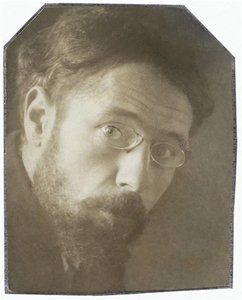
1867–1947, Frankrig
Pierre Bonnard
Tidligt liv, familie og uddannelse Pierre Bonnard trådte ind i verden den 3. oktober 1867 i Fontenay-aux-Roses, Hauts-de-Seine, Frankrig. Han blev født ind i en familie præget af faste rammer og forventninger; hans far, Eugène Bonnard, besad en høj stilling i det franske krigministerium. Mens hans slægt var rodfæstet i statens administrative stabilitet, blev Pierres hjemlige sfære formet af hans mor, Élisabeth Mertzdorff, som stammede fra Alsace.
Om Pierre Bonnard Bemærkelsesværdige værker af Pierre Bonnard
Også af Pierre Bonnard
 Nøgen1920
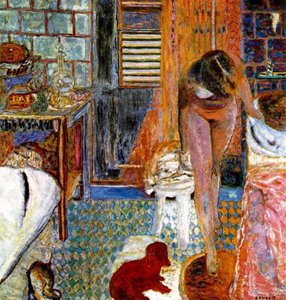 La toilette, ca Private1932
 The almond tree in blossom
 Le placard rouge (The Red Cupboard),1939

Essays om The Windows
 Impressionismens Mestre: Top 10 Kunstværker der Definerede en Epoke – OriginalUniqueArt.dkOplev impressionismens magi! Dyk ned i historierne bag 10 ikoniske malerier fra Monet, Degas og Renoir. Find inspiration til din indretning…
 Capturing Emotion: The Enchanting World of Romantic Illustration and the Art of Visual PoeticsExplore the evocative beauty of Romantic illustration. From Art Nouveau to Victorian classics, discover how master illustrators capture pro…
 Chasing the Sun: The Ethereal Magic of Window Light in Impressionist MasterpiecesDiscover the ethereal beauty of window light in Impressionist masterpieces. Explore a visual journey through Monet, Bonnard, and Van Gogh, …